REVIEW · WASHINGTON DC
Private Black History Tour Washington DC for up to 10 Guests
Book on Viator →Operated by Perfect Private Tours and Transportation · Bookable on Viator
A morning in DC with a purpose. This private Black History tour strings together landmark stops and ends at the NMAAHC with tickets included.
You get an easy, air-conditioned ride, a focused route, and just enough time at each site to make photos and ask questions without sprinting across the Mall.
I especially like the mix of big memorials and story-rich stops that go beyond the usual monument loop. The included NMAAHC admission is a practical win, too, because it helps you plan your museum time without scrambling for entry.
One thing to consider: the tour ends without hotel drop-off, so you’ll need your own way back after the final stop. Also, with about 15 minutes per stop, this is built for smart overviews, not long stays.
Key highlights you’ll actually feel
- Hotel pickup from anywhere in DC, including vacation homes, makes mornings painless
- 8 iconic photo stops in a tight 2–3 hour window, with bottled water on board
- NMAAHC tickets included, so you can focus on the museum instead of entry logistics
- A private expert guide who brings context to each stop, not just facts on a sign
- Stops include Howard University, U Street sights, and major memorials tied to emancipation and service
- Good weather matters, since this runs outdoors for most of the day
In This Review
- How a 2–3 hour private route fits DC’s monument maze
- Price and value: when $575 feels fair
- Pickup, transportation, and the no-dropoff reality
- Stop-by-stop: the story the route tells
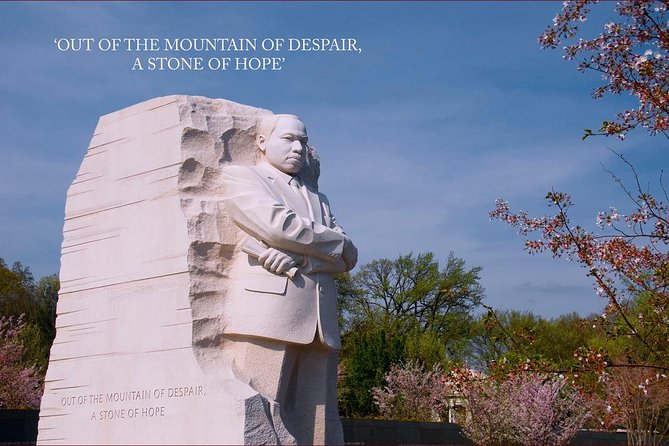
- 1) Martin Luther King, Jr. Memorial (photo stop)
- 2) Lincoln Memorial (guided stop)
- 3) Lincoln Park: original Lincoln Memorial + Mary McLeod Bethune Statue
- 4) African American Civil War Memorial Museum
- 5) Howard University (photo stop)
- 6) U.S. Capitol (photo stop)
- 7) Howard Theatre (photo stop)
- 8) Ben’s Chili Bowl Mural (photo stop)
- 9) National Museum of African American History and Culture (NMAAHC)
- Why Howard University and the U Street stops hit harder than you expect
- NMAAHC tickets and the trick for a short museum visit
- Your guide experience: what to look for in the interaction
- Tips to get the most from 15-minute stops
- Should you book this private Black History tour?
- FAQ
- How long is the private Black History tour?
- What time does the tour start?
- Where does pickup happen?
- Is admission included for the National Museum of African American History and Culture?
- What monuments and stops are part of the tour?
- Is the tour private or shared?
- What language is the tour offered in?
- Is bottled water provided?
- What happens if the weather is bad?
- Is a service animal allowed?
How a 2–3 hour private route fits DC’s monument maze
Washington DC has a funny way of swallowing time. One wrong turn at the Metro or one extra wait at a popular entrance, and suddenly your day plan turns into a foggy blob of walking and apologies.
This tour is designed to prevent that. The entire experience is paced for a short visit: you start at 9:00 am, ride between sites comfortably, and spend roughly 15 minutes at each stop. That means you’re not stuck choosing between seeing everything and learning anything. You get a guided overview at key memorials, plus photo stops at other places that help you connect the dots afterward.
And because it’s private, you’re not negotiating your viewing angle with strangers or fighting for attention. If you want to slow down at a statue, ask one more question, or grab photos without rushing, the format makes that easier.
Price and value: when $575 feels fair
The listed price is $575 per group (up to 2), and the experience is private. That pricing structure matters.
If you’re traveling solo or as a couple, the cost is straightforward: you’re basically paying for a guided, chauffeured history lesson that includes museum entry and door-to-door pickup. If you’re a family, a small group of friends, or a duo traveling with teens, this can become better value because you’re sharing the cost while keeping the tour private.
Two value points to keep in mind:
- NMAAHC admission is included, which is often the “time sink” in DC planning. Tickets and timing support are a real convenience.
- You’re paying for someone to drive and explain, so you don’t spend your limited vacation hours reading plaques you could read at home.
One caution: the info says private up to 10 guests, but the price note specifies up to 2. If you’re a larger group, confirm how pricing scales for your exact headcount before you lock it in, so you don’t get surprised later.
You can also read our reviews of more tours and experiences in Washington DC.

Pickup, transportation, and the no-dropoff reality
Logistics can make or break a DC tour. This one helps with the biggest hurdle: hotel pickup (and pickup from vacation homes, including Airbnb and others). So instead of dragging yourself to a meeting point, you get collected and transported in an air-conditioned vehicle.
That vehicle comfort sounds small until you hit DC heat or humidity. Then it becomes the best feature on the calendar.
There is one trade-off: the tour includes pickup, but not drop-off. You’ll need to get back to your hotel on your own after the final stop. That’s not a dealbreaker, but it’s something you should plan around—especially if your hotel is far from the route’s finish point.
Stop-by-stop: the story the route tells
This tour is built like a guided walking photo album, but you’re riding between pages. Here’s what each stop adds and what to expect from the short time window.
1) Martin Luther King, Jr. Memorial (photo stop)
You’ll stop at the Martin Luther King, Jr. Memorial for about 15 minutes, focused on photos and quick orientation. Even if you’ve seen MLK references before, standing there helps you frame the day’s themes: justice, leadership, and the kind of courage that changes laws and lives.
How to use your time: take your main photo first, then ask your guide what detail matters most here. That turns a snapshot into a memory with context.
2) Lincoln Memorial (guided stop)
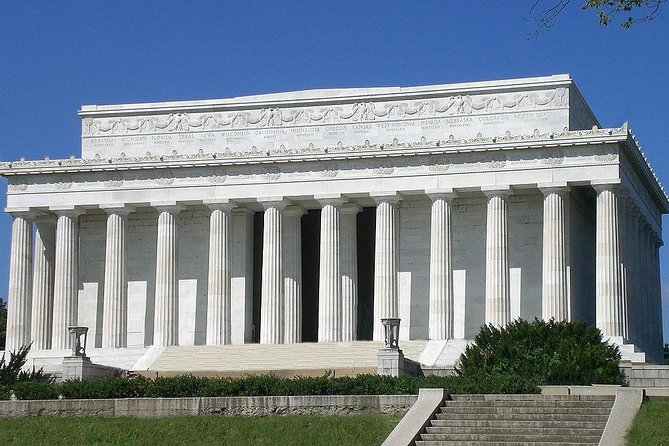
Next is the Lincoln Memorial, with a more guided 15-minute stop. Lincoln’s story is tied to emancipation and the political tension of the era—so this stop works as a bridge between national ideals and the lived reality of freedom.
Watch for: how your guide connects Lincoln’s symbolism to the tour’s broader Black history focus. The guided format helps you avoid getting stuck in generic “who stood where” tourism.
You can also read our reviews of more historical tours in Washington DC





3) Lincoln Park: original Lincoln Memorial + Mary McLeod Bethune Statue
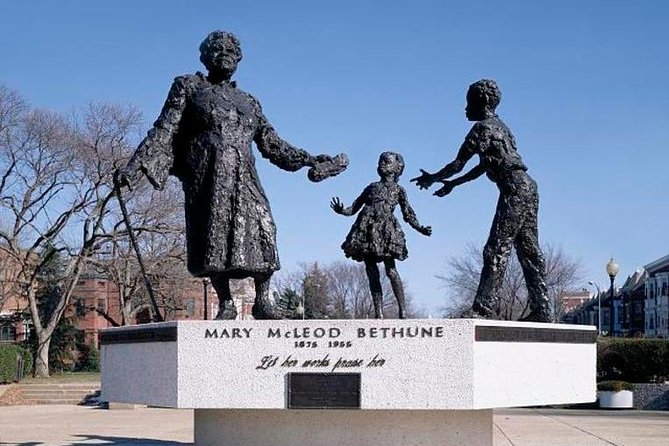
At Lincoln Park, you’ll get a guided 15-minute stop to see the original Lincoln Memorial and the Mary McLeod Bethune Statue.
This is one of those DC moments that makes you say, oh—I didn’t realize that connection existed. It also puts Mary McLeod Bethune into the foreground, so the day isn’t only centered on the most famous names.
Possible drawback: because the stop is short, you’ll want to choose one or two things you care about most—statue details, location context, or the story your guide tells.
4) African American Civil War Memorial Museum
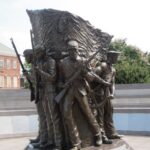
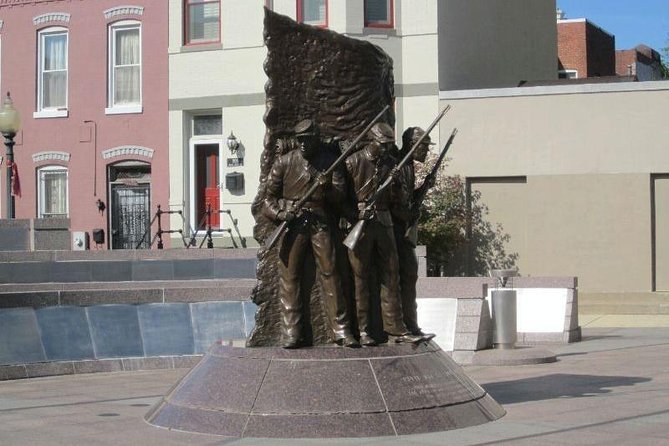
Then you’re at the African American Civil War Memorial Museum area for a guided 15-minute visit focused on the African American Civil War Memorial.
This stop matters because it shifts the conversation from monuments as symbols to monuments as records. You’re honoring the people who fought for freedom—and that changes the emotional temperature of the day.
How to get value fast: ask your guide how this memorial reframes what you were taught about the Civil War.
5) Howard University (photo stop)
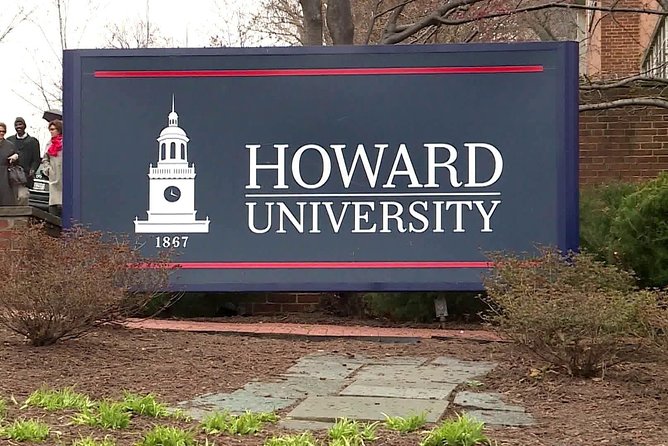
You’ll stop at Howard University for photos, about 15 minutes. This is an essential stop for understanding Black education and institutional power in the nation’s capital.
If you’re the type who likes seeing the living thread of history—not only the past—Howard’s presence turns the tour from remembrance into lineage.
6) U.S. Capitol (photo stop)
Next is a photo stop at the U.S. Capitol, also about 15 minutes. On its own, it can feel like a dramatic landmark with no deeper layer. On this tour, it becomes a reminder that politics, power, and policy are part of the story—whether or not you’re watching lawmakers.
7) Howard Theatre (photo stop)
At the Howard Theatre, you’ll get another 15-minute photo stop. This is where the tour hints at cultural history: not just who made decisions, but who created spaces where communities gathered, performed, and shaped national culture.
8) Ben’s Chili Bowl Mural (photo stop)
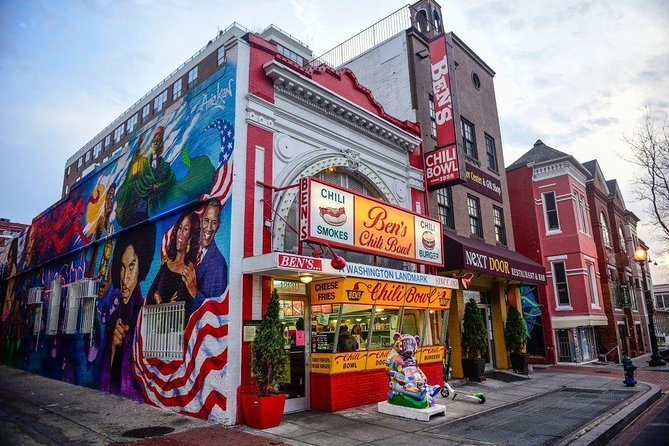
Then it’s a photo stop at the Ben’s Chili Bowl Mural for about 15 minutes. This one is quick, but it’s also human-scale history—food, community, and the kind of everyday landmark that keeps neighborhoods alive.
It’s the kind of stop that makes your tour feel less like a museum flyer and more like you’re in a real city.
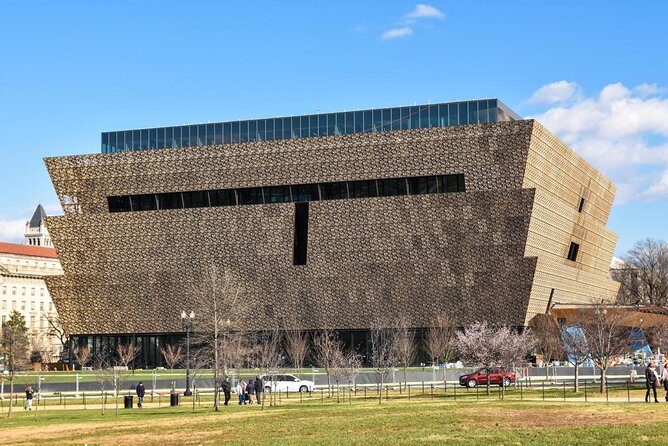
9) National Museum of African American History and Culture (NMAAHC)
The final stop is the big one: the National Museum of African American History and Culture. You’ll explore inside for around 15 minutes, with admission included.
This is where the day’s stories start stacking. You’ve seen monuments and memorial themes outside; now you walk into the museum and your brain can connect the guided overview to artifacts, exhibits, and broader narratives.
Using only 15 minutes well: pick one theme you want to understand better, then let your guide point you to what matters most for that theme. With limited time, aim for direction, not exhaustion.
Why Howard University and the U Street stops hit harder than you expect
The route isn’t only memorials. It also threads through Howard University and the U Street area (via the Howard Theatre and the Ben’s Chili Bowl mural). That pairing makes a difference.
Monuments tend to be about recognition. These stops are also about creation—education, performance, community energy. Even in short photo-stops, these places help you remember that Black history in DC isn’t only about what was taken or what was fought for. It’s also about what was built.
If you’re traveling with teens, this is the part that often lands best. It’s easier to picture school, culture, and everyday life than it is to picture decades of policy fight from a plaque alone.
NMAAHC tickets and the trick for a short museum visit

NMAAHC is the kind of museum you could easily spend half a day in. This tour intentionally gives you a shorter window: about 15 minutes inside.
So how do you make that work?
1) Go in with one question
Examples: How did education shape opportunity? How do politics and civil rights intersect? Your guide can help you pick a path.
2) Use the included entry as time leverage
Getting museum tickets handled ahead of time helps you avoid losing your best energy to entry confusion and long waits. The point here is not skipping learning—it’s keeping the day moving so you actually get to experience the museum.
3) Think photo-smart, not collection-hungry
Take one or two anchor photos or a quick “spot this later” shot. Then focus on one area that matches what your guide emphasized earlier.
This short museum window isn’t trying to cover everything. It’s trying to give you a hit of understanding and momentum—enough that you’ll want to come back (or at least know where to look next time).
Your guide experience: what to look for in the interaction
A big part of why this tour gets strong marks is the guide style. The tone is personable and question-friendly, with clear explanations that connect DC’s landmarks to Black history themes across time.
You may even hear a few good jokes. That matters more than you’d think, because humor reduces the stress of serious topics and keeps the day human.
There’s also a practical comfort factor: in at least one past departure, the guide was praised for being courteous and easy to get along with, and for driving with care in a clean vehicle. Smooth driving matters when you’re trying to keep your schedule tight and your head clear for stories.
If you like tours where you can ask follow-ups, this format fits. You’re not stuck listening like it’s a lecture—you’re moving through the city with a human translator.
Tips to get the most from 15-minute stops
Because the stops are short, small choices matter.
- Wear shoes you can walk in comfortably. Even with a car, you’ll still step out, walk a bit, and stand for photos.
- Bring sunglasses and a hat if you’re doing this in warmer months. You’ll be outdoors between stops.
- Have your phone camera ready before you arrive at the best angles. Waiting to get ready costs you one full moment.
- Ask one targeted question at each guided stop. If you ask about a single detail, you’ll remember the rest better later.
- Use the water. Bottled water is provided, and that little hydration reminder makes the day feel easier.
Also, this tour lists a moderate physical fitness level. Plan for short walks and standing time, and you’ll be fine.
Should you book this private Black History tour?
I think this is worth booking if you want three things in DC: a guided story, a smart schedule, and museum entry handled for you. It’s also a great match if you’re short on time but still want more than random monument photos.
Book it especially if:
- you’re visiting DC for the first time and want a route that makes sense fast
- you want NMAAHC admission included without extra planning
- you care about context, not just locations
Skip it (or adjust expectations) if:
- you need long stays at each site
- you strongly prefer self-guided museum wandering
- you don’t want the hassle of arranging your own return after pickup
Overall, this tour earns its value by doing the planning heavy lifting for you: pickup, transport, tickets, and a route that connects MLK, Lincoln-related themes, civil war remembrance, Howard University, and the U Street corridor—all leading to NMAAHC.
If you want a DC morning that teaches and still feels doable, this is a solid choice.
FAQ
How long is the private Black History tour?
The tour runs about 2 to 3 hours.
What time does the tour start?
The start time is 9:00 am.
Where does pickup happen?
You can get hotel pickup from anywhere in Washington DC, including vacation homes like Airbnbs.
Is admission included for the National Museum of African American History and Culture?
Yes. NMAAHC tickets are included for complimentary entry.
What monuments and stops are part of the tour?
You’ll visit the Martin Luther King, Jr. Memorial, Lincoln Memorial, Lincoln Park (including the original Lincoln Memorial and Mary McLeod Bethune Statue), the African American Civil War Memorial, Howard University, the U.S. Capitol, Howard Theatre, Ben’s Chili Bowl mural, and NMAAHC.
Is the tour private or shared?
It’s a private tour/activity, so only your group participates.
What language is the tour offered in?
The tour is offered in English.
Is bottled water provided?
Yes. Complimentary bottled water is included.
What happens if the weather is bad?
The experience requires good weather. If it’s canceled due to poor weather, you’ll be offered a different date or a full refund.
Is a service animal allowed?
Yes. Service animals are allowed. The tour also notes moderate physical fitness is required.