REVIEW · WASHINGTON DC
Georgetown Spy History Tour with a Former CIA Officer
Book on Viator →Operated by Spyher · Bookable on Viator
Spycraft meets real streets in Georgetown. This walking tour pairs a former intelligence officer with WWII and Cold War stories you can actually see in the neighborhood’s details. The experience is built for curiosity: you’re encouraged to ask questions, and the guide uses practical examples to connect the spy world to what’s around you.
I especially like the chance for interactive Q&A throughout, which keeps the tour from turning into a lecture. I also like the walking format, because you start noticing small design choices and locations you’d otherwise miss while rushing through Georgetown. The main drawback to plan for is that it’s weather-dependent and involves walking, so skip it if you don’t want to dress for the outdoors.
In This Review
- Key Things I’d Highlight Before You Go
- Georgetown Spy History Starts at Oak Hill Cemetery
- What a Former Intelligence Officer Adds (and Why It’s Not Just Trivia)
- The Walking Tour That Helps You Spot the Stuff Most Guides Skip
- How Spycraft Lessons Actually Show Up on This Tour
- A Likely Tour Feel: Casual, On-Time, and Built for Questions
- Logistics You Should Know: Time, Distance, and Mobile Tickets
- Price and Value: $85 for a Small Group with a Real Operator Mindset
- Who This Tour Fits Best (and Who Might Prefer Something Else)
- Where It Lands You After: Ending Near Martin’s Tavern
- Quick Booking Tip: Dress Like It’s Washington Outdoors
- Should You Book This Georgetown Spy History Tour?
- FAQ
- How long is the Georgetown Spy History Tour?
- Where does the tour start and end?
- What’s included in the price?
- Are snacks provided?
- What language is the tour offered in?
- How many people are in the group?
- Is there free cancellation, and how does weather affect it?
Key Things I’d Highlight Before You Go
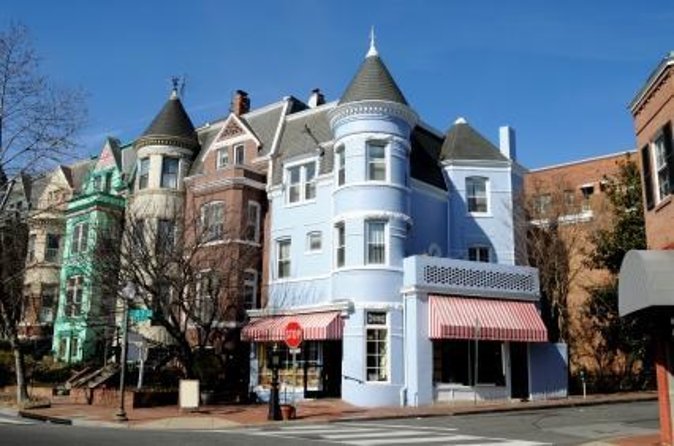
- Former intelligence officer storytelling with personal anecdotes from overseas and how intelligence work shaped decisions
- Ask-anything moments during the walk, not just a single Q&A at the end
- Hidden spy-site details you’re guided to spot while walking through Georgetown
- Hands-on spy concepts like reading a signal site and explaining a dead drop
- A small group vibe with a maximum of 25 people, which makes conversation easier
Georgetown Spy History Starts at Oak Hill Cemetery
The tour begins outside Oak Hill Cemetery at 3001 R St NW, Washington, DC. That matters more than you might think. Starting there gives you a clear geographic anchor before you move into the tighter Georgetown streets, and it sets the tone for how the guide frames the neighborhood: not as postcard DC, but as a place where people lived, met, watched, and communicated under pressure.
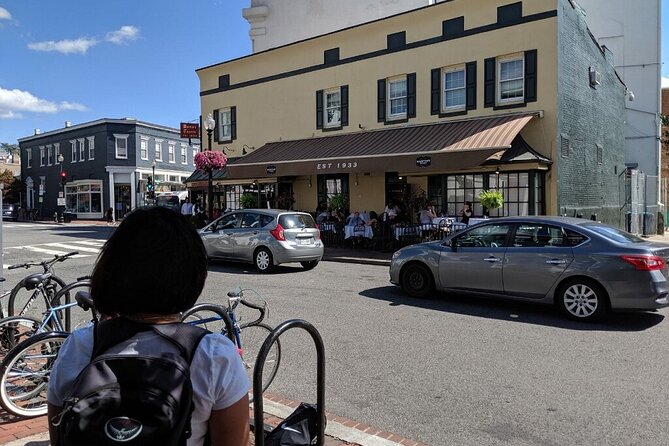
The start-to-finish route ends about 0.7 miles away outside Martin’s Tavern at 1264 Wisconsin Ave NW. You’re looking at roughly 1 hour 30 minutes total, so this isn’t a slow stroll. It’s paced like a field walk: enough time for explanations, but with momentum so you cover multiple “spy sites” along the way.
Bring walking shoes and water. That’s not just good advice for comfort; it keeps you focused. When your feet are fine, you’ll catch more of what the guide points out—those small visual cues that become important once you understand what they’re looking for.
You can also read our reviews of more historical tours in Washington DC


What a Former Intelligence Officer Adds (and Why It’s Not Just Trivia)

You’re not getting a general history talk. You’re touring with a former intelligence officer, which changes the flavor of the whole experience. The guide shares how the profession thinks, including the mindset that drives risk management and communication choices.
From the description, you’ll hear about how impersonal communication helps mitigate risk. That idea isn’t taught as a slogan. It’s connected to real spy history from WWII and the Cold War, with emphasis on how residents of Georgetown may have played roles in espionage-era life. In other words, the tour tries to make the “why” as important as the “what.”
This is also where the stories become more than trivia. The guide uses personal anecdotes from overseas and then helps you interpret the neighborhood through the lens of leaders, heroes, and traitors. You’re not asked to memorize dates. You’re asked to look at places and think about what communication would have meant in that setting.
If you love spy stories, covert operations, and international intrigue, this format fits your interest better than most DC tours. If you only want sightseeing facts, you might find the operational perspective a little unusual—but it’s exactly what makes it distinctive.
The Walking Tour That Helps You Spot the Stuff Most Guides Skip
A big part of the value here is that you’re walking. Georgetown is full of details that are easy to overlook when you’re on your phone or following a route without context. On this tour, the guide steers your attention to specific features and locations tied to WWII and Cold War spy history.
You’ll visit select spy sites across the neighborhood, not just one stop with a sign and a quick photo. The goal is to build a picture of how intelligence history can live in everyday street-level spaces—front facades, corners, and the geometry of moving through public areas.
I like this approach because it turns sightseeing into observation. You won’t just hear, you’ll look. And because the tour is interactive, you can ask questions as they come up, rather than saving everything for the end.
A practical note: because it’s a walking tour, you’ll want moderate physical fitness. The description doesn’t promise step-free routes or long pauses. If your plan includes lots of uneven sidewalk time in DC weather, this should still work, but be honest with yourself about walking comfort.
How Spycraft Lessons Actually Show Up on This Tour
This tour doesn’t treat spycraft as a movie plot. It uses real concepts from intelligence work and then tries to make them tangible while you’re outdoors.
Two specific ideas are highlighted in the tour flow:
- Reading a signal site
- Explaining and testing the theory of a dead drop
Even if you’re new to espionage history, these aren’t thrown at you as vague “spy stuff.” The intent is to help you understand how communication systems are designed to reduce risk. Impersonal communication is part of the same thread: if you can’t rely on direct contact, you need methods that don’t blow the cover.
This is also where Q&A shines. If something doesn’t click, you can ask the guide to clarify. And because you’re moving through the neighborhood rather than sitting in one location, those explanations can land in your mind faster. You’ll have a place to mentally attach the concept.
If you’re a true espionage-lover, you’ll probably enjoy how the tour makes the past feel structured and practical instead of purely dramatic. If you prefer only big historical events, you might find yourself focusing on smaller operational choices—still interesting, but a different angle than a standard museum history route.
A Likely Tour Feel: Casual, On-Time, and Built for Questions

The tone matters on a tour like this. You’ll be glad to know it’s not described as stiff or overly formal. It’s presented as fun and educational and interactive, which fits a smaller group setting capped at 25 travelers.
In real life, that group size helps. When you’re in a group that’s not too big, it’s easier to ask follow-ups and get answers that are relevant to your questions. That also means the guide can tailor explanations on the fly instead of repeating the same script for everyone.
One of the strongest signals in the feedback is that the tour is entertaining without losing substance. A former intelligence officer sharing real-life style anecdotes tends to do that. You may get a better sense of what intelligence work can feel like: how professionals interpret situations, handle ambiguity, and focus on communication safety.
Some tours give you a single “cool story.” This one tends to build momentum. Expect a start with a secret message theme, then a progression of examples and explanations as you go.





Logistics You Should Know: Time, Distance, and Mobile Tickets
Here’s how to plan your day around it.
- Duration: about 1 hour 30 minutes
- Walking distance: ends about 0.7 miles from where it starts
- Group size: maximum 25 travelers
- Language: English
- Ticket type: mobile ticket
Those details matter for decision-making. An hour and a half is short enough to fit between meals and other DC plans, but long enough for meaningful walking and explanation. The mobile ticket helps on the admin side, so you’re not stuck hunting through paperwork.
What about food? Snacks aren’t included. If you’re the type who gets shaky or distracted when you’re hungry, plan a snack before you go. Water is recommended, and you’ll be outside.
Also note the weather requirement. The experience says it requires good weather. If DC is doing DC—rain, wind, or cold snaps—have a flexible plan and dress accordingly.
Price and Value: $85 for a Small Group with a Real Operator Mindset
At $85 per person for roughly 1.5 hours, this tour isn’t cheap. But it’s not just paying for a walking route. You’re paying for a guide who brings intelligence-world perspective and can explain tradecraft concepts in plain language.
So where’s the value?
- You get a specialist, not a generic guide script. The former intelligence officer angle is the premium component.
- You get interaction time. The structure supports questions, and that’s a big deal in a short tour.
- You get a limited group size (up to 25). Smaller groups usually mean better back-and-forth and less time waiting your turn.
- You get on-the-ground context. Walking to actual sites adds a layer of understanding you can’t get from reading a brochure.
If your travel style is “show me the story behind the streets,” the price can feel fair. If you mainly want passive sightseeing with minimal walking, you may decide it’s better value to spend less on a general Georgetown tour and put the savings into a museum ticket or a great meal.
My practical advice: if you’re already interested in WWII and Cold War espionage, $85 becomes easier to justify because the tour is tightly aligned with that niche.
Who This Tour Fits Best (and Who Might Prefer Something Else)

This experience is ideal for you if:
- you like spy history, covert operations, and international intrigue
- you enjoy learning from someone who can explain the mindset behind the work
- you want Georgetown from a different angle than a standard neighborhood tour
- you’re happy walking outdoors for around 1.5 hours and asking questions
It may be less ideal if:
- you want mostly scenic photo stops with minimal explanation
- you get uncomfortable in cold or wet weather (since it requires good weather)
- you strongly prefer tours with lots of seating or long breaks
Because the tour is described with moderate physical fitness, it’s reasonable to expect sidewalks and steady movement. If you plan around medical needs or mobility limits, factor that in before booking.
Where It Lands You After: Ending Near Martin’s Tavern
The tour ends outside Martin’s Tavern. That’s a handy finish point. You’ll be near a place where you can warm up, get a drink, or grab food nearby without needing to immediately reposition across town.
If you want to turn the walk into a full evening, this endpoint makes it easy to plan a low-effort next step. If your group schedule is tight, it also helps you know where the tour deposits you.
Quick Booking Tip: Dress Like It’s Washington Outdoors
This tour will ask something small from you: attention while walking. You’ll get more out of it if you show up comfortable.
- wear walking shoes
- bring water
- dress for the day’s weather, because it’s weather dependent
That’s the simplest way to make sure the spy stories stick. Comfort helps your brain stay switched on.
Should You Book This Georgetown Spy History Tour?
If you’re a spy-history person, or even a curious beginner with a fondness for WWII and Cold War stories, I think it’s an easy yes. The tour’s biggest strength is that it blends practical intelligence concepts—like signal communication and dead drops—with a walk where you can actually see what you’re being taught.
If you hate cold weather walks or you want a low-interaction sightseeing style, you might feel the price and pace more than you’d like. But for anyone who wants Georgetown with a sharper edge—and time to ask questions—this is one of the more memorable options in DC.
FAQ
How long is the Georgetown Spy History Tour?
It runs about 1 hour 30 minutes.
Where does the tour start and end?
It starts outside Oak Hill Cemetery at 3001 R St NW, Washington, DC 20007, and ends about 0.7 mile away outside Martin’s Tavern at 1264 Wisconsin Ave NW, Washington, DC 20007.
What’s included in the price?
The tour includes a 1.5 hour walking tour of WWII spy sites and history in Georgetown.
Are snacks provided?
No, snacks are not included. Bringing water is recommended.
What language is the tour offered in?
The tour is offered in English.
How many people are in the group?
The tour has a maximum of 25 travelers.
Is there free cancellation, and how does weather affect it?
Yes, you can cancel for a full refund up to 24 hours in advance. The experience requires good weather, and if it’s canceled due to poor weather you’ll be offered a different date or a full refund.