REVIEW · WASHINGTON DC
African American History Tour with Museum of African American History Ticket
Book on Viator →Bookable on Viator
Few places in DC pack this many stories. This guided route threads African American history through national landmarks and neighborhood stops, ending at the National Museum of African American History and Culture. I love the small group feel (max 21), and I love that you finish with museum time instead of rushing off. One drawback to plan for: some stops involve walking and steps, including the Frederick Douglass site depending on the day.
Your day is built around big moments you can stand near—then zoom in on the people behind them. You’ll hear how African Americans shaped the U.S. capital’s story, from labor and landmark court decisions to major civil rights milestones. For the most part it’s a smooth pace, but you’ll want sensible shoes and a little stamina for short transfers and memorial stairs.
In This Review
- Key things I think you’ll appreciate
- How this half-day DC route stays personal (and not just a checklist)
- Meeting at the US Navy Memorial Plaza, then rolling with Kenny
- U.S. Capitol and White House: standing near power, and near the labor behind it
- Marian Anderson at Constitution Hall, then Lincoln Memorial’s civil rights stage
- Martin Luther King Jr. Memorial: read the wall before you take the photos
- Frederick Douglass: what you can see depends on the day
- LeDroit Park and Black Broadway: culture and integration in one neighborhood loop
- A quick stop for Civil War stories: the African American Civil War Memorial Museum
- Dunbar High School and the Howard Theatre: education and entertainment under pressure
- Passing Howard University and Carter G. Woodson House: names you’ll keep seeing
- Mary McLeod Bethune Council House: leadership with a physical address
- Finishing at the museum: keep going until 5:30
- Price and logistics: is $90 worth it for your day?
- Who should book (and who might skip)
- Should you book this African American History Tour?
- FAQ
- How long is the tour?
- Where does the tour start and end?
- What’s included with the Museum of African American History and Culture ticket?
- Is admission included for the White House?
- When is the Frederick Douglass house interior tour available?
- Does the tour involve walking or steps?
- What’s the cancellation policy?
Key things I think you’ll appreciate
- You start near the National Mall at the US Navy Memorial Plaza and end inside the museum area at 1400 Constitution Ave NW.
- Tour group stays small (up to 21), so your guide can answer questions without losing people.
- You get real landmark context at the U.S. Capitol, Lincoln Memorial, and the Martin Luther King Jr. Memorial.
- A day-of-week difference matters for Frederick Douglass: inside access on Tuesday, Wednesday, and Saturday only.
- Neighbored stories you don’t get on a typical bus loop, like LeDroit Park and the Howard Theatre.
- You’re done with the tour, not the museum, with tickets that let you stay until 5:30.
How this half-day DC route stays personal (and not just a checklist)
If you’ve ever done a big-city sightseeing tour and felt like you were just collecting statues, this one works differently. The format mixes landmark stops with neighborhood stops, and your guide ties them together with names, dates, and cause-and-effect. The result is that the city stops being a postcard and turns into a timeline you can walk through.
At $90 per person for about 3.5 hours, the value comes from two places. First, the guide does the heavy lifting: turning scattered facts into a story arc you can actually remember. Second, your ticket to the National Museum of African American History and Culture is included, and that museum time is the payoff for the day.
The “consider” is simple: you’re on your feet. Even though each stop is relatively short, you’ll walk, you may climb some stairs, and the Frederick Douglass house portion depends on the day.
You can also read our reviews of more tours and experiences in Washington DC.

Meeting at the US Navy Memorial Plaza, then rolling with Kenny
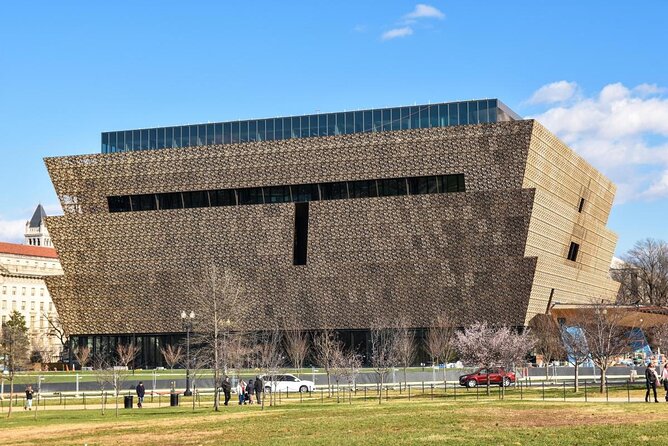
The tour starts at US Navy Memorial Plaza, 701 Pennsylvania Ave NW at 9:30 am, and it ends at the museum (1400 Constitution Ave NW). You’ll be in an air-conditioned vehicle with bottled water, which matters in Washington’s heat (and it can get sweaty fast).
Your guide—often identified as Kenny in guest feedback—sets the tone early. People describe him as funny and story-driven, and that combination is a real advantage on this subject matter. African American history has moments that can be heavy; a guide who explains clearly while keeping the pace human makes it easier to stay with the program.
Small-group tours also help with photo time. Stops are long enough to see details and take pictures, but short enough that you’re not stuck for ages at one location.
U.S. Capitol and White House: standing near power, and near the labor behind it
Two of the first “wow” moments are the U.S. Capitol and the White House. At the Capitol stop (about 20 minutes), you’ll stand where key moments like the Obama inauguration took place. More importantly, your guide connects the dots between the nation’s symbols and the people whose work and restrictions helped shape how those institutions functioned.
You’ll also hear how enslaved people helped build parts of the Capitol and the White House. That kind of framing changes how you look at the buildings immediately—less “tourist sight” and more “evidence of the past.”
The White House stop is about 15 minutes. Tickets for inside access aren’t part of this experience, and the tour notes that admission isn’t included for that portion. Still, you get the story context tied to African Americans’ role in the White House—from the early enslaved workers to President Barack Obama.
Practical tip: even if you’re mostly viewing from the outside, Washington crowds can be a factor. This schedule is short-stops-fast, so you’ll want to show up ready to move.
Marian Anderson at Constitution Hall, then Lincoln Memorial’s civil rights stage
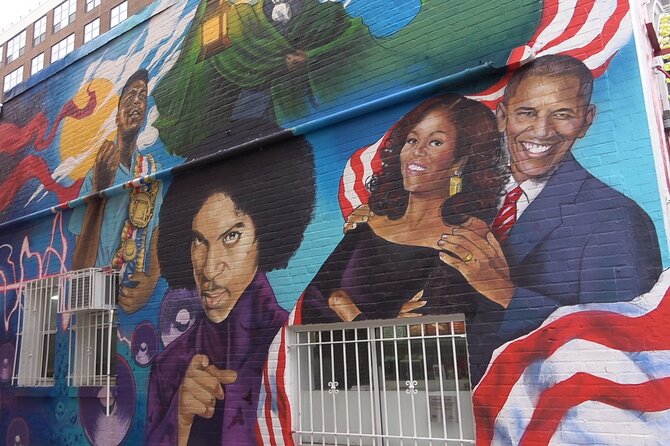
A standout historical story in this tour is the Marian Anderson concert incident tied to Constitution Hall. Your guide explains how the DAR (which owned the hall then) refused to allow Anderson to perform because of her race. The fallout became a national controversy, and First Lady Eleanor Roosevelt helped make a different event happen.
Then you land at the Lincoln Memorial stop (about 30 minutes). This is where the tour connects the dots between Anderson’s performance and later civil rights activism you can literally stand near. You’ll hear about major events at the memorial, including the March on Washington and the story of Anderson’s concert there, along with mention of Robert Moten’s dedication speech for the memorial opening.
What I like about using Lincoln this way is that it avoids the usual “Lincoln = a statue” approach. Instead, it highlights how the memorial served as a stage for African American leadership and national demands for justice.
Martin Luther King Jr. Memorial: read the wall before you take the photos
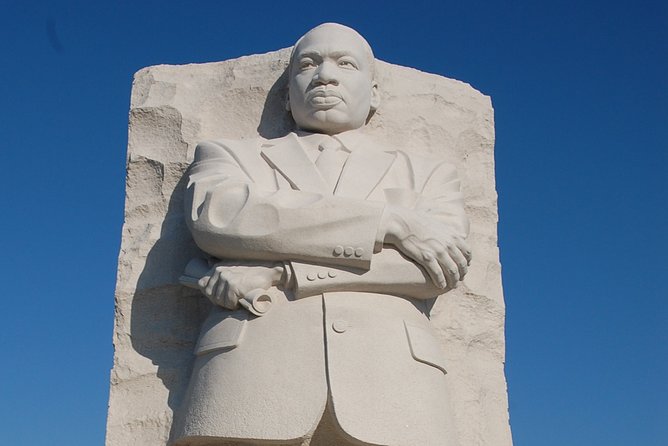
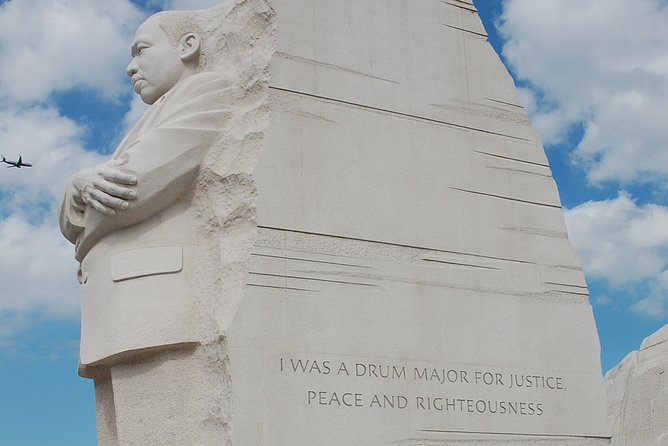
The Martin Luther King, Jr. Memorial stop is about 15 minutes, and it’s built for a kind of slow attention. Your guide points out key parts like the Inscription wall with 14 quotes, the Mountain of Despair, and the Stone of Hope.
If you rush through this memorial, you miss the point. It’s not just a monument you walk past—it’s an instruction manual for how civil rights work should feel: struggle, hope, and persistence all in one place. Even if you only have a short time here, your guide’s explanation helps you read it in the right order.
The tone shift at this stop is often one of the strongest moments of the day, and multiple guests call the King Memorial powerful.
You can also read our reviews of more historical tours in Washington DC




Frederick Douglass: what you can see depends on the day
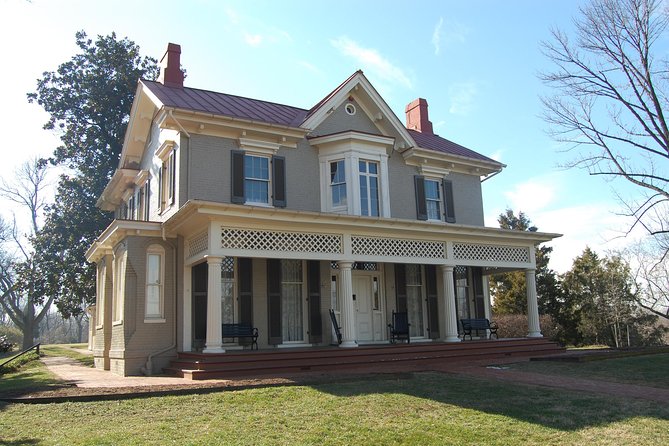
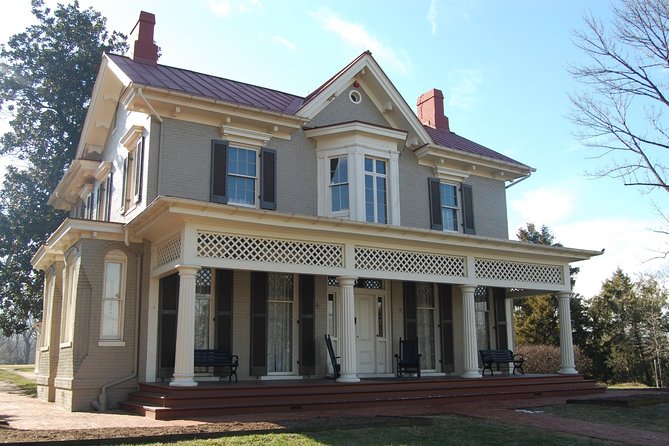
This is one of the most important stops on the schedule, and the details change by day. The tour includes Frederick Douglass National Historic Site with a walking tour inside the house on Tuesday, Wednesday, and Saturday. On other days, you’ll drive past the Douglass home and hear the history from the vehicle instead.
That day-of-week rule is not small—it affects how hands-on your experience feels. If you specifically want to tour inside, choose your travel dates around those days. There’s also an accessibility consideration: at least one guest feedback notes the walking and steps can be challenging on that portion.
If you do get inside access, expect a deeper look at Douglass’s home and the context around it—your guide will focus the story so you’re not just touring rooms, but understanding what those spaces meant.
LeDroit Park and Black Broadway: culture and integration in one neighborhood loop
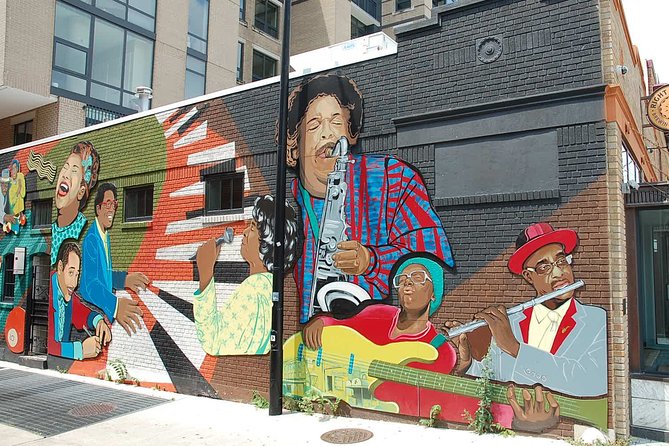
After the major national monuments, the tour turns toward the city’s lived culture. A stop focused on LeDroit Park explains how the neighborhood grew from housing originally planned for white professors of Howard University, then sold to both Black and white buyers—making it an early integrated neighborhood.
This part of the tour also highlights the neighborhood’s intellectual and cultural energy. Your guide brings up leaders such as Mary Church Terrell, tied to the National Association of Colored Women, and connects the area to Duke Ellington. You’ll also hear it described as part of what people called Black Broadway, with entertainment venues that helped keep performance culture going even under segregation.
This is where the tour starts feeling less like a museum and more like a map of community life.
A quick stop for Civil War stories: the African American Civil War Memorial Museum
Next up is the African American Civil War Memorial Museum area. The stop is short (about 10 minutes), but the content is focused. You’ll learn about 209,000 African American troops and sailors who fought during the Civil War.
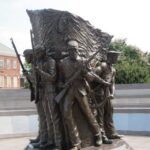
Your guide points out plaques with names of USCT troops across regiments, and you’ll also see the statue called Spirit of Freedom, made by Ed Hamilton. Even with limited time, this stop does something valuable: it makes it easy to connect Civil War service to later civil rights battles and ongoing recognition.
Dunbar High School and the Howard Theatre: education and entertainment under pressure
Two more story-rich landmarks round out the neighborhood work.
First is Dunbar High School, founded in 1870 as the first public high school for African Americans in the United States. Your guide shares that the school has a long record of academic excellence and connects it to notable figures, including Mary McLeod Bethune and poet Paul Laurence Dunbar.
Then you get the Howard Theatre, a major cultural venue. It opened in 1910 and was designed and operated by African Americans at a time when segregation limited opportunities everywhere. Your guide explains how it became a hub for performers and audiences during segregation, and it connects the theater to the development of African American music and comedy.
You’ll hear about performers associated with the Howard Theatre, including Duke Ellington, Billie Holiday, Ella Fitzgerald, and Marvin Gaye, plus its connection to the Chitlin’ Circuit.
If you want a quick reality check on how culture survived and thrived, this stop gives it to you without preaching.
Passing Howard University and Carter G. Woodson House: names you’ll keep seeing
The tour includes driving past Howard University, established in 1867, with 13 schools. Your guide also mentions well-known graduates tied to the university, including Thurgood Marshall, Elijah Cummings, Taraji Henson, and Toni Morrison.
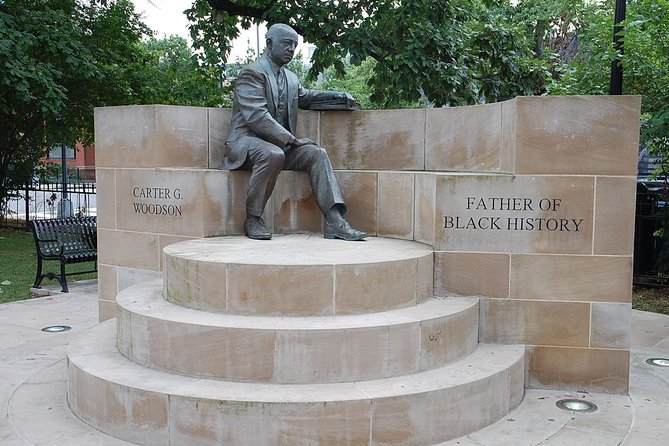
Then you’ll drive past the Carter G. Woodson House, described as the home of the Father of Black History. Woodson is credited with creating Black History Month, and this stop gives you a direct line between scholarship and public recognition.
For many visitors, these are the “pause and notice the name” moments. The tour trains you to see institutions not as labels, but as engines.
Mary McLeod Bethune Council House: leadership with a physical address
Mary McLeod Bethune Council House is a highlight for people who like leadership stories grounded in place. The tour notes that you’ll drive past the home and that a house tour is available Thursday through Saturday time permitting. The home was purchased by Bethune in 1943, and the design is described as Second French Empire.
This is the type of stop that can make the whole day feel more personal. Instead of only learning about famous events, you also get a sense of the everyday decisions and organizational work that helped change the future.
Finishing at the museum: keep going until 5:30
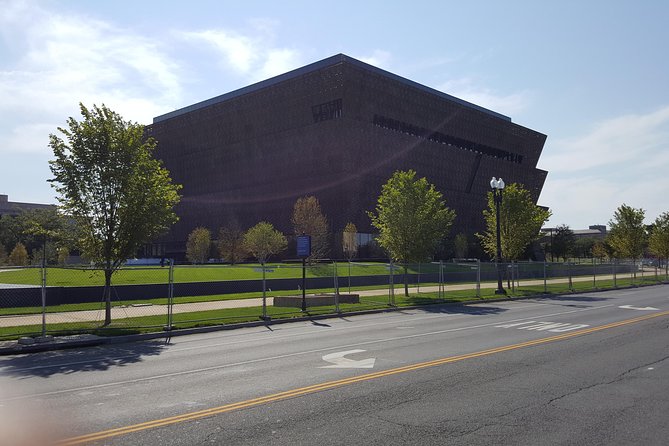
The tour ends at the National Museum of African American History and Culture, and this is where your included ticket turns the day from “good tour” into “whole experience.” After about 3 hours 30 minutes, you receive tickets that are for same-day entry, and you can stay until 5:30 pm when the museum closes.
Important detail: once you arrive at the museum, the guided part of the tour is over. You’re on your own to explore with your ticket. That structure matters. It lets you choose the pace that fits you—spend extra time on galleries that hit hard, or move quickly when you want to keep momentum.
One guest described a one-hour guided tour on C2 as a museum highlight, and that kind of guided start can help you know where to focus once you’re free-roaming.
Practical museum tip: this museum is big. If you come straight from the tour, you’ll likely feel ready to move. Make a simple plan on arrival: pick a must-see section first, then let the rest be a bonus.
Price and logistics: is $90 worth it for your day?
For many people, $90 sounds like a lot—until you factor in what you’re actually buying. You’re paying for:
- A guide who connects landmarks to stories you might otherwise miss
- An efficient half-day route across major sites plus neighborhood context
- Museum entry included, with time to stay until 5:30
- Comfort items like air-conditioning and bottled water
If you’re coming to Washington for only a short window, this is a strong way to get orientation fast. If you’re already museum-stacking and just want a quick photo lap, you might find it slightly more structured than you want.
The main “value match” is this: if you care about the people behind the monuments, this tour helps you see more in less time.
Who should book (and who might skip)
This tour is a great fit if you want:
- A guided DC introduction that connects monuments to African American leaders and events
- A small-group feel with room for questions
- A museum ticket on the same day, so you can keep the learning going
It may be less ideal if:
- You can’t handle walking and possible stairs (Frederick Douglass access can involve steps)
- You’re very sensitive to schedule changes based on day-of-week access at Douglass and the Bethune House tour availability
If you’re traveling with teens, families, or a group that likes stories with names, it tends to land well. The pacing is designed to keep moving without feeling rushed.
Should you book this African American History Tour?
Yes—if you want your Washington trip to feel connected, not random. The tour’s biggest strength is the way it links national landmarks (Capitol, Lincoln, King) with neighborhood power centers (LeDroit Park, Dunbar High School, Howard Theatre) and then sends you straight into the museum with time to keep exploring.
The only serious caution is the day-of-week effect at Frederick Douglass. If inside access matters to you, line up your dates for Tuesday, Wednesday, or Saturday. Bring comfortable shoes, and you’ll be set for a memorable, well-paced day.
FAQ
How long is the tour?
The tour runs for about 3 hours 30 minutes.
Where does the tour start and end?
It starts at US Navy Memorial Plaza, 701 Pennsylvania Ave NW, Washington, DC, and ends at the National Museum of African American History and Culture, 1400 Constitution Ave NW, Washington, DC.
What’s included with the Museum of African American History and Culture ticket?
The tour includes tickets to the National Museum of African American History and Culture for same-day entry. After the tour ends at the museum, you can stay until 5:30 when the museum closes.
Is admission included for the White House?
No. The White House admission is noted as not included.
When is the Frederick Douglass house interior tour available?
A walking tour inside the Frederick Douglass house is offered on Tuesday, Wednesday, and Saturday. On other days, the tour drives past the home and shares the history from there.
Does the tour involve walking or steps?
Yes. It includes walking and some steps. The Frederick Douglass stop can be more challenging due to the steps.
What’s the cancellation policy?
You can cancel up to 24 hours in advance for a full refund. If you cancel less than 24 hours before the experience starts, the amount paid is not refunded.