REVIEW · WASHINGTON DC
African-American Heritage Walking Tour of U Street in DC
Book on Viator →Operated by UTG Experience · Bookable on Viator
U Street at dusk hits different—especially on this guided walk. I love how the route strings together Black Broadway nightlife, landmark memorials, and major performance venues in one tight loop, and I also love the personal way the guide connects what you see on the street to what happened here in the past. The one thing to keep in mind: a few recent travelers reported last-minute cancellations or a missing guide, so build in a little day-of flexibility and follow the day’s communication closely.
This is a 2-hour evening experience with a licensed guide, capped at 20 people, so it stays manageable and discussion-friendly. You’ll use a mobile ticket, walk at a moderate pace, and see how the U Street corridor connects to jazz, civil rights-era change, and the long fight to create spaces for Black artists and soldiers.
In This Review
- Key things to know before you go
- U Street after 5pm: Black Broadway on foot
- Ben’s Chili Bowl mural: why this artwork keeps changing
- African American Civil War Memorial Museum: USCT stories you can read
- Howard Theatre: a historic Black stage from 1910 onward
- Price, pace, and value in a 2-hour evening walk
- What to expect from the guides (and why names show up)
- Day-of considerations: cancellations and meeting-point issues
- Who this tour is for
- Should you book this African-American Heritage Walking Tour of U Street?
- FAQ
- Where does the tour start?
- What time does it begin?
- How long is the tour?
- What does it cost?
- Is the tour in English?
- Are museum or attraction admissions included?
- How big is the group?
- What if the weather is bad?
Key things to know before you go
- U Street at night: You’re walking the neighborhood that earned the nickname Black Broadway.
- Memorial + museum stop: The African American Civil War Memorial Museum focuses on U.S. Colored Troops and the Wall of Honor.
- Ben’s Chili Bowl mural changes: Public art shifts over time, and the stop explains why.
- Howard Theatre as a stage-maker: A historic Black theatre founded in 1910, tied to the Shaw/Howard area.
- Small-group feel: Maximum of 20 travelers makes it easier to ask questions as you walk.
U Street after 5pm: Black Broadway on foot
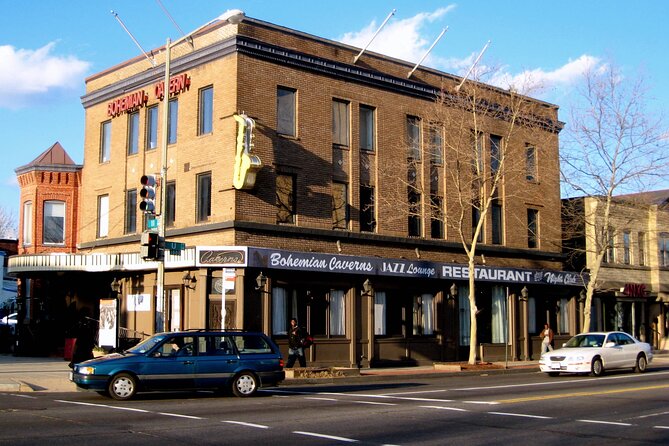
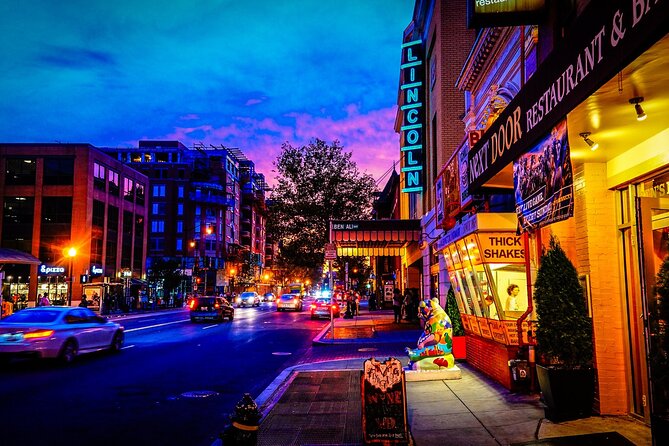
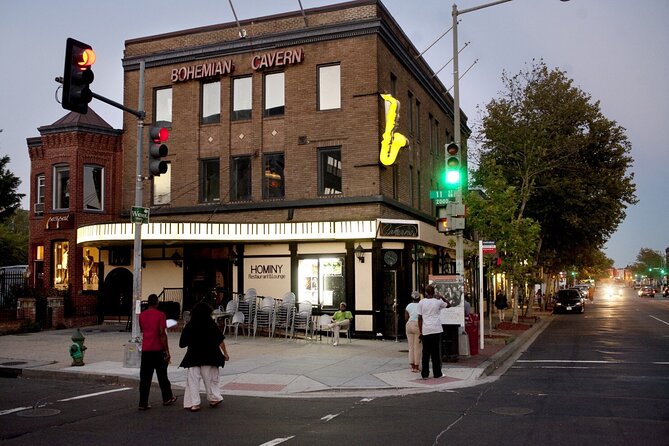
Starting at 5:00 pm at 1250 U St NW, you begin on the U Street corridor when the neighborhood energy is rising. This is a walking tour for people who want more than surface photos. You’ll learn how U Street became a cultural hotspot—often described through jazz and performance culture—and how the streets themselves hold the memory of theaters, clubs, and celebrity visitors.
Stop 1 is your foundation. It’s where you get the big picture: this was not just entertainment. It was community-building, too. The tour frames U Street as a place where major performers passed through and where venues helped define what American music could sound like. Names tied to this legacy include Duke Ellington, Cab Calloway, Pearl Bailey, Sarah Vaughn, and Jelly Roll Morton—so as you look around, you’re not just seeing storefronts. You’re seeing the stage settings that helped launch an entire era.
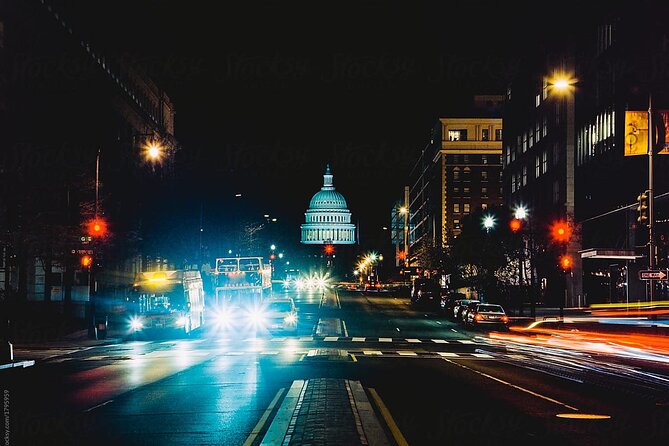
One practical note: this start time matters. Night tours change how you experience neighborhoods. Street lighting, foot traffic, and the mood of U Street at evening all help you understand why nightlife-based history feels so immediate here.
You can also read our reviews of more walking tours in Washington DC

Ben’s Chili Bowl mural: why this artwork keeps changing
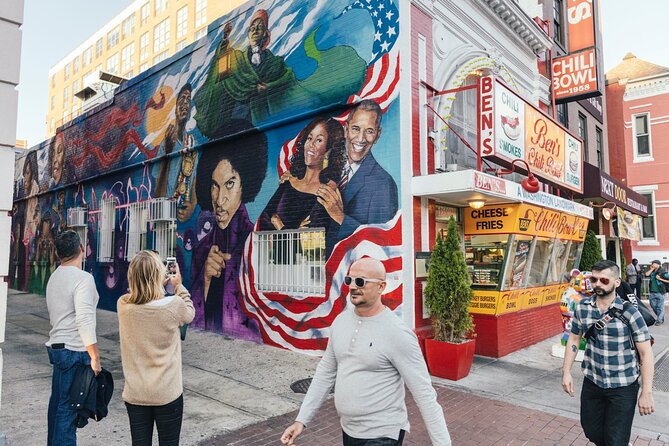
About a half-hour into the walk, you’ll stop at the Ben’s Chili Bowl mural. Even if chili fries are your main interest, this stop is about something more interesting: the wall functions like a public history board—one that can shift as the world’s understanding changes.
The tour explains that the mural has been revised multiple times since it appeared in 2012. It previously included a large smiling Bill Cosby, Barack Obama, Donnie Simpson, and Chuck Brown. Later, a portion was removed after allegations against Cosby came to light. In 2017, the mural was temporarily adjusted to fit the Washington Wizards during the NBA playoffs. Then local artist Aniekan Udofia painted the mural that stands there today.
What I like about including this stop is that it teaches you how history isn’t always static. Public memory changes because public information changes. You’ll leave with a better sense of how D.C. grapples with honoring people while also responding to controversy and new context.
African American Civil War Memorial Museum: USCT stories you can read
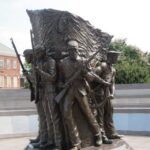
Next comes the most solemn part of the tour: the African American Civil War Memorial Museum. This is described as the first memorial dedicated solely to Black troops who fought for the Union—so you’re not just learning dates. You’re focusing on who fought, what they endured, and how their service helped shift policy.
Here’s the heart of the story you’ll hear: early in the Civil War, when the rebel states refused to rejoin the Union, Abraham Lincoln issued the Emancipation Proclamation and created regiments in the Union Army and Navy filled with Black soldiers. Those units faced viciousness from the opposing army and discrimination from within their own ranks.
The tour also points you toward scale. More than 200,000 Black Americans filled the 175 regiments of the United States Colored Troops (USCT), which represented about one-tenth of the Union’s forces. Eventually, 180,000 Black soldiers served, including 98,500 formerly enslaved men. Names are inscribed on the Wall of Honor—and that detail matters. Instead of staying abstract, the story puts identity back into history.
What to consider: this stop can feel heavy, even if you’ve heard Civil War basics before. Plan for a more reflective pace here. If you’re the type who needs a mental reset, bring that into your timing and don’t rush your own reaction.
Howard Theatre: a historic Black stage from 1910 onward
The final stop is the Howard Theatre, a famous music and arts hub tied to decades of performance culture. The tour frames it as the first Black theater in America, founded in 1910 in the Shaw neighborhood around Howard University.
The origin story is simple and powerful. The Howard Theatre was created because Black men and women weren’t allowed into other venues in the city at the time. So the theatre wasn’t just entertainment—it was access. It was a way of carving out space in a system that had shut doors.
You’ll also learn that the theatre attracted a wide range of Black musicians over time, from Louis Armstrong to Kendrick Lamar. Before it became nationally recognized, it was known locally for amateur open-mic style events and band contests. The tour connects these details to a broader idea: when mainstream doors close, local stages often become the first launchpads.
In one helpful extra detail drawn from real-world experiences, some visitors mention getting time around the Howard University area while on the same walk. Since this can vary by route flow and how the guide handles timing, treat it as a possible bonus, not a guaranteed add-on.
Price, pace, and value in a 2-hour evening walk
At $90 per person for about 2 hours, this tour sits in the mid-to-upper range for walking history tours. Here’s how I’d judge the value.
You’re paying for three things that tend to matter on tours like this:
- Licensed guide time (and time on foot is work, not just talking in one spot).
- Multiple major stops packed into a short window: U Street streetscape, Ben’s Chili Bowl mural, the Civil War memorial museum, and the Howard Theatre.
- Free admissions at the stops listed as admission ticket free.
If you normally pay separate admission fees in D.C., the included stops can make the math feel more fair. But the bigger value is the way the tour stitches together different kinds of meaning: music culture, memorialization, and the physical places where community life happened.
Pace-wise, the route calls for moderate physical fitness. Evening is when legs start to feel it. Still, because it’s a two-hour walk with short stop durations, it’s not a marathon. If you prefer lots of sitting, this may feel like a fast rhythm. If you like walking plus frequent explanation, it’s a good fit.
You can also read our reviews of more historical tours in Washington DC





What to expect from the guides (and why names show up)
A repeated theme from recent experiences is that the guide experience can shape how much you get from the walk. Guides including Amanda, Darren, and Nur Ali show up in high-rating comments for being passionate and engaging, with strong connections between neighborhood details and wider history.
When guides are good on this kind of tour, you get more than facts. You get direction. You learn what to notice as you look at buildings and street corners, and you get practical pointers on how to keep exploring after the tour ends.
Since this tour is capped at 20 travelers, it also tends to support Q&A rather than a lecture-only vibe. That matters if you’re curious about how U Street changed over time or why the Civil War story is centered specifically on the USCT experience.
Day-of considerations: cancellations and meeting-point issues
This tour has an overall rating of 3.8 from 20 reviews, and a few of the low scores come from problems you should take seriously. There are reports of:
- the tour being canceled a few hours before start
- a guide not showing up at the meeting point
- the tour running shorter than advertised
And there are also responses from the provider indicating that guides were present in at least one disputed case, plus situations where booking numbers weren’t found in their system.
So here’s my practical advice: treat the day like a live plan, not a set-and-forget appointment. Arrive a bit early, keep your mobile ticket ready, and follow the contact instructions you receive at booking. If something feels off, act quickly rather than waiting.
Also, the experience requires good weather. Since this is a walking tour, bad conditions can affect when and how it runs.
Who this tour is for
This is a great match for you if:
- you want African-American history in place, not just in a book
- you enjoy walking tours that include culture and memorials, not only one theme
- you like evening neighborhood atmospheres and street-level storytelling
- you’re the type who asks questions while you walk
It may be less ideal if:
- you need a perfectly timed, unchanging schedule
- you can’t handle the possibility of weather-related changes
- you prefer museums where you can mostly sit (this is still a walk-first experience)
Should you book this African-American Heritage Walking Tour of U Street?
If your goal is to understand U Street beyond the postcard version, I think this tour is worth your time. The combination of Black Broadway context, the Ben’s Chili Bowl mural as a lesson in public memory, and the focused Civil War memorial museum stop gives you variety without losing the thread of community history. Add the Howard Theatre ending, and you get a strong arc from cultural life to civic memory to performance spaces.
Just go in with open eyes. The tour is best approached as an evening walking experience you’ll enjoy if it runs smoothly, and it’s smart to plan lightly so a weather shift or last-minute change doesn’t ruin your whole day.
If you’re flexible, curious, and ready to walk and talk, book it. If you’re traveling on a tight schedule where one disruption would hurt, consider building a backup plan for that evening.
FAQ
Where does the tour start?
It starts at 1250 U St NW, Washington, DC 20009, USA, and it ends back at the meeting point.
What time does it begin?
The tour starts at 5:00 pm.
How long is the tour?
The duration is about 2 hours.
What does it cost?
The price is $90.00 per person.
Is the tour in English?
Yes, it’s offered in English.
Are museum or attraction admissions included?
Each stop listed shows Admission Ticket Free, so you don’t need to pay separate admissions for the stops mentioned.
How big is the group?
The tour has a maximum of 20 travelers.
What if the weather is bad?
The experience requires good weather. If it’s canceled due to poor weather, you’ll be offered a different date or a full refund.
If you want, tell me your travel dates and what you care most about (music, memorials, or neighborhood history), and I’ll help you decide if the 5pm timing makes sense for your day plan.