REVIEW · ROME
Vespa Tour – Explore Ancient Rome
Book on GetYourGuide →Operated by Roman Vespa · Bookable on GetYourGuide
If Rome had a shortcut, this is it. This Vespa tour for passengers strings together the classics and the postcard views in about 90 minutes, with a dedicated photography session along the way so you don’t just look—you actually take home proof. I love how the route mixes headline sights (Colosseum, Piazza Navona) with viewpoint stops that feel less common, and I really like the small group feel that helps the guides keep things moving without rushing your photos. One drawback to plan around: you’re a passenger, not the driver, so you’ll be sitting back for the ride while the team handles the navigating.
The vibe is fun and practical. You follow the Vespa drivers through tight, lively streets, then get short guided moments at stops where you’ll get the story and the angles. In the best way, it’s a Rome sampler: you see a lot, learn enough, and finish in a central spot ready to keep exploring.
Based on recent experiences with guides like Sam and Emilio, the tone tends to be friendly, respectful, and safety-first. You’ll still want to show up ready to ride—this is not a long walking tour.
In This Review
- Key things I’d pay attention to
- Why this works so well as a first or second Rome loop
- Starting at Via Cavour: your launch point near the Colosseum
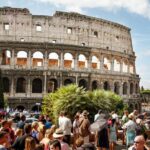
- Colosseum in a quick guided hit (10 minutes)
- Riding past Palatine Hill and Circus Maximus: seeing Rome from the road
- Giardino degli Aranci and the Terrazza Aventino viewpoint (20 minutes)
- Trastevere time: a guided pause through a lively neighborhood (15 minutes)
- Fontana dell’Acqua Paola: the calmer stop that still hits
- Janiculum Hill: Rome and the Vatican in one high-level view (15 minutes)
- Passing Castel Sant’Angelo and finishing at Piazza Navona
- Photography: how the dedicated session fits the 90-minute pace
- Price and value: what $53 gets you in real terms
- Guides and group size: why small can feel safer
- Who should book this Vespa tour, and who should skip it
- Should you book this Vespa tour of Ancient Rome?
- FAQ
- How long is the Vespa tour through Ancient Rome?
- Where does the tour start and where does it end?
- Is this tour for passengers only?
- What languages are the live guides available in?
- What should I bring?
- Who is the tour not suitable for?
Key things I’d pay attention to
- Passenger-only setup: You sit on the Vespa while drivers handle the route.
- Small group (up to 10): Easier pacing and more attention from the guides.
- Photo time at major viewpoints: You get moments to capture pictures, not just pass by.
- Big views from Giardino degli Aranci and Janiculum Hill: Wide panoramas across the city and toward the Vatican.
- Iconic-to-local route design: Colosseum and Arc vibes, plus Trastevere and a quieter fountain stop.
- Guides with a safety mindset: In recent tours, guides like Sam and Emilio were described as warm, fun, and careful on the road.
Why this works so well as a first or second Rome loop
I like tours that save your legs and protect your time. In Rome, that’s not a small thing. The city is beautiful, but it can be slow on foot when you’re crossing between neighborhoods and landmarks.
This experience is built for movement. In 1.5 hours, you get a Vespa circuit that hits several major areas you’d normally need half a day (or more) to string together by bus, taxi, or walking. And because you’re traveling on Vespa, you spend more time looking at the city and less time stuck in transit.
You also get the “story + view” format right. Some rides focus on sights only. Here, you get short guided time at key moments, plus time to take pictures. That mix matters if you care about both meaning and memories.
You can also read our reviews of more tours and experiences in Rome.
Starting at Via Cavour: your launch point near the Colosseum
The tour starts at Via Cavour, 207, close to the Colosseum area. That’s a smart location if you want to avoid long pre-tour transfers. It also sets the tone: you’re right in the ancient center early, so the route feels grounded rather than like you’re being bused out to something far away.
Plan to arrive a bit early so everyone can regroup, check water, and get organized. This is one of those tours where being ready means the whole group rides smoother.
If you’re the type who likes to figure out where you are in Rome, you’ll also appreciate the orientation from day one. You finish with the city center still within reach, which helps you continue on without getting stuck in logistics.
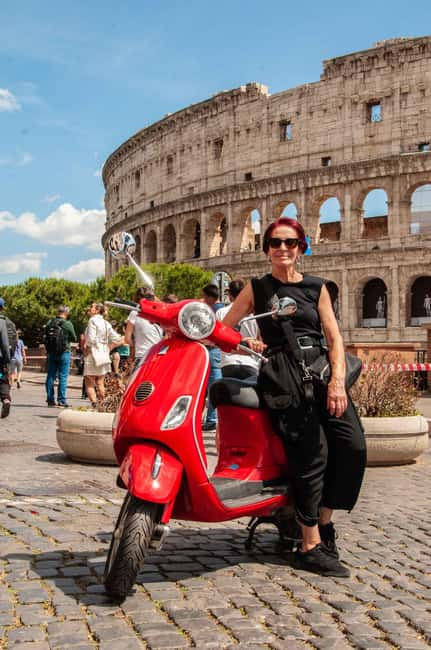
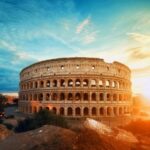
Colosseum in a quick guided hit (10 minutes)
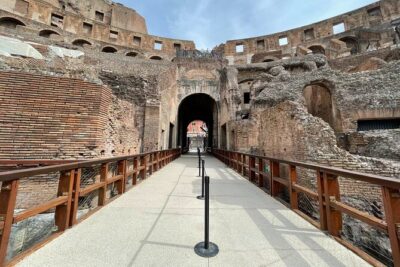
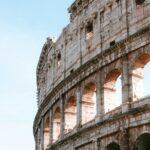
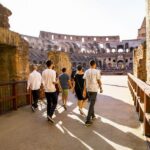
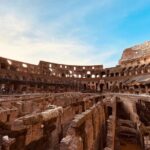
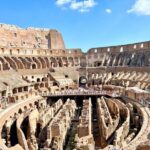
Your first big stop is the Colosseum, with a guided tour for about 10 minutes. Ten minutes is short, yes. But for a Vespa format, it’s also realistic. You’ll get a focused introduction and enough context to look at the structure like more than a photo backdrop.
Here’s the payoff: you’re not spending your whole time standing in one spot. You’ll see the Colosseum, get guided orientation, then roll on to the surrounding layers of ancient Rome—exactly how the city works best when you’re moving.
Tradeoff to note: if you want a deep, slow, history-class experience, 10 minutes may feel brief. This tour is built for momentum and views, not long lectures.
Riding past Palatine Hill and Circus Maximus: seeing Rome from the road
After the Colosseum, you pass by Palatine Hill (about 5 minutes) and Circus Maximus (about 5 minutes). These aren’t set up as long stops. They’re there to give you the larger ancient map.
Why I like this approach: it helps you connect the dots. From a Vespa, you can quickly understand how these ancient sites sit next to each other in the wider city structure. Then, later when you wander, you’ll have a stronger sense of where everything fits.
You’ll also pass by the kind of route landmarks that make Rome feel like Rome. The road becomes part of the story.
Giardino degli Aranci and the Terrazza Aventino viewpoint (20 minutes)
Next you hit Giardino degli Aranci (Orange Garden) for a guided visit of about 20 minutes. This stop is popular for a reason: it’s tied to the Terrazza Aventino, one of the best panoramic vantage points in the area.
You’re not just collecting a view here. You’re getting a perspective on the city that’s hard to recreate from street level. From this higher point, you can see Rome spread out, and the route is designed so your photo time lines up with the scenery.
This is also where the “greatest hits + authenticity” blend shows up. Orange Garden can feel romantic, but it still reads as local Rome because it’s a real public space—not a theme-park viewpoint.
Tip for the photo mindset: treat this as your main photo stop. If you rush it, you’ll feel it later when you realize your best images came from everywhere else except the moment where you had the angle.
Trastevere time: a guided pause through a lively neighborhood (15 minutes)
On the way toward the next points, you pass by Trastevere, then your itinerary includes a guided stop of about 15 minutes there.
Trastevere is the kind of neighborhood that rewards a short, guided orientation. You’re likely to notice street textures, building colors, and the general “how people actually live here” energy in a way you miss if you only see Rome from major squares.
Fifteen minutes also means you’re not stuck waiting on a long walk-through. You get enough time to absorb the vibe, grab a few photos, and then keep moving while the route stays smooth.
Possible consideration: if you want a full neighborhood explore with lots of time for coffee and wandering, this isn’t that format. It’s a taste—and a good one—but you’ll still want a separate slot later for a deeper Trastevere loop.
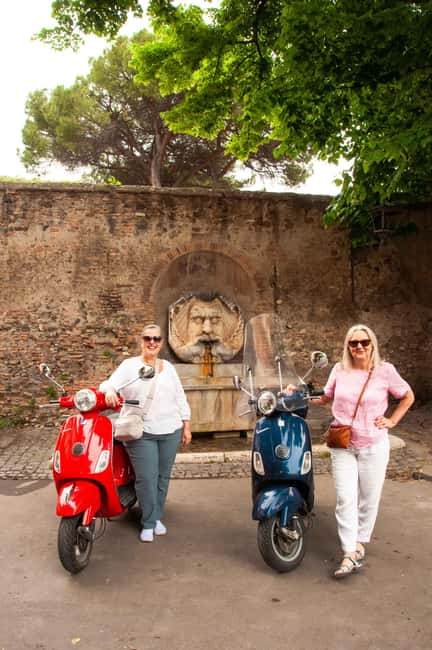
Fontana dell’Acqua Paola: the calmer stop that still hits
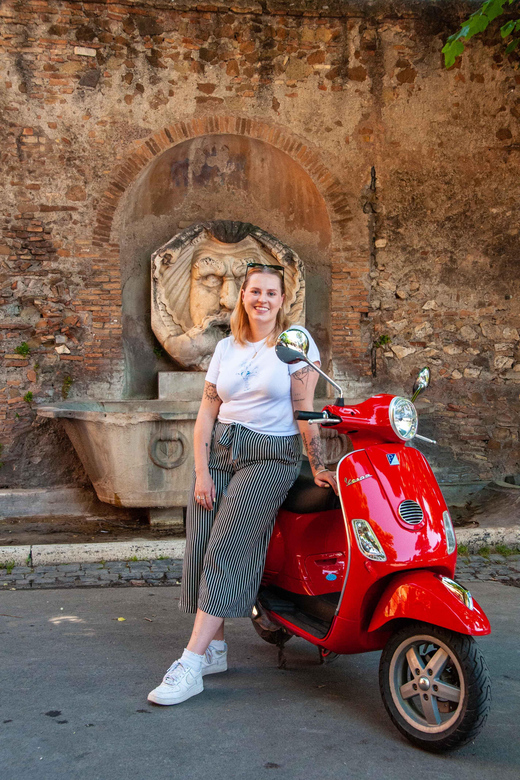
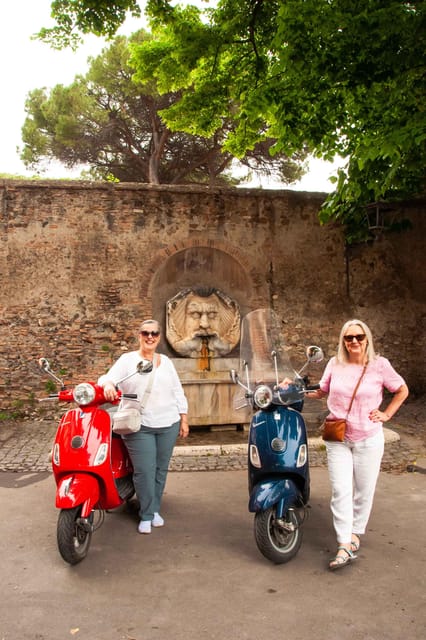
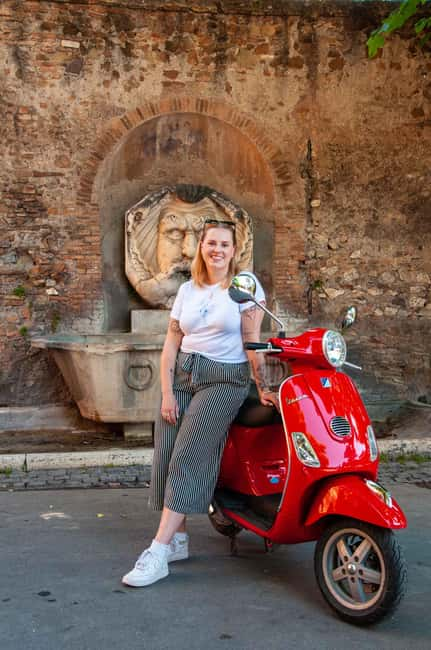
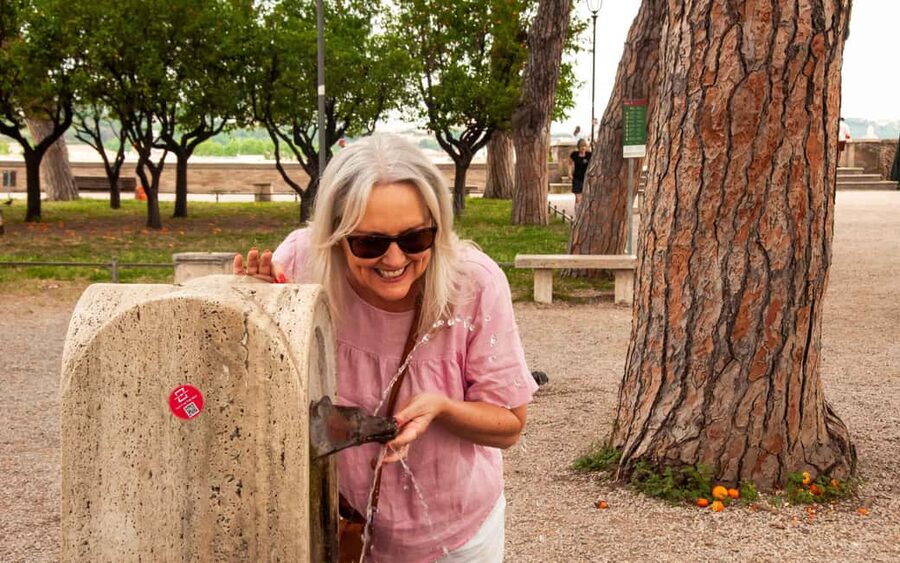
Your next scheduled stop is Fontana dell’Acqua Paola, with a visit of about 10 minutes. This is the kind of stop I appreciate on tours like this: it breaks up the heaviness of ancient monuments with something that feels more street-level and human.
Even if you’re not the type who knows fountain details, it’s a good moment to slow down for a short look, adjust your photos, and reset. You’ll also benefit from having it placed between major viewpoints. That sequencing helps the whole ride feel balanced rather than like a checklist.
Best use of the time: step back, look at the surroundings, then take your close-up. It’s quick, but you’ll get two different kinds of images.
Janiculum Hill: Rome and the Vatican in one high-level view (15 minutes)
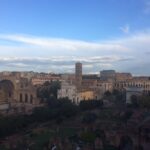
Then comes the highest point of Rome, Janiculum Hill, with a visit of about 15 minutes. The payoff here is clearly stated in what you’ll be able to see: the terrace views toward the Vatican and the city.
This is where I’d call the tour’s emotional climax. You’ve been moving through famous spaces. Now you get a full-picture perspective that makes the whole route feel connected.
Because you’re on a Vespa, you avoid the biggest barrier for many visitors: the effort of getting up there. You still get the view. That balance is why this stop fits the format so well.
If you care about photos, this is your second big one after Giardino degli Aranci. Try to time your shots with the light you see at the moment—don’t wait for a perfect fantasy; you’ll miss the real one.
Passing Castel Sant’Angelo and finishing at Piazza Navona
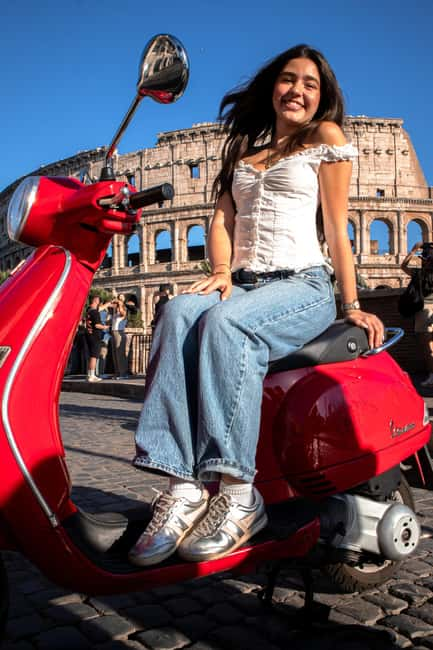
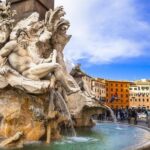
Near the end, you pass by Castel Sant’Angelo (about 5 minutes), then the tour finishes at Piazza Navona.
That pass-by matters because Castel Sant’Angelo helps set you up for the finish. It’s a strong visual anchor and it keeps the tour from feeling like it abruptly ends. You’re still in the center of things, with Piazza Navona waiting at the end—easy to continue exploring on foot.
If you like “start with drama, end with atmosphere,” this ending works. Piazza Navona is a classic place to linger after a ride, because you can switch from photo mode to street-sitting mode without any big transition.
Photography: how the dedicated session fits the 90-minute pace
The tour is designed with a dedicated photography session in mind. Translation: this is not just you holding your phone while the group moves on.
From the way guides have been described, the pacing tends to include time for pictures and viewpoints where you can actually get decent angles. That matters because Rome traffic and narrow streets don’t leave you much room to stop whenever you want.
Here’s what I’d do if you want great results: treat the scenic stops as your main photo targets, then use quick shots during pass-by moments. If you try to photograph constantly, you’ll miss both the ride experience and the better staged viewpoints.
Price and value: what $53 gets you in real terms
At $53 per person for about 1.5 hours, this isn’t a bargain that feels cheap. It’s more like a smart use of time. You’re paying for:
- Vespa transportation through central Rome
- Live guiding in multiple languages (English, Italian, Russian, Turkish)
- Short guided introductions at key sights rather than just driving past
- A structured route with viewpoint stops built in
- A dedicated photography moment so you’re not stuck improvising
If you’ve ever tried to cover Colosseum area, viewpoints like Aventine, a Trastevere stop, and Janiculum in one short timeframe, you know the logistics cost adds up fast. This tour packages that into one smooth block.
Is it perfect value for everyone? No. If you want long, slow museum-grade experiences, you’ll feel the short stops. But for an efficient “see and understand” Rome circuit, it’s a strong deal.
Guides and group size: why small can feel safer
This is a small group capped at 10 participants. In practice, that usually means less waiting, less wandering, and a ride experience that stays under control.
The guide experience seems to matter a lot here. Recent names you might hear include Sam and Emilio, and the common theme is that they were described as kind, fun, respectful, and focused on making sure everyone was okay on the road. That safety-and-comfort emphasis matters more than people expect when you’re moving through crowded streets at Vespa speed.
Also, don’t ignore the language coverage. Having English, Italian, Russian, and Turkish options makes the tour feel more inclusive, especially if you want explanations rather than just silent sightseeing.
Who should book this Vespa tour, and who should skip it
This is best for you if you want:
- A passenger-focused Vespa ride through Rome
- A short route that still covers major neighborhoods and viewpoints
- A guided experience with time for photos
- A small-group atmosphere
It’s not a great match if:
- You want to spend hours walking and soaking up details at a single monument
- You can’t do a riding-style experience (this is not a stroller-friendly setup, and it’s not built for bikes)
- You’re outside the stated age boundaries
The tour is not suitable for children under 10, babies under 1, or people over 95. It also doesn’t allow baby strollers and baby carriages. If you’re traveling with a stroller, that’s a big planning constraint. Bring water, too; it’s a practical requirement and a smart habit in Rome.
Should you book this Vespa tour of Ancient Rome?
I’d book it if you’re trying to balance three things: iconic sights, real Roman neighborhoods, and time-efficient movement. The route is built for that sweet spot—Colosseum, panoramic stops like Terrazza Aventino and Janiculum Hill, a Trastevere moment, then an easy landing at Piazza Navona.
Skip it if you’re hunting for a slow, in-depth history seminar or a long wandering day. This is more about seeing Rome from the best angles with the least friction.
If you want a memorable, photo-friendly circuit that feels genuinely Rome-y—this tour is a strong choice.
FAQ
How long is the Vespa tour through Ancient Rome?
The tour lasts about 1.5 hours.
Where does the tour start and where does it end?
It starts at Via Cavour, 207 and ends at Piazza Navona.
Is this tour for passengers only?
Yes. This is experience only for passengers. You follow the drivers as they take you around.
What languages are the live guides available in?
Live tour guides are available in English, Italian, Russian, and Turkish.
What should I bring?
Bring water.
Who is the tour not suitable for?
It’s not suitable for children under 10, babies under 1, and people over 95.