REVIEW · ROME
Palazzo Valentini Ancient Domus Underground Multimedia Experience
Book on Viator →Operated by TOURISTATION · Bookable on Viator
Roman rooms get their color back here. Under Palazzo Valentini in central Rome, you explore ancient imperial Roman home remains and see them reconstructed with multimedia—lights, graphics, videos, and an audio guide.
I love how the story connects the underground ruins to Rome’s big public symbols, especially Trajan’s Column. I also like that the narration includes Piero Angela, which adds real pace and clarity to what you’re looking at.
One possible drawback: this is more audio-and-screen than a traditional live guide walk-through. If you want lots of face-to-face explanation and questions, plan on a more self-directed experience in a mostly underground space.
In This Review
- Key highlights to know before you go
- Palazzo Valentini Underground: what you’ll actually see
- Trajan’s Column, bas-reliefs, and the multimedia story you can follow
- The 1 hour 30 minute flow: from virtual domus to the included media
- The audio guide app: why it’s worth using after the ticket ends
- Language, pacing, and where it fits in a Rome plan
- Price and value: is $35.50 a fair deal?
- Should you book Palazzo Valentini’s multimedia experience?
- FAQ
- Where is the Palazzo Valentini Ancient Domus Underground Multimedia Experience located?
- How much does the ticket cost?
- How long does the experience last?
- Is the experience offered in English?
- What is included with the ticket?
- Is a guided tour included?
- Is hotel pickup or drop-off included?
- Is it near public transportation?
- Will I receive confirmation after booking?
- Can I get a refund if I cancel?
- Is it suitable for most people?
Key highlights to know before you go
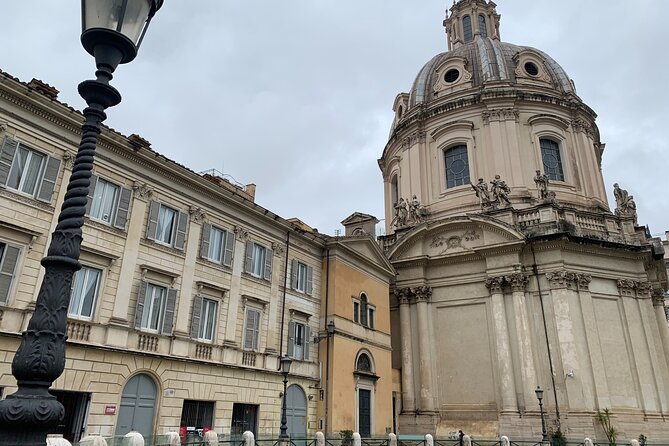
- Underground imperial domus remains under Palazzo Valentini, shown in context
- Trajan’s Column reconstruction focused on the bas-reliefs and Dacia campaign
- Piero Angela narration that helps you follow the visuals without guessing
- 25-minute Ancient Rome video included as part of the experience
- Downloadable audio guide app to extend your Rome sightseeing beyond this stop
Palazzo Valentini Underground: what you’ll actually see
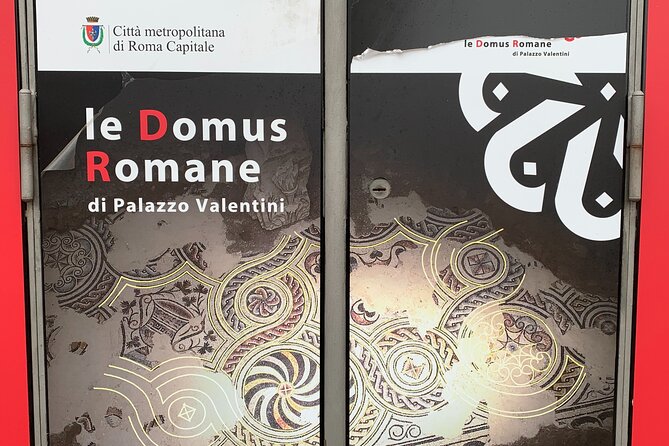
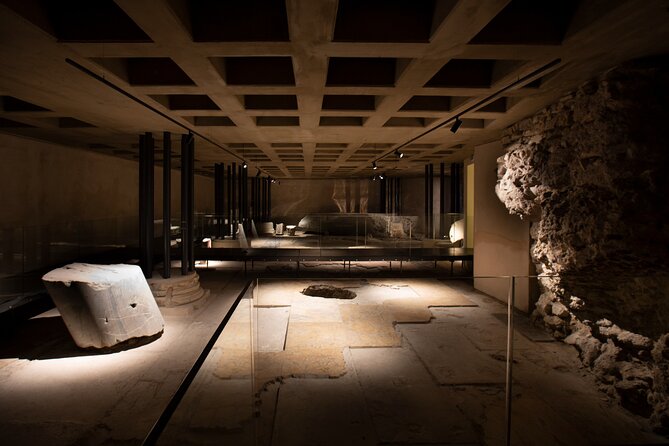
This is one of those Rome experiences where the setting matters almost as much as the subject. The whole point is that you’re looking at Roman home remains below Palazzo Valentini, and the multimedia layers help you understand what those spaces likely felt like when they were whole, not just when they’re broken and buried.
The experience is built around virtual reconstructions. That means the audio, lights, and on-screen graphics don’t just play in the background. They point your attention to specific parts of the site so you can connect the physical remains you see in front of you with the rooms and architectural features that used to exist above ground.
The best part is that you get to see Roman daily life and elite domestic design in a way that’s easier than trying to decode ruins alone. Plain stone, fragments, and traces can look like nothing. Here, they become readable, and the time jump feels less like a guess and more like a guided story.
Practical note: it’s a 1 hour 30 minutes experience and it’s designed for most travelers. You don’t need special expertise in Roman architecture to enjoy it. You just need a willingness to look carefully and let the media do its job.
You can also read our reviews of more tours and experiences in Rome.


Trajan’s Column, bas-reliefs, and the multimedia story you can follow
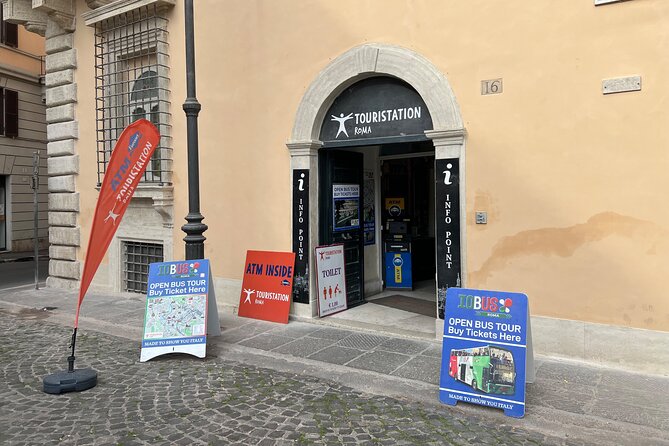
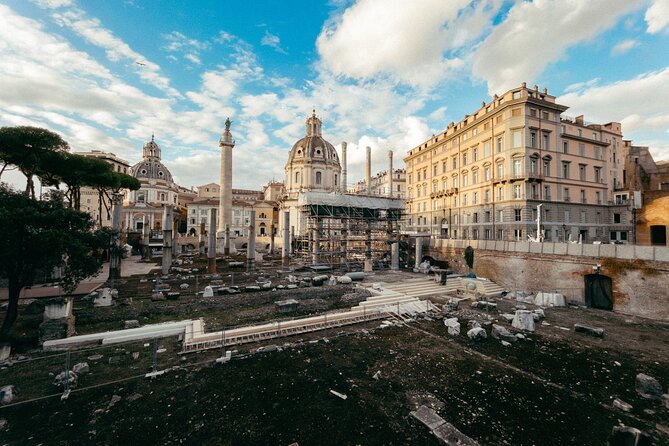
A major reason this stop is so popular with people who like history that feels visual is the way it links this underground domus setting to Trajan’s Column. You won’t just hear that Trajan existed. You’ll get a sense of what the area looked like during the time period the site is reflecting—and why Trajan’s campaign mattered.
The virtual reconstruction gets close enough for the bas-reliefs to make sense. Instead of treating the column like a generic monument, the multimedia frames the narrative around the military story of Trajan’s conquest of Dacia (today’s Romania). That detail matters because it turns famous Roman art into something with cause and consequence.
And it’s not only about battles. You’re learning how Roman public messaging worked—how art, power, and architecture reinforced each other. Even if you’ve seen Trajan’s Column from street level before, the underground viewpoint and the guided explanation help you connect the column’s storytelling style to the broader city space around it.
If you prefer guided learning but don’t love big group tours, this is a smart middle path. The pacing is controlled by the audio and visuals, so you spend less time wondering what to look at next. You can sit with the moments that actually click.
The 1 hour 30 minute flow: from virtual domus to the included media
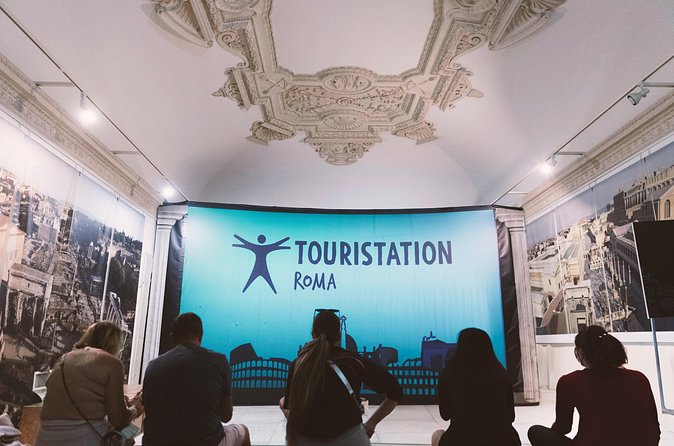
The timing is straightforward: plan on about 1 hour 30 minutes for the full experience, and treat it as one continuous stop rather than a quick peek. You’ll begin at the Le Domus Romane di Palazzo Valentini section, where the multimedia tour uses virtual reconstructions, lights, graphics, and videos to bring the Roman Imperial Age setting to life.
As it runs, you’ll be hearing narration by Piero Angela, and that narration is the thread that helps you keep track of what each reconstructed scene is trying to show. This is especially helpful when the visuals shift locations or add context to what you’re seeing in the ruins.
There’s also an included 25-minute Ancient Rome multimedia video. That’s a nice buffer because it gives you more explanation than a pure audio track. If you’ve ever left a museum thinking, I know what I saw, but I don’t fully understand it, this kind of built-in video component can fix that problem.
What to watch for: don’t rush your eyes. Even with multimedia, the best moments come when you pause and look back at the remains in front of you while the media is talking about what they represent. That’s when it becomes less like a show and more like learning.
The audio guide app: why it’s worth using after the ticket ends

The ticket includes a City APP audioguide, and the overview also highlights a downloadable audio guide app you can use to enrich the rest of your Rome stay. That matters because Roman sightseeing can be scattered. You see a church here, a ruin there, and after a few days the details blur unless you have some structure.
An app-based audio guide can help you keep threads connected—names, locations, and the story behind what you’re seeing. You already get multimedia context underground. Then, when you step back onto Roman streets, you have a framework to interpret what you find next.
The value here isn’t just convenience. It’s repetition in a useful way. One explanation inside the domus can make later sights easier to decode because you’ve already learned how Roman spaces worked and how monuments told stories.
One practical mindset: treat this experience as your primer. Use the app afterward to reinforce what you learned, especially if you’re trying to understand Rome beyond the usual top-tier checklist.
Language, pacing, and where it fits in a Rome plan
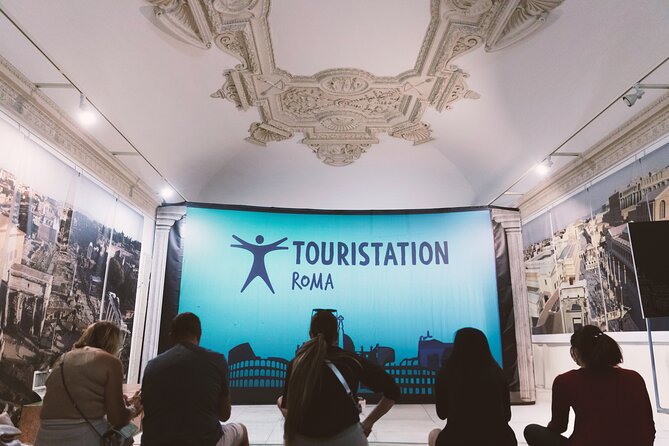
This experience is offered in English, which is important because the narration and multimedia are the core of the learning. If English is your comfortable language, you’ll get more out of the bas-reliefs and reconstruction sequences instead of relying on visuals alone.
It’s also near public transportation, which helps you slot it into a day without turning your route into a logistics puzzle. Rome can be full of long walks and sudden detours, so having a central, transit-friendly stop is a real convenience.
Because it’s underground and media-led, you’ll want to plan it when you’re not rushed. You don’t have to do it at a perfectly calm time of day, but you do need the mental space to follow the narrative. If your itinerary is packed right up to the start time, this is the kind of experience that can feel like a blur.
Who this suits best
- People who like Roman ruins but want help making them make sense
- Travelers who prefer guided explanation over wandering
- History fans who like architecture plus political storytelling (Trajan’s era)
- Anyone who values learning they can carry to other sights with the included audio app
Who might prefer something else
- Anyone who specifically wants a live guided tour with lots of Q&A
- People who dislike audio-led experiences or prefer reading everything at their own pace

Price and value: is $35.50 a fair deal?
At $35.50 per person, this isn’t a cheap “see the room and move on” ticket. But it also isn’t priced like a full-day tour with a human guide and a coach bus. It lands in the category of paid museum-style storytelling, where the real product is the multimedia interpretation plus the included audio app support.
Here’s why the price can feel fair for the right person:
- You get admission to the virtual domus experience, not just entry to a static site
- You also receive a significant multimedia video component (25 minutes)
- The narration (including Piero Angela) is part of the value, because it guides what you see
- The included app audio guide extends your experience beyond the underground stop
Where value could feel weaker:
- If you strongly prefer live guides and hands-on explanations, you may wish the ticket included more human interaction
- If you’re on the shortest possible schedule, you might want to choose a different stop that takes less time
In other words, the price is paying for production quality and interpretation. If you enjoy “ruins plus explanation” done with modern tech, you’ll likely feel like you got your money’s worth.
Should you book Palazzo Valentini’s multimedia experience?
Book it if you want a Roman interior view that’s hard to get any other way. This is the sort of experience that changes how you think about what you’re seeing in Rome. The domus remains become understandable, not just photographed.
I’d especially recommend it if Trajan’s era is on your radar. The reconstruction around Trajan’s Column and the focus on the bas-reliefs and the Dacia campaign help you connect the monument to a larger city story. It’s not just art trivia; it’s political messaging translated into something you can follow.
Don’t book it if you’re chasing a traditional guided tour format. This is built to be watched and listened to, with the story delivered through multimedia and narration rather than a live guide leading every step.
If you’re still deciding, think of it like this: you’re paying for clarity. When you leave the underground domus, you should feel better equipped to recognize Roman power, design, and storytelling when you see them elsewhere in the city.
FAQ
Where is the Palazzo Valentini Ancient Domus Underground Multimedia Experience located?
It takes place in Rome, Italy.
How much does the ticket cost?
The price is $35.50 per person.
How long does the experience last?
The duration is about 1 hour 30 minutes.
Is the experience offered in English?
Yes, it is offered in English.
What is included with the ticket?
Included are Palazzo Valentini Virtual Experience, a City APP Audioguide, and a 25-minute Ancient Rome multimedia video.
Is a guided tour included?
No. A Guided Tour at Palazzo Valentini is not included.
Is hotel pickup or drop-off included?
No. Pick up from and to the hotel is not included.
Is it near public transportation?
Yes, it is near public transportation.
Will I receive confirmation after booking?
Yes, confirmation will be received at time of booking.
Can I get a refund if I cancel?
No. The experience is non-refundable and cannot be changed for any reason.
Is it suitable for most people?
The information states that most travelers can participate.