REVIEW · ATHENS
Acropolis, Parthenon and Ancient Agora Guided Tour with entrances
Book on Viator →Operated by Athens Walks Tour Company · Bookable on Viator
Ancient Athens gets real on your feet. This Acropolis, Parthenon and Ancient Agora guided tour is built to make the big monuments feel like lived-in spaces, not just stone facts. I like that it pairs the Acropolis landmarks with the Ancient Agora in one morning, plus it includes entrances so you can focus on the stories.
What I like most is the small-group feel (up to 20 people) with hearing devices so you can actually catch the guide’s explanations. And I also like the pacing: multiple stops across the hill and then a longer stretch in the Ancient Agora so it’s not just a rush to the Parthenon.
One possible drawback: the Acropolis climb is real, even if the walk pace includes breaks. On hot, windy, or cold days, plan for the weather and the uphill effort.
In This Review
- Key things to know before you go
- A 3.5-hour Athens plan that balances icons and everyday life
- Morning start matters: how the route uses the first hours
- Stop 1: Acropolis visit (about 30 minutes) and the view that ties it together
- Herod Atticus Odeon: a Roman theater on Acropolis slopes (about 10 minutes)
- Theatre of Dionysus: where Greek drama took shape (about 15 minutes)
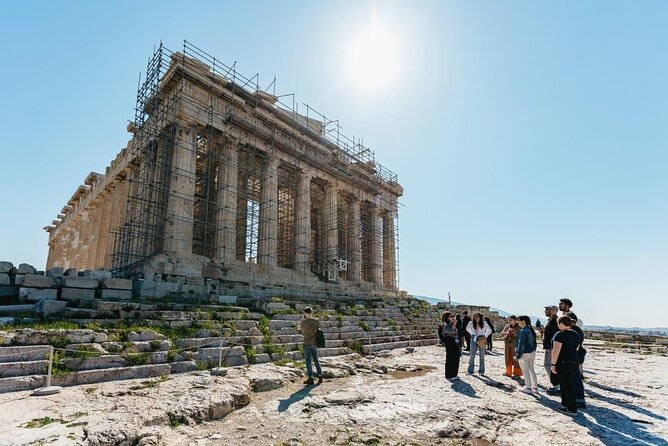
- Parthenon: the main event (about 30 minutes)
- After the hill: stepping into the Ancient Agora (stoa, temple, then the Agora itself)
- Stop 5: Temple of Hephaestus (about 15 minutes)
- Stop 6: Stoa of Attalos (about 15 minutes)
- Stop 7: Ancient Agora of Athens (about 1 hour 15 minutes)
- The guide experience: why the audio and group size matter
- What to watch for: climb, weather, and pacing reality
- Value check: what the $129.75 price includes and why it can be worth it
- Who should book this Acropolis and Ancient Agora tour
- Should you book? My straight answer
- FAQ
- How long is the Acropolis, Parthenon and Ancient Agora guided tour?
- What time does the tour start, and where does it meet?
- Is the tour offered in English?
- Are entrance fees included?
- How many people are in the group?
- What level of fitness do I need?
- Can I get a full refund if I cancel?
Key things to know before you go
- Entrances included for Acropolis monuments and the Ancient Agora, so you do not have to sort tickets mid-tour.
- Hearing devices let you stay connected to the guide through a microphone, even when the group spreads out.
- Small group size (max 20) helps the guide manage questions and keep a steady pace.
- Parthenon time is built in (about 30 minutes) instead of only a photo stop.
- Longer Agora block (about 1 hour 15 minutes) gives you breathing room after the hill.
A 3.5-hour Athens plan that balances icons and everyday life
This is a 3 hours 30 minutes guided walk through two sides of Athens: the dramatic symbolism of the Acropolis, then the practical center of civic life in the Ancient Agora. The route is straightforward, but the pacing matters. You get multiple viewpoints and multiple kinds of ruins, so you leave with a sense of how the city worked, not just how it looked in textbooks.
It starts at 9:00 am at Porinou, Athina 117 42, and ends at the Ancient Agora area (Athens 105 55). That end point is useful: once you finish, you are already in the zone where you can keep exploring at your own speed.
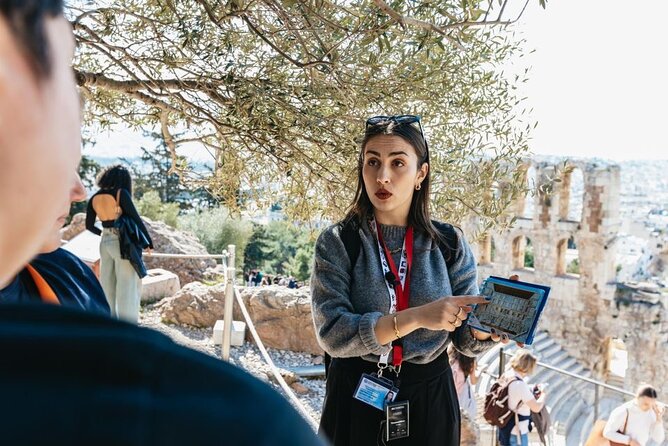
Another value point: it is offered in English and includes a licensed tour guide. You also get a modern audio assist—hearing devices connected to the guide’s microphone—which is especially helpful when wind picks up on the hill.
You can also read our reviews of more guided tours in Athens
Morning start matters: how the route uses the first hours
The tour begins at 9:00 am, and that timing aligns with the smartest move in Athens: start early to escape the harshest sun and crowds. Even on days when conditions are windy (or chilly), morning usually feels more manageable for the climb.
Expect a steady rhythm: short segments with real stops for context, then longer time where the site needs it. If you prefer to take photos without sprinting, you will like this structure. Several guides on this tour are praised for keeping time and still giving pauses for questions and pictures.
Stop 1: Acropolis visit (about 30 minutes) and the view that ties it together
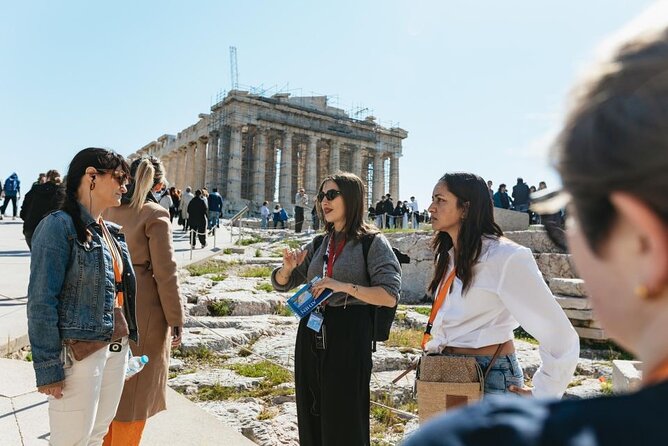
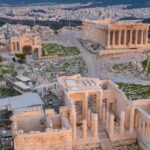
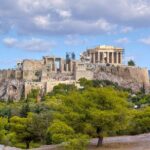
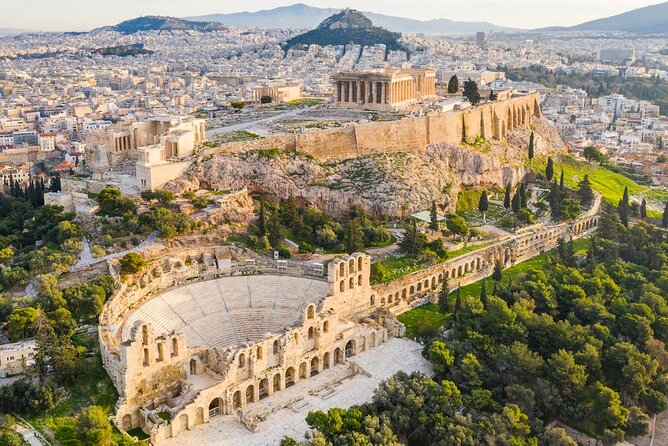
You begin at the Acropolis, the ancient citadel on a rocky outcrop above Athens. This is where the tour immediately sets the tone: monumental architecture, a commanding setting, and the feeling that you are stepping into a power center.
The about 30 minutes here works best if you want more than a quick loop. A guide should help you connect three things fast:
- where you are standing relative to the Parthenon area,
- why the Acropolis mattered politically and religiously, and
- how later generations viewed these ruins as symbols.
This stop also gives you the first big “yes, this is why people come” moment—the combination of scale and views over the city. You’ll likely want a few photos, but do not treat it as only a sightseeing break. The best payoff comes from hearing how the pieces fit.
Possible consideration: wind and cold can hit the hill hard, and the walk is uphill. One review noted a cold, windy day and a guide who kept going and made it worth it. That is the kind of practical attitude that helps.
Herod Atticus Odeon: a Roman theater on Acropolis slopes (about 10 minutes)
Next you stop at the Herod Atticus Odeon, the impressive stone theater built in 161 AD by Herodes Atticus in memory of his wife. You also learn the practical detail that it once had a wooden roof and could seat around 5,000 people.
This is a shorter stop (about 10 minutes), but it is a great “context bridge.” From the Acropolis main works, it helps you notice that Athens history is not one straight line. The Greeks built the stage; later Romans left their own architectural signature too.
If you like theaters and public spaces, this stop often clicks quickly. The setting is also photogenic because of the way the theater sits on the hillside.
Theatre of Dionysus: where Greek drama took shape (about 15 minutes)
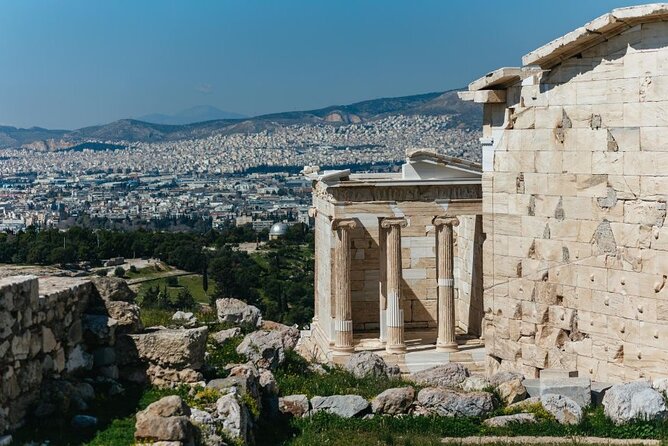
Then it is the Theatre of Dionysus on the south slope of the Acropolis, originally connected to the sanctuary of Dionysus Eleuthereus. This stop (about 15 minutes) is where the tour shifts from monuments as symbols to monuments as culture in action.
Greek theater matters because it was not only entertainment. It was tied to religion, civic identity, and public life. A good guide here helps you see why this spot is more than seating rows and stone stairs.
You may notice how the route keeps you moving between points that explain different layers of the same hill—religion, performance, and public meaning.



Parthenon: the main event (about 30 minutes)
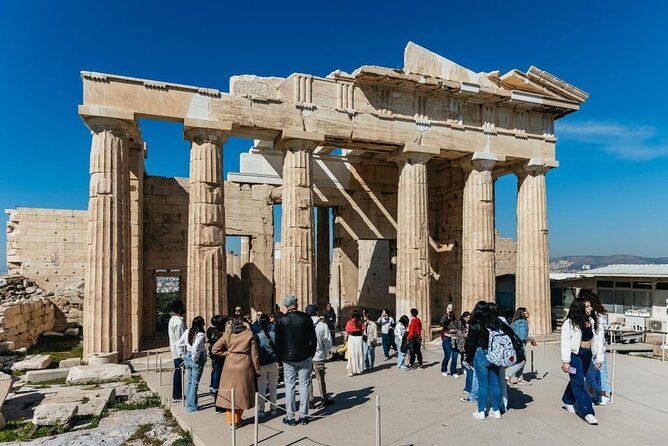
The Parthenon stop is about 30 minutes, and that is enough time to do two things well:
1) see the building details that define it, and
2) understand why its sculptures and design became such a long-lasting symbol.
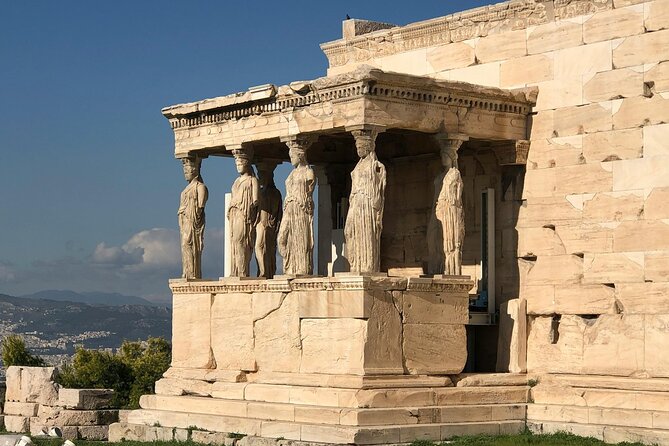
The tour frames it as a former temple on the Athenian Acropolis dedicated to Athena, with decorative sculpture considered a high point of classical Greek art. You also get the bigger meaning: it is often treated as an enduring symbol of Ancient Greece, democracy, and Western civilization.
The practical takeaway for you: do not rush. Even if you are tempted to sprint for the best angle, take the time to look and listen. With a guide explaining what to notice, the Parthenon can turn from a name on a map into a coherent story.
After the hill: stepping into the Ancient Agora (stoa, temple, then the Agora itself)
At this point, the tour changes gears. You go from the heights of the Acropolis down into the spaces where everyday civic, religious, and commercial life happened.
This change is one reason I think the tour works so well. The Acropolis can feel overwhelming if all you do is point at famous structures. The Agora balances that by showing how a city functioned.
Stop 5: Temple of Hephaestus (about 15 minutes)
You visit the Temple of Hephaestus in the Ancient Agora. It is described as one of the best-preserved ancient Greek temples, dedicated to Hephaestus (god of fire and craftsmanship), built around 449 BC.
Even in about 15 minutes, this stop helps you slow down. It’s a classical Doric temple, and it gives you a tangible sense of ancient religious architecture rather than only big civic speeches you might imagine from democracy talk.
If you like solid forms and the feel of craftsmanship, this is a strong stop. It also fits nicely after the Parthenon so you can compare styles and context without it feeling redundant.
Stop 6: Stoa of Attalos (about 15 minutes)
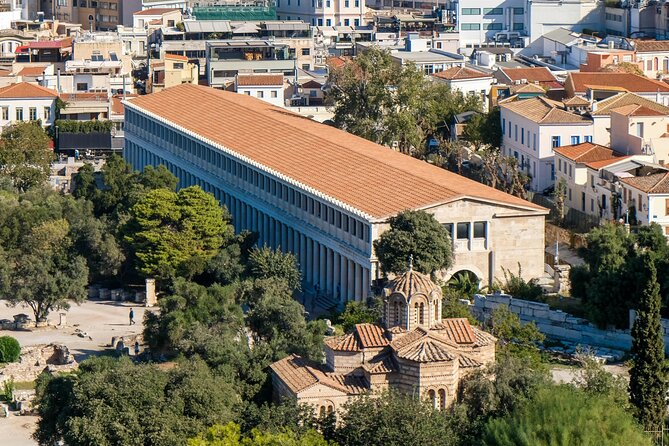
Next is the Stoa of Attalos, a two-story colonnaded building originally built in the 2nd century BC by King Attalos II of Pergamon. It was restored in the 1950s and now houses the Museum of the Ancient Agora.
The key value here is understanding what a stoa did in everyday life: a covered walkway that also functioned as a public space, often linked to shopping and movement. So you are not only looking at a structure—you are picturing how people moved through the city.
If you like architecture with “human-scale” purpose, you will appreciate this stop. It helps you imagine conversations, commerce, and daily civic routines.
Stop 7: Ancient Agora of Athens (about 1 hour 15 minutes)
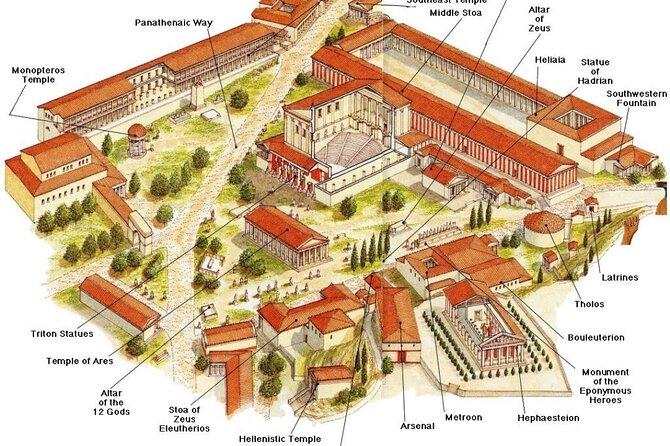
The tour finishes with the Ancient Agora of Athens, also called the Classical Agora. This is the longest stop here, about 1 hour 15 minutes, which makes sense because the Agora is bigger and requires more orientation.
It is described as a place for commercial activity, assemblies, and gatherings. The Agora is bounded by the hill of the Areopagus to the south and hills like Agoraios Kolonos (Market Hill) to the west. That kind of spatial framing matters because the Agora feels less like one monument and more like a whole working district.
A longer time block is where the guide can connect themes: religion and public life, architecture and civic function, and how the city’s center shaped decision-making and identity. This is often where the tour clicks if you start the morning focused on big visuals and then realize you want the story behind the stones.
The guide experience: why the audio and group size matter
This tour caps at 20 travelers, which is a meaningful detail. Smaller groups tend to move with less chaos, and it is easier for the guide to check that everyone is still together—especially on uneven stone paths.
The other major quality factor is the hearing devices. With the guide’s microphone, you are less stuck deciphering words through distance and wind. That matters on the Acropolis, where sound can travel strangely and the group often fans out for photos.
The reviews also highlight guide style. You’ll see names like Laura, Angeliki (Angel), Hermes, Elaina, and Demos tied to praised experiences. The recurring theme is strong communication: clear explanations, helpful answers to questions, and a pace that includes pauses.
One standout detail for your planning: some guides are specifically noted for building in rest stops during the climb. That is a big deal if you do not want the whole tour to feel like a single continuous ascent.
What to watch for: climb, weather, and pacing reality
Let’s be honest: this is a walking tour with an uphill component. The tour says it is for travelers with a moderate physical fitness level. A separate note from reviews calls out that there is a long climb to the top, and at least one comment suggests having more water options (like a bottle).
So for your preparation:
- plan for time and effort on the climb,
- dress for wind as well as sun,
- and bring water you can access easily.
If you do not enjoy big stairs, this is still doable, but you should expect pauses. Guides on this tour are praised for not leaving people behind, including accommodations for mobility issues. Still, you will be on stairs and uneven ground, so bring a practical mindset.
Value check: what the $129.75 price includes and why it can be worth it
At $129.75 per person, the tour can look like more than a basic walking tour. The difference is what is bundled in.
You are paying for:
- entrance fees to both the Acropolis monuments and the Ancient Agora,
- a licensed tour guide, and
- hearing devices connected to the guide’s microphone.
That combination matters because the Acropolis and Agora are not quick drop-ins. Entrance lines and ticket confusion can eat time and energy. By including admissions, you protect the schedule and keep the focus on the experience itself.
Also, since you cover multiple major stops in one run, you are not piecing together separate visits. You get a coherent morning sequence: hill first, then everyday Athens in the Agora.
Who should book this Acropolis and Ancient Agora tour
This tour is a smart pick if you:
- want a guided explanation at the Parthenon rather than only plaques,
- like the idea of seeing both Acropolis monuments and the Agora in one outing,
- enjoy photo stops but still want a real narrative, and
- would benefit from hearing devices and a microphone-connected guide.
It is also a good fit for history-minded travelers who want more than a checklist. The strongest versions of this tour are the ones where the guide makes the stops connect—Roman theaters beside Greek religious spaces, temples in the Agora beside broader civic meaning.
If you only want one site, you might choose something shorter. But if you want the Acropolis plus the Agora, this route gives you that in a controlled timeframe.
Should you book? My straight answer
Yes, book it if you want the big-ticket Athens classics without losing half a day to ticket logistics. The value is strongest when you take it as a guided storyline: climb, context, Parthenon focus, then a slower, longer walk through the Ancient Agora.
I would only hesitate if you strongly dislike uphill stair climbing, since you should be prepared for a longer ascent. For most people with moderate physical fitness, a guide-led pace with rest stops makes it workable.
If you want a morning that turns famous ruins into understandable Athens, this is a high-odds choice.
FAQ
How long is the Acropolis, Parthenon and Ancient Agora guided tour?
It runs for about 3 hours 30 minutes.
What time does the tour start, and where does it meet?
The start time is 9:00 am. The meeting point is Porinou, Athina 117 42, Greece.
Is the tour offered in English?
Yes, it is offered in English.
Are entrance fees included?
Yes. Entrance fees for both the Acropolis monuments and the Ancient Agora are included.
How many people are in the group?
The tour has a maximum of 20 travelers.
What level of fitness do I need?
The tour is listed for travelers with a moderate physical fitness level.
Can I get a full refund if I cancel?
Yes, free cancellation is available. You can cancel up to 24 hours in advance for a full refund. If it’s canceled due to poor weather, you’ll be offered a different date or a full refund.