REVIEW · ATHENS
Athens: Ancient Agora E-Ticket and Audio Tour
Book on GetYourGuide →Operated by Clio Muse Tours · Bookable on GetYourGuide
Instant democracy history, in your pocket. The Ancient Agora visit is built for easy entry and a phone-guided walk through the places tied to Athenian self-rule and big political moments. You get a pre-booked e-ticket to cut the entry grind, then an offline audio tour that lets you move at your own speed around the ruins and museum.
I especially like that this isn’t just a list of stones. The route is shaped like a story, starting with Solon’s reforms, then stepping into the world of lawmaking, assembly decisions, and the people behind them. You’ll also get practical support with offline content and a built-in interactive map, so you’re not hunting for signals while standing in the middle of archaeological paths.
The one thing to keep in mind is that the audio experience depends on your device and your attention to directions. The app doesn’t work on certain older phones, and some navigation notes can feel a little vague once you’re on foot and paths start to run parallel.
In This Review
- Key things I’d circle before you go
- Entering the Ancient Agora: e-ticket rules and what actually matters
- Starting at Hephaestus and Solon: how the tour turns ruins into a timeline
- The Tholos and Bouleuterion: daily lawmaking in the ruins
- Museum of the Ancient Agora: what to prioritize (and that second-floor view)
- Mars Hill stories: Aristides the Just, Pericles, and human-scale history
- Pnyx and the Rock of Ares: where the Acropolis view hits
- Philopappos hill and the prison of Socrates: the end of the story starts to weigh
- Wrapping up near the Theatre of Dionysus: a clean finish close to the Acropolis
- Price and value: when $30 makes sense for an audio-first visit
- Practical tips to make the audio tour feel effortless
- Should you book it?
- FAQ
- How long does the Ancient Agora e-ticket and audio tour take?
- Do I need internet to use the audio tour?
- Is there a live guide included?
- What languages are available for the audio guide?
- What do I need to bring?
- Is the Ancient Agora tour wheelchair accessible?
Key things I’d circle before you go
- Fast-track entry with a pre-booked e-ticket validated at onsite machines
- Offline audio + offline interactive map, helpful because there’s no internet in the archaeological site
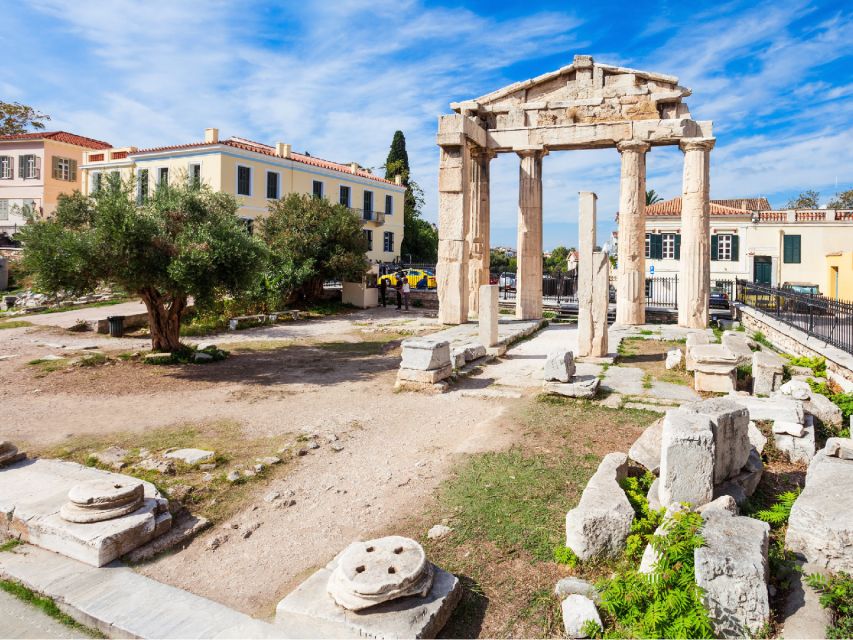
- A route tied to specific democracy landmarks, from Hephaestus and Solon to the Pnyx and the prison of Socrates
- Museum time that you can actually use, including an often-missed elevated view from the second floor
- Great phone pacing, with the option to slow down for photos and exhibits (but keep an eye on how the app behaves when you zoom)
Entering the Ancient Agora: e-ticket rules and what actually matters

This is the kind of ticket setup I like in Athens: you plan ahead, then you show up and go. You’ll have an adult e-ticket for the Ancient Agora, plus a self-guided smartphone audio tour. The total time usually falls in the 90 minutes to 2 hours range, which is long enough to feel like you did something real, but short enough to keep your Acropolis day from turning into a marathon.
Before you leave, you need to download two things on your phone: the e-ticket and the audio tour content. The important detail is that there’s no internet access once you’re inside the archaeological site, so you can’t rely on data for loading audio or maps. Offline content is included, including an offline interactive map to help you move between stops without roaming charges.
When you arrive, you’ll validate your ticket at onsite validating machines. You need your ticket either printed or downloaded on your phone. A voucher like GetYourGuide vouchers is not accepted at the entrance, so don’t show up expecting it to work there.
Also plan on bringing the basics that aren’t included: headphones (recommended), a charged smartphone, and comfortable shoes. You’re also not allowed to bring luggage or large bags. If your day includes other sights with big bags, it’s worth sorting your storage plans early.
A few more Athens tours and experiences worth a look


Starting at Hephaestus and Solon: how the tour turns ruins into a timeline

The tour starts with the kind of framing that makes the Ancient Agora feel less random. Instead of wandering from one fragment to another, you begin at the foot of the hill where the temple of Hephaestus still stands radiant. The audio guide sets the scene: how a chain of events led to democracy in Athens, and why it wasn’t created in one clean moment.
Solon comes next. You’ll hear about his legal reforms, which helped make space for an early civil society. Even if you’ve heard Solon’s name before, the audio format is helpful here because it gives you cause-and-effect context. You’re not just learning who did what; you’re getting why it mattered for ordinary civic life.
This is also where you’ll feel the main strength of a well-written audio tour. You can pause, look around, and then continue when your brain is ready. If you like history but hate being marched along, this style can work well.
The Tholos and Bouleuterion: daily lawmaking in the ruins
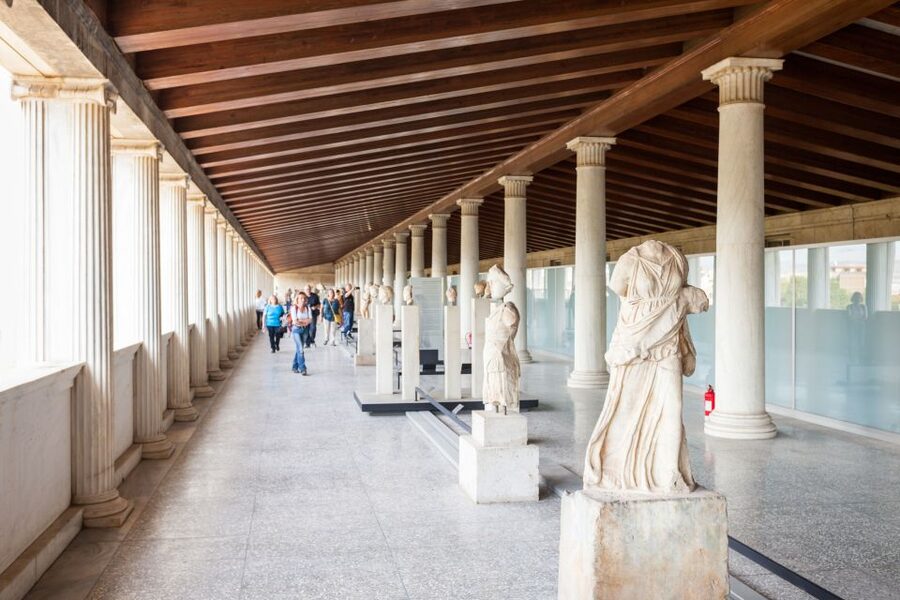
As you continue, the route guides you toward the Tholos area and the ruined Bouleuterion. This is one of the key stops because it’s tied to a very specific image: 500 Athenians meeting daily to draw up laws and proposals for the popular assembly.
Hearing that in place matters. The Agora isn’t huge in the way some sites are, but it’s dense. When the audio tour tells you what happened here and then points you toward the matching physical remains, the ruins start behaving like evidence instead of background decoration.
This is also where the audio tour’s pacing helps. You’re not stuck reading small labels while someone waits for the next group photo. You can keep your own rhythm: listen longer here, then move on before you lose energy.
Museum of the Ancient Agora: what to prioritize (and that second-floor view)
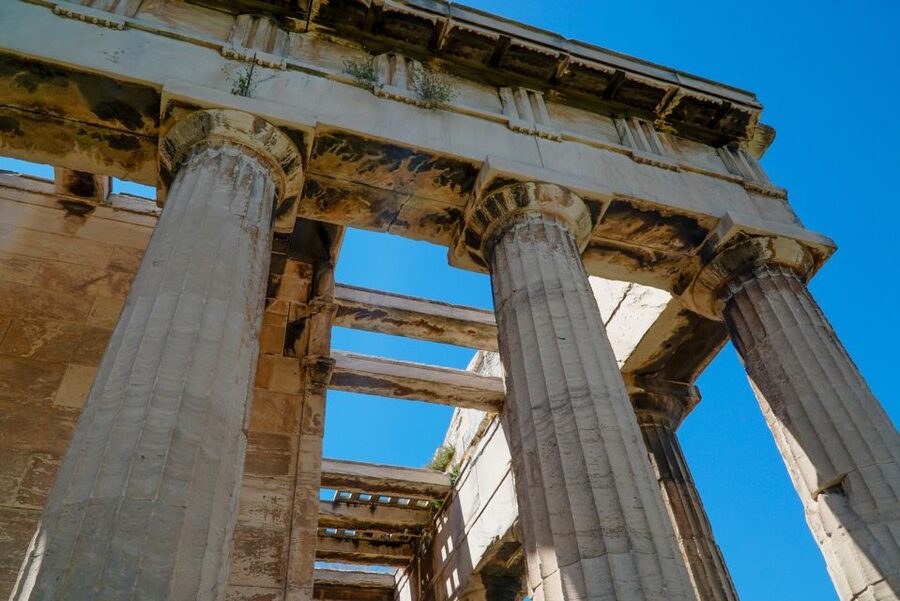
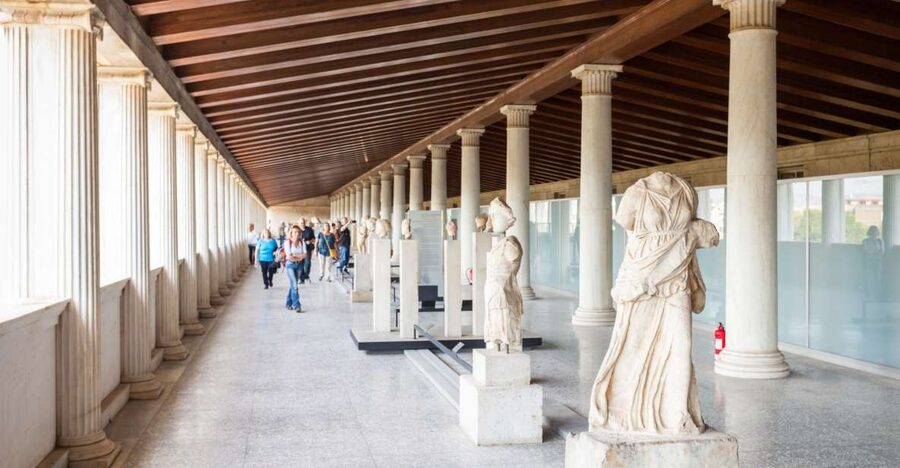
The Museum of the Ancient Agora is where this experience earns its time. It’s not just a quick indoor stop to break the heat. The museum exhibitions give you a clearer picture of how Athenians defended their democracy from malign influence, including the ingenious (and sometimes cruel) methods used.
This is also the spot where I’d suggest you slow down. The museum is especially useful if you want your outdoor walking to make more sense. When you step back outside afterward, the places you passed feel more legible because you’ve already seen related artifacts and explanations inside.
One practical tip stands out from real visitor experience: don’t skip the second floor. That level offers a different, elevated perspective toward the Panathenaic Way. Many people miss it because they assume the main story is on the ground level. If you’re the type who likes seeing how ancient paths connected different parts of the city, this second-floor angle is worth your attention.
And yes, the museum being indoors is a relief. If you visit in warm months, you’ll likely appreciate having an air-conditioned break as part of your plan.
Mars Hill stories: Aristides the Just, Pericles, and human-scale history
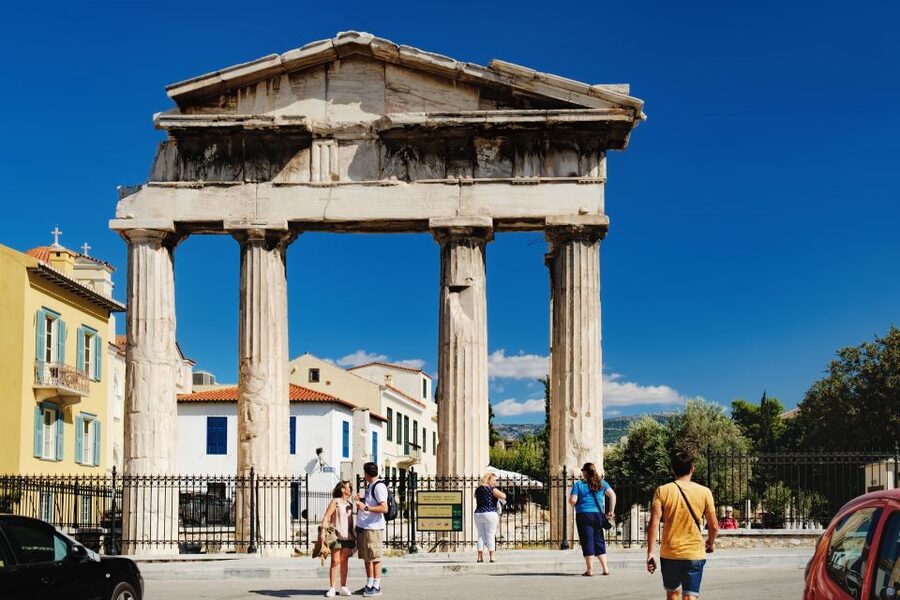
From here the audio tour shifts into personality and political character, not just institutions. The guide references notable figures like Aristides the Just and Pericles, using anecdotal stories to bring their world to life.
For you, the benefit is simple: you’re not only collecting facts about democracy. You’re learning how democracy played out through real people who argued, advised, influenced, and shaped Athens’ public image.
This kind of “people + place” structure can be a big help in a site like the Agora, where it’s easy to feel like you’re walking through scattered remains. The audio narration helps you connect what you’re hearing to what you’re looking at, so your brain builds a map instead of a blur.
A few more Athens tours and experiences worth a look


Pnyx and the Rock of Ares: where the Acropolis view hits

One of the best parts of the Ancient Agora day is when you get the view connections. The audio tour points you toward Pnyx and the Rock of Ares, both with postcard-style vistas toward the Acropolis.
This matters because the Ancient Agora isn’t an isolated theme park of democracy. It’s part of a larger topography where civic space and major city landmarks sit within the same visual field. When you look toward the Acropolis from these vantage points, the story feels larger than a classroom lecture.
You also get a natural sense of movement. As your route continues, you’re not just circling the same area. You’re gradually working up the hills, which keeps the day from feeling flat or repetitive.
Philopappos hill and the prison of Socrates: the end of the story starts to weigh

Later on, as you ascend on Philopappos hill, the tour leads you to the prison of Socrates. This stop is emotionally heavier than the earlier “how democracy worked” sections.
The audio guide gives insights into the philosopher’s life and death. Even without a live guide, that storytelling approach can stick better than a basic signboard explanation, because it helps you understand why Socrates’ fate became symbolically important in the history of civic life.
One extra anecdotal note worth knowing: the audio tour includes stories such as the account of Samuel the Cobbler and his relationship to Socrates. If you enjoy the texture of everyday connections around famous figures, this kind of segment can be a highlight in the middle of the route rather than something you tack on at the end.
Wrapping up near the Theatre of Dionysus: a clean finish close to the Acropolis
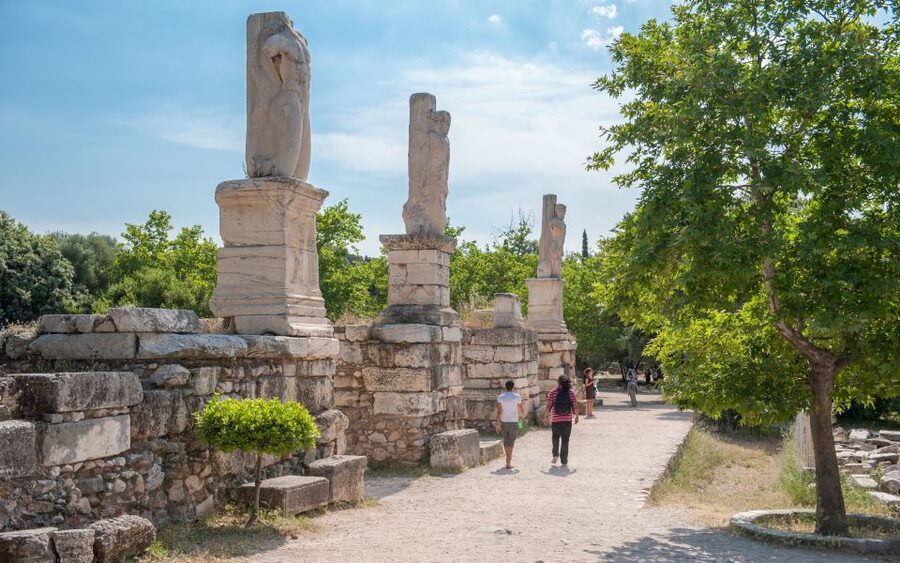
The tour ends within easy reach of the Acropolis archaeological site, in front of the theatre of Dionysus. This is a smart ending because you’re positioned to continue your Athens day without backtracking through the city.
Here, you can marvel at the oldest theatre of the world (as presented in the tour description) and learn about the place where tragedies by Aeschylus, Sophocles, and Euripides were staged. If your brain is hungry for continuity—warmer sunlight, hillside walking, then suddenly theatre history—this ending works.
It also creates a nice rhythm: political history first, philosophical tension next, then performance culture at the end. Democracy and theatre were never far apart in classical Athens, and the tour’s structure hints at that connection.
Price and value: when $30 makes sense for an audio-first visit
At $30 per person for about 90 minutes to 2 hours, this is not trying to compete with a full live guided tour. There’s no live guide included, and you’re also responsible for your own smartphone and ideally headphones.
So where is the value?
- You save time at entry with the pre-booked e-ticket and fast entry process.
- You avoid roaming costs and coverage headaches because the tour is designed for offline use.
- You get a curated story route through multiple key spots (museum, Mars Hill, Pnyx, prison of Socrates, and the theatre area).
For you, this format is often best if you’re:
- traveling solo or with one other person and want control of pacing,
- comfortable reading your way through museums if you choose to,
- happy listening to history narration without needing Q&A.
If you want a real-time guide to correct your questions on the spot, or if navigation anxiety makes you tense, you may find a live guide more relaxing. A phone tour can be very good, but it’s not the same as a human adjusting to your curiosity.
Practical tips to make the audio tour feel effortless
This experience is built for self-guiding, so a few details make a big difference.
1) Download before you go, and test your audio once you’re inside.
You’re using offline content, and the site has no internet. Get everything ready before you arrive so you don’t waste your one short window of daylight.
2) Bring headphones.
Headphones aren’t included. If you’re using your phone speaker in a busy area, you’ll likely miss parts of the narration.
3) Check compatibility before booking if you’re on an older device.
The audio tour is not compatible with Windows phones, and it doesn’t support older iPhone models like iPhone 5/5C, older iPod Touch generations, older iPad generations, or the iPad Mini 1st generation. If you’re on the edge of compatibility, it’s safer to check now.
4) Know that navigation can be a little vague.
Some walking directions can feel spotty. Paths can run parallel, and place names may not look obvious. If you’re the kind of traveler who hates guessing, give yourself extra patience and rely on the offline interactive map.
5) Don’t assume the audio keeps playing when you take photos.
There’s a common snag: the recording may stop when you zoom to take a picture. Your fix is simple—pause less aggressively, or after a photo, restart playback quickly and continue.
6) Time your start to beat heat.
One very practical tip from real-world experience: do this early in the morning or late in the afternoon so you’re not slowly walking in peak heat. The museum helps because it’s air conditioned, but outdoor segments still matter.
7) Plan for ticket line rules if you qualify for reduced or free entries.
EU students and minors can enter for free with ID or passport, but they still need to queue to get a zero-value pass. Non-EU students and participants over 65 can get reduced tickets, but they also need to queue at the ticket office. That’s not a problem, it’s just a timing detail.
Should you book it?
If you want an Ancient Agora visit that’s structured, paced to your own walking speed, and supported by offline audio and an offline map, I think this one is a smart pick. The $30 price feels reasonable for what you get: fast entry plus a story-driven tour that links Solon, lawmaking spaces, the Pnyx, Socrates, and the theatre area.
I’d skip this option in favor of a live guide if you:
- need very clear turn-by-turn guidance without any ambiguity,
- have a phone that might not support the audio tour,
- strongly prefer a wheelchair-friendly route (the tour notes it isn’t suitable for wheelchair users, and some points aren’t wheelchair accessible).
If you’re flexible, bring headphones, download everything ahead of time, and accept that you’re guiding yourself through ancient paths, you’ll likely end the visit feeling like the Agora isn’t just ruins. It’s a working political stage, frozen in stone and voice.
FAQ
How long does the Ancient Agora e-ticket and audio tour take?
Plan on about 90 minutes to 2 hours, depending on your starting time and how long you linger at stops and in the museum.
Do I need internet to use the audio tour?
No. The tour includes offline content and an offline interactive map, and the site has no internet access, so downloading beforehand matters.
Is there a live guide included?
No. This is a self-guided experience with a smartphone audio tour.
What languages are available for the audio guide?
The audio tour is available in English, Italian, Greek, German, Spanish, and French.
What do I need to bring?
Bring comfortable shoes, headphones, and a charged smartphone. Also download the e-ticket and audio tour before you arrive.
Is the Ancient Agora tour wheelchair accessible?
It isn’t suitable for wheelchair users, and some points of interest are not wheelchair accessible.