REVIEW · ATHENS
Ancient Athens Corinth Biblical Tour Following Paul 51.A.D
Book on Viator →Operated by Great Greece Tours · Bookable on Viator
Paul’s footsteps start with a ride. This private Athens-and-Corinth day turns Scripture geography into real stops, with hotel pickup and time set to your rhythm, not a big-bus squeeze.
You’ll ride in an air-conditioned vehicle with Wi-Fi onboard and an English-speaking driver-guide who stitches each location to the story of Paul, from the 51 A.D. setting at Areopagus to the later Corinth sites. One thing to plan for: the Ancient Corinth (Archaia Korinthos) entrance fee is not included, and there can be periods when Mars Hill is closed for repairs, meaning you may only see it from below.
In This Review
- Key things that make this tour worth your time
- A one-day Paul route: Athens to Corinth by story and geography
- Pickup, Wi-Fi, and timing that keeps the day comfortable
- Areopagus (Mars Hill) and the opening sermon context
- Roman Agora, Diolkos, and Corinth Canal: why this area mattered
- Ancient Corinth’s BHMA and the one entrance fee to remember
- Temple of Apollo and Acrocorinth viewpoints: scale, layers, and dramatic storytelling
- Kenchreia and Apostolos Pavlos Church: Priscilla, Aquila, and the Vision mosaic
- Lunch expectations: planned time, but not included in the ticket
- Guide impact: what you’ll get from Konstantinos, Jorge, Nick, George, and Michael
- Value check: what $313 per group buys you
- Who should book this and who might want a different option
- Should you book? My quick decision guide
- FAQ
- How long is the tour?
- Is this a private tour?
- What’s included in the price?
- Is lunch included?
- Do I need to pay an entrance fee during the tour?
- Can I cancel for a full refund?
Key things that make this tour worth your time
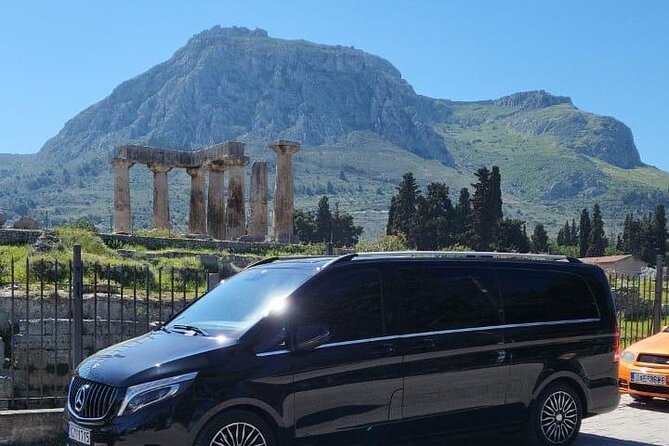
- Private, pickup-first touring that saves you the hassle of getting yourself across Athens and the Corinth area
- Wi-Fi and air-conditioning on board, which matters when your day runs 7 to 8 hours
- Areopagus (Mars Hill) framed around Paul’s 51 A.D. story, with time to take it in
- Diolkos and the Corinth Canal stop that explains why Corinth mattered for trade and travel
- Ancient Corinth’s BHMA plus Apollo and Acrocorinth viewpoints, the day’s main payoff
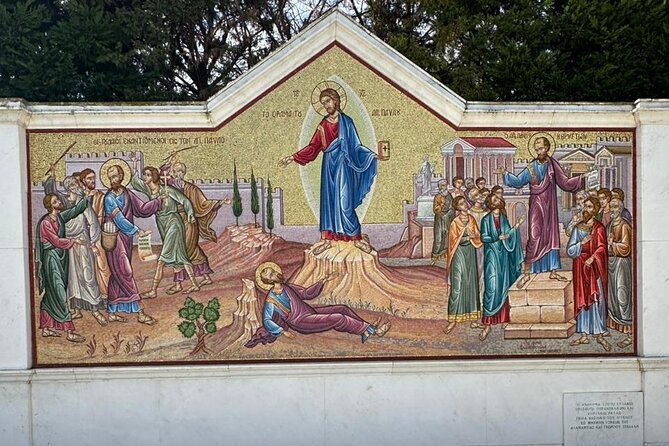
- Kenchreia and Apostolos Pavlos Church, with the Vision of Paul mosaic as a memorable close
A one-day Paul route: Athens to Corinth by story and geography
What I like about this kind of day trip is how it avoids the hit-and-run feeling. Instead of dropping you at a random set of ruins, the stops follow the logic of travel and communication in Paul’s era: preaching, ports, marketplaces, and the city’s famous heights.
You’re also getting two different flavors of place. Athens sets the stage at Areopagus, while Corinth shows you the working city world Paul wrote to—the marketplace, the harbor area, and the view from Acrocorinth that helps the region make sense.
You can also read our reviews of more tours and experiences in Athens.

Pickup, Wi-Fi, and timing that keeps the day comfortable
The practical win is the pickup and drop-off. If you’re in a hotel or Airbnb, the driver waits for you at the entrance. If you’re on a cruise, the driver waits at the gate holding a sign with your name. That removes a lot of stress when you’ve got limited time.
On board, you get bottled water, air-conditioning, and Wi-Fi. That sounds small until your day starts running long, and you’re trying to get messages out, check maps, or just cool down between stops.
The tour is private for your group (up to 2 in this pricing structure), so you can move at a human pace. Most stops are short blocks—about 20 to 30 minutes—so you can look, photograph, and get back to the van without feeling stuck for hours in one spot.
Areopagus (Mars Hill) and the opening sermon context
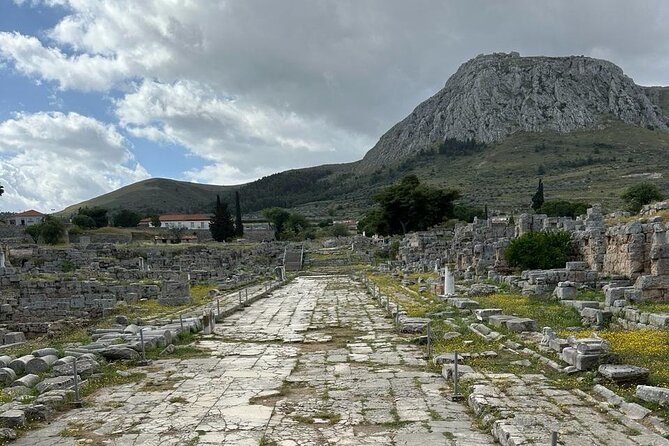
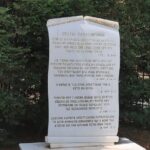
You start at the Areopagus area—often connected to the famous Mars Hill preaching setting tied to 51 A.D. The stop is free and timed at about 30 minutes. Even if you don’t study Greek history ahead of time, the location helps your brain map the rest of the day.
This is a great first stop because it sets expectations. The driver-guide frames what you’re seeing so that later places—like Corinth’s harbor and marketplaces—don’t feel disconnected. If you want a day that adds context to Scripture, this first “anchor” matters.
One heads-up: there can be periods when Mars Hill is closed for repairs. If that happens, you might still see the area but not climb up. I’d plan your mindset around viewing from the most accessible points and keeping the rest of the day flexible.
Roman Agora, Diolkos, and Corinth Canal: why this area mattered
From there, the tour shifts from preaching locations to the city mechanics behind the story.
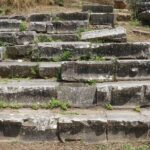
Roman Agora is one of the stops where the day earns its keep. It’s set up around the idea of Paul’s early context when he came from the port area, with a narrative link to the move toward Areopagus. This is one of those places where the ruins are quieter, but the driver-guide’s explanation helps you connect the dots between civic life and religious talk.
Then comes a classic Greece “wait, that’s real?” moment: the Diolkos. This roll-way system is described as about 2,700 years old, used to drag boats across the land between the Corinthian Sea and the Aegean side. If you want to understand why Corinth mattered economically, this stop is a strong shortcut.
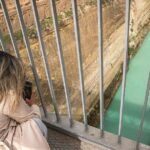
After that, you get the modern engineering layer at Corinth Canal. The canal is about 6 km long, with huge cut-through measurements provided on the tour: roughly 80 meters high, 24 meters wide, and 10 meters deep. You’ll also hear about the excavations starting in 1882, credited to King George’s initiative, with thousands of workers. Even if you only spend about 30 minutes here, the scale helps you visualize how the region functions as a corridor.
Ancient Corinth’s BHMA and the one entrance fee to remember
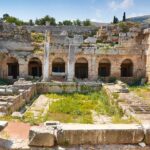
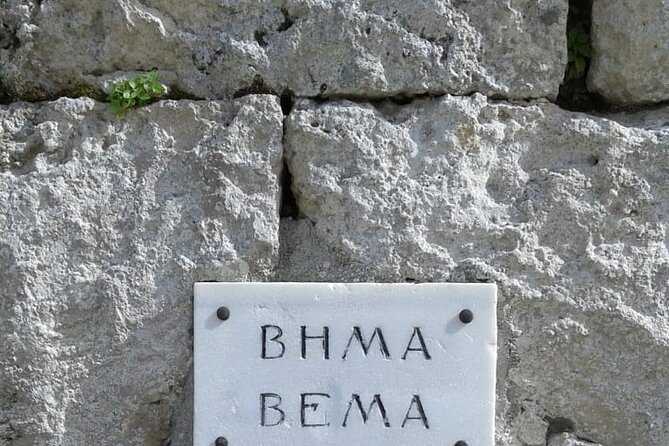
If you care about Paul’s letters, this is the center of the day: Ancient Corinth (Archaia Korinthos). This stop is where the tour’s “step of Paul” focus comes in, often tied to the BHMA. It’s also the stop most likely to feel like the biggest payoff for your time.
Here’s the practical planning piece: the Ancient Corinth entrance fee is €15.00 per person and is not included. That means you’ll want to bring cash or card ready, plus time buffers for the entrance process.
Also take note of how the stop is handled. One important consideration is that the guide may not accompany you inside the archaeological site. That doesn’t make it worse—it just means you’ll get the most out of it if you arrive with a tiny bit of context (for example, knowing that Paul wrote to the Corinthians and that Corinth was a busy commercial center).
If you’re the kind of person who likes to read plaques slowly and connect what you see to the Bible story, you’ll probably love this stop. If you want guided walk-through style inside every ruin, you may need to compensate with your own quick reading once you’re on-site.
Temple of Apollo and Acrocorinth viewpoints: scale, layers, and dramatic storytelling
After Ancient Corinth, the day climbs into bigger visual payoffs.
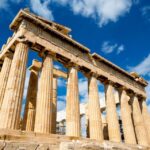
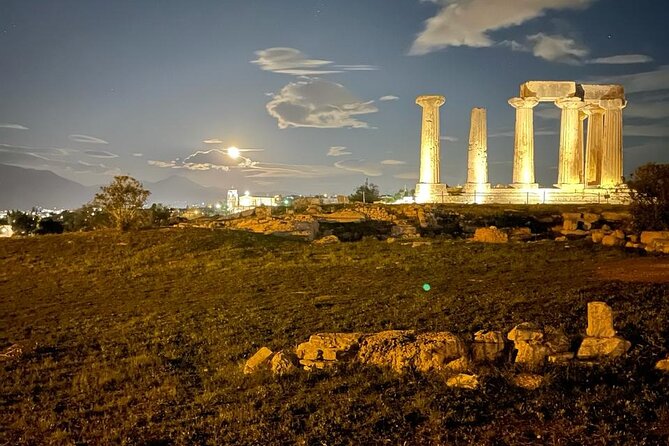
Temple of Apollo is described as the oldest Apollo temple in Greece, with a timing-related detail that the sun hits from multiple viewing sights (tied to 716 B.C.). You won’t be here long—about 30 minutes—but the idea is to connect the religious landscape to Corinth’s civic identity. The driver-guide also frames Apollo as a local god tied to light and music, which makes the ruins feel less random.
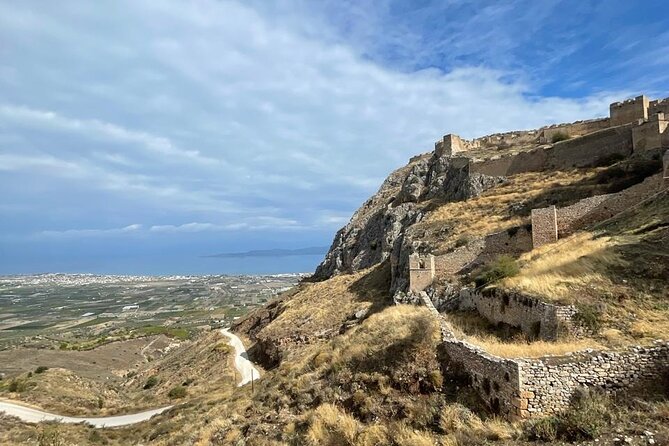
Then you go to Acrocorinth, a major highlight for views. This is described as the winter palace area linked with Caesar, plus the location featuring a temple of Aphrodity, and it’s presented as a massive stronghold over the town—about 530 meters high. You’ll also hear later-history context (including the palace use in the 1246 A.D. period) and the tour includes dramatic local legends. Treat those elements as stories the guide uses to bring the site alive, not as a reason to fact-check in your head.
Acrocorinth is the stop where you’ll feel why people stayed here. The heights help you understand how the Corinth region could control movement and keep watch. Even with short stop time, it tends to become the moment you remember from the whole day.
Kenchreia and Apostolos Pavlos Church: Priscilla, Aquila, and the Vision mosaic
The tour doesn’t just end with views. It returns to the Paul-in-Corinth theme with sites tied to the harbor world.
Kenchreia (also spelled Kechries on the tour notes) is positioned as an ancient harbor area connected to Paul’s story with Priscilla and Aquila, including the detail that they made tents in the area. The tour also points out a church linked with visitors and the practice of the Paul-era story, with time to look around.
This stop is often powerful because it shifts you from ruins and monuments into human scale. Harbor areas were where news arrived, where travelers passed through, and where communities formed. Even if you don’t think of it that way before you go, the site framing makes it click.
You finish with Apostolos Pavlos Church, focused on the Church of Paul in Ancient Corinth and its mosaic called The vision of Paul. It’s about 20 minutes, free to visit, and it’s a nice emotional landing point. After a long day of outdoor sites, the mosaic gives the story a more intimate feel.
Lunch expectations: planned time, but not included in the ticket

Lunch is not included in the tour price. That said, you’ll usually have time to grab food during the day, and your driver-guide can often recommend a spot.
Some guides have been praised for choosing lunch locations with great views in the Corinth area. The takeaway for you: go in knowing lunch is on you, and if you’re picky about views, ask what’s nearby and where they recommend stopping.
If you don’t want to spend your own money on food, plan ahead by carrying snacks and water in your day bag. Bottled water is included, but you might still want fruit or a light bite between ruins.
Guide impact: what you’ll get from Konstantinos, Jorge, Nick, George, and Michael
This is the part that often decides whether the day feels worth it or just exhausting.
Across the experience, guides named Konstantinos, Jorge, Nick, George, and Michael are associated with high satisfaction. The consistent pattern is that your driver-guide works as the storyteller. They explain why you’re looking at each place and connect it to Paul’s timeline and Corinth’s setting.
One more practical point: because this is private and time-limited at each stop, you’ll get better value if you’re ready with a couple of focused questions. For example: ask how Paul’s messages were shaped by civic life, trade routes, or the port-world feel of Corinth and nearby towns.
Value check: what $313 per group buys you
The price is $313.01 per group, up to 2 people, for about 7 to 8 hours. That sounds like a lot until you factor in what you actually get: hotel or cruise pickup and drop-off, a private luxury vehicle, air-conditioning, Wi-Fi, bottled water, and an English-speaking driver-guide.
Here’s the quick math. If you’re two people, that’s roughly $156 each for a private day that would normally be priced much higher when you add entrance fees and transportation separately.
Also remember what you’re paying for: time savings and comfort. You’re not managing buses, not hunting meeting points, and not losing hours to transfers. For a port day especially, that matters.
The only real extra cost called out is the Ancient Corinth entrance fee at €15.00 per person. Lunch is another add-on you’ll handle directly.
If you’re traveling solo and you want private comfort, you may still find it good value because you’re paying for the entire logistics package, not shared time with strangers.
Who should book this and who might want a different option
This tour fits best if you want a day built around Paul’s footsteps and you like the idea of matching Bible context to real geography.
You’ll likely enjoy it most if:
- You prefer private pacing over large-bus crowd control
- You want the driver-guide to connect sites into a coherent story
- You’re okay with short stops and a long van day (it’s built that way)
You might consider another style if you want long, guided walkthrough time inside every archaeological site. Since the guide may not accompany you inside Ancient Corinth, self-reading and your own pace can become more important.
Also, if you’re hoping to climb to every exact viewpoint every time, build in flexibility for occasional closure issues like repairs at Mars Hill.
Should you book? My quick decision guide
Book this if you want a single, well-paced day that links Athens (Areopagus/Mars Hill) with Corinth (market, harbor, and heights) and keeps logistics handled for you. The private ride, Wi-Fi, and pickup setup reduce the daily stress that can flatten a long history day.
Don’t book it only if you’re strictly budget-only and hate surprise costs like the €15 Ancient Corinth entrance or if you need a full-site guided escort inside every ruin.
If you’re a Paul-and-Corinth person, this one tends to feel like the right size of trip: enough stops to matter, short enough that you still stay comfortable.
FAQ
How long is the tour?
The experience runs about 7 to 8 hours.
Is this a private tour?
Yes. It’s private for your group, with pricing set up for groups of up to 2.
What’s included in the price?
Included are air-conditioned private transportation, Wi-Fi on board, bottled water, an English-speaking driver-guide, and hotel/cruise pickup and drop-off. A mobile ticket is also provided.
Is lunch included?
No. Lunch is not included in the price.
Do I need to pay an entrance fee during the tour?
Yes. Ancient Corinth (Archaia Korinthos) has an entrance fee of €15.00 per person that is not included.
Can I cancel for a full refund?
Yes. You can cancel up to 24 hours in advance for a full refund.