REVIEW · ROME
Pantheon Guided Tour: Rome’s Ancient Temple with Express Option
Book on Viator →Operated by TOURIKS · Bookable on Viator
Rome’s Pantheon is quick, but it’s not simple. In about an hour you get a guided route through Rome’s best-preserved monument plus practical time-saving with an express option. I like that the tour includes entrance fees and uses headsets so you actually catch the details. One thing to watch: the experience length can stretch or stay short depending on which option you choose, and the Pantheon is a working church so attire matters.
If you love architecture, the Pantheon rewards you hard—especially with a guide calling out what most people walk past. I also like the small-group feel (up to 10) and the pacing, which keeps it moving without turning it into a race. If you’re sensitive to sound quality, note that one unhappy review complained about not hearing the guide well, so it’s worth positioning yourself close to the group and keeping your headset snug.
In This Review
- Key things that make this tour a smart choice
- Why the Pantheon feels different with a guide
- Meeting at Fontana del Pantheon: start with the facade
- Inside the Pantheon: the dome, the details, and the big story
- The dome and why it still shocks people
- Columns, materials, and the surviving Roman layer
- Pagan purpose, Christian reuse, and who ended up here
- Getting in faster: express entry and small-group pacing
- The one drawback to plan for
- The optional add-on: squares and churches that frame the Pantheon
- Stop 1: Piazza della Minerva
- Stop 2: Tempio di Adriano
- Stop 3: Piazza Navona
- What to wear and how to avoid entry headaches
- Price and value: what $54.42 really buys you
- Who should book this Pantheon tour—and who might not
- Should you book this Pantheon Guided Tour?
- FAQ
- What language is the tour offered in?
- Where does the tour start?
- How long does the tour take?
- Is the entrance fee included?
- Does the tour use an express option?
- Are headsets provided?
- Can I add a tour of nearby squares and churches?
- What attire do I need for the Pantheon?
- What happens if the tour is canceled due to weather or church events?
Key things that make this tour a smart choice
- Express entry time-saver: the Pantheon can mean serious waiting when you go alone.
- Dome-focused explanations: you’ll get the story behind the Pantheon’s proportions and engineering.
- Original details, not just photos: expect a walk through columns, the interior space, and what survives from the Roman era.
- Headsets included: sterilised headsets help you hear the guide clearly.
- Optional add-on around the Pantheon: Piazza della Minerva, Tempio di Adriano, and Piazza Navona stitch the neighborhood together.
- Small group pacing: max 10 travelers keeps it easier to ask questions and stay together.
Why the Pantheon feels different with a guide
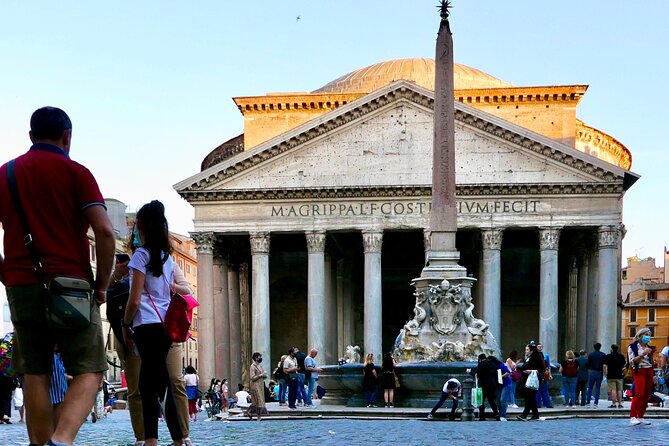
The Pantheon is the rare Roman site that still feels like it’s talking directly to you. Even from the outside, it has that big-statement look—then inside it flips the script. The space is simple in outline, but it’s loaded with design choices that explain why this building lasted (and why it became such a big deal later).
What makes this tour work for real trip schedules is the combination of short duration and expert focus. The experience is built around the Pantheon first, with an optional extension if you want the surrounding squares and churches too. That’s perfect when Rome is packed and you’re trying to keep energy for the rest of your day.
I also like that the tour isn’t only about what the Pantheon looks like. It’s about what it’s doing—how the dome reads in scale, how the interior holds up, and how the building’s Roman purpose shifted when the empire changed its beliefs.
A final practical perk: you’re not just dropped at a door and sent in. You have a real starting point and guidance right away, which matters at a site this famous where signage can feel like it’s screaming instead of helping.
You can also read our reviews of more guided tours in Rome


Meeting at Fontana del Pantheon: start with the facade
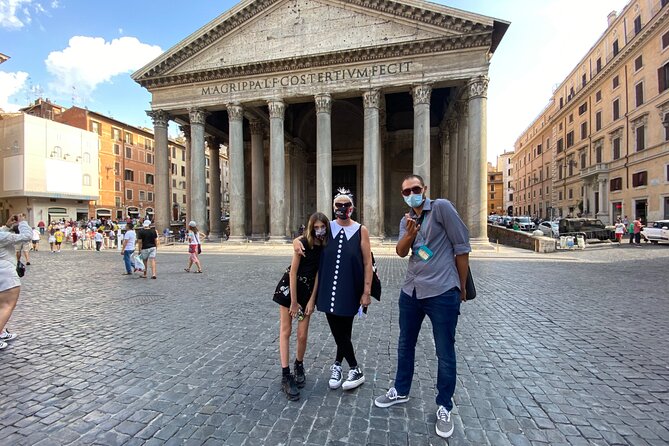
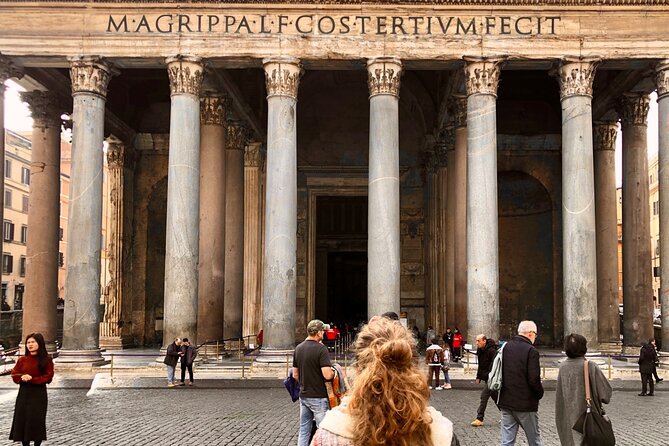
You meet at Fontana del Pantheon, in Piazza della Rotonda, right below the obelisk. This matters more than you’d think. Before you even step into the Pantheon, your guide gives context about the exterior and the surroundings—so the inside doesn’t feel like a random stop on a walking list.
This outside intro is especially helpful if you’ve never seen how Romans framed public buildings. You begin to spot how the Pantheon sits in the city, how the square shapes your first view, and how the facade sets expectations. In other words, you’re primed.
The tour timing is also practical: you’re asked to arrive about 5 minutes early. Do it. Rome rewards calm, and arriving late at a meeting point that’s known for crowds can turn a smooth start into a stress spiral.
Inside the Pantheon: the dome, the details, and the big story
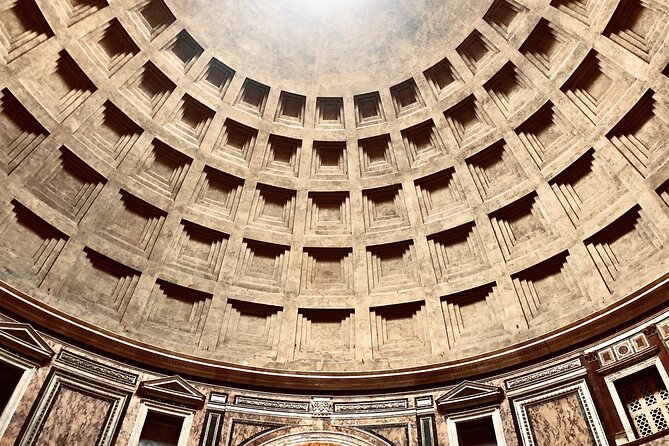
Once you enter, the core of the experience becomes what I’d call high-signal interior time. The Pantheon is often treated like a quick photo stop. With a guide, it becomes a lesson in why the building still feels unreal.
The dome and why it still shocks people
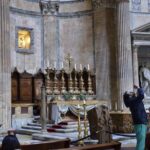
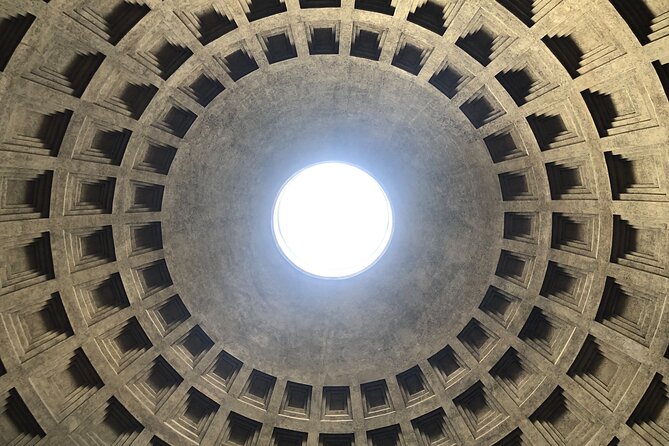
Your guide will point you to the largest dome in the Ancient world and explain what you’re seeing in terms of proportions and design logic. This is the kind of information that changes your reaction. Instead of thinking only that it’s impressive, you start understanding why it feels so balanced.
You’ll also hear how the Pantheon’s interior struck later artists—including the fact that Michelangelo reacted to its proportions when he first saw it. That’s one of those details that makes the Pantheon feel like a bridge between eras.
Columns, materials, and the surviving Roman layer
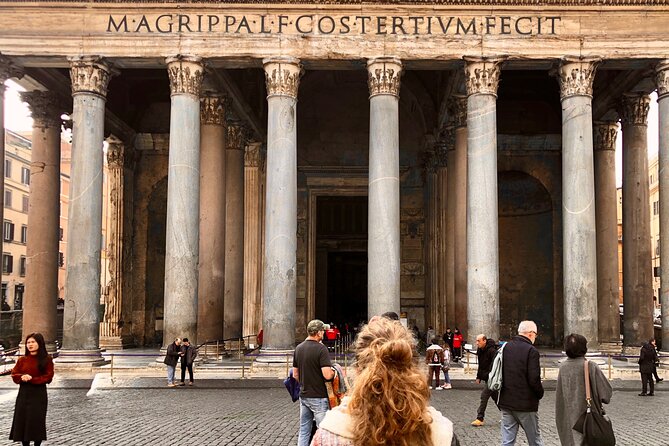
One of the best moments is when the guide talks through elements that are easy to miss if you’re just scanning for the perfect angle. You’ll walk past the Corinthian columns brought from Egypt, and you’ll hear what those choices meant for the Roman mindset: power, reuse, and a taste for the best materials from far away.
You’ll also be encouraged to look for what’s still original—your guide points out the original marble floor. That kind of specificity is what turns the visit from sightseeing into real understanding.

Pagan purpose, Christian reuse, and who ended up here
The tour covers the Pantheon’s story shifting over time. You’ll learn about the pagan rationale behind the design—then the later transformation when the Pantheon became a Christian church.
This is where the Pantheon earns its fame beyond architecture. You’ll hear how it became a resting place for Christian martyrs, Italian royals, and notable figures in the arts, including Raphael. That Roman-to-Christian overlap is exactly why the building still matters to modern visitors. It didn’t just survive—it kept getting reinterpreted.
Getting in faster: express entry and small-group pacing
The big practical question for any Pantheon tour is simple: will you lose half your day in a line? This tour is designed to avoid that problem with an express option and an organized entry flow.
From what people report, the pay-off can be substantial. One review specifically said the skip-the-line choice saved something like 30 to 45 minutes even early in the morning. If you’re planning a day around multiple major sights, that saved time is basically free travel oxygen.
You also benefit from the small group size—up to 10 travelers. That usually means:
- the guide can keep things moving without losing people
- you have a better shot at hearing the guide clearly
- you can ask questions and get real answers
And yes, the tour includes sterilised headsets. That’s not just a nice detail. At a famous church-with-crowds site, sound can be messy. Headsets help you keep up with the guide’s pace.
The one drawback to plan for
There’s always a chance the tour won’t match your ideal length. The stated duration is 40 minutes to about 1 hour 20 minutes, and it depends on whether you add the optional extension. If you’re counting on a super-short visit, pick your option carefully and don’t plan your next stop right at the same time.
Also, arrive on time and stay close. One review complained about barely hearing the guide due to accent and volume. Headsets help, but if you’re far back or have it loose, you’ll feel it.
The optional add-on: squares and churches that frame the Pantheon
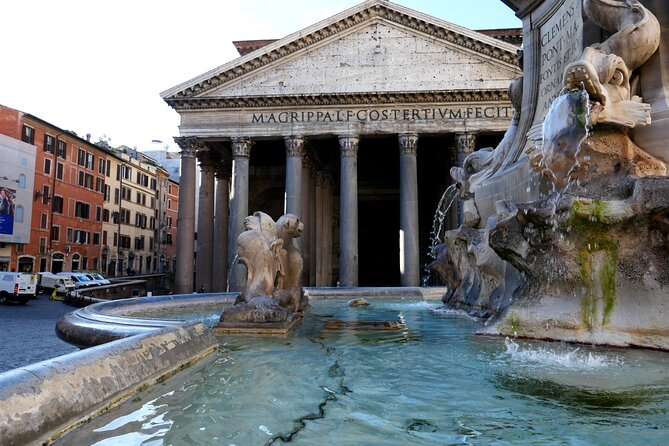
If you still have energy after the main Pantheon portion, the add-on is where the tour becomes more than a single-building visit. It’s an extra walk of about 40 minutes around nearby squares and churches, with stops that help you understand the neighborhood.
It also solves a Rome problem: you don’t just see one monument, you learn how it sits inside everyday streets.
Stop 1: Piazza della Minerva
You start at Piazza della Minerva, and you’ll learn its background before looking closely at the Elephant and Obelisk sculpture by Bernini. It’s a small square, but Bernini’s work has a way of making you pause. This stop is a good tempo reset after the Pantheon’s indoor intensity.
Stop 2: Tempio di Adriano
Next is the Temple of Hadrian—the giant columns around the corner. Even if you didn’t know it by name before, you’ll quickly get why it’s there and why it looks like an Ancient structure dropped into a modern street grid. You’ll appreciate the mix of ancient and modern architecture right up close.
Stop 3: Piazza Navona
Finally, you end in Piazza Navona. This is where the tour taps into the living, outdoor side of Rome. You’ll get glimpses of local life in nearby alleys and then finish with the square’s Baroque flair—work attributed to Bernini and Borromini.
You’ll also see details of the Fontana dei Quattro Fiumi. This is the kind of landmark that rewards slow looking, and having a guide for context helps you spot what you’d otherwise miss.
One review even called this extension out as a smart choice because it adds context to the surrounding area. I agree with that logic: it turns your Pantheon visit into a neighborhood story.
What to wear and how to avoid entry headaches
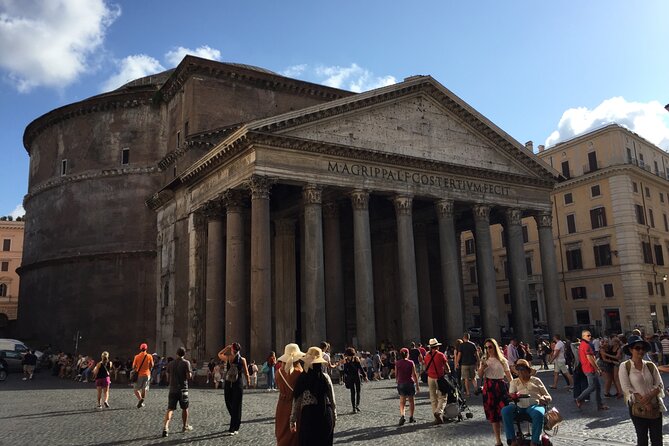
The Pantheon is a church today, so you’ll need appropriate attire: cover knees and shoulders. Plan your clothing accordingly. If you arrive in the wrong outfit, you can waste the start of your tour dealing with it.
Two more practical tips:
- Bring a small layer for evening or windy days. The tour is short, but you’ll spend time outside around the meeting point and walking the add-on route.
- Keep your headset ready and your spot consistent. If the group forms a tight cluster inside, stay where you can hear without straining.
Also note: the tour is subject to weather conditions and/or liturgical-calendar events. If it gets canceled, you’ll be offered an alternative date or a full refund. That’s normal for a working church site, and it’s worth keeping a little flexibility in your day planning.
Price and value: what $54.42 really buys you
At $54.42 per person, this tour isn’t the cheapest way to see the Pantheon. But it’s also not priced like a luxury detour. The best way to evaluate it is by what’s included and what it saves you.
Included:
- a live professional guide
- entrance fees
- sterilised headsets
- full on-site assistance
Then there’s the hidden value: time. One review mentioned the skip-the-line option saving roughly 30–45 minutes. If your day is tight—and in Rome, it always is—that time can be the difference between seeing one more landmark or having to cut something.
You should also consider what option you choose. The base experience runs 40 minutes to about 1 hour 20 minutes, while the extension adds another 40 minutes for the surrounding squares and churches. If you choose the extension, you’re stretching your money across more walking, more context, and more famous nearby spaces.
There are two cautions from reviews you should take seriously:
- If you book expecting a longer, more detailed Pantheon-only lecture, you might feel the base tour is shorter than you hoped. The duration varies.
- If you think of it as just a paid ticket plus a short walkthrough, you may be disappointed. This tour works best when you treat it like guided interpretation, not just entry.
Who should book this Pantheon tour—and who might not
This tour is a great fit for:
- first-timers who want a clear Pantheon orientation fast
- people who love architecture and want explanations tied to what you’re seeing
- anyone with limited time who still wants the story behind the building
- travelers who appreciate small groups and headset support
It may be less ideal if:
- you strongly prefer total self-paced wandering and don’t want guidance shaping your route
- you’re very sensitive to audio issues and you’ve had problems hearing guides in crowds before
- you want only a brief stop and nothing else, since the overall experience length can vary by option
If you’re the kind of traveler who asks questions, the format helps. Multiple reviews highlight that guides encouraged questions and handled them with humor and care.
Should you book this Pantheon Guided Tour?
I’d book it if you want a high-impact Pantheon visit without wasting hours or walking in blind. The combination of express entry, headsets, and a guide focused on real structure and real history is exactly what makes this site worth paying for instead of just rushing through it.
Choose the extension if you want the Pantheon to connect to the surrounding Rome you’ll actually walk through next. Piazza della Minerva, Tempio di Adriano, and Piazza Navona give you a satisfying arc—from sculpture to columns to Baroque theater.
Skip it only if your style is purely independent wandering and you’re already comfortable using your own guidebook notes inside crowded churches. Otherwise, this is one of the simpler ways to make the Pantheon feel like more than a stop on a list.
FAQ
What language is the tour offered in?
The tour is offered in English.
Where does the tour start?
It starts at Fontana del Pantheon, Piazza della Rotonda, 00186 Roma RM, Italy (meeting below the obelisk).
How long does the tour take?
The tour lasts about 40 minutes to 1 hour 20 minutes (approx.), depending on the option you choose.
Is the entrance fee included?
Yes. Entrance fees are included, and the Pantheon admission ticket is covered as part of the tour.
Does the tour use an express option?
Yes. The tour is described as having an express option, designed to help you make the most of your time.
Are headsets provided?
Yes. You’ll receive sterilised headsets to hear your guide clearly.
Can I add a tour of nearby squares and churches?
Yes. You can add an additional 40-minute guided tour around nearby squares and churches during booking.
What attire do I need for the Pantheon?
Because it’s a church today, you’ll need to cover knees and shoulders to enter.
What happens if the tour is canceled due to weather or church events?
If canceled due to weather conditions or liturgical-calendar events, you’ll be given the option of an alternative date or a full refund.