REVIEW · ATHENS
Ancient Athens Electric ATV Scooter Tour
Book on GetYourGuide →Operated by Smart Urban · Bookable on GetYourGuide
Electric scooters can turn Athens into a highlight reel. In just 2 hours, this electric four-wheel ATV tour links the big names—Acropolis, Agora, and democracy at Pnyx—with practical photo stops and quick breaks that keep your legs happy.
What I like most is the combo of smart routing and local guidance. You ride from Plaka through key archaeological areas, then pause at viewpoints like Areopagus where the city’s layout starts to make sense fast.
One drawback to consider: the guide experience can vary. The tour format works well, but one review mentioned a guide felt less engaging, so if you’re picky about storytelling, go in with the mindset that you’re there for the sights and the ride, too.
In This Review
- Key things to know before you ride
- Riding an electric ATV across ancient Athens (without the sore feet)
- Starting in Plaka: the old Athens mood right away
- The Acropolis corridor: views, the Odeon, and a sense of scale
- Areopagus (Mars Hill): courtroom energy and panoramic angles
- Pnyx: seeing the birthplace of democracy in the open air
- Thissio and Kerameikos: pottery, cemeteries, and everyday life
- Ancient Agora: where philosophers, politicians, and merchants overlapped
- Monastiraki Square and the flea market pass: a more modern Athens beat
- Roman layers: Library of Hadrian and the Roman Agora
- The scooter ride itself: smooth handling and real safety habits
- Guides and group size: why the tour feels manageable
- Value check: what you get for $58 in 2 hours
- Who this tour is best for (and who should skip it)
- Should you book the Ancient Athens Electric ATV Scooter Tour?
- FAQ
- How long is the Ancient Athens Electric ATV Scooter Tour?
- Where does the tour start?
- How many people are in the group?
- What’s included with the tour?
- What languages are available for the live guide?
- Is there an age limit?
- How much does the tour cost?
Key things to know before you ride
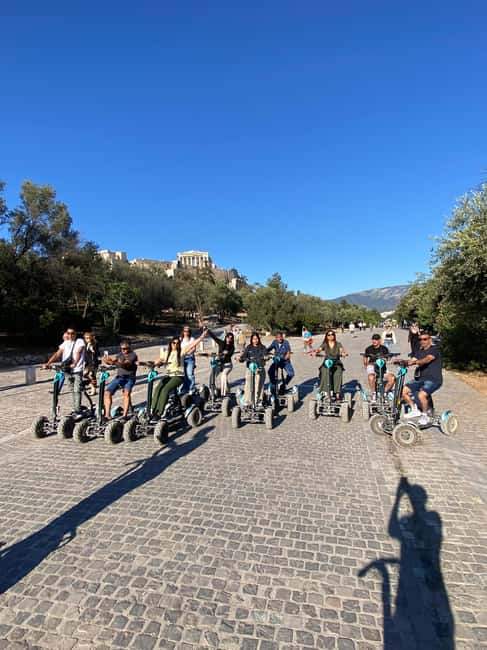
- Small group size (up to 10) keeps the tour from feeling rushed and helps with safer riding in tighter streets.
- Electric ATV + training + helmet means you’re not just dropped into traffic with no prep.
- Photo stops at landmark viewpoints include the Acropolis area and hilltop perspectives like Areopagus.
- Stops tied to the big political story: you visit Pnyx, connected to early democracy, plus the Agora for public-life context.
- Comfort support included: water, insurance, and even WiFi are part of the package.
- Scooters are reported in top condition with smooth, easy handling for navigating Athens streets.
Riding an electric ATV across ancient Athens (without the sore feet)
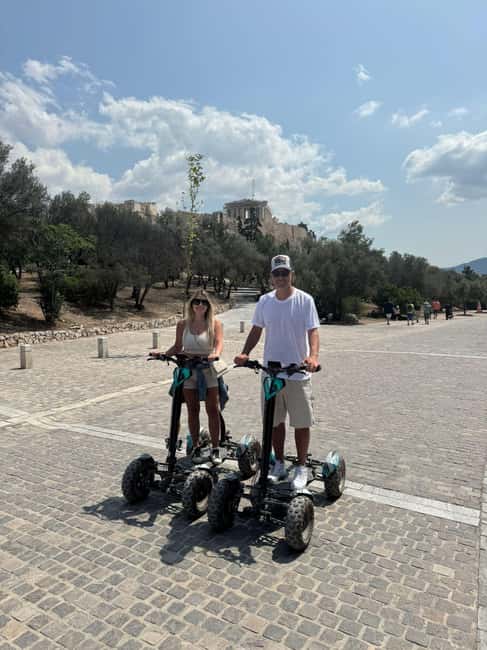
Athens is built for walking, but walking everywhere can wreck your day—especially when you’re trying to connect multiple “must-see” sites. This tour solves that problem with electric ATVs that still give you that street-level, on-your-own exploration feeling.
You get a guided route, but you’re not stuck behind a slow parade. The electric scooters are designed for easy handling, and the tour includes training so you can feel confident early.
At $58 per person for 2 hours, the value isn’t only the sites—it’s the mix of transportation, guide time, safety gear, and the extras that reduce hassle. You’re also traveling efficiently between neighborhoods that would take you a lot of foot time to string together.
You can also read our reviews of more tours and experiences in Athens.



Starting in Plaka: the old Athens mood right away
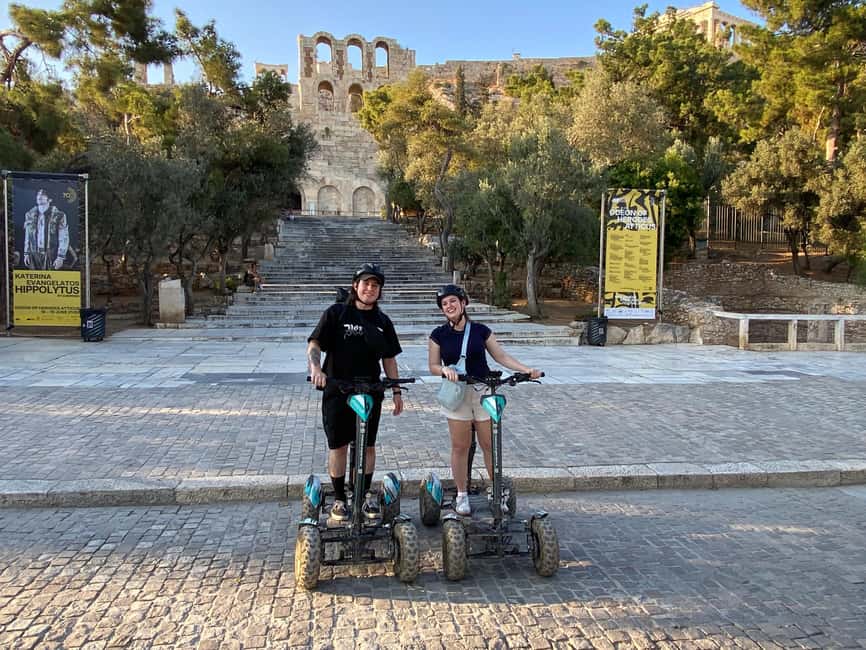
Your tour begins in the Plaka neighborhood, known for its old-stone streets and classic Athens charm. This is a great starting point because you’re already in the historic zone before you even mount the scooter.
After gearing up with your helmet, you roll out under the guidance of the local leader. You’ll ride through neighborhood streets that feel lived-in, not like a tour-only corridor. That matters because Athens is layered—ancient stone, newer streets, and daily life all overlap.
The Acropolis corridor: views, the Odeon, and a sense of scale

One of the strongest parts of this tour is the section along the Acropolis. You don’t just hear about it—you ride alongside it and get that “oh wow” sense of scale that pictures never fully capture.
A key stop here is the Odeon of Herodes Atticus, an ancient stone theater. Even if you don’t spend ages inside, the stop helps you connect what you see on the hill to how Athens once hosted performances and public events.
If you’re trying to understand where everything sits, this is the moment it clicks. The scooter travel also helps you position yourself for photos without tiring your body before the best viewpoints.
Areopagus (Mars Hill): courtroom energy and panoramic angles

Next, you head toward Hill of Mars (Areopagus). This is the kind of location that makes a city feel like a puzzle—because it’s high enough to show you the bigger picture, but still close enough to connect to the sites below.
The tour includes time for a view and photo opportunities, plus history explanations tied to how ancient judicial proceedings worked here. For me, the practical value is this: when you can see the topography, you stop thinking of Athens as separate attractions and start seeing it as one connected city.
Pnyx: seeing the birthplace of democracy in the open air

Then it’s on to Hill of Pnyx, known as the birthplace of democracy. On a walking tour, Pnyx can feel like just another hill stop. On a scooter route, it feels like a deliberate chapter in a story.
The timing and pacing matter: you’re already warmed up from the ride, and the guides give context so you understand what this space meant for political gatherings. It’s also a good photo moment because the horizon line helps you imagine crowds moving through the area.



Thissio and Kerameikos: pottery, cemeteries, and everyday life
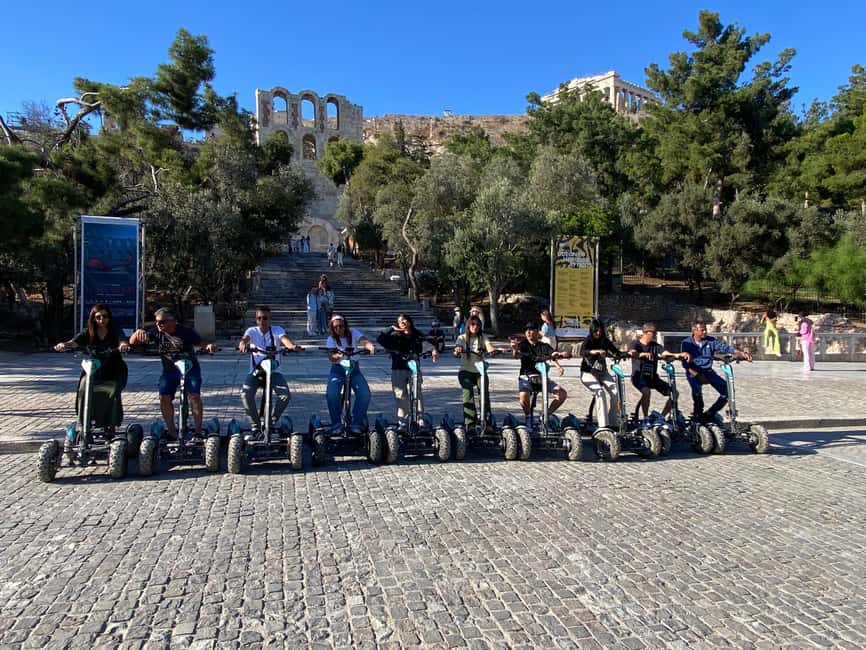
As the tour continues, you ride through Thissio and approach the Keramikos Archaeological Site. Kerameikos isn’t just about ruins—it’s connected to a practical side of classical Athens. The site includes an ancient cemetery and was also a pottery production area.
That makes it feel more human than some purely monumental stops. You start to picture daily craft, not only big speeches or grand buildings.
The stop is structured for learning and photos, with the guide sharing key details and the group taking short breaks as needed.
Ancient Agora: where philosophers, politicians, and merchants overlapped
After Kerameikos, you reach the Ancient Agora, the public heart of ancient Athens. This is the area where the tour becomes more than sightseeing—it turns into a timeline in your head.
You’ll get a guided look at the space and a chance to imagine the mix of people who used the Agora: philosophers, politicians, and merchants. This is one of the best parts for anyone who wants context, not just landmarks.
One practical note: the tour is only 2 hours, so stops aren’t meant to become long museum sessions. If you love slow, deep exploring, you may want to pair this ride with separate time at the Agora afterward.
Monastiraki Square and the flea market pass: a more modern Athens beat
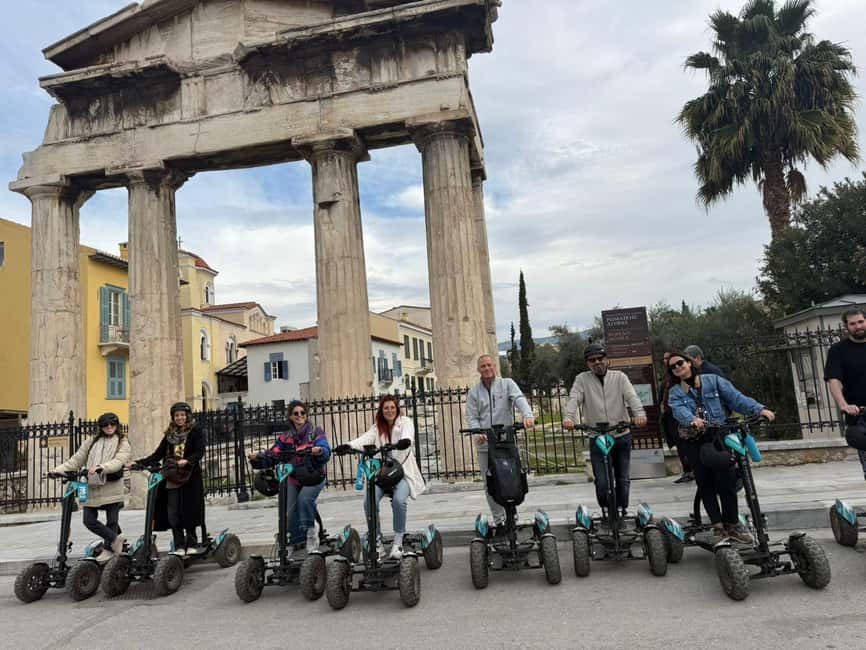
Before returning toward Plaka, you cruise near Monastiraki Square. The route also passes by the area of the flea market, which can be fun if you like antiques, small local goods, and the energy of a busy Athens square.
This section matters because it shows how the ancient city lives on around today’s crowds. It’s also useful for getting oriented. Even if you don’t buy anything, you start to understand where you’ll want to wander on your own later.
Roman layers: Library of Hadrian and the Roman Agora

The tour doesn’t stop at one era. You ride past the Library of Hadrian and the Roman Agora, showing Athens as a place that kept evolving after the classical period.
You’re not spending hours in each zone, but the route gives you quick “chapter changes.” That’s ideal for first-timers who want a clean overview before committing to deeper visits.
The scooter ride itself: smooth handling and real safety habits
The ATVs are a big part of the experience, and the feedback is consistently positive. People highlight the scooters as clean, well-maintained, and easy to ride—even through Athens traffic and narrow streets. That’s a comfort factor you should care about because Athens streets can feel intimidating if you’re on foot for hours.
Safety is supported by the included helmet and the training session. You’re also covered by insurance, and water is provided so the stops feel manageable rather than draining.
If you’re nervous about driving a new vehicle, plan to arrive ready to listen during training. Once you get the hang of it, the tour becomes fun fast—fast enough that you’ll forget how much walking you’d normally do.
Guides and group size: why the tour feels manageable
This is a small group tour, capped at 10 participants, which helps with spacing and gives the guide a better chance to manage questions.
The tour also runs with English, Spanish, and Hebrew-speaking guides. In the feedback, named guides like Bill and Demi come up as highlights—both described as friendly, knowledgeable, and patient, with helpful local tips and routes.
The only caution from the reviews is that one person felt the guide was less engaging. That doesn’t mean the tour is bad—it’s more a reminder that communication style can affect your enjoyment, especially on a guided route where you’re listening while riding.
Value check: what you get for $58 in 2 hours
Here’s the practical math in plain terms. For $58, you’re not just paying for a guide who talks at you. The price includes:
- an electric four-wheel ATV
- helmet
- training
- insurance
- water
- WiFi
- a live guide
That turns the cost into something closer to a “transport + experience package,” which often makes sense in a city like Athens where distances add up quickly.
You’re also getting a structured route that covers major anchors like the Acropolis area and Ancient Agora, plus hilltop viewpoints tied to real ancient civic life. For many people, that’s the difference between seeing a few scattered highlights and getting a connected overview.
Who this tour is best for (and who should skip it)
This tour is a strong fit if you want:
- a first-time Athens overview without spending the whole day walking
- an easy way to connect multiple archaeological areas efficiently
- a blend of viewpoints, short stops, and history explanations
- a fun ride that still gives you structure
It may be less ideal if you:
- want a slow, museum-style pace (the tour is only 2 hours)
- are very sensitive to how much you must listen while moving between stops
- have young kids—this one is not suitable for children under 8
If you’re traveling with mixed interests (history lovers plus people who hate foot-only days), this scooter format often lands well because it delivers both motion and context.
Should you book the Ancient Athens Electric ATV Scooter Tour?
I’d book it if you’re trying to cover the headline Athens sites while keeping your body fresh for the rest of your trip. The strongest reasons are the practical ones: electric ATVs that handle well, a small group setup, and a route that links the Acropolis area to hilltop civic sites like Areopagus and Pnyx, then continues to the Ancient Agora.
I’d think twice if you’re chasing a deep, long, museum-level experience. This is a ride-and-see tour. It’s designed to help you get oriented and leave with a clearer picture of how all those places connect.
FAQ
How long is the Ancient Athens Electric ATV Scooter Tour?
The tour lasts 2 hours.
Where does the tour start?
The starting point is the Plaka neighborhood.
How many people are in the group?
It’s a small group limited to 10 participants.
What’s included with the tour?
Included items are a tour guide, an electric four ATV scooter, helmet, insurance, training, water, and WiFi.
What languages are available for the live guide?
The live tour guide is available in English, Spanish, and Hebrew.
Is there an age limit?
Yes. It is not suitable for children under 8 years.
How much does the tour cost?
The price is $58 per person.
If you want, tell me your travel month and whether you’re more into viewpoints or archaeology. I can suggest the best order to pair this with other Athens stops so you don’t repeat time in the same areas.