REVIEW · ATHENS
Ancient Athens Segway Tour
Book on GetYourGuide →Operated by Athens City Segway Tours · Bookable on GetYourGuide
One ride can cover more Athens than a full walking day. This 2-hour Segway route links key sights around the Acropolis area with viewpoint stops, pottery and theatre landmarks, and a final spin through Monastiraki and its flea market lanes.
I especially love the way the day is built for first-timers. A full training session (plus a helmet) gets you confidently moving, and the guide keeps the route friendly enough that you can focus on the sights instead of wrestling with the machine.
The main consideration is sound and comfort: if you’re expecting a perfectly audible lecture while you’re moving, plan for short pauses to catch every detail. Also, this is not for everyone physically—there are clear age and weight limits, and the tour isn’t recommended for pregnancy.
In This Review
- Key things to know before you go
- Why a Segway works so well in Athens’ ancient core
- Plaka start: training, helmet, and confidence you can feel
- Dionysiou Areopagitou Street: the clean Acropolis sightline
- Odeon of Herodes Atticus: Roman stone theatre still at work
- Mars Hill (Areopagus) and Pnyx Hill panoramic viewpoints
- Keramikos and the Ancient Agora: seeing classical Athens without trudging
- Monastiraki and the flea market lanes: modern Athens right at the end
- The ride rhythm: timing, breaks, and how the 2 hours feel
- Price and value: what $81 buys you in Athens
- Who this Segway tour fits best (and who should skip it)
- Final verdict: should you book the Ancient Athens Segway Tour?
- FAQ
- FAQ
- How long is the Ancient Athens Segway Tour?
- Where is the meeting point?
- Is Segway training included?
- Do you enter archaeological sites during the tour?
- What age can ride a Segway?
- Are there weight limits?
- Is the tour suitable for pregnant women?
- What languages are the live guides available in?
- What should I avoid bringing?
Key things to know before you go
- Training first, then riding: you get hands-on Segway practice at the start, not just a quick demo
- Acropolis views from the promenade: Dionysiou Areopagitou Street gives a clean line of sight toward the Acropolis
- Two viewpoint hills: you get big panorama time from Mars (Areopagus) and Pnyx Hill
- Roman-era theatre stop: you’ll see the Odeon of Herodes Atticus, still used during the Athens Festival
- No site entry tickets required: you’ll look at major archaeological areas from the route, not inside
- Great for orientation: in a short time, you learn how the city layers ancient Athens, Roman Athens, and modern Athens
Why a Segway works so well in Athens’ ancient core
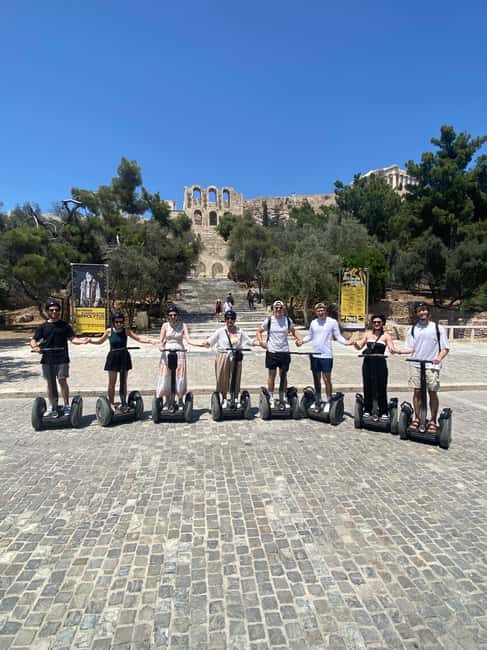
Athens has a lot of “go slow or you miss it” geography—hills, long sightlines, and tight lanes that don’t always feel great for heavy walking. A Segway flips the script. You glide, you stop often enough to photograph, and you still move through the neighborhoods where the ancient monuments sit inside a living city.
What makes this route practical is the way it strings together nearby highlights. You’re not hopping all over town; you’re staying in the core zone around the Acropolis, then finishing in Monastiraki, where modern Athens is loud, small, and full of texture.
It’s also a low-effort way to cover more ground than most guided walking tours. If you want an overview day—while keeping your feet fresh for later museum time—this format makes sense.
You can also read our reviews of more tours and experiences in Athens.



Plaka start: training, helmet, and confidence you can feel
The tour starts in Plaka, Athens’ classic old neighborhood, at Eschinou 9. Plaka is an easy place to begin because the streets feel scenic right away, and you’re already surrounded by the vibe of old Athens.
At the office, you get a comprehensive Segway training session and safety instructions. In many of the tour experiences described, first-timers pick it up fast—more than “learning the Segway” is about learning when to slow down, when to turn, and how to stay relaxed while rolling through pedestrian areas. Guides like Demie and Dima are repeatedly praised for being patient and calm during the early practice phase.
You’ll also wear a helmet (included), and you’ll want comfortable shoes. This isn’t about fashion. It’s about stable steps off the Segway during photo breaks and short sightseeing moments.
Dionysiou Areopagitou Street: the clean Acropolis sightline
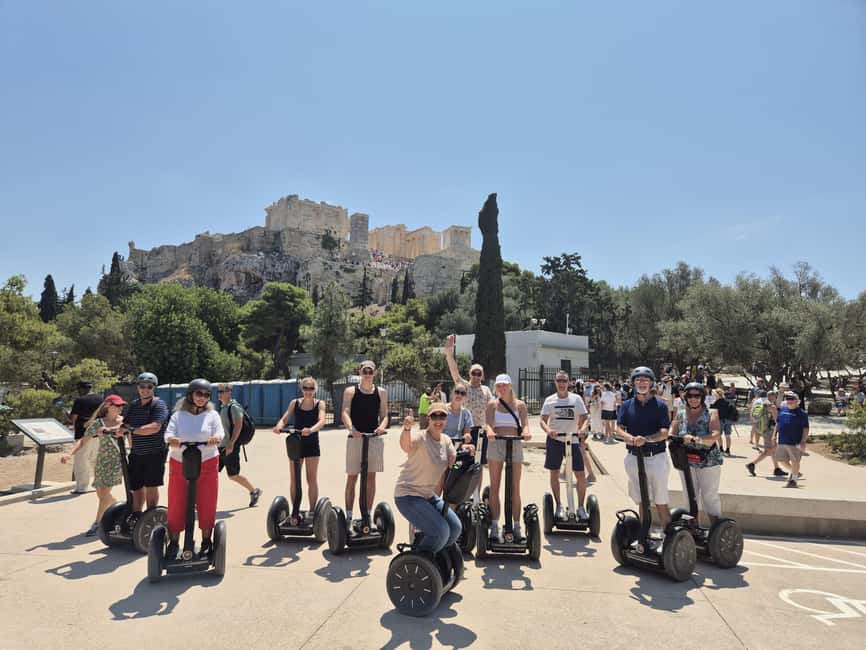
One of the best parts of the route is the glide along Dionysiou Areopagitou Street, a UNESCO-listed pedestrian promenade. This is the kind of street where you can look straight ahead and actually see the Acropolis instead of losing the view between buildings and crowds.
Along the way, you pass major anchors like the Acropolis Museum, a modern, striking building that houses priceless ancient artifacts. You also see the Theater of Dionysus, widely recognized as the first known theater in the Western world—where dramatic performance began in ancient Greece.
If you like your sightseeing with big “wow” visuals, this is the segment that usually delivers. Even if you’ve seen photos before, watching the view unfold while you glide gives you that sense of place—what Athens looked like before modern traffic and later layers took over the streetscape.
Odeon of Herodes Atticus: Roman stone theatre still at work
After the big promenade views, the route shifts toward the theatre side of the Acropolis slopes. You’ll encounter the Odeon of Herodes Atticus, a Roman-era stone theatre built in 161 AD by Herodes Atticus.
This stop isn’t just for photos. It’s a reminder that Athens didn’t stop being important after classical Greece. The same theatrical space concept kept getting reused, rebuilt, and repurposed as centuries passed.
The timing matters a bit here: the venue continues to host performances during the Athens Festival. Even if you’re not in festival season, the feel of the structure is something you remember—stone seating, the hillside setting, and that sense of scale.
Mars Hill (Areopagus) and Pnyx Hill panoramic viewpoints
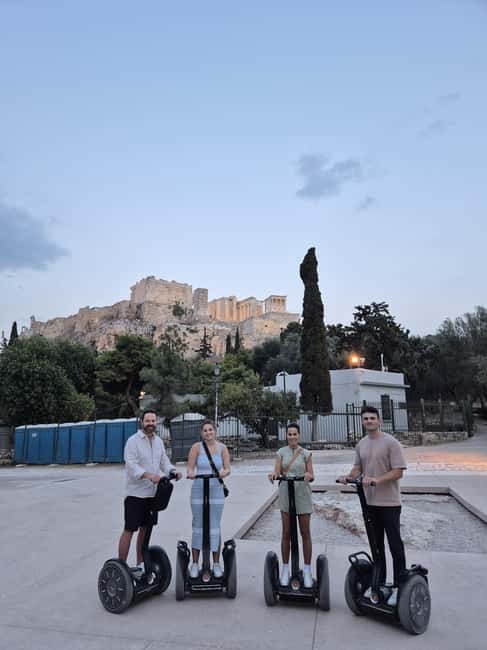
The tour includes major viewpoint time from Mars Hill (Areopagus). This rocky outcrop is historically tied to judicial and political proceedings in ancient Athens, so it’s not just a pretty stop. It’s a place where you understand why people would gather there to decide matters of civic life.
From Mars Hill, you get panoramic views spanning ancient monuments and the modern city grid. These are the frames that turn your Athens photos from “nice” into “this is the real city.”
Then you’re also set up for views from Pnyx Hill, described as a birthplace of democratic governance. You learn what the physical location was like for political assemblies and direct democracy in ancient Athens. If you’re the kind of person who likes ideas with a location attached, this is a big win.



Keramikos and the Ancient Agora: seeing classical Athens without trudging
From the viewpoint side, the tour moves into the historical streetscape around where everyday ancient life happened.
You’ll spend time at/around Keramikos, Athens’ ancient pottery quarter. This is where you connect Athens to craft and production, not just temples and big speeches. The “pottery quarter” label matters because it hints that the city’s famous culture came from skilled hands and daily work.
Next comes the Ancient Agora segment. This portion is designed to give you a look at classical public spaces—ruins of government buildings, temples, and civic areas. You’re riding through archaeological terrain, which helps you cover more ground than you could easily by foot in a short outing.
A key point: the tour does not enter archaeological sites. That means you won’t get inside many ruins behind ticket gates. What you do get is the outside route perspective—plus the guide’s context—so you come away with a mental map. Then, if you want to go deeper later, you can choose which ticketed sites match your interests.
Monastiraki and the flea market lanes: modern Athens right at the end
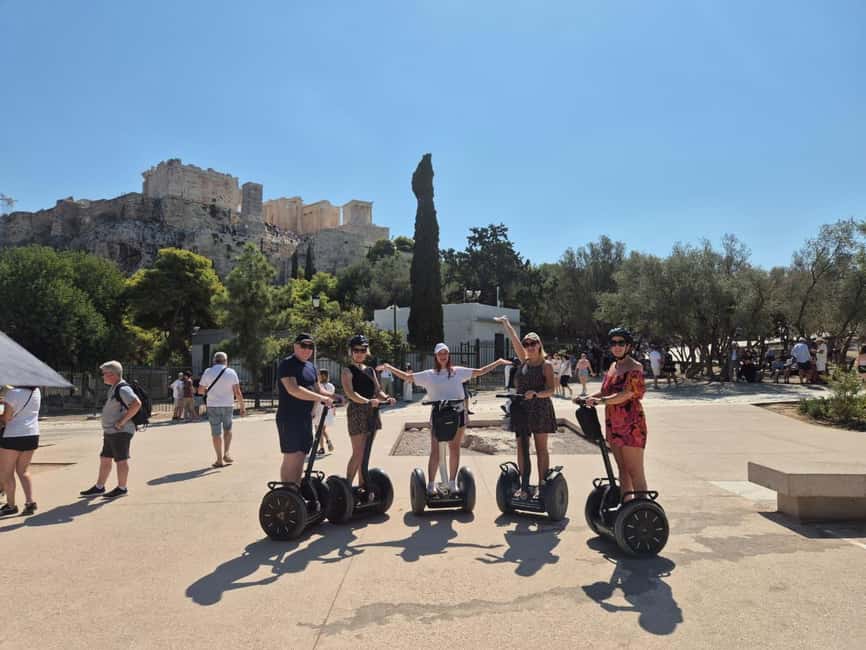
After the ancient and classical segments, you finish in Monastiraki. This is where Athens shows you the present tense—lively market streets, shops, and that quick, human scale that makes you want to slow down even on a Segway.
The route also passes landmarks tied to later layers of the city, including Hadrian’s Library and the Roman Agora, which helps you understand that Athens doesn’t just have one “ancient period.” It keeps building, restoring, and reusing space across eras.
You’ll get break time and photo stops in this section, plus some free time so you can wander the market energy on foot. If you’re hoping for a tour that ends with something you can snack your way through, this is the part that usually delivers.
The ride rhythm: timing, breaks, and how the 2 hours feel
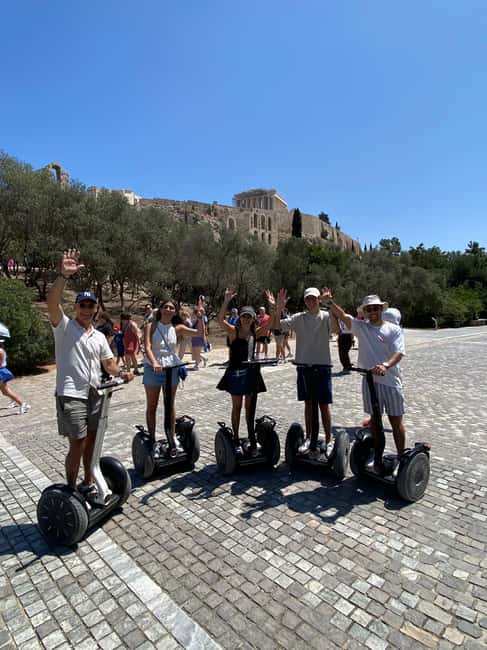
The tour is 2 hours, and the way it’s paced is part of the value. You get Segway rides between stops, but you also get short breaks—photo stops and sightseeing moments are built in.
In one of the experiences described, a guide gave extra practice time—15 to 20 minutes—before fully setting off, which is exactly how you want it if you’re nervous. If you’re new to Segways, ask yourself a simple question: do you want to feel rushed, or do you want to feel steady? The format here aims for steady.
You may still notice one small drawback that comes up: during movement, it can be harder to hear every word. If you care about the history details, listen hardest at stops and don’t assume you’ll catch everything while rolling.
Price and value: what $81 buys you in Athens
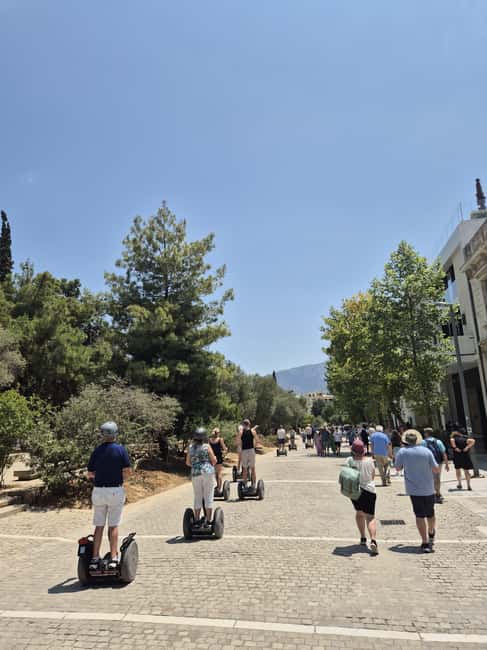
At $81 per person, you’re paying for more than just transportation. You’re paying for guided structure, training time, and access to a route that connects several major sights inside the city core in a way that’s hard to replicate quickly on your own.
Is it cheaper than walking? Often, yes—but only if you’re willing to spend time and energy mapping the same sequence yourself. This tour is effectively a time-saver. It’s also a comfort-saver, because you’re not doing a long day on foot after already arriving in Athens.
What you should not assume: entry fees and guided tours inside archaeological sites are not included, and the tour doesn’t enter sites. If you want museum interiors or ticketed ruin areas, you’ll add those separately.
So the value equation is simple. If you want an organized overview, a fun ride, and major highlights with context in two hours, this is strong value. If you want maximum ticketed site time inside buildings and ruins, you’ll get less than a full-entry archaeological day.
Who this Segway tour fits best (and who should skip it)
This tour suits you if you:
- Want a first-day orientation to central Athens and the Acropolis area
- Like practical history—learn why places mattered, then see the location
- Prefer an easier way to cover multiple segments around Plaka, the Acropolis zone, and Monastiraki
- Are comfortable riding a personal transporter after training and a bit of practice
It’s not a fit if:
- You’re pregnant (not recommended)
- You’re outside the minimum age of 10 or you’re traveling with a minor who isn’t accompanied (anyone under 18 must be with an adult)
- You fall outside the weight limits (not suitable under 45 kg / 99 lbs or over 113 kg / 250 lbs)
- You have luggage or large bags (not allowed), or you want to bring awkward bulky items on the Segway
If you’re on the fence, consider your goal. This is a “get the lay of the land” tour. For deep, ticketed archaeology, you’ll still want separate time.
Final verdict: should you book the Ancient Athens Segway Tour?
Book it if you want an efficient, fun, and guided way to connect a lot of Athens in a single afternoon. The training-first approach and the calm, patient guides reported—people like Demie, Dima, and Gina—make it feel doable even if you’ve never ridden before. You’ll come away with a mental map of where the ancient world sat in today’s city, plus photo-ready Acropolis sightlines.
Skip it if you’re hoping for lots of indoor museum time or ticketed archaeological site entries, because this tour stays outside and uses the ride route for viewing and context. Also skip if you’re not comfortable with the health and physical constraints.
If your priority is first-day orientation and saving your legs for later, I’d call this one a smart pick.
FAQ
FAQ
How long is the Ancient Athens Segway Tour?
It lasts 2 hours.
Where is the meeting point?
Meet at Eschinou 9, in Plaka (Athens 105 58, Greece).
Is Segway training included?
Yes. The tour includes training, plus a helmet and an experienced local tour leader.
Do you enter archaeological sites during the tour?
No. The tour does not enter archaeological sites, and entry and guided tours at archaeological sites are not included.
What age can ride a Segway?
The minimum age to ride is 10. Anyone under 18 must be accompanied by an adult.
Are there weight limits?
Yes. Segways are not suitable for anyone who weighs less than 100 pounds (45 kg) or over 250 pounds (113 kg).
Is the tour suitable for pregnant women?
No. It is not recommended for pregnant women.
What languages are the live guides available in?
The live tour guide is available in Hebrew, Russian, Ukrainian, Spanish, and English.
What should I avoid bringing?
Luggage or large bags are not allowed. Wear comfortable shoes and plan to travel light for the ride.