REVIEW · ATHENS
Private Biblical Ancient Corinth Tour from Athens
Book on Viator →Operated by LS Tours · Bookable on Viator
Ancient Corinth feels close, not distant. This private 8-hour day strings together engineering at the Corinth Canal, Paul-related locations, and the big climb to Acrocorinth for wide views. I love the one-group pace and the way your driver can explain what you’re seeing; the main trade-off is that key entries and a licensed guide are not included.
You also get a lot of story per hour. On past departures with drivers such as Bill, George, Alex, and Chris, the focus stays on Paul, the roads, and why these places mattered on the map.
Practical note: the day is long, and the Acrocorinth path is steep. Wear grippy shoes, expect stairs/rock underfoot, and plan to spend real time walking, not just photo stops.
In This Review
- Key highlights you’ll actually feel
- Private Biblical Corinth: What This Day Trip Gets Right
- The Athens Pickup and the Long Drive That Sets the Tone
- Corinth Canal: Engineering You Can Feel in Your Neck Muscles
- Diolkos Trackway: The Ship-Overland Shortcut That Changed Everything
- Kenchreai Port: Paul’s Stop Area on the Eastern Side
- Acrocorinth: The Fortress Above and the Views That Explain the Stakes
- Museum of Ancient Corinth: Turn Stops into Meaning
- Lunch and Village Time Near Corinth: A Real Break, Not a Token Pause
- Ancient Corinth (Archaia Korinthos): Paul’s City-State in Real Footsteps
- Value Check: What You’re Really Paying For
- Tips to Make This Day Feel Effortless
- Should You Book This Private Biblical Corinth Tour?
- FAQ
- How long is the Private Biblical Ancient Corinth Tour from Athens?
- What’s included in the tour price?
- What’s not included?
- Do I get hotel or port pickup?
- Is this tour private?
- What language is the tour offered in?
- Will there be a tour guide inside the archaeological sites?
- Is admission included for all stops?
- How far in advance do people usually book?
- What happens if the weather is bad?
Key highlights you’ll actually feel
- Corinth Canal views from above with a sense of how geography forces decisions
- The Diolkos trackway that moved ships overland across the Isthmus
- Kenchreai, Paul’s stop area tied to Acts and Romans
- Acrocorinth fortress views with a commanding feel for the Peloponnese gateway
- Museum time that turns ruins into context before you walk Ancient Corinth
Private Biblical Corinth: What This Day Trip Gets Right
This is the kind of day that makes ancient places stop feeling abstract. You start in Athens, then work your way toward Corinth’s “why,” not just its “what.” The route is built around the Isthmus of Corinth—the narrow link between mainland Greece and the Peloponnese—and it shows how that bottleneck shaped trade, war, and early Christianity.
The private format matters. Instead of watching a group disappear and reappear, you can linger when something clicks—like a port location tied to Paul, or the view from Acrocorinth that explains why fortifications had such value. And because your driver is in charge of the timing, you’re not stuck waiting at each stop as much.
The main catch is straightforward: admission fees and a licensed tour guide aren’t included in the base price. You’re paying for private transportation plus a driver who provides commentary, not for a full museum guide in every room.
You can also read our reviews of more private tours in Athens
The Athens Pickup and the Long Drive That Sets the Tone
Pickup is direct and simple. Your personal driver meets you at the hotel lobby, apartment entrance, or the disembarkation area at Piraeus Port, then you head out in an air-conditioned vehicle with WiFi onboard and bottled water.
You’re on the road for about an hour before the first major sights. That might sound slow, but it’s the right kind of slow for this day. It gives you time to get oriented—how Corinth fits between Athens and the Peloponnese—and it helps you understand what you’ll be walking into later.
Also, plan for a full day. You’re looking at roughly 8 hours total, plus you’ll want breaks at the right moments rather than rushing every stop. If you’re trying to do this on a day when you’re wiped out, it may feel heavier than it looks on paper.
Corinth Canal: Engineering You Can Feel in Your Neck Muscles
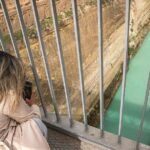
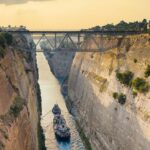
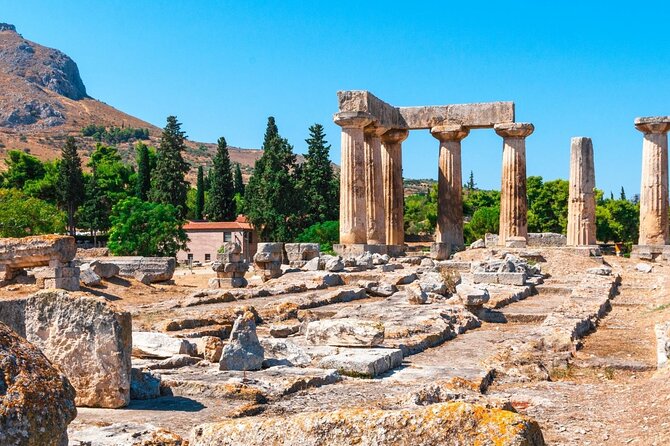
The Corinth Canal is the headliner for a reason. It cuts through the Isthmus of Corinth, linking the Gulf of Corinth (Ionian side) to the Saronic Gulf (Aegean side). At only 6.4 km long and about 21 meters wide at the base, it’s just narrow enough to make you picture ships working through it carefully.
You’ll spend about 30 minutes here, including time to look down and across the steep limestone walls. From higher viewpoints you get a strong sense of the canal’s “choke point” character. It’s not just scenery. It’s a lesson in how modern engineering tackles the same geographic problem that ancient people faced.
Two practical tips:
- Bring your phone camera time seriously. The best angles tend to be where you’re standing still, looking down.
- If you hate hot wind, consider timing your photos for when you’re under shade or behind a structure.
Diolkos Trackway: The Ship-Overland Shortcut That Changed Everything
Right after the canal, you’ll stop at the Diolkos—an ancient paved trackway near Corinth. This is one of those places where history becomes mechanical. The Diolkos let boats be moved over land across the Isthmus of Corinth, avoiding the long and dangerous journey around the Peloponnese.
You’ll get around 30 minutes here. That’s enough time to understand the idea: take the “always around” route and replace it with a straight shot through the bottleneck. The trackway combined principles of a railway and overland ship transport, and it stayed unique in the ancient world.
Why I like this stop for a biblical-themed day: it connects to movement. Paul’s travels weren’t just about faith—they depended on routes, ports, and the ability to travel goods and people efficiently. Seeing the Diolkos helps you picture what ancient movement looked like at ground level.
Kenchreai Port: Paul’s Stop Area on the Eastern Side
Next up is Kechries (Kenchreai). In ancient times, it was one of Corinth’s two ports. It handled trade routes toward the east via the Saronic Gulf, while Lechaion served westbound routes toward Italy and beyond. That split mattered because Corinth sat in the middle—so ships and goods had to channel through these port hubs.
You’ll spend about 30 minutes here, and it’s also where early Christianity shows up in the story. Acts 18:18 mentions the Apostle Paul stopping in Kenchreai during his second missionary journey. He had his hair cut to fulfill a vow, probably connected to a Nazirite vow. Paul also mentions Phoebe in his letter to the Romans, linked to the local assembly in the area.
This is the stop where you’ll feel the tour’s biblical focus most directly. If you enjoy reading scripture alongside real locations, you’ll get more out of Kenchreai than you would from a list of facts alone.
A small consideration: this stop is time-limited. If you’re the kind of person who wants to linger over every marker, keep your expectations aligned with the day’s schedule.

Acrocorinth: The Fortress Above and the Views That Explain the Stakes
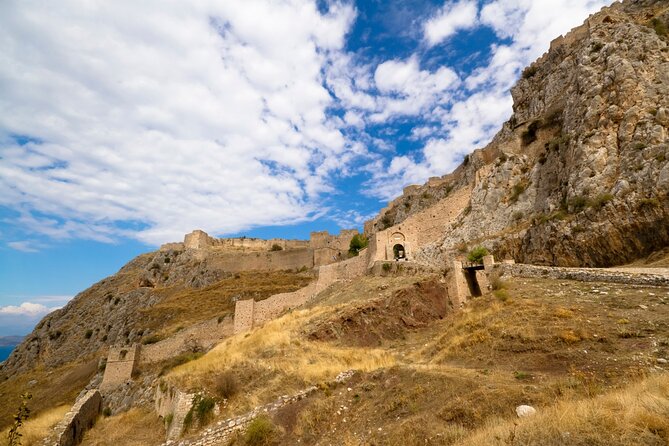
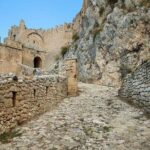
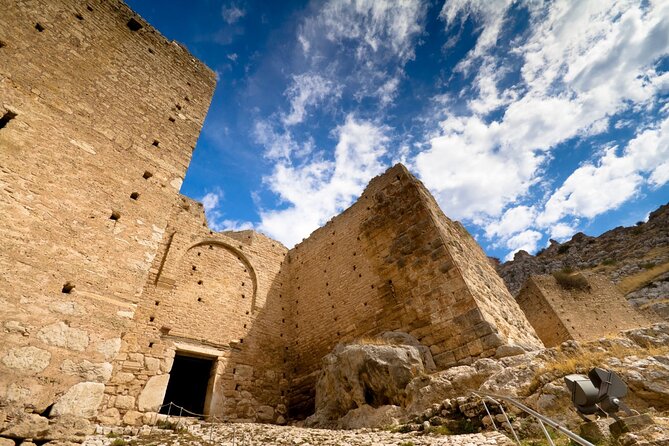
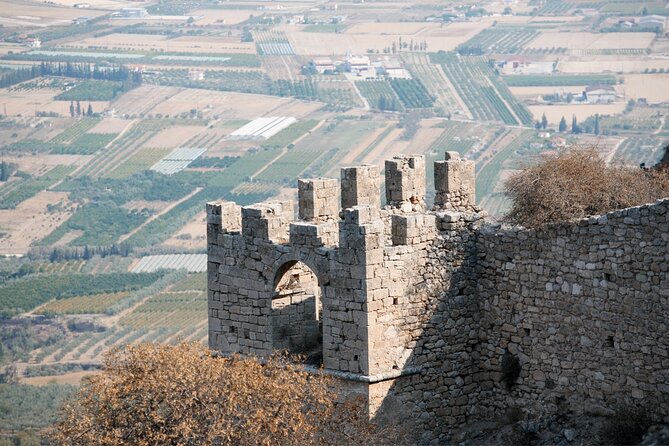
Acrocorinth is Corinth’s Upper City and its acropolis: a monolithic rock with a fortress perched on top. It looks intimidating because it was meant to be. With a secure water supply, the fortress repeatedly served as a last defense for southern Greece, controlling the approach to the Peloponnese.
You’ll have about 1 hour here. That time is just enough for the climb and enough lingering to enjoy the views—assuming you pace yourself. One thing to know before you go: the path is steep, rocky, and slippery in spots. If you have mobility issues or you don’t like uneven ground, this is the part of the day where you’ll need to think carefully.
Why the climb is worth it: from the top, the Isthmus stops being a concept and becomes a control point. You can almost feel how people would have scanned for threats coming from the mainland.
Also, give yourself a photo buffer. It’s easy to rush the climb and then realize you have no time to stand and take in the panorama.
Museum of Ancient Corinth: Turn Stops into Meaning
After Acrocorinth, you’ll move to the Museum of Ancient Corinth. It’s about 1 hour. This part is not included in the entry price, so plan for the extra admission for museum and archaeological sites (listed as €15 per person for entry/admission to the archaeological site and museum).
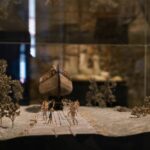
What you’re doing here is simple: you’re switching from “standing in ancient space” to “understanding ancient objects.” The museum was built in 1932 to house finds from excavations, including work by the American School of Classical Studies. The building is organized around two atriums, which gives it a distinct layout rather than feeling like a standard warehouse of artifacts.
If you’re the type who likes to leave ruins with more than photos, museum time is where the day starts paying off. You see how the city was structured and what everyday life looked like through objects, not just walls and columns.
If you prefer only outdoor sights, you can still make museum time useful—just treat it as a focused hour. Pick the areas that match your interests: Paul-era context, city life, and the built environment.
Lunch and Village Time Near Corinth: A Real Break, Not a Token Pause
You’ll get a break built into the day—about 2 hours—with time to stroll village shops and grab handmade souvenirs. You’ll also have time for lunch at a local taverna.
This is one of the smartest pieces of the schedule. After walking and climbing, you need a place to sit and recharge. And because it’s a taverna lunch, you’re not eating a generic tourist meal in a hurry.
A practical tip: eat before you’re starving. The day’s pace can make you forget you still have another major ruin stop ahead.
If you’re picky about food, you’ll still likely find something. It’s Greece, and tavernas tend to keep a solid menu range. Just don’t plan to negotiate the schedule over lunch. The day moves forward.
Ancient Corinth (Archaia Korinthos): Paul’s City-State in Real Footsteps
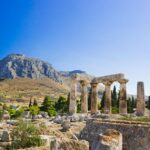
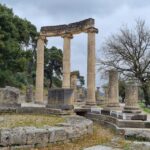
Ancient Corinth is the main stage. This was a city-state on the Isthmus of Corinth, roughly halfway between Athens and Sparta. The modern city is nearby, but the ruins are what carry the weight: Corinth was one of the biggest and most important Greek cities, with an estimated population of 90,000 in 400 BC.
For Christianity, this is where the text meets the stone. Corinth shows up in Paul’s First and Second Corinthians, and it appears in Acts as part of Paul’s missionary journeys. There’s also a connection to Pausanias’ Description of Greece, which includes Corinth.
You’ll have about 1 hour on the site, and entry is not included for the ruins. This is enough time to get your bearings and see key areas, even if you don’t want to do every single fragment and foundation.
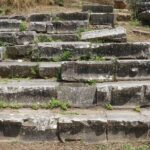
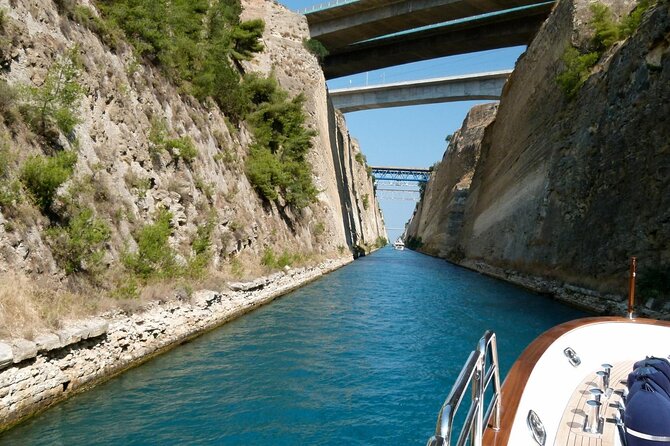
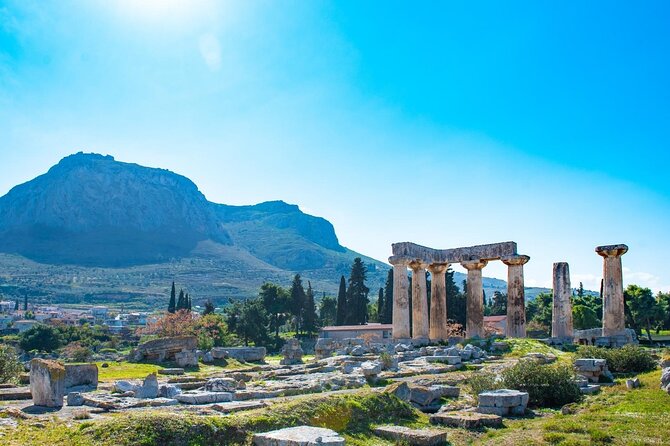
If biblical sites matter to you, you may encounter points of interest commonly associated with Paul’s preaching location and the broader civic center—areas that people connect with moments like the Roman marketplace and the Temple of Apollo. The exact viewing focus can vary with your route and access, but the aim is to connect city space with the New Testament narrative.
Main drawback: 1 hour can feel short. The site is spread out enough that you’ll want to choose priorities. If you have specific interests—Paul, Roman buildings, or public spaces—ask your driver for a suggested route within your time limit.
Value Check: What You’re Really Paying For
At $204.81 per person for an 8-hour private day, you’re mainly paying for three things:
- private, air-conditioned transportation from Athens
- a driver who stays engaged and answers questions in fluent English (even though they are not licensed tour guides inside sites)
- a plan that includes multiple stops linked to the Corinth story
Keep in mind what you’re not getting:
- admission to the archaeological site and museum is extra (listed as €15 per person)
- a licensed tour guide is not included, which means you rely on your driver for interpretation, plus signage and what you can read on your own
Is it still good value? Usually, yes—especially if you want control and less rushing. A private day like this can be hard to replicate with public transport, and the travel time eats up hours anyway. When you combine the canal, Diolkos, Kenchreai, Acrocorinth, a museum, and Ancient Corinth into one day, you’re essentially buying efficiency.
One more practical detail: your driver will not enter archaeological sites with you. They can answer questions and talk history, but they won’t be accompanying you inside every area. So if you want detailed narration in every room or every monument, you may need to add a licensed guide on the side.
Tips to Make This Day Feel Effortless
Here’s how to set yourself up for success without overpacking your brain.
Wear for Acrocorinth. You’re dealing with a steep, uneven path. Grippy soles beat fashion shoes every time.
Plan your expectations. Some stops are 30 minutes, some are 1 hour. If you try to treat everything as a deep museum hour, you’ll feel stressed. Instead, use the shorter stops for photos and orientation, then slow down when you’re at Acrocorinth and the museum.
Bring a light script. If you want the biblical angle to really land, skim the relevant passages beforehand. It makes Kenchreai and the Corinth ruins feel like a coherent story instead of separate stops.
Ask for pacing options. Private means you can often adjust within reason. If you want more time at Acrocorinth views or at Ancient Corinth, it’s worth asking early.
Should You Book This Private Biblical Corinth Tour?
Book it if you want a single, efficient day from Athens that connects engineering, geography, and early Christian context without the stress of navigating everything alone. I especially think it works well for couples or small groups who like a personal schedule and don’t mind a full day.
Skip or rethink if you hate steep climbs or you need a slow, wheelchair-friendly pace at every stop. Acrocorinth is a real physical moment in the day. Also consider adding extra guidance if you want a licensed expert explaining every site in detail, since the driver provides commentary but does not function as an onsite guide.
If you’re curious about how the Isthmus shaped movement and faith, this is a strong way to spend your time. It’s not just ruins. It’s a story you can see—from ship routes to fortress walls.
FAQ
How long is the Private Biblical Ancient Corinth Tour from Athens?
It runs about 8 hours.
What’s included in the tour price?
Included are an air-conditioned vehicle, WiFi on board, private transportation, and bottled water.
What’s not included?
Entry/admission to the archaeological site and museum is €15.00 per person, and a licensed tour guide is not included.
Do I get hotel or port pickup?
Yes. Pickup is offered, and your driver returns you to the same place. Pickup can be from a hotel lobby, apartment entrance, or Piraeus Port disembarkation area.
Is this tour private?
Yes. Only your group participates.
What language is the tour offered in?
It’s offered in English.
Will there be a tour guide inside the archaeological sites?
Your driver is not an official tour guide and will not enter archaeological sites with you, but they are knowledgeable and can answer questions in fluent English.
Is admission included for all stops?
Some stops list admission tickets as free, but museum and archaeological site entry are not included.
How far in advance do people usually book?
On average, it’s booked 66 days in advance.
What happens if the weather is bad?
The experience requires good weather. If it’s canceled due to poor weather, you’ll be offered a different date or a full refund.