REVIEW · ROME
Ancient Rome with Archaeology – Small Group Only
Book on GetYourGuide →Operated by LeonardoDC · Bookable on GetYourGuide
Rome makes sense with evidence on the ground. This archaeology-first walking tour connects the Roman Forum, Colosseum, and Imperial Forums to the way Rome actually grew—built step by step, uncovered by study. You get big-site context without feeling lost in a sea of stones, thanks to the guide-led explanations from LeonardoDC.
Two things I really like: the tour starts with a short orientation that frames the timeline and the art/architecture behind what you’ll see, and then you keep getting “how this works” answers as the monuments change from one era to the next. One thing to consider: this experience focuses on outside views and archaeological areas—it does not include tickets or entry inside monuments, so plan expectations around seeing and understanding, not touring interiors.
In This Review
- Key highlights at a glance
- An archaeology-first approach that turns ruins into a story
- The small-group format near Rome’s most famous corners
- Meeting at Piazza Mattei and getting oriented before the big sites
- Colosseum area: reading the setting without needing to go inside
- Imperial Fora: why five forums feel like one big idea
- Roman Forum and the Capitol: temples, basilicas, and a changing city
- Theatre of Marcellus and the Porticus of Octavia: a strong ending layer
- Price, time, and value: is $49 a smart use of 2.5 hours?
- Who this tour suits best (and who might want something else)
- Ending points: where you’ll drop off and why it helps
- Should you book this Ancient Rome with Archaeology tour?
- FAQ
- Where do we meet for Ancient Rome with Archaeology?
- How long is the tour?
- What are the main stops during the walk?
- Does this tour include entry tickets inside the monuments?
- How many people are in the small group?
- What languages does the guide speak?
- Is it suitable for people with limited mobility?
- What are the cancellation and payment options?
Key highlights at a glance
- Small group of up to 6 means you can keep pace with questions and explanations
- Roman Forum + Imperial Fora taught as a connected story, not separate stops
- Colosseum and Palatine viewpoints help you place the monument in its real urban setting
- Capitoline area and Theatre of Marcellus archaeological zone close the loop with later layers
- Leonardo’s period map and original-monument pictures help you “see” what’s missing
An archaeology-first approach that turns ruins into a story
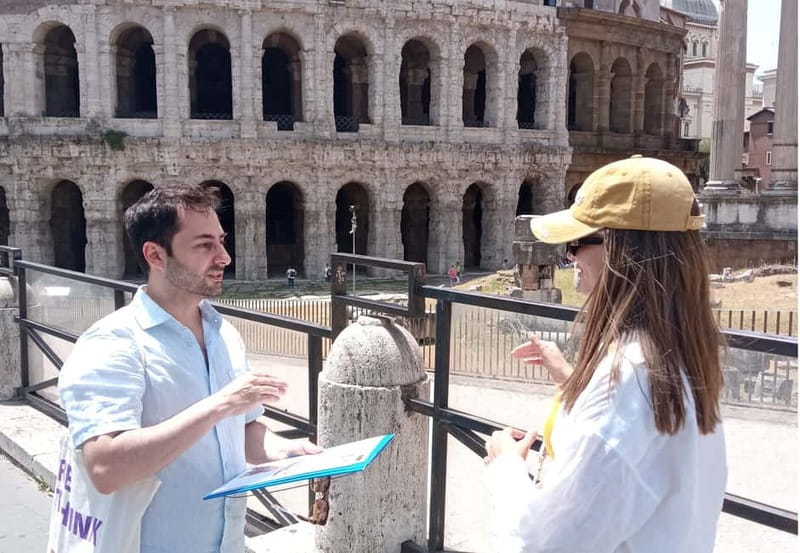
Rome’s monuments can feel like a greatest-hits album: famous names, lots of photos, and then… what now? This tour works differently. It treats each stop as a chapter you can read with archaeology, history, and art history. Instead of only describing what a structure looks like, the guide explains why it exists in that exact place and how it fits into the city’s shifting priorities over time.
What’s especially useful is how the tour frames the evolution of Rome from the start. You get a timeline introduction—either in a café nearby or while you’re on your way—so the walking route makes sense as you go. You also get help noticing patterns: building techniques, street-level changes, and how one layer of Rome often sits right on top of another.
I also like the fact that the tour is paced for real understanding, not just speed. The group stays small (max 6), and the guide can adjust the flow based on your interests and time. That matters around the Roman Forum and the Colosseum area, where people often rush through because they feel like they’re supposed to.
You can also read our reviews of more tours and experiences in Rome.
The small-group format near Rome’s most famous corners
A group capped at 6 can be the difference between hearing stories and hearing traffic. Here, you’re walking among the major monuments, and you still have room for discussion. That’s a practical advantage because these sites are visually complex: you’re looking at fragments, reconstructions in your mind, and viewpoints that require explanation to interpret correctly.
This tour is listed as a light walking experience. That doesn’t mean it’s boring—it means it’s designed so you’re not fighting distance or stamina to get the value. It also notes wheelchair accessibility provided by the city, which is rare for many “run-and-gun” Rome tours.
You’ll cover a lot of ground in 2.5 hours, but it’s done with short walking segments and guided analysis. If you want an experience that’s social but not chaotic, and you’re happy to learn while standing in place, this format fits.
Meeting at Piazza Mattei and getting oriented before the big sites
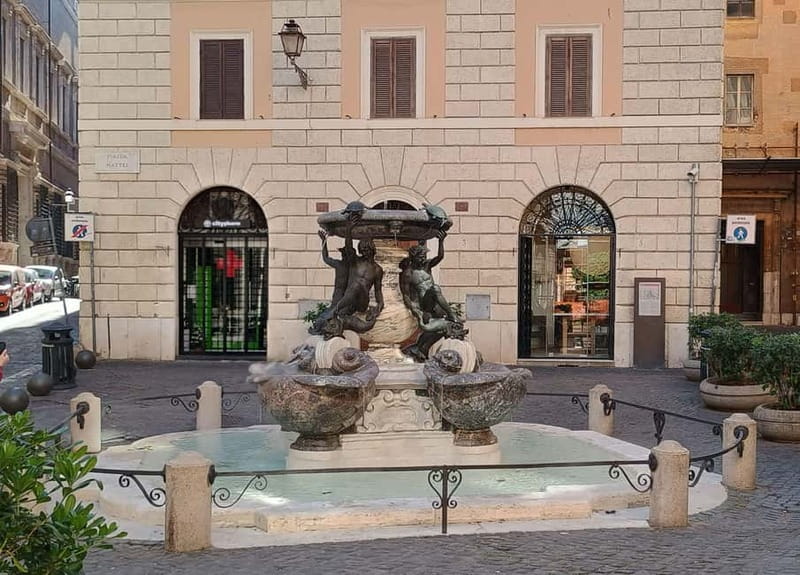
You meet at Piazza Mattei, 1, right by the Fountain of the Turtles. It’s a clear landmark spot—handy when you’re trying to sync up with a small group in Rome’s maze-like streets.
From the start, the emphasis is on context. The guide begins with a brief introduction to the timeline of Rome’s history and the main themes of its art and architecture. Then you’re off toward the monuments. That order matters. If you arrive at the Roman Forum and Colosseum without any framing, your brain fills the gaps with guesswork. Here, you get just enough structure so you can later recognize what you’re looking at.
This is where I think the tour earns its worth. A good orientation turns scattered scenes into a connected picture. You start to notice how the city’s power changed the way it built, and you can track how that shows up in the places you pass.
Colosseum area: reading the setting without needing to go inside
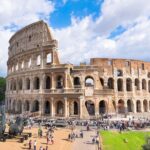
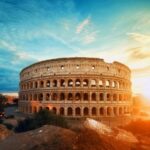
This tour brings you to the Colosseum area for a guided walk and sightseeing from key vantage points. The focus is understanding the monument’s place in the ancient city—not just standing for photos.
Because the tour does not include entry tickets, you won’t be doing an interior walkthrough of the arena or museum spaces. But you still get a guided, archaeology-based look at the relationship between the Colosseum and the surrounding urban landscape. That’s helpful, because the Colosseum isn’t just an object—it’s part of a larger system of streets, hills, and neighboring monumental zones.
You also cover Palatine Hill as part of the overall narrative. Even when you’re mostly viewing from the outside, Palatine helps explain how the city’s elite spaces and political symbolism evolved. You start to see the logic: what gets built where, and why. For many people, that’s more valuable than an interior ticket, because it’s the city-level understanding that makes everything else click.
If you’re the type who learns by connecting dots, the Colosseum stop isn’t a dead-end. It becomes a hinge point between earlier Rome and the later monumental complex you’ll see next.
Imperial Fora: why five forums feel like one big idea
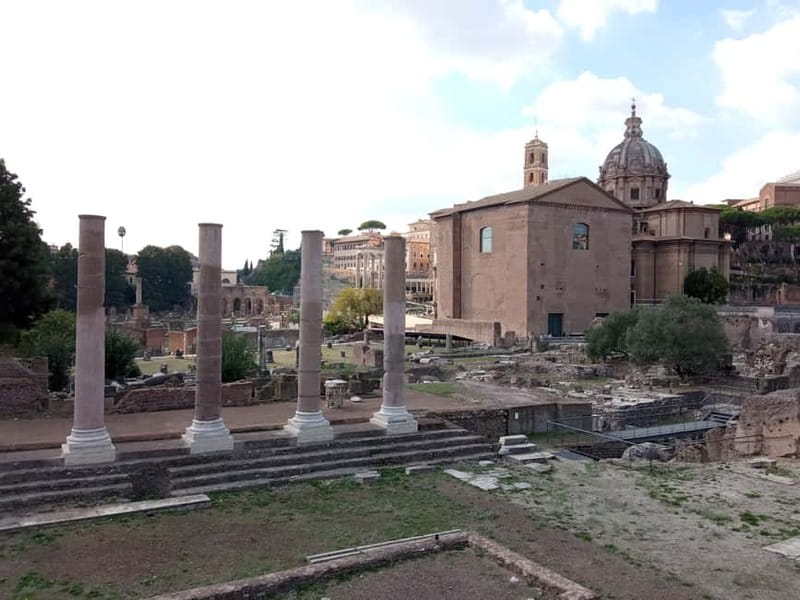
After the Colosseum zone, you move to the Imperial Fora—guided sightseeing and analysis that helps you understand how the monumental center kept shifting. These forums can be intimidating at first glance. There are multiple layers, multiple buildings, and different emperors trying to leave their mark.
What works here is the archaeology-first storytelling. You’re not just told that the Imperial Fora are impressive. You’re shown how they relate to Rome’s political ambitions and how architectural choices express power. You also get time to look from viewpoints designed to help you connect the layout in your mind.
I like that this stop keeps a “systems” approach. The Imperial Fora aren’t isolated masterpieces; they’re linked to the city’s planning and the way Rome wanted to stage legitimacy. Once you know what to look for—visual axes, building groupings, and how monumental space organizes movement—the ruins start behaving like a blueprint.
Roman Forum and the Capitol: temples, basilicas, and a changing city
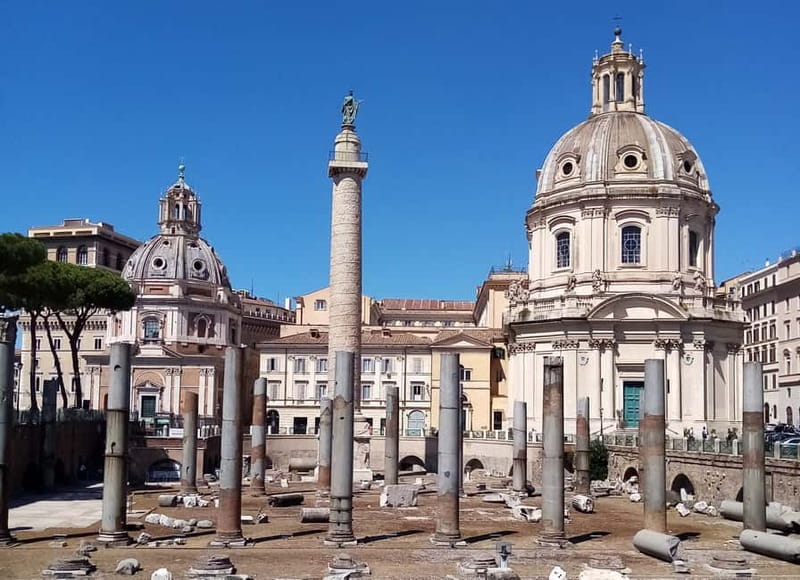
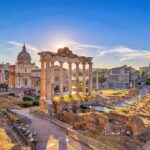
The Roman Forum stop is where the tour really earns your attention. You’re guided through the area with a focus on the temples, basilicas, and major spaces that shaped public life. Archaeology helps explain what you’re seeing today: ruins that are often only parts of larger complexes.
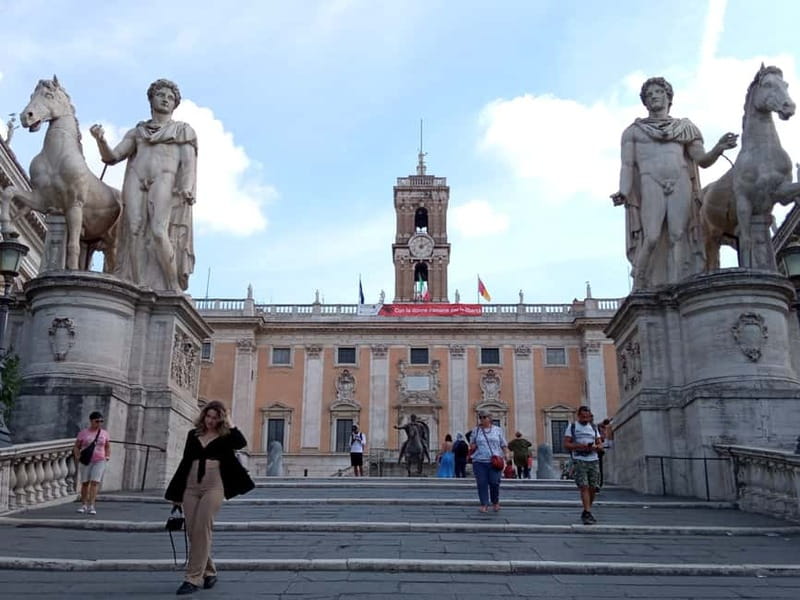
You’ll also connect this to the Capitoline Hill area, including Piazza del Campidoglio. That matters because the Capitoline is tied to Rome’s long-standing identity as a power center. When you look at the forum complex with the Capitol in mind, you start to understand the city’s “hierarchy of places”—where authority lived, where crowds gathered, and where monumental architecture turned into political messaging.
A small practical note: this area is visually dense. So even if the tour is described as not requiring much effort, you’ll still want to be mentally present. The value comes from listening while you look. If you’re expecting only quick sightseeing, you might feel like you’re missing the point. If you like explanations and looking for clues, you’ll have a great time.
Theatre of Marcellus and the Porticus of Octavia: a strong ending layer
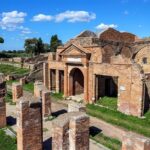
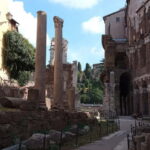
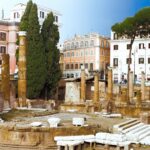
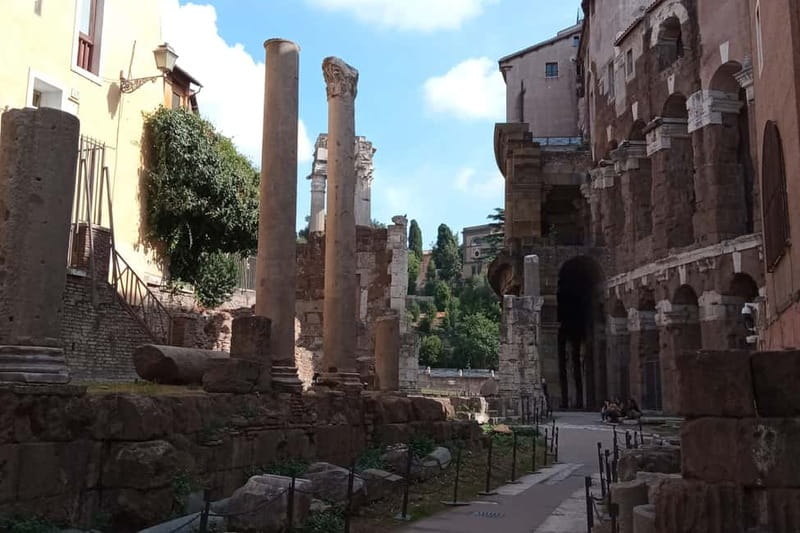
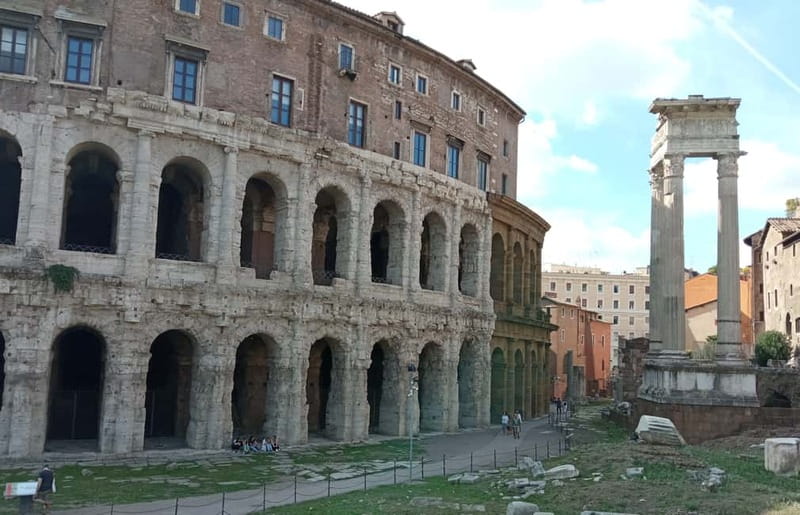
The tour finishes at the archaeological area of the Theater of Marcellus, including Temple of Apollo and the Porticus of Octavia. This is a great choice for an ending because it brings you into a zone where you can feel the city’s layers shifting toward later periods.
Unlike some closures where everything famous is concentrated around one cluster, this finish helps expand your sense of Rome beyond the postcard map. You get guided sightseeing and analysis in an outdoor setting, in a free entrance archaeological area. It also leads toward the area associated with the former Jewish Ghetto. That connection adds real depth to the walk: you’re not only looking at ancient Rome—you’re also seeing how later history takes shape in the same urban geography.
What I find satisfying is how the ending doesn’t just add another ruin. It closes the loop. You go from the forum world of public architecture and imperial messages into a theater complex and surrounding structures tied to civic identity. The city feels more complete by the time you’re done.
Price, time, and value: is $49 a smart use of 2.5 hours?
At $49 per person for about 2.5 hours, this tour lands in the “worth it if you want understanding” category. You’re not paying for museum entries or full indoor access. You’re paying for guided interpretation that helps you make sense of what’s visible.
Here’s the value logic I’d use:
- If you already plan to buy tickets for interiors separately, this is a high-return way to learn the story behind the stones.
- If you don’t want lines, ticket planning, or timed entry stress, this offers major sights with guided context.
- If you care about archaeology as an explanation method—how things were found, reconstructed, and interpreted—this format is a good fit.
The biggest trade-off is clear: no tickets for the monuments. If your top goal is walking inside the Colosseum or going through ticketed areas inside the forums, you’ll need a different plan for that. But if your goal is to leave Rome with a map in your mind—timeline + architectural meaning—this tour is priced in a way that makes that payoff realistic.
Who this tour suits best (and who might want something else)
This one fits especially well if you:
- want a small group experience with a guide who can answer questions
- enjoy learning how monuments relate to one another across time
- like archaeology-style explanations, not just big-name facts
- prefer a light walking approach that works for most ages
You might want a different option if you:
- strongly prefer ticketed interior access at each stop
- plan to cover many museums in the same day and need only quick highlights
- want a long, slow deep read where you sit and study for hours (this is still 2.5 hours)
That said, the tour’s structure is designed to be efficient without feeling shallow. You move through the city with purpose, then finish in an archaeological zone that doesn’t feel like an afterthought.
Ending points: where you’ll drop off and why it helps
You end with two drop-off locations: Via Nicola Salvi, 65, and Piazza del Colosseo. That’s practical. It keeps you near the monument area so you can continue on foot or connect with whatever you planned next, without being stranded far away.
If your day includes more central Rome sights, being dropped near Piazza del Colosseo is a big advantage. It’s also a nice final contrast: you finish with a quieter archaeological zone feel, then land back near the most photographed area.
Should you book this Ancient Rome with Archaeology tour?
Book it if you want Rome to start making sense quickly. The combination of major sites (Roman Forum, Colosseum area, Imperial Fora, Capitoline area, and the Theatre of Marcellus zone) plus an archaeology-first explanation is exactly the kind of learning boost that makes your self-guided exploring afterward easier.
I’d skip it only if you’re mainly chasing inside-the-monument access and timed tickets. This tour is built to help you understand what’s in front of you, not to replace ticketed entry.
If you’re booking, consider pairing it with a separate plan for monument interiors on another day—or later the same day—so you get both the guided city-story context and the experience of walking inside when you choose.
FAQ
Where do we meet for Ancient Rome with Archaeology?
You meet right by the Fountain of the Turtles in Piazza Mattei, 1.
How long is the tour?
The experience lasts 2.5 hours.
What are the main stops during the walk?
You’ll see the Colosseum area, the Imperial Fora, the Roman Forum, the Capitoline area (including Piazza del Campidoglio), and the Theatre of Marcellus archaeological zone with the Temple of Apollo and the Porticus of Octavia.
Does this tour include entry tickets inside the monuments?
No. The tour does not include going inside monuments or tickets for them.
How many people are in the small group?
The group is limited to 6 participants.
What languages does the guide speak?
The live guide offers English and Portuguese.
Is it suitable for people with limited mobility?
It’s described as a light walking tour suitable for all ages, and it notes wheelchair accessibility provided by the city.
What are the cancellation and payment options?
You can cancel up to 24 hours in advance for a full refund. You can also reserve now and pay later.