REVIEW · ROME
Private Ostia Antica Tour: The Perfectly Preserved Port of Ancient Rome
Book on Viator →Operated by Through Eternity Tours · Bookable on Viator
One of Rome’s best ruins trips is oddly calm. This private Ostia Antica tour lets you walk through a nearly intact ancient port where everyday life shows up in shops, baths, and homes—not just temples and monuments.
I like that you get a real guide plus skip-the-line tickets, so you spend your time among the ruins instead of waiting. The only catch: you’re walking on uneven ground with steps, so you’ll want comfortable shoes and a steady pace—or flag mobility needs early.
In This Review
- Key things to know before you go
- Why Ostia Antica’s preserved port feels like a time machine
- Private guide perks: the difference between reading ruins and understanding them
- House of Diana and the theatre zone: start with daily life cues
- Synagogue and forum: religion and civic life in one route
- Temple of Venus and Neptune’s baths: where leisure shows up
- Theatre views and the rhythm of a 5-hour day
- Meeting at Ple Ostiense-Piramide: simple, transit-friendly, and central to access
- Price and value: is $494.10 per person fair for Ostia?
- Who this tour suits best (and who might want a different plan)
- Should you book this Ostia Antica private tour?
- FAQ
- How long is the Ostia Antica private tour?
- Is admission to Ostia Antica included?
- Can I choose my starting time?
- Will I wait in line for tickets?
- Is the guide English-speaking?
- Does the tour include headsets?
- Where do we meet, and does the tour end nearby?
- Is transportation or food included?
- Is this really private?
Key things to know before you go
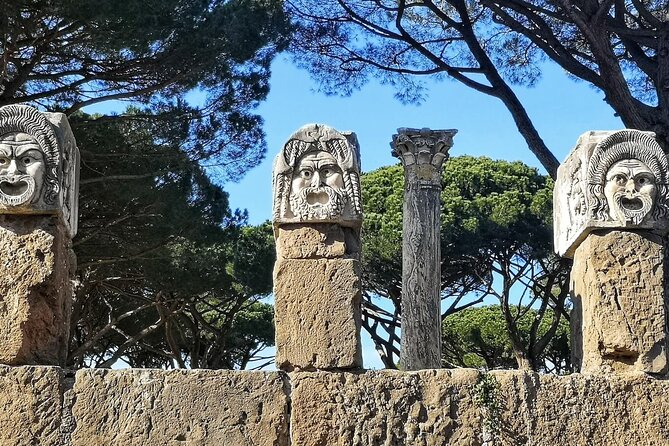
- Private guide, private group: Only your group participates, so questions don’t get squeezed in at the end.
- Skip-the-line access included: Admission for the site is part of the experience.
- Big views come from the theatre: You’ll climb up to see the ruins from the high points.
- You’ll cover more than “one building”: House of Diana, synagogue, forum, temple of Venus, baths of Neptune.
- Start time is flexible: You can choose a start time during opening hours.
- Bring water and plan for steps: This is an archaeological park walking tour.
Why Ostia Antica’s preserved port feels like a time machine
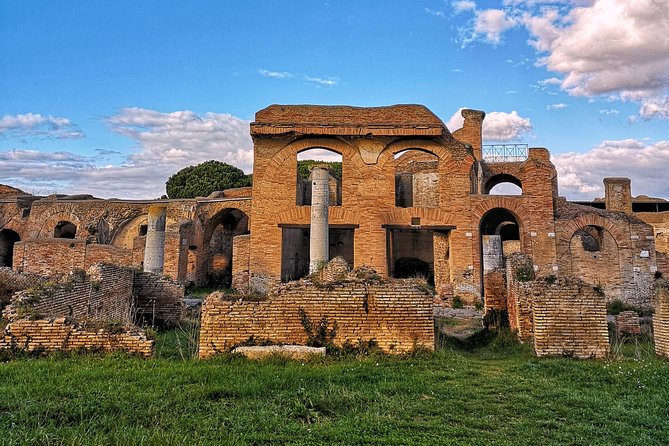
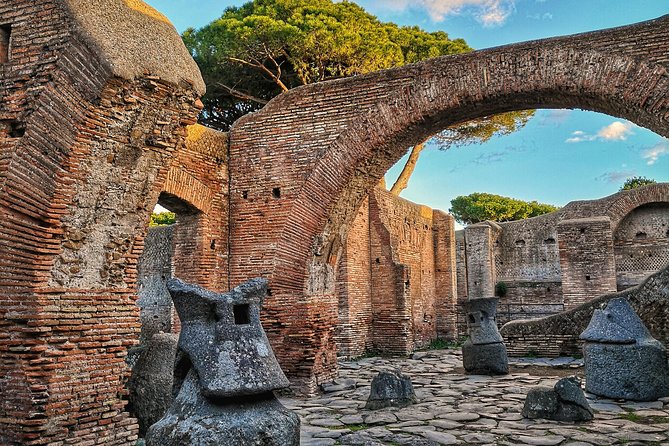
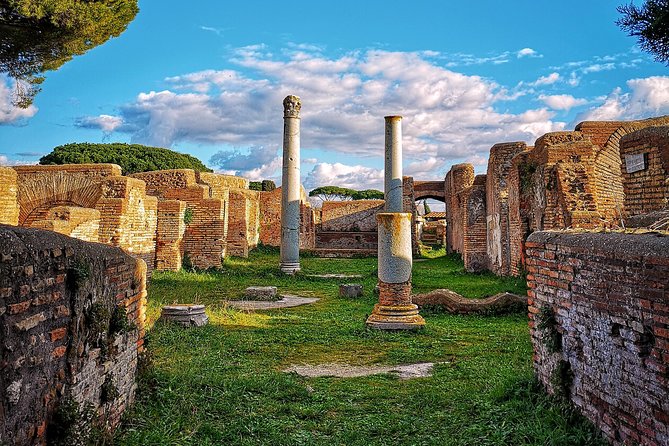
Ostia Antica is the kind of place that changes your Roman expectations. Rome’s center is famous for emperors and grand monuments. Ostia is where you understand the other side of the empire: shipping, work, meals, schooling, leisure, and neighborhood life.
What makes this tour special is the way it’s designed to help you read the ruins like a living map. As you move from house to public spaces, you start noticing how the city was arranged for people who arrived by sea, shopped, and then moved through streets lined with everyday businesses. It’s not just pretty stone—it’s an entire “how people lived” story.
And yes, there’s a reason the site feels so good compared to Rome’s busiest stops. Even when you share a trip with other visitors at the edges, the best moments here tend to feel quieter—especially when you have a guide helping you time your stops and keep your group moving.
You can also read our reviews of more private tours in Rome

Private guide perks: the difference between reading ruins and understanding them
The biggest practical win is simple: this is a private tour with an English-speaking guide. That matters at Ostia Antica because lots of the details aren’t obvious unless someone points them out—where the space is meant for meetings, how a building functioned, what to look for in religious spaces, and why certain layouts matter.
The tour is also built to reduce friction. You get skip-the-line tickets and headsets for groups of 6 or more. Less waiting. Better flow. And when you’re trying to understand a place that spans multiple areas, time saved is time earned.
I also like the human factor in the guidance style. In past experiences with this company, guides such as Gracelyn have been praised for being both knowledgeable and friendly, and attentive to special needs like taking rest or spending a bit more time at a location. Another standout is Brandon, described as highly knowledgeable in archaeology/history/classics and even noted as a PhD candidate. That kind of training shows up in how confidently the story connects the buildings to real life.
One small consideration: even on private tours, pace can vary. One experience flagged that the guide sometimes talked while moving away or got a bit too far ahead. If you prefer close, steady pacing, it’s worth setting that expectation at the start: ask your guide to keep your group together and stop when you want to look closer.
House of Diana and the theatre zone: start with daily life cues
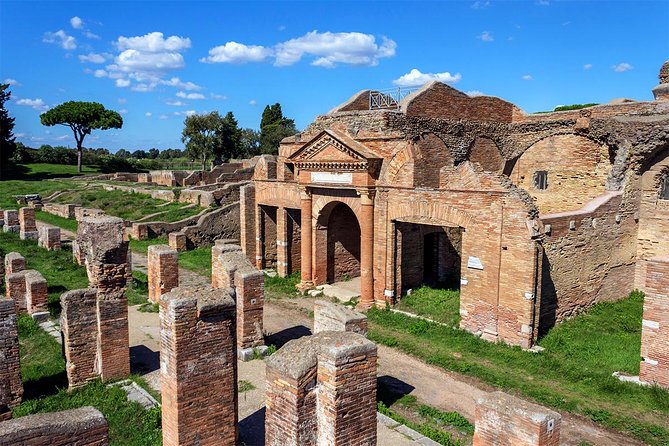
Your walk begins in the Parco Archeologico di Ostia Antica, where the site instantly feels more complete than many “standalone ruin” stops. You’ll spend about 4 hours inside the park area, with admission included.
The first major stops set you up to understand the city. The House of Diana is a great opener because it pushes you to think beyond public monuments. Houses at Ostia help you connect domestic details to the wider urban plan. Even without reading every inscription, you get that feeling: this wasn’t a museum built after the fact—it was a home system within a working port city.
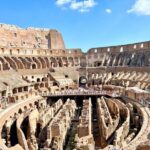
Then comes one of the most rewarding parts of the day: the theatre of Ostia. This isn’t just “look at seats.” You climb up to experience the theatre from the steps and higher viewpoints, which helps you understand how the space was meant to be seen and how the ruins fit into the overall layout. If you like getting oriented in a place—getting your bearings fast—this theatre moment helps.
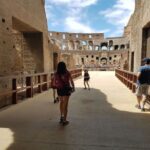
Practical tip: the theatre climb includes steps. Wear shoes with grip and take your time on the way up. If you’re slower, your guide can usually build in pauses since this is private.
Synagogue and forum: religion and civic life in one route
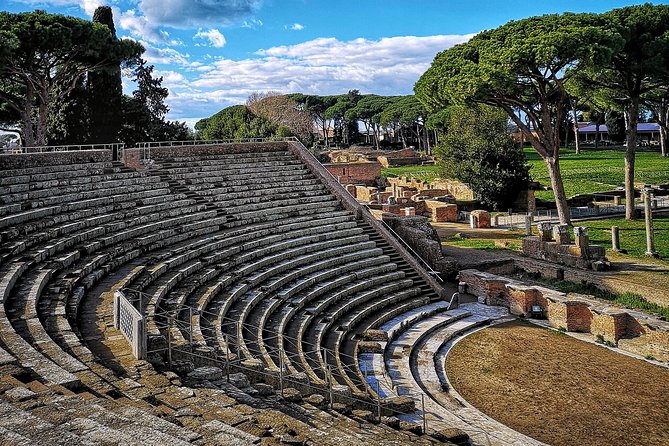
A big reason Ostia Antica works so well as a guided visit is that it covers different types of spaces back-to-back: home, performance, religious life, and civic centers. The flow is part of the learning.
You’ll visit the synagogue, which adds a layer many people don’t expect when they think “Roman ruins.” Seeing this site in the context of the port city helps you grasp that the empire wasn’t one-note. Different communities lived, worshiped, and organized life here.
From there, the forum brings you back to public life—spaces meant for gathering and civic business. The forum is where the city’s daily rhythm becomes easier to picture. Instead of treating each building as a separate postcard, you’ll start to see patterns: where people would pass through, where public notices and gatherings likely mattered, and how the port economy fed the city’s public life.
If your travel style likes connections—how one place explains another—this part of the tour usually clicks. You’re not only looking at stones. You’re building a mental model of how people moved and used space.
Temple of Venus and Neptune’s baths: where leisure shows up
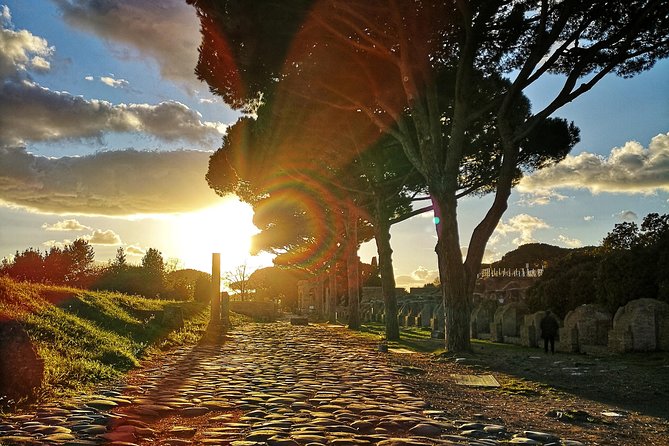
Once you hit the Temple of Venus, the tour shifts toward belief and public display again, but in a different tone than the synagogue. Temples in ancient cities were about more than prayer. They were tied to identity, visibility, and how the city defined itself.
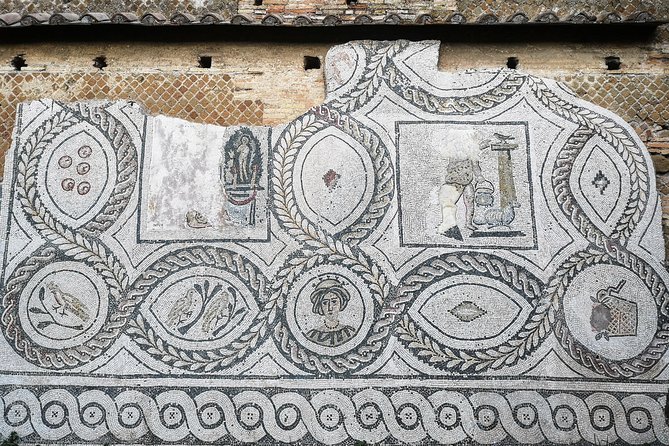
Then you end up at the Baths of Neptune, one of the places where Ostia’s “everyday” angle becomes impossible to ignore. Baths were social hubs. They were where routine turned into conversation, gossip, relaxation, and local interaction. Even if you don’t know every architectural term, you can feel what the space is for as you move through it.
This stop is also a good reality check for your day-planning. Baths are wide and you may want extra minutes to look around. Since this is private, you can usually slow down without feeling like you’re delaying a huge group.
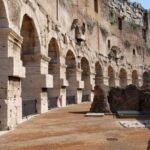
Another small but important detail: the tour recommends a bottle of water because you’ll be walking through an archaeological park with steps and uneven surfaces. That’s not overkill. Ostia can take more out of you than you expect, especially if you’re doing it as a highlight on a full Rome itinerary.

Theatre views and the rhythm of a 5-hour day
The tour runs about 5 hours total, with the core time spent exploring the park (around 4 hours) and time for meeting and regrouping. Since the tour can start at any time during opening hours, you’ll have a big say in how the day feels.
Here’s how I’d think about it as a practical traveler:
- If you want the site to feel calmer, pick a start time that avoids the busiest windows.
- If your energy is limited, aim earlier so you don’t fight late-day fatigue while navigating steps.
This flexibility is genuinely useful. Rome is a place where the day often runs late due to crowds, trains, or museum time. When the tour has opening-hours flexibility, you can adapt without stressing out.
Also remember: transportation to and from the meeting point isn’t included. You’ll need to plan how you’ll get there.
Meeting at Ple Ostiense-Piramide: simple, transit-friendly, and central to access
The meeting point is Ple Ostiense-Piramide (MB-RL) 00154 Rome. The tour ends back at the same point. It’s convenient because it’s near public transportation, and you won’t have to solve an extra “where do we regroup” puzzle.
The day stays straightforward as long as you’re clear on what’s included. Included items are: all fees and taxes, skip-the-line tickets, the expert English-speaking private guide, and headsets for groups of 6 or more. Not included are transportation, food, and beverages, plus optional gratuities.
So bring a simple plan:
- Eat beforehand or plan to grab something after the tour.
- If you’re sensitive to walking time, pack water and give yourself buffer for steps and uneven ground.
If you have mobility concerns, tell the provider during booking. The tour notes that they can accommodate best with advance notice.
Price and value: is $494.10 per person fair for Ostia?
At $494.10 per person, this isn’t a “cheap day out.” It’s priced as a private, guide-led experience with skip-the-line admission and a structured route through multiple key areas.
Is it worth it? Usually yes if you match at least a couple of these situations:
- You care about getting explanations, not just photos.
- You’re traveling as a smaller group and want a pace that fits your needs.
- You’re trying to see Ostia as a major highlight of your trip, not a quick add-on.
- You want your guide to help you connect the port city story from place to place.
Where the value can drop is if you already know ancient architecture deeply and don’t mind reading quietly on your own. Ostia Antica is good for self-guided exploration—but the private guide is what turns it from sightseeing into understanding.
A smart way to think about the price: you’re paying for time efficiency (skip-the-line), interpretation, and flexibility. When you combine those with the fact that you cover a cluster of major sites in one morning/afternoon block, the cost starts to feel more reasonable.
Who this tour suits best (and who might want a different plan)
This tour is a great fit if you like:
- Everyday ancient life, not only imperial big-ticket monuments
- A paced walk where someone can answer questions
- A quieter-feeling experience compared to Rome’s most crowded sights
- A route that includes theatre viewpoints plus major civic/religious spaces
It may be less ideal if:
- Your group has difficulty with steps and uneven surfaces (even if you can participate, it’ll be slower and needs planning)
- You want minimal walking and prefer a mostly seated experience
- You’re on a tight schedule and need a very short visit
It’s also worth it to note one practical point from the tour design: you can start at various times during opening hours. That flexibility tends to make a difference when you’re planning around other Rome stops.
Should you book this Ostia Antica private tour?
If you’re choosing between Ostia and another major Rome site, I’d lean toward booking this one if your goal is to understand how the Roman world worked day-to-day. Ostia Antica is one of the few places where you can get that “port city” feeling through streets and spaces that still make sense visually.
Book it if you want a guide to:
- point out what you’re actually looking at
- connect the synagogue/forum/temple/baths into one story
- help keep your pace comfortable (rest stops and extra time were specifically mentioned as important in past experiences)
- make the ruins feel alive, not just old
Skip (or reconsider) if your group dislikes walking on uneven ground, or if you’d rather save money and tour on your own. For most people, the private guide + skip-the-line admission turns a good archaeological park into the best kind of Rome memory: calm, personal, and easy to understand.
FAQ
How long is the Ostia Antica private tour?
It runs about 5 hours in total, with roughly 4 hours spent exploring the archaeological park.
Is admission to Ostia Antica included?
Yes. The admission ticket is included with the tour.
Can I choose my starting time?
Yes. This private tour can start at any time during the opening hours of Ostia Antica. You’ll be asked to share your preferred starting time during booking.
Will I wait in line for tickets?
No. Skip-the-line tickets are included.
Is the guide English-speaking?
Yes. The tour includes an expert English-speaking private guide.
Does the tour include headsets?
Headsets are included for groups of 6 or more.
Where do we meet, and does the tour end nearby?
You meet at Ple Ostiense-Piramide (MB-RL) and the tour ends back at the same meeting point.
Is transportation or food included?
Transportation to and from the meeting point is not included, and food and beverages are also not included.
Is this really private?
Yes. This is a private tour/activity, and only your group participates.