REVIEW · ROME
Tour of Rome in Golf Cart: Ancient Rome
Book on GetYourGuide →Operated by Luxurbe · Bookable on GetYourGuide
Rome without sore feet is the point, and this electric golf cart tour links the biggest ancient ruins with guided stops and roomy panoramic breaks. You glide through imperial Rome instead of spending the whole day weaving between crowds and cobblestones.
I really like two things: the Colosseum-to-Circus Maximus viewpoint run (great for photos and orientation), and the guided stops that give you context without dragging you across long distances. Plus, the live English-speaking guide keeps the story moving, with photo time built into the route so you’re not just rushing from one sign to the next.
One thing to consider: entrance tickets aren’t included, so if your dream is to go inside major sites for hours, you’ll still need extra tickets and time.
In This Review
- Key Points I’d Plan Around
- Why a Golf Cart Is Smart for Ancient Rome
- Price and What $47 Buys You (and What It Doesn’t)
- Meeting Point at Piazza del Popolo 11: Don’t Overthink It
- The First Stops: Largo di Torre Argentina and Piazza Venezia
- Theatre of Marcellus and the Unnamed In-Between Stop
- Temple of Venus and Rome: A Stop That Helps You Read the City
- Domus Aurea: The Story Behind the Space
- Colosseum Viewing from a Fresh Angle
- Roman Forum: Understanding Why This Area Was the Center
- Circus Maximus: The Panoramic Finish That Makes the Day Click
- Guides and Storytelling: Where the Experience Gets Personal
- What to Bring, What to Wear, and Real-World Weather
- Should You Book This Ancient Rome Golf Cart Tour?
- FAQ
- How long is the Ancient Rome electric golf cart tour?
- How much does the tour cost?
- What’s included in the tour price?
- Are entrance tickets included for the Colosseum or Roman Forum?
- Where is the meeting point?
- How does hotel pick-up work?
- Does the tour run in rain?
- Is there an audio guide?
- Is the tour wheelchair accessible?
- What should I know about timing and cancellation?
Key Points I’d Plan Around
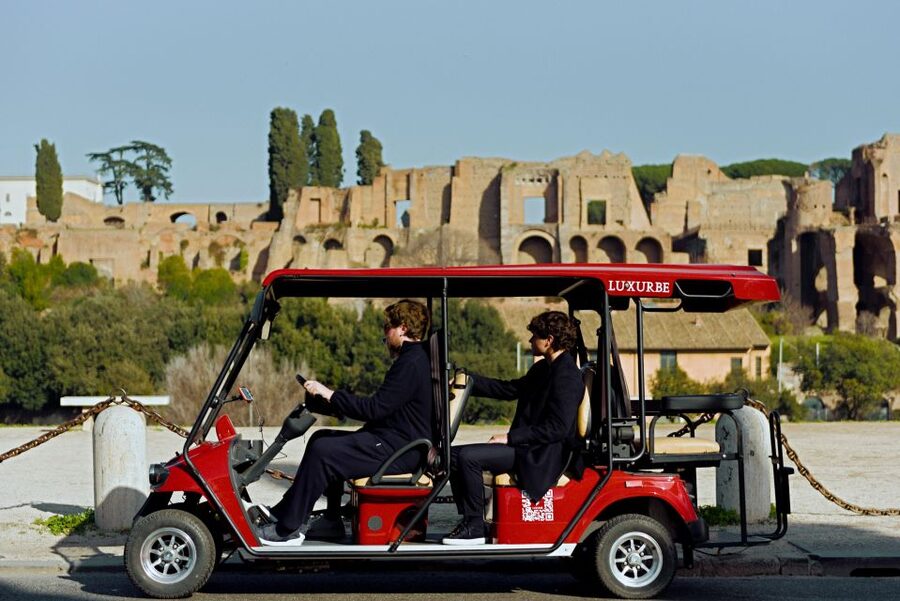
- Short walking, smooth riding: the cart keeps transfers easy between major sites.
- Guided stops with photo time: you get time to look closely, not just pass by at speed.
- Big-picture views toward Circus Maximus: the tour’s later stretch is made for panoramas.
- Guides matter a lot: I saw examples of guides like Matt and Tobin Tazzuti praised for clear explanations and helpful answers.
- Flexible route in some cases: Tobin Tazzuti was noted for adjusting based on what you’ve already seen and what you still want.
- Comfort focus over museum time: it’s a guided sightseeing experience, not a ticket-included deep-dive.
Why a Golf Cart Is Smart for Ancient Rome
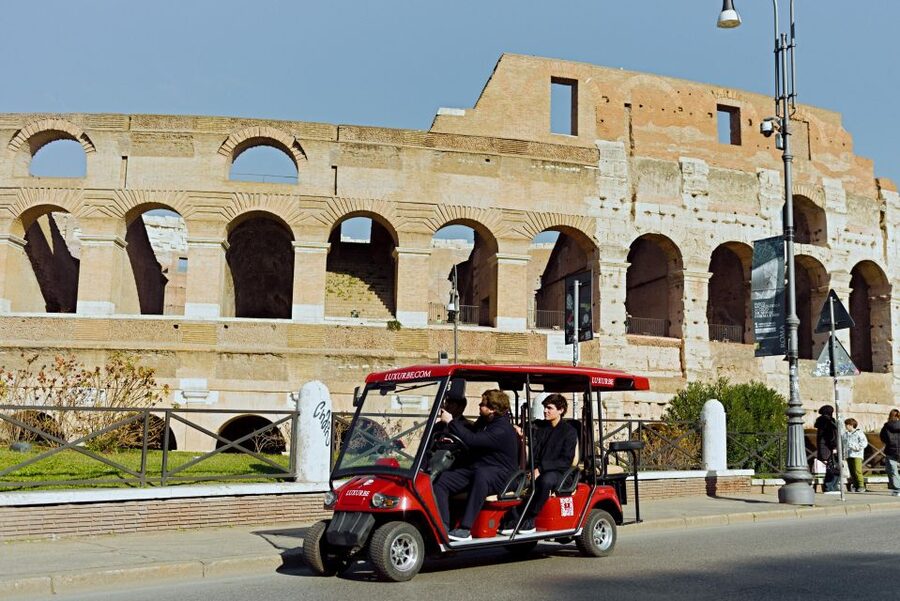
Ancient Rome is famous, but it’s also physically demanding if you’re trying to cover the classics on foot. This is where the electric golf cart makes sense. You still get close-up views and stories, but you’re not burning your energy just getting between ruins.
The route is built around a “see first, understand second” rhythm. You ride a short hop, get a guided stop, take photos, and then move on. That pacing keeps the day from feeling like a checklist you never finish.
You can also read our reviews of more tours and experiences in Rome.
Price and What $47 Buys You (and What It Doesn’t)
At $47 per person for about 3 hours, this is priced like a focused sightseeing experience rather than a full ticket-and-transport package. You’re paying for guided commentary, the electric cart ride between key ruins, and organized photo stops.
What’s not included is just as important: entrance tickets aren’t part of the price. So if you want to actually enter places like the Colosseum and the Roman Forum areas beyond viewing points, budget separately. In other words, you’re buying convenience and storytelling—then deciding on entries based on your priorities and energy.
A good way to think about value: if you want maximum ancient Rome landmarks with minimal fatigue, this is strong. If you want long indoor exploration, you’ll likely need a different plan (or extra tickets) to match your expectations.
Meeting Point at Piazza del Popolo 11: Don’t Overthink It
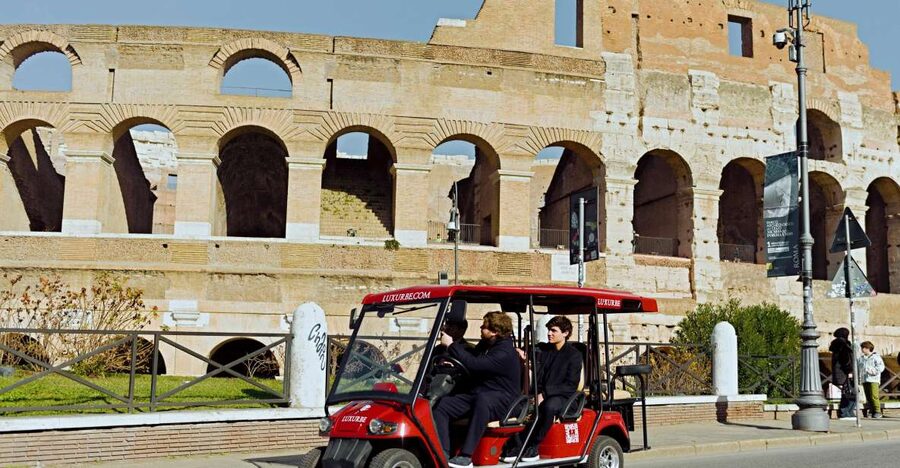
The meeting point is Piazza del Popolo 11, in front of the Leonardo da Vinci Museum. Wait outside the entrance and do not go inside the building.
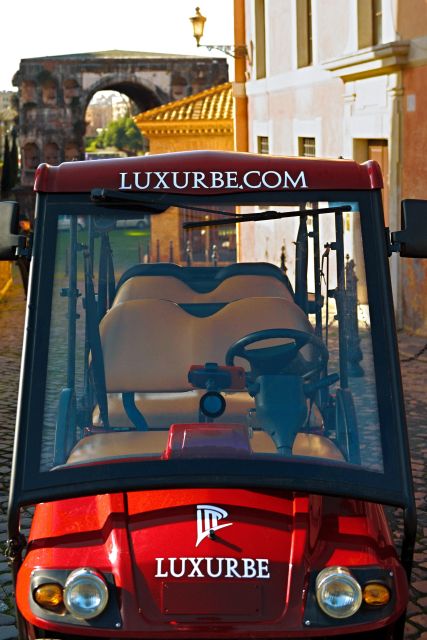
There’s no Luxurbe sign. You’re looking for the cart/vehicle itself, and the driver should arrive and be easy to recognize. Plan for up to 10 minutes of waiting time, and don’t show up late expecting a miracle—arrivals beyond the grace period can be treated as no-shows.
If you choose hotel pickup, you wait at street level outside your hotel entrance. The driver will come within the scheduled time or within that same waiting window, and you’ll depart from there.
The First Stops: Largo di Torre Argentina and Piazza Venezia
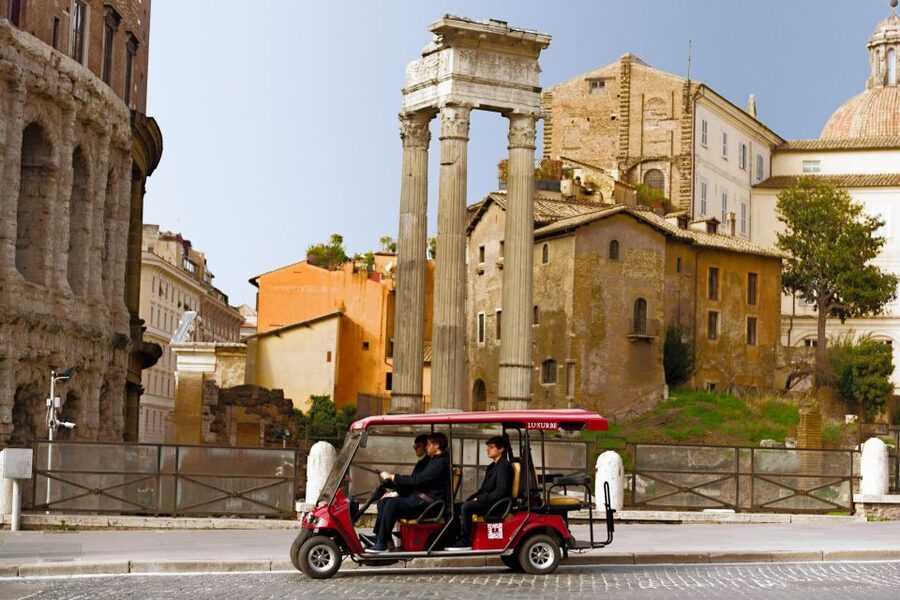
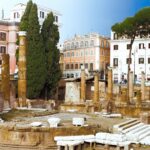
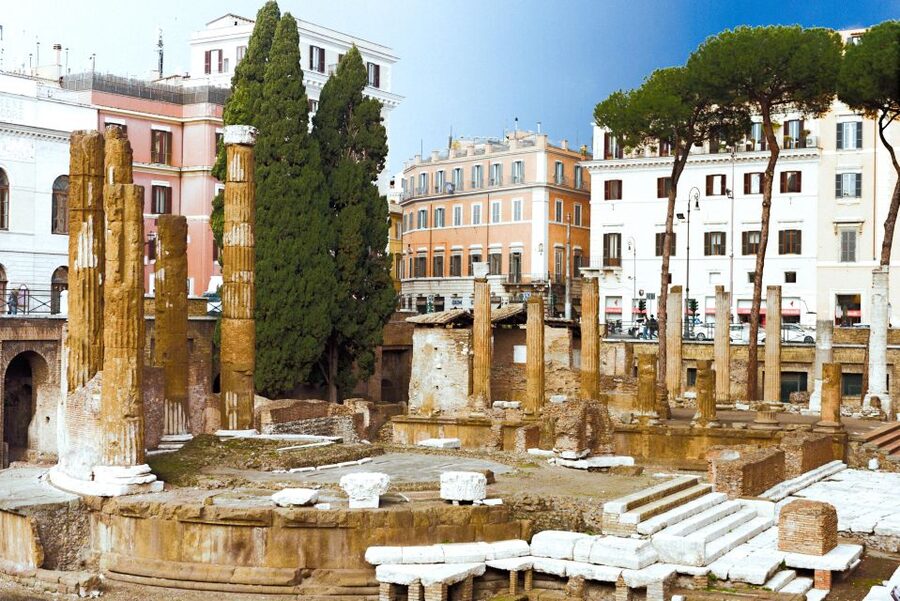
The tour typically starts with a guided stop at Largo di Torre Argentina for about 15 minutes. This is a smart opening because it gets you thinking about Rome as layered, not linear. You see the kind of space where archaeology and history overlap, and the guide’s context helps you spot what matters as you arrive.
Next up is Piazza Venezia with another guided stop (also around 15 minutes). This is one of the areas where Rome’s imperial energy feels immediate. Even if you’ve seen photos before, having a guide point out what you’re looking at changes the experience from “I recognize the landmark” to “I understand why this spot is important.”
These early stops are also a good warm-up. You’re not yet tired, you’re getting your bearings fast, and you’re already learning how the guide will interpret what you see.
Theatre of Marcellus and the Unnamed In-Between Stop
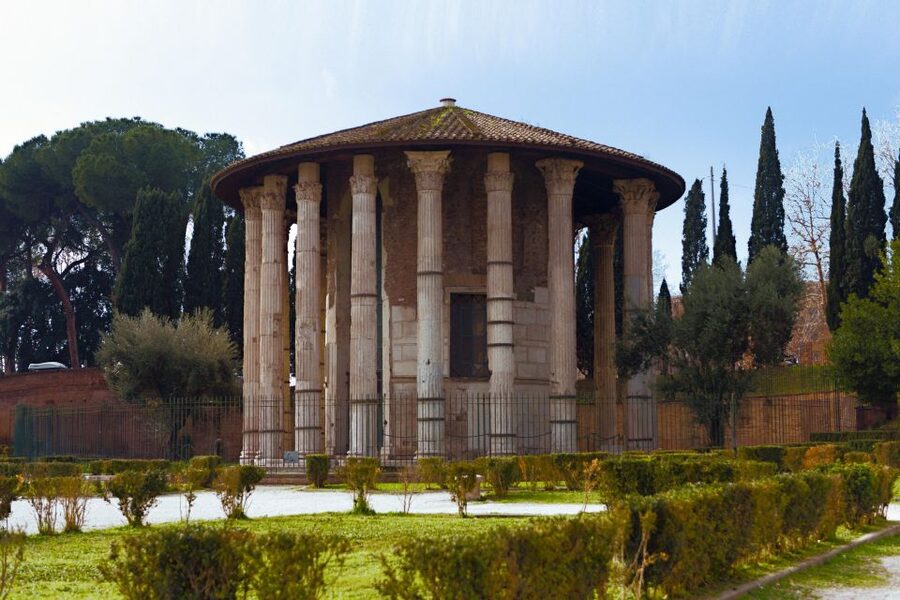
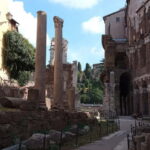
After Piazza Venezia, the cart moves you along efficiently, then you reach the Theatre of Marcellus for about 15 minutes of guided time. This theater area is a classic “Rome as architecture” moment. A guide can help you understand how these structures shaped public life—so it feels less like ruins and more like an operating system for ancient crowds.
The schedule also includes another guided stop listed as another 15-minute segment before the cart hop onward. You’ll still get that same pattern: a short ride, a guided explanation, and photo time. If traffic or closures affect sequencing, the order can shift, but the goal stays consistent—keep you oriented and moving through the most relevant imperial corridors.
This is where the cart really earns its place. You get to see multiple major sites without the stop-and-start grind of walking uphill, down steps, and around road bottlenecks.
Temple of Venus and Rome: A Stop That Helps You Read the City
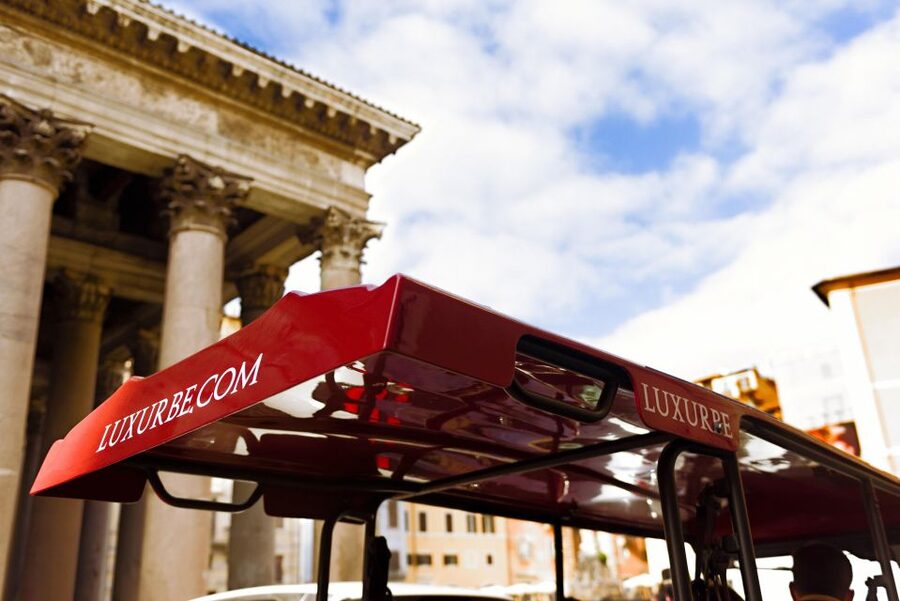
The Temple of Venus and Rome is another 15-minute guided stop. This is a powerful name on the map, but it becomes even more meaningful with a guide’s framing. Instead of treating it like a famous label, you start to understand it as a statement—politics, religion, and prestige all tangled together.
Then you move on toward the Domus Aurea. Expect guided time here to last about 20 minutes. This is one of those places where you’ll likely find yourself thinking, so this is what power looked like when it was trying to outshine everything around it.
If you’re the type who likes to ask questions, this portion is a good time to do it. Clear explanations make ruins easier to “see” as whole structures rather than fragments.
Domus Aurea: The Story Behind the Space
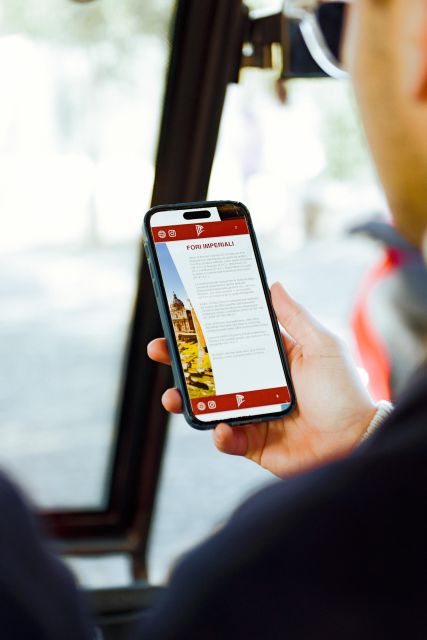
The Domus Aurea stop is about 20 minutes. The Domus area is less about checking a box and more about experiencing how Rome’s imagination worked on a grand scale.
Even when you’re looking at remnants rather than a fully intact building, a good guide helps you understand what the original plan was trying to achieve. That makes the ruins feel purposeful instead of random.
If you care about interpretation, pay attention to how your guide connects this stop to what came before it—imperial Rome’s ambition is consistent, even when the architecture changes.
Colosseum Viewing from a Fresh Angle
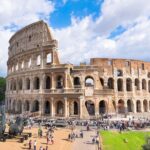
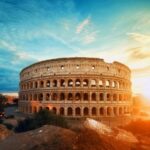
The cart brings you to the Colosseum next, with about 20 minutes of guided time. Even if you’re not entering, the tour’s value is in perspective. You’re not just standing in front of a famous facade; you’re being guided on what to look for and why the site mattered so much.
The route is designed so the Colosseum isn’t an isolated moment. It’s a hinge between earlier landmarks and the later run toward the Forum and the open views that come next.
Also, because you’re on an electric cart, you’re less likely to feel stuck in a slow-moving queue between far-apart viewpoints. You keep your day’s momentum.
Roman Forum: Understanding Why This Area Was the Center
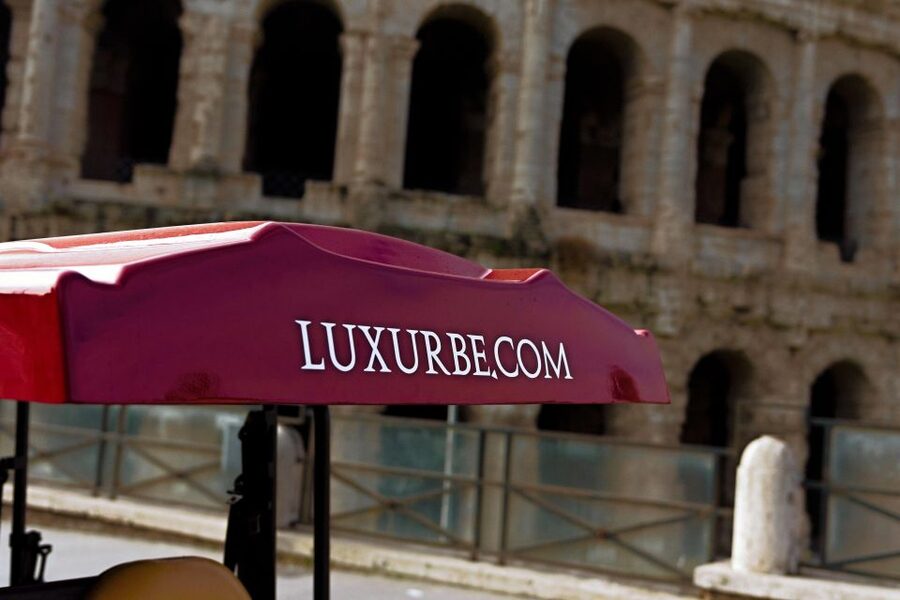
Next comes the Roman Forum, with about 20 minutes guided time. The Forum works best when your guide helps you connect structures to everyday power—laws, ceremony, public debate, and authority.
Ruins here can feel confusing if you’re on your own, mainly because everything is important. With a guide, you learn what to prioritize visually and how to interpret the layout.
This is also where the tour pacing helps. You’re not exhausted by a long walk by the time you reach the Forum area, so you can actually absorb what you’re seeing.
Circus Maximus: The Panoramic Finish That Makes the Day Click
The final major stop is Circus Maximus, guided for about 20 minutes. This is the part of the tour built for striking views—from the broader open perspective you can start to understand scale in a way that photos don’t always deliver.
The tour is specifically noted for panoramic outlooks running from the Colosseum area toward Circus Maximus. That’s a real advantage for orientation. You’re getting a sense of Rome as a connected system of spaces, not a set of disconnected ruins.
If you’re trying to learn the “shape” of ancient Rome in one afternoon, this finish helps the day feel like it has a conclusion—even without museum tickets.
Guides and Storytelling: Where the Experience Gets Personal
This kind of tour rises or falls on the guide. The good news is the operation seems to take that seriously.
I’ve seen examples of Matt being praised for clear English and extremely helpful explanations, which matters because Rome is full of names and details. You don’t want confusing info while you’re trying to look around.
I’ve also seen Tobin Tazzuti credited with strong historical and archaeological knowledge, and the extra detail that he asked what you’ve already seen and what you still want to cover. That’s a big deal. It means the day doesn’t feel like a rigid script, and you can steer toward your interests—whether that’s politics, architecture, or simply getting the best photo angles.
Robin was noted as patient and helpful, including when the group had young children. That’s useful if you’re traveling with family or anyone who needs a calmer pace.
What to Bring, What to Wear, and Real-World Weather
Bring comfortable shoes even though the cart reduces walking. You still get on and off, stand during viewpoints, and move through short distances at each stop.
Dress for the weather. The tour runs in light rain, so don’t count on a dry miracle. Plan accordingly with a light layer and rain protection if the forecast looks questionable.
A few practical restrictions are worth knowing:
- Pets aren’t allowed.
- Baby strollers aren’t allowed.
- No luggage or large bags.
- Unaccompanied minors aren’t allowed.
- Weapons or sharp objects aren’t allowed.
One practical note that needs checking: the information says the tour is wheelchair accessible, yet it also lists it as not suitable for wheelchair users. If you’re using a wheelchair, confirm directly before booking so you don’t arrive with the wrong expectations.
Should You Book This Ancient Rome Golf Cart Tour?
Book it if you want a smooth, guided way to cover the big hitters—Largo di Torre Argentina, Piazza Venezia, Theatre of Marcellus, Temple of Venus and Rome, Domus Aurea, plus the Colosseum, Roman Forum, and Circus Maximus—without turning your day into a footrace.
Skip it or add extra planning if you specifically want to spend long hours inside monuments with full exploration time. This tour is designed more for guided sightseeing with convenient cart transfers than for ticket-based deep entry.
This is also a smart choice when energy is limited—bad knees, limited time, or you just don’t want to commit to long walks. You get the main ancient Rome story beats, and you’ll likely leave with a clearer mental map than you’d get from wandering alone.
FAQ
How long is the Ancient Rome electric golf cart tour?
The duration is 3 hours.
How much does the tour cost?
The price is $47 per person.
What’s included in the tour price?
You get a guided sightseeing tour by electric golf cart, an English-speaking driver/guide, and guided photo stops at main landmarks. Audio guides are available upon request (if available), and hotel pick-up and drop-off are included only if you selected that option.
Are entrance tickets included for the Colosseum or Roman Forum?
No. Entrance tickets to monuments and attractions are not included.
Where is the meeting point?
Meet at Piazza del Popolo 11, in front of the Leonardo da Vinci Museum. Wait outside the entrance and do not enter.
How does hotel pick-up work?
Hotel pick-up and drop-off are optional. If selected, you wait outside your hotel or accommodation at street level. The driver arrives at the scheduled time or within a 10-minute waiting window.
Does the tour run in rain?
The tour operates even in light rain.
Is there an audio guide?
Audio guides are provided upon request (if available). Languages listed include Italian, English, and Spanish.
Is the tour wheelchair accessible?
The information includes wheelchair accessibility, but it also states it is not suitable for wheelchair users. If you use a wheelchair, confirm with the provider before booking.
What should I know about timing and cancellation?
There’s a free cancellation up to 24 hours in advance for a full refund. Also, there is a grace period of up to 10 minutes after the scheduled start time; arriving later may be treated as a no-show.