REVIEW · ROME
Ancient Rome with Archaeology – Small Group Only
Book on GetYourGuide →Operated by LeonardoDC · Bookable on GetYourGuide
Rome becomes easier when archaeology explains it. This small-group walk connects the Roman Forum, Colosseum, Imperial Fora, Capitoline Hill sights, and the Theater of Marcellus area into one clear timeline—why these places rose, changed, and mattered. I especially like the way the guide uses archaeology and art-history thinking to make the buildings feel less like random ruins and more like evidence.
I also like the human pace: Leonardo (the guide behind LeonardoDC) builds a short timeline introduction on the spot and then adjusts the walk to your interests, so the “why” sticks. One possible drawback to plan for: this experience does not include entry or tickets for the monuments, so you’re mainly seeing the sites from vantage points and archaeological areas, not walking inside.
Practical highlights at a glance
- Archaeology-led explanations that tie the monuments to Rome’s changing political power and art
- Multiple major stops in about 2.5 hours, including the Colosseum and the Roman Forum areas
- Capitoline Hill viewpoints plus the square area at Piazza del Campidoglio
- The Theater of Marcellus archaeological zone with Temple of Apollo and Porticus of Octavia
- Small group size (up to 6) for a more personal experience and room to ask questions
In This Review
- How archaeology turns Rome into a walkable timeline
- Meet at Piazza Mattei’s Fountain of the Turtles
- Colosseum viewpoints: outside access, inside understanding
- Imperial Fora: reading Rome’s power center in layers
- Roman Forum and Palatine: Rome’s growth explained where it happened
- Piazza del Campidoglio: viewpoints and meaning on Capitoline Hill
- Theater of Marcellus, Temple of Apollo, and Porticus of Octavia
- Small group size, pacing, and what 2.5 hours really means
- What you pay ($36.08) and why it can still feel like good value
- Who this tour suits best (and who might want something else)
- Should you book it?
- FAQ
- FAQ
- How long is the Ancient Rome with Archaeology small group tour?
- What is the group size?
- Where does the tour start?
- Where does the tour end?
- Which languages are offered?
- Is this tour suitable for people with mobility needs?
- Is there a lot of walking?
- Do I need monument tickets or entry passes?
- What major sights are included?
- Are there different starting times?
How archaeology turns Rome into a walkable timeline
This is the kind of Ancient Rome experience that helps you stop memorizing names and start understanding cause-and-effect. You’ll walk through some of the most famous landmarks in Lazio, but the focus is not just what they look like—it’s how archaeology helps explain how and why they evolved.
The guide’s method is straightforward. You begin with a timeline snapshot—where Rome started, how it grew, and what kinds of art and architecture matched each new phase. Then each monument becomes a chapter, with the talk anchored to what you can actually see around it.
If you like history that feels practical, this format works well. You’re not stuck in a lecture hall. You’re moving, looking, and getting interpretations that match the stone in front of you.
Meet at Piazza Mattei’s Fountain of the Turtles
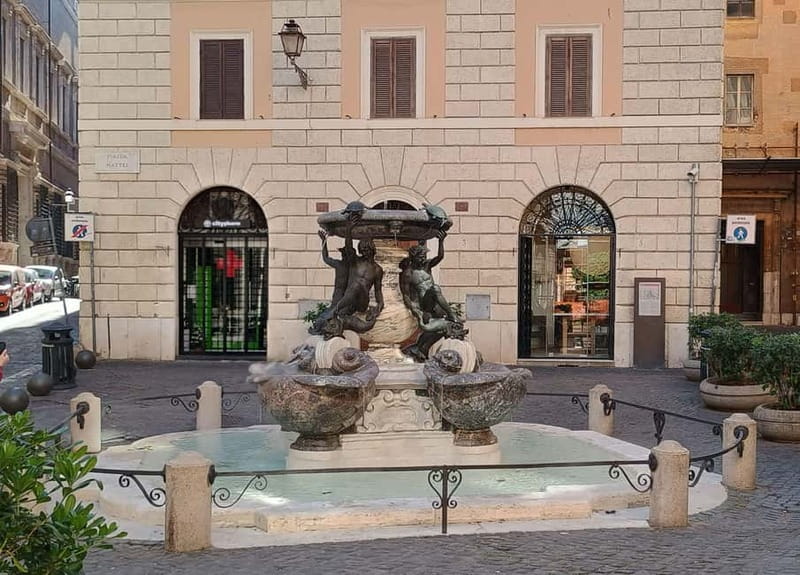
The tour starts at Piazza Mattei, 1, right in front of the Fountain of the Turtles. It’s a handy local meeting point, and it means you’re already in the center of the action before you even head out to the big ruins.
Before you reach the major sites, you’ll get that early orientation—either in a café area or while walking. That intro matters more than you might think, because it gives you the timeline “hooks” you’ll use later when you’re staring at layers of Roman building style.
The walking style is light and designed to be manageable. The experience is described as suitable for all ages, with city-supported physical accessibility, and you’ll have a steady pace rather than a forced march.
You can also read our reviews of more tours and experiences in Rome.
Colosseum viewpoints: outside access, inside understanding
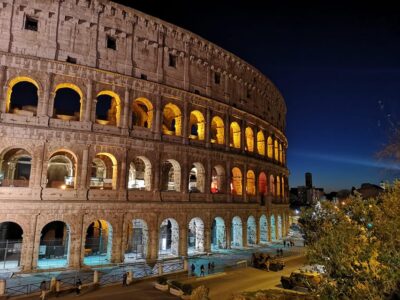
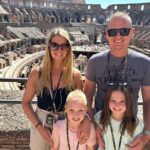
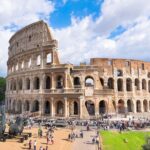
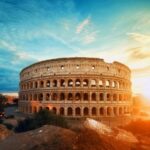
You’ll spend about 30 minutes at the Colosseum stop, guided and focused on what you can see from outside vantage points. Since there are no entry tickets included, the experience leans into archaeology instead of interior sightseeing.
From the outside, you can still learn a lot. The key is connecting the structure’s scale and design choices to the city’s priorities—public life, spectacle, and political messaging. The guide’s art-history angle helps you read the monument as more than an iconic photo backdrop.
This is also where small-group format pays off. With a group limited to six, you’re less likely to get stuck behind tall heads at the best angles, and you can ask the “wait, why was it built like that?” questions without the tour turning into a rush job.
Imperial Fora: reading Rome’s power center in layers
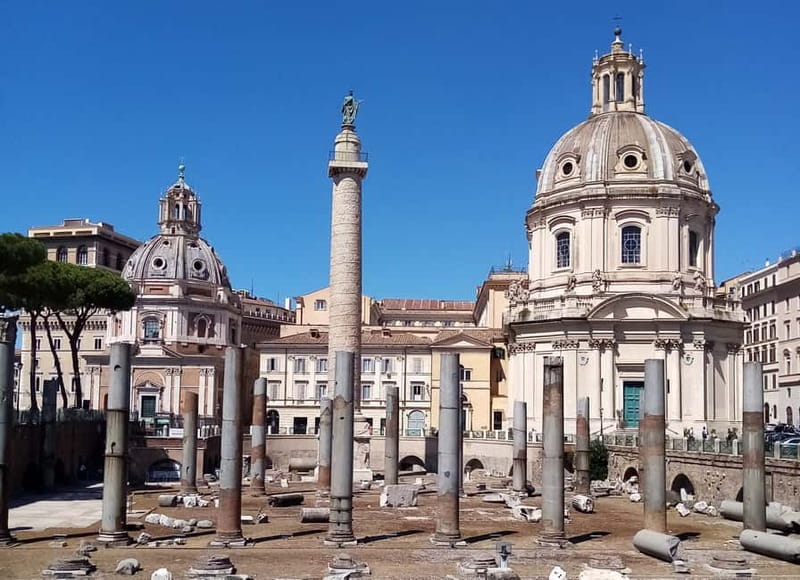
Next you head to the Imperial Fora, with another guided 30 minutes of sightseeing and walking. This section is all about context: these weren’t just impressive buildings, they were statements about authority, urban planning, and how power wanted to be experienced in public space.
What makes the Imperial Fora stop feel different is the archaeology framing. Instead of treating everything as one big “ruins field,” you’re encouraged to think in layers—how new construction fits over earlier urban patterns, and how that affects what survives today.
You’ll get vantage points that help you connect the layout to the story. Even without going inside, you can learn how the space functioned and why it mattered in daily Roman life and state display.
Roman Forum and Palatine: Rome’s growth explained where it happened
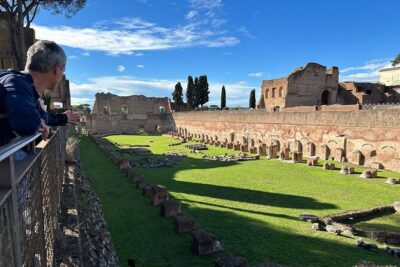
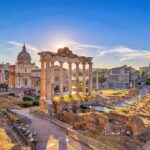
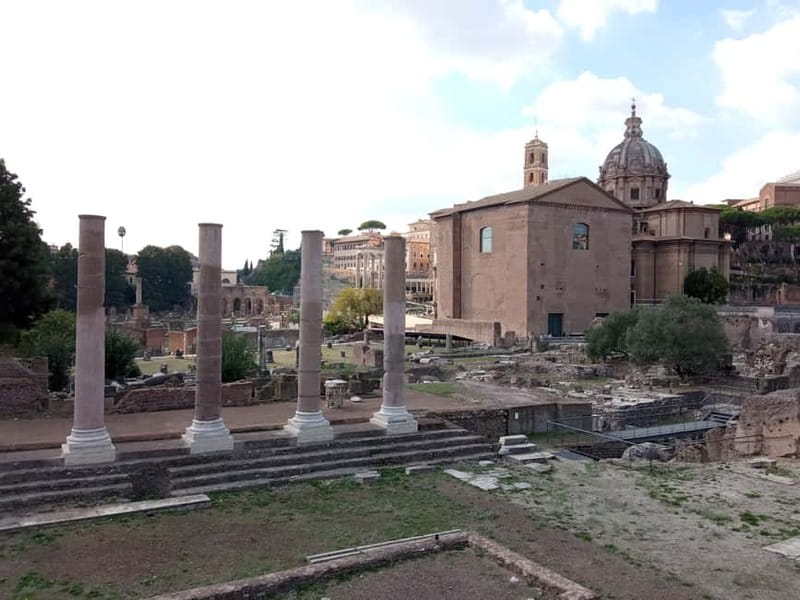
You then move into the Roman Forum area with guided sightseeing for about 30 minutes. This is the core of the “Roman development” story, and it’s where your early timeline intro comes back into play.
The guide’s big theme here is the evolution of Rome—from a smaller settlement idea toward the enormous imperial city you see in later monuments. Archaeology is the bridge. It helps explain why the Forum sits at the crossroads of politics, public culture, and changing building eras.
You’ll also pass into the broader sense of Palatine Hill’s importance during the walkthrough. Think of this stop as the place where Rome’s political identity becomes visible in stone and layout, not just in texts.
A small note to keep your expectations realistic: you’re learning the Forum’s meaning through observation and interpretation. If you were hoping for a ticketed “walk-through every room,” this isn’t that kind of tour. If you want the why-behind-the-ruins effect, it’s exactly the right style.
Piazza del Campidoglio: viewpoints and meaning on Capitoline Hill
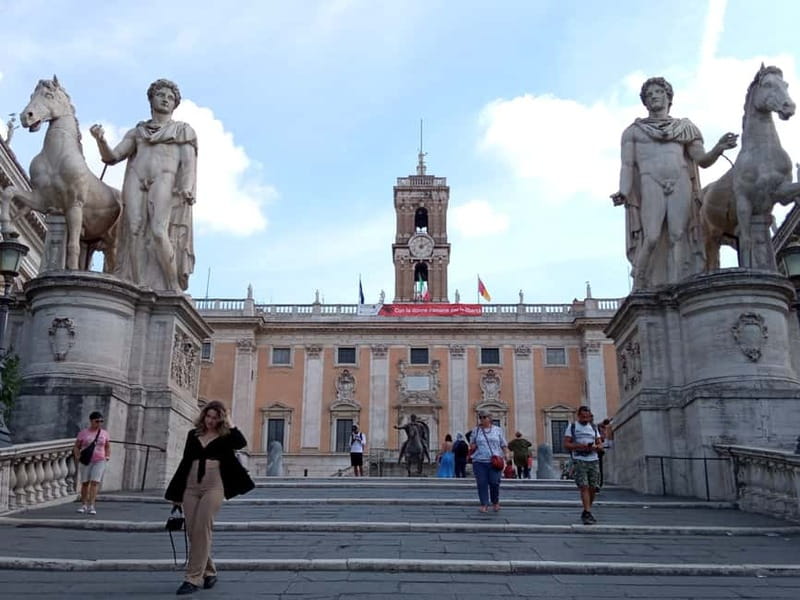
The tour includes a stop at Piazza del Campidoglio, on Capitoline Hill, with guided sightseeing and walking (about 30 minutes). This is a satisfying shift because you’re no longer only staring at fragmented ruins—you’re standing in a formal civic space where the city’s symbolism is part of the story.
Capitoline Hill is one of those Roman ideas that keeps returning in different ways: power, order, and how rulers want people to feel when they look across the city. The guide ties this to what you’ve already seen, so the monuments start feeling connected instead of separate.
What I like here is the way the interpretation helps you notice relationships between spaces. You’re not just collecting sights. You’re building a mental map of how Rome structured its messages through architecture and positioning.
Theater of Marcellus, Temple of Apollo, and Porticus of Octavia
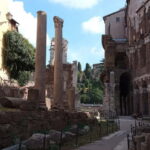
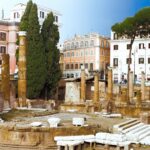
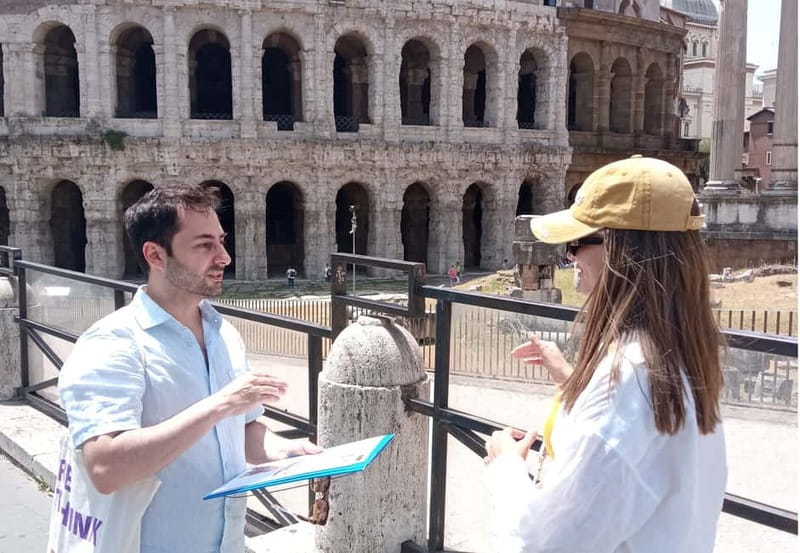
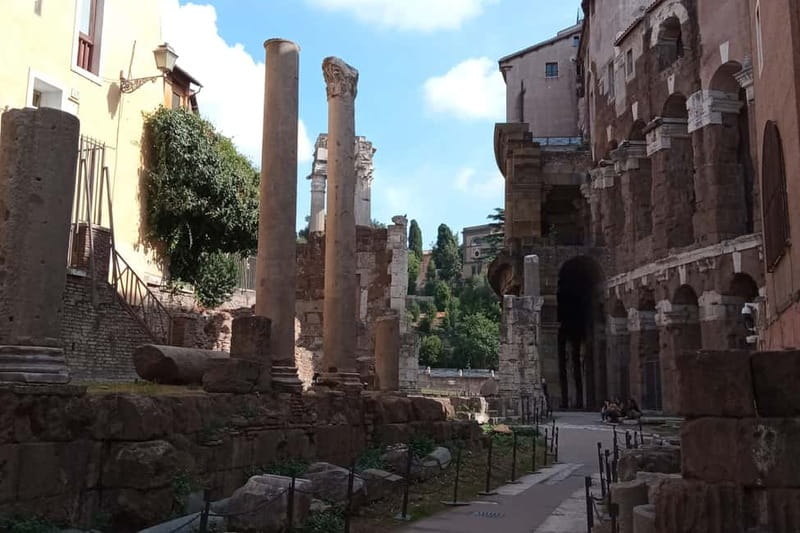
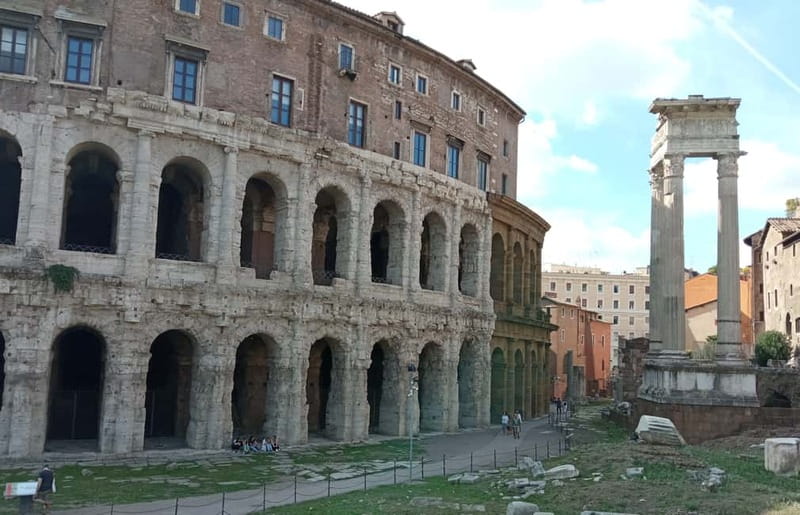
The walk ends at the archaeological area of the Theater of Marcellus, with guided time that also includes the Temple of Apollo and the Porticus of Octavia. You’ll get about 30 minutes at this final stop, plus a chance to slow down and see how these spaces relate to each other.
This ending section is valuable for a reason: it brings you to an archaeological area where context can feel more intimate than the massive arena scale of the Colosseum. The Theater of Marcellus area is about function and setting—how public entertainment and sacred structures sit within the city’s fabric.
You’ll also learn about the way this area connects to later history. The experience notes that this archaeological zone leads to the former Jewish Ghetto, which adds an extra layer to why the site matters beyond purely Roman-era storytelling. It’s a reminder that “ancient Rome” doesn’t exist in a museum bubble—it sits under and around later chapters.
Small group size, pacing, and what 2.5 hours really means
This is a small group tour limited to 6 participants, guided live in Portuguese or English. In practice, that size keeps the experience conversational. You can get specific answers without feeling like you’re competing with a crowd for attention.
The whole tour runs about 2.5 hours. That time window is long enough to hit several major landmarks but short enough to stay comfortable—especially since it’s described as light walking with physical accessibility provided by the city.
The pacing is also described as personalized to your interests, pace, and time. That doesn’t mean the guide will magically slow down every stop. It means the talk isn’t cookie-cutter. If you care more about architecture and art than politics, the focus can shift to what helps you “read” the sites.
If you’re traveling with kids or you want something active but not exhausting, this format tends to work well. You get big-name monuments without the marathon length that can wear people down.
What you pay ($36.08) and why it can still feel like good value
At about $36.08 per person for roughly 2.5 hours, you’re paying for three things: a guided explanation, access to multiple key zones in one outing, and a small-group setting.
The “watch-out” value factor is also clear: tickets and entry inside monuments aren’t included. So you shouldn’t judge the price based on the cost of museum-like ticketing. Instead, judge it based on the quality of interpretation you’ll get as you move between stops.
Where the value shines is the archaeology approach. When a guide can explain how buildings changed over time, you stop seeing ruins as disconnected fragments. You walk away with a mental model, not just photos of stone.
If you’re the type who wants to understand what you’re looking at—rather than just ticking off the Colosseum and moving on—this price is easier to justify.
Who this tour suits best (and who might want something else)
I’d aim this style of tour at first-time Rome visitors who still want depth. You’re seeing the headline monuments—Colosseum, Roman Forum, Imperial Fora, Capitoline Hill, Theater of Marcellus—while the guide ties them together with archaeology and art-history context.
It’s also a good match for people who feel overwhelmed by Rome’s size. One guided loop, with a clear story and a manageable walking pace, helps you feel oriented quickly.
On the other hand, if your main goal is interior access—walking inside major monuments, buying tickets, and doing a deeper museum-style route—this experience won’t satisfy that. It’s designed for outside viewing and archaeological areas, not ticketed entry.
Should you book it?
If you want Ancient Rome explained in a way that makes the monuments feel connected, I’d book this. The small group size, Leonardo’s guided timeline approach, and the archaeology focus are the strongest reasons to go, especially if you’ve felt like you needed more than a quick stop-and-snap tour.
Book it even if you’re short on time, because 2.5 hours covers a lot of ground with a light walking pace. Just go in knowing what’s included: guided sightseeing from the right spots, and archaeology-led context—without inside-entry tickets.
FAQ
FAQ
How long is the Ancient Rome with Archaeology small group tour?
It lasts about 2.5 hours.
What is the group size?
It’s a small group limited to 6 participants.
Where does the tour start?
It starts at Piazza Mattei, 1, right in front of the Fountain of the Turtles.
Where does the tour end?
It ends back at the meeting point.
Which languages are offered?
The live guide speaks Portuguese and English.
Is this tour suitable for people with mobility needs?
Yes. The tour is described as wheelchair accessible with city-provided physical accessibility.
Is there a lot of walking?
It’s described as light walking suitable for all ages and does not require effort.
Do I need monument tickets or entry passes?
No. The experience does not include going inside monuments or tickets for them.
What major sights are included?
You’ll see the Colosseum, Imperial Fora, Roman Forum, Capitoline Hill area (Piazza del Campidoglio), and the Theater of Marcellus area, including Temple of Apollo and Porticus of Octavia.
Are there different starting times?
Different times are available, so you’ll need to check availability for specific starting times.