REVIEW · NEW DELHI
3-4 Hour Old Delhi Heritage Walk Tour with Tuk Tuk Ride Wherever Required
Book on Viator →Operated by TravExcel India Tours & Travel · Bookable on Viator
Old Delhi rewards the curious with smart shortcuts. This half-day tour mixes Jama Masjid viewpoints with real market streets—spices, parathas, gold and silver—while you move by AC car plus tuk tuk/rickshaw where it actually helps. I like that it stays small (group capped at 15) and that the guide’s style keeps the whole area making sense fast, with names like Tariq, Adeel, and Rahis Kahn showing up in guide feedback.
Two things I especially like: you get door-to-door comfort with bottled water between the most important stops, and you’re walking the same lanes people shop in, not just standing outside gates. One drawback to plan around: Jama Masjid entry isn’t included, and Old Delhi can feel crowded and weather-sensitive, so you’ll want solid shoes and a good-weather mindset.
If you want the Old City in one efficient morning or afternoon—without getting lost in the chaos—this is a strong way to do it.
In This Review
- Key reasons this tour works
- Old Delhi, on foot but not stuck on foot
- Price and time: what $24 buys you in real terms
- The guide makes the difference in tight streets
- Stop 1: Jama Masjid—Mughal scale and practical entry planning
- Stop 2: Chandni Chowk markets—spices, silver, and everyday shopping
- Stop 3: Gali Paranthe Wali—one street, one food obsession
- Stop 4: Khari Baoli—Asia’s largest wholesale spice market
- Stop 5: Naughara—small stop, meaningful local detail
- Stop 6: Dariba Kalan—gold and silver shopping street
- Tuk tuk and rickshaw rides: the secret to not wasting time
- What this tour is really best at (and what it isn’t)
- A practical packing and timing checklist
- Should you book this Old Delhi heritage walk?
- FAQ
- How long is the Old Delhi heritage walk tour?
- What’s the price per person?
- What’s included in the tour price?
- Is the Jama Masjid admission included?
- Do I need tickets for the other stops?
- How big is the group?
- Do I get pickup from my hotel?
- Is the tour only for my group?
Key reasons this tour works
- Small group (max 15): easier pace, less waiting, better questions.
- AC vehicle between stops: you still get the relief when traffic and distance add up.
- UNESCO-linked anchor at Jama Masjid: a true Mughal-era starting point.
- Market “route logic”: Chandni Chowk, Gali Paranthe Wali, Khari Baoli, Dariba Kalan all connect naturally.
- Tuk tuk/rickshaw when it’s useful: less backtracking in tight lanes.
- Real guide energy: English-speaking guides like Tariq and Adeel are repeatedly praised for handling crowds and logistics.
Old Delhi, on foot but not stuck on foot
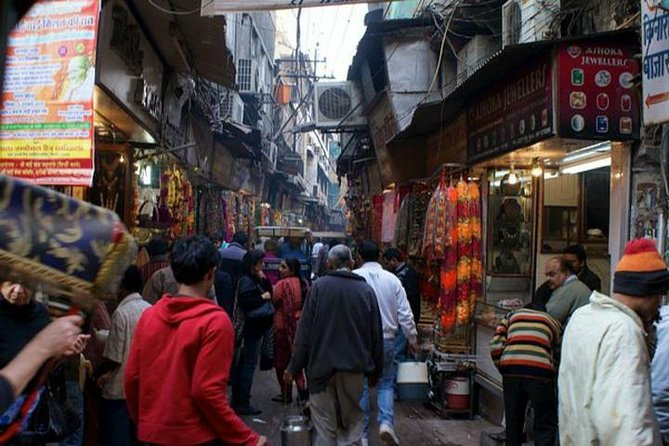
Old Delhi can overwhelm you quickly—sound, smell, and people all at once. What makes this tour easier is the pattern: you do enough walking to feel the place, but you’re not fighting every block. You start with a major landmark, then move into the commercial streets where the city’s daily rhythms take over.
The “Old Delhi by car plus rickshaw/tuk tuk” approach is practical. In a city of narrow lanes, stopping and restarting matters; an AC car gets you to the right start points, and tuk tuk or rickshaw helps you hop to the next cluster without wasting time. You’re also covered by a small group cap, so the guide can actually steer.
You can also read our reviews of more walking tours in New Delhi



Price and time: what $24 buys you in real terms

At $24 per person for about 3 to 4 hours, you’re paying for structure. That sounds simple, but in Old Delhi structure is the value: you’re not spending your limited time negotiating your way between Jama Masjid-area streets, Chandni Chowk’s lanes, and the spice market quarter.
Your money goes toward bottled water, an air-conditioned vehicle, private transportation, and GST. Lunch isn’t included, and Jama Masjid has an extra admission ticket (plus possible camera fees), so you should plan on small additional costs. Still, for a guided half-day that covers multiple high-impact areas, it’s a decent deal—especially if it’s your first time in Delhi.
The guide makes the difference in tight streets
This is the kind of tour where a good guide changes everything. The best feedback in the information you shared points to guides like Tariq, Adeel, and Rahis Kahn for English-speaking clarity, confidence in logistics, and the ability to navigate crowds without turning the trip into a sprint.
I’d treat that as a big clue for what you should look for when you arrive: a guide who can move you through bottlenecks, explain what you’re seeing in plain language, and keep you from repeating the same ground. In Old Delhi, that’s how you avoid the classic mistake—seeing things, but not understanding them.
Stop 1: Jama Masjid—Mughal scale and practical entry planning
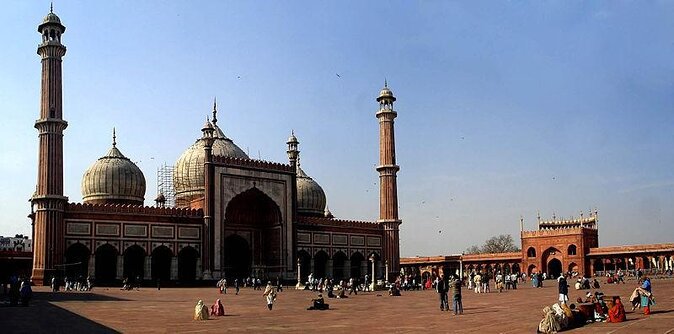
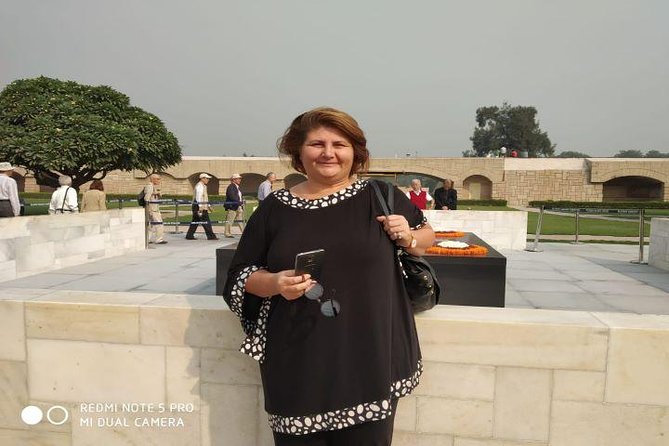
You’ll begin at the Jama Masjid of Delhi, also known as Masjid-i Jahān-Numā. It was built by Mughal Emperor Shah Jahan between 1644 and 1656, reportedly at a cost of one million rupees, and it’s one of the largest mosques in India.
Plan for about 45 minutes here. Admission is not included, and camera fees may apply, so if you care about photos, be ready with the right budget and follow any on-site rules. The big payoff is seeing the sheer scale and layout of a Mughal-era monument in the middle of living streets, not in a museum setting.
What to watch for: the way the surrounding area pulls you into the Old City. Even if you’re not there for religious architecture, the Jama Masjid area acts like a map key—once you orient here, the rest of the lanes feel less random.
Stop 2: Chandni Chowk markets—spices, silver, and everyday shopping
Next comes Chandni Chowk, often described as Old Delhi’s shopping heart. You’re in the thick of the action for about 30 minutes, and it’s exactly the mix that makes it famous: spices and dried fruit, silver jewelry, and colorful saris. Side streets can also show small shops offering essential oils and everyday goods.
The value of this stop isn’t just shopping. It’s pattern recognition—how Old Delhi’s trade clusters around specific products. If you’ve ever felt that Old Delhi is all chaos, this is where a good guide helps you sort the noise into categories.
A drawback: the crowd level can be intense at market speed. Go with the mindset that you’re here to watch the street work, not to “browse” like a mall. If you want photos, take them quickly and respectfully, and expect you’ll be moving often.
You can also read our reviews of more historical tours in New Delhi


Stop 3: Gali Paranthe Wali—one street, one food obsession
A short hop brings you to Gali Paranthe Wali, a narrow lane known for paratha shops. You’ll spend about 15 minutes there, and the point is to see how food culture shapes the street layout.
If you’re a first-timer, this is a fun reset. It’s less monumental than Jama Masjid and less trade-focused than Khari Baoli, but it connects you to the “what people actually buy for lunch” side of Old Delhi. Even if you don’t stop for food, you’ll likely understand why this lane earned its reputation.
The main consideration is that the street is narrow and busy. Wear comfortable shoes and keep your phone secured in a way that doesn’t turn you into a traffic hazard.
Stop 4: Khari Baoli—Asia’s largest wholesale spice market
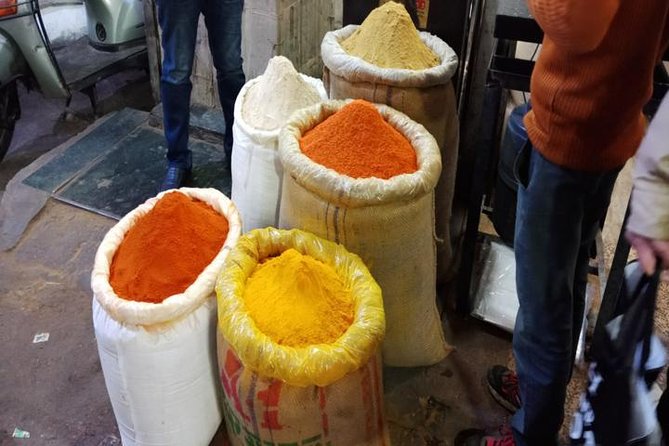
Then you hit Khari Baoli, a street known for wholesale groceries and—importantly—its spice market at large scale. Expect about 30 minutes here.
This is one of those places where your senses do some of the work. The market sells spices, nuts, herbs, and also staples like rice and tea, so it’s not just “tourist spices in small bags.” It’s bulk trade. That’s why this stop feels so authentic: you’re seeing a supply chain, not just a souvenir shelf.
If you’re sensitive to strong smells, take a steady pace and give yourself small pauses. A good guide can also help you focus—what to notice, how the stalls differ, and what the product variety means in practice.
Stop 5: Naughara—small stop, meaningful local detail
You’ll make a stop at Naughara, which translates as “nine homes.” One competing interpretation ties the name to “nine pots” of water kept out for thirsty travelers. Either way, it’s a reminder that Old Delhi’s street identity isn’t only about trade—it’s also about service and survival in busy routes.
Time here is about 25 minutes, and because it’s a smaller stop, you’ll feel the tour easing a bit. This is a good moment to slow down, look at how the lane works, and notice how people move through the space.
The drawback is that this kind of stop can feel less “wow” if you’re expecting big monuments. But it’s often the detail that makes the whole neighborhood feel real.
Stop 6: Dariba Kalan—gold and silver shopping street
You’ll finish at Dariba Kalan, a street with famous stalls for gold and silver. It takes about 30 minutes and it’s another trade cluster, but with a different personality than Khari Baoli.
The name relates to Persian roots: Dur-e be-baha means something like a grand pearl, with Kalan indicating “big.” The big takeaway for you is not etymology trivia—it’s that Dariba Kalan is still organized around craftsmanship and precious-material commerce.
This is a fun closing act because it shifts the tour from spices and food signals into jewelry and metalwork culture. If you like to see how different trades shape street geography, you’ll appreciate the contrast.
Tuk tuk and rickshaw rides: the secret to not wasting time
A key part of this tour is using tuk tuk/rickshaw wherever needed. That matters because Old Delhi streets don’t behave like grid streets. You can walk two streets over and feel like you’ve jumped to a different world.
The AC car between the main areas also keeps the pace realistic. You get air-conditioned breaks during traffic or when the next cluster is farther than it looks. That’s especially helpful in hot or humid periods, or if you’re traveling with anyone who doesn’t want an all-on-foot morning.
If you’re choosing footwear, go comfy and sturdy. You’ll be walking through market surfaces and uneven pavement where a rolling shoe can be more trouble than it’s worth.
What this tour is really best at (and what it isn’t)
This is best at three things:
1) getting you oriented in Old Delhi fast,
2) packing in multiple landmark-to-market transitions in half a day, and
3) explaining what you’re seeing while you’re actually in it.
It’s not a slow, museum-only experience. You’ll be in active streets, so the tour is more about street understanding than quiet sightseeing. If you hate crowds, you might find the market segments taxing. But if you can handle busy streets for a few hours, you’ll likely come away with a clearer mental map than you would on your own.
A practical packing and timing checklist
Old Delhi doesn’t give you much flexibility once you’re in the lanes, so I’d plan smart:
- Wear comfortable shoes for uneven, crowded walking.
- Bring a small amount of cash for extra costs like Jama Masjid admission and potential camera fees.
- Keep water handy even though bottled water is provided; heat and crowds add up.
- If you’re planning phone photos, remember market lanes can be crowded and quick—move with the group.
Also, this experience requires good weather. If conditions are poor, you should expect a change in the date rather than a fully canceled day.
Should you book this Old Delhi heritage walk?
Book it if you want a guided Old Delhi route that connects the biggest sights with the working-market streets, all inside a half-day timeframe. The max 15 group size is a real advantage, and the repeated praise for guides like Tariq, Adeel, and Rahis Kahn suggests you’ll get clear explanations plus solid crowd-handling.
Skip it or think twice if you need a quiet, low-crowd experience, or if the idea of market intensity makes you anxious. Also factor in the extra cost for Jama Masjid entry and possible camera fees, plus your own meal plans since lunch isn’t included.
If you’re balancing time, value, and the desire to actually understand Old Delhi instead of just passing through it, this is a strong pick.
FAQ
How long is the Old Delhi heritage walk tour?
It runs about 3 to 4 hours.
What’s the price per person?
The price is $24.00 per person.
What’s included in the tour price?
You get bottled water, an air-conditioned vehicle, private transportation, and GST.
Is the Jama Masjid admission included?
No. Jama Masjid admission ticket is not included, and camera fees may apply.
Do I need tickets for the other stops?
Admission at Chandni Chowk, Gali Paranthe Wali, Khari Baoli, Naughara, and Dariba Kalan is listed as free for this tour experience.
How big is the group?
It’s a small-group tour capped at 15 visitors.
Do I get pickup from my hotel?
Yes. Pickup is offered, along with door-to-door transfers.
Is the tour only for my group?
Yes. It’s described as private transportation and your group participates together.