REVIEW · ROME
Private Guided Tour Colosseum and Ancient Rome
Book on Viator →Operated by Sun In Rome Tours · Bookable on Viator
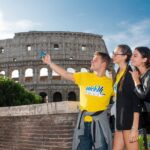
One of the best ways to understand the Colosseum is to stand inside it. This private tour gets you onto the reconstructed arena floor through the Porta Libitinaria, the so-called Gate of Death, then continues with a guided walk of the Roman Forum and up to Palatine Hill. If you want Rome at human scale—less rushing, more seeing—this format fits.
I like two things right away: you get arena-floor access that most people never see, and you’re paired with a professional English-speaking guide who helps you connect what you’re looking at to how it worked back then. Plus, the pace is built for a custom group, not a fixed cattle-call rhythm.
One consideration: this experience is weather-dependent, and it’s also non-refundable and non-changeable if you cancel for reasons outside poor conditions. So plan it with your schedule locked in, and keep a weather Plan B in mind.
In This Review
- Key points to know before you go
- Porta Libitinaria to the Colosseum Arena: the start that changes everything
- Stepping onto the reconstructed floor: what the gladiator connection really means
- Roman Forum and Palatine Hill: walking the political stage instead of the postcard set
- Private tour pacing: the big difference you’ll actually notice
- Practical logistics: meeting point, mobile ticket, and the ID rule
- Price and value: why $336 per person can make sense here
- Who this tour fits best (and who might want a different plan)
- Should you book the Colosseum + Forum private tour?
- FAQ
- How long is the Private Guided Tour Colosseum and Ancient Rome?
- Is the tour private or shared with other groups?
- What’s included with the tour?
- Where does the tour start and end?
- What is the Gate of Death?
- Do I need a mobile ticket?
- What ID do I need for entry?
- What happens if weather is bad?
Key points to know before you go
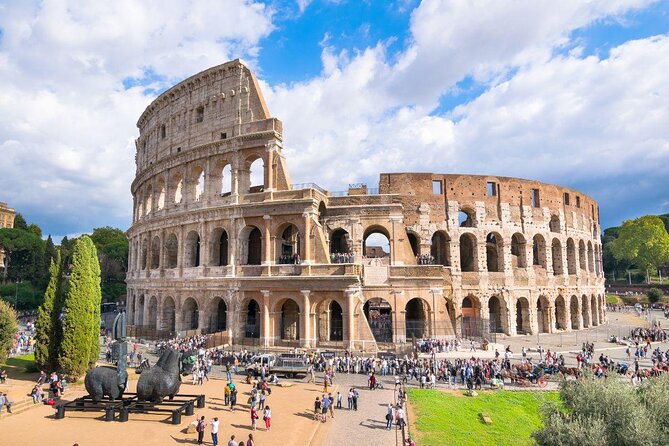
- Gate of Death entry via Porta Libitinaria puts you on the arena floor route that feels different from the usual Colosseum ticket line.
- Most visitors won’t go inside the arena; this tour focuses on that higher-impact viewpoint.
- Roman Forum + Palatine Hill guidance helps you “read” the ruins instead of just walking past them.
- Private format and custom group size means fewer bottlenecks and more control of the pace.
- Mobile ticket keeps logistics simpler than paper-only options.
- ID must match booking names to avoid problems at the ticket office.
Porta Libitinaria to the Colosseum Arena: the start that changes everything
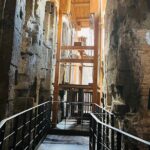
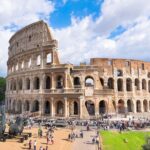
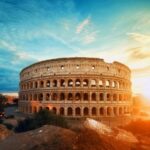
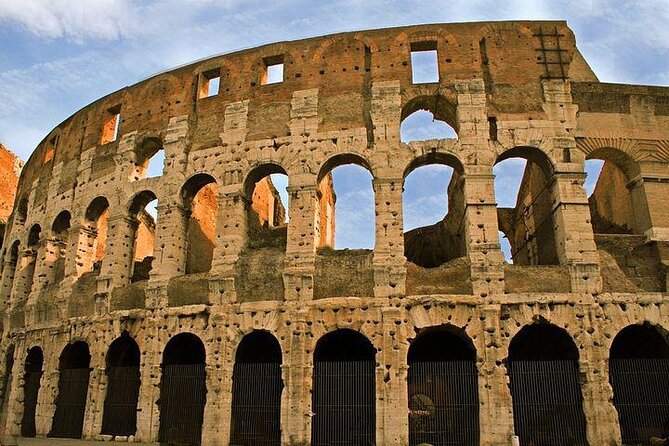
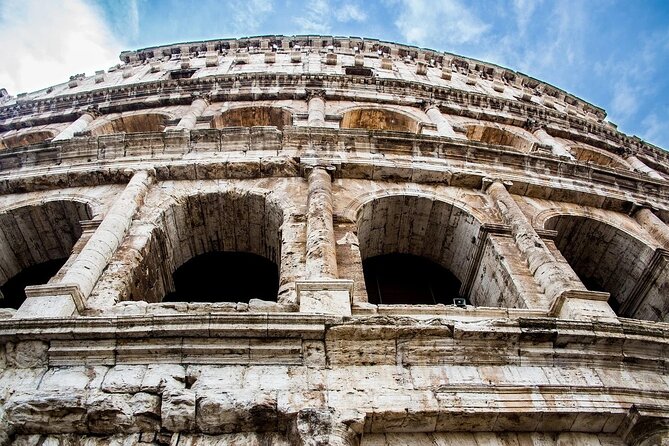
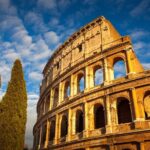
If you’ve ever visited the Colosseum and felt like you were looking at it rather than into it, this is your fix. The tour begins at Piazza del Colosseo and takes you to the entrance route through Porta Libitinaria, also known as the Gate of Death. The point isn’t just a clever name—it’s that you’re moving toward the arena from the side that feels tied to the Colosseum’s most intense moments.
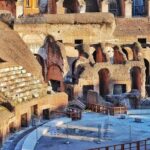
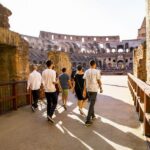
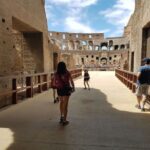
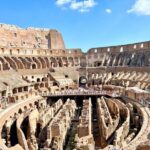
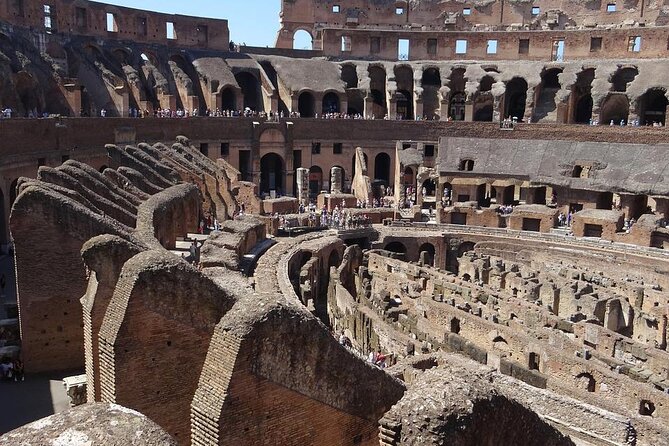
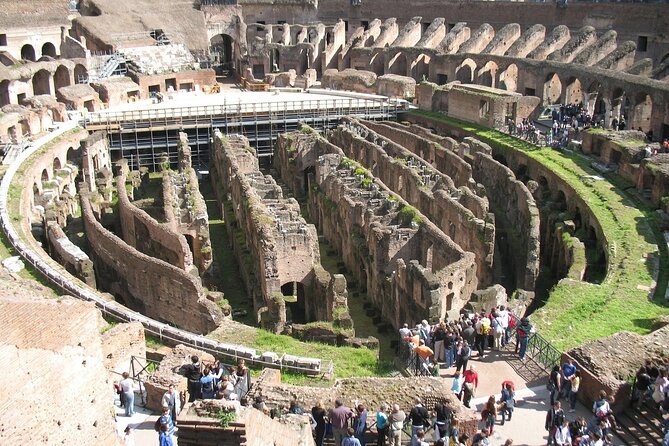
Most standard visits start you in the stands or along paths that skim the outside of the story. Here, you’re led right to the reconstructed arena floor, where the view flips. You’re suddenly eye-level with the space where gladiators (and wild animals in the arena’s earlier days) would have been staged. It’s a mental reset: you stop treating the building like a photo backdrop and start treating it like a working machine.
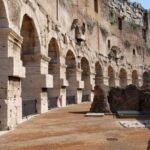
This also matters for your photos and your understanding. From the arena level, you can see how the architecture funnels attention inward, and how the seating tiers relate to the central performance space. Even if you know the basics, the “where you stand” experience is what makes the Colosseum click.
You can also read our reviews of more guided tours in Rome
Stepping onto the reconstructed floor: what the gladiator connection really means
The headline feature is arena-floor access, and it’s the part you’ll feel in your body, not just your brain. You’ll stand on the reconstructed arena floor and follow the guided experience that’s designed to match how the Colosseum functioned for events. Calling it an authentic gladiator experience is fair—not because you’re watching a live performance included here, but because you’re entering and experiencing the space the way the spectacle was structured.
A huge practical win: your time is focused. You’re not spending most of the visit moving through crowded corridors and hunting for the one view that makes everything worth it. Instead, the tour centers on the moments that deliver the biggest payoff: the arena-level perspective, then the connected walk through the surrounding historic areas.
You’ll also likely get more out of the ruins because of the order you experience them in. When you first understand the arena, the Forum and Palatine Hill stop being separate sightseeing stops. They become part of the same ancient “system” of power, politics, and public life.
One more detail: this is listed as professional guidance on-site. That matters because there’s a lot going on in the Colosseum—even when it looks like “just stones.” A good guide helps you notice what you might otherwise miss, and it keeps you from drifting into random wandering.
Roman Forum and Palatine Hill: walking the political stage instead of the postcard set
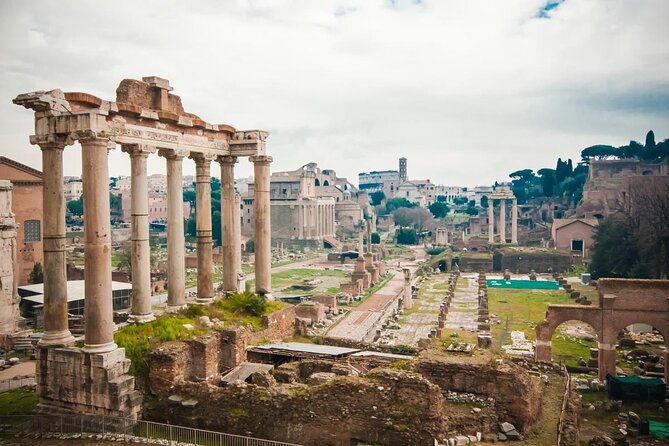
After the Colosseum, the tour moves into the Roman Forum and up to Palatine Hill, with guiding through both. This is where many people feel the most “Rome” shock, because the Forum isn’t one monument—it’s a landscape of political and social layers. From ground level, the Forum can look like scattered remains until someone helps you map it.
A guided approach helps you do two useful things fast. First, you learn how to orient yourself in what you’re seeing—what’s a key area and why. Second, you understand how Palatine Hill fits into the story, since it’s connected to where elite power and prestige took shape above and around the Forum.
The tour is built for a comfortable pace, which matters here. The Forum and Palatine Hill involve walking and looking upward, and they can get tiring if you’re trying to do it all on your own while also checking your phone for “what is this?” A guide keeps the route efficient and the explanations timely—so you spend more time seeing and less time guessing.
Also, the order matters. Doing this right after the arena helps your brain connect public spectacle with public authority. You’re going from performance space to political space, without losing momentum.
Private tour pacing: the big difference you’ll actually notice
This is a private tour, so only your group participates. That sounds like a marketing line, but in practice it changes how the experience feels. You’re not stuck behind slow walkers at a bottleneck, and you’re less likely to get left behind while the rest of the group herds toward the next stop.
It also helps with the guide interaction. You can ask practical questions, and the guide can adjust pacing based on how your group is doing. In the past, people have praised guides for being friendly and well educated, including names like Damiano and Elisabeth/Elizabeth. You shouldn’t expect the exact same guide every time, but the emphasis on professional English-speaking guidance is consistent—and that’s what you want.
The tour duration is about 2 hours 30 minutes, and that’s a sweet spot for this mix of sites. It’s long enough to feel substantial—arena floor, then Forum and Palatine Hill guidance—without turning into a full-day endurance test.
If you like history told with energy and structure, this format tends to work well. You get a narrative arc instead of a checklist.
Practical logistics: meeting point, mobile ticket, and the ID rule
The meeting point is Piazza del Colosseo (00184 Roma RM), and the tour ends back at the same spot. That’s convenient: you won’t need to navigate halfway across Rome after you’ve already walked and climbed a bit.
Your ticket is listed as a mobile ticket, which should help with day-of convenience. You’ll also want to follow the ID requirements closely. The tour notes that each traveler must present a valid passport or ID document that matches the name provided at booking. And it specifically warns that presenting voucher details with all travelers’ full names before entry can be required for access to the Colosseum and Roman Forum.
This is the kind of detail that can ruin a day if you ignore it. When you book, double-check the spelling of every full name exactly as it appears on the ID you’ll bring. If your group has minors, make sure their details are included correctly as well.
In addition, it’s stated to be near public transportation and that most travelers can participate. Still, keep your own mobility needs in mind because the Colosseum area and Palatine Hill involve walking and uneven ground.
You can also read our reviews of more private tours in Rome

Price and value: why $336 per person can make sense here
At $336 per person, this isn’t a budget choice. But the value logic is clear when you break down what’s included: a private, professional English-speaking guide; a custom group setup; arena-floor access on the reconstructed floor; and a guided visit that combines the Colosseum with Roman Forum and Palatine Hill.
For many visitors, the most expensive part of a Colosseum day is time and friction. You pay extra to buy back control: fewer crowds to manage, better timing for meaningful access, and guidance that turns “big sights” into “understandable sights.” When the experience includes arena-floor entry—an area most people don’t reach—that’s the central upgrade you’re paying for.
You’re also buying a tighter itinerary. In 2.5 hours, you cover the Colosseum’s key moment plus the Forum and Palatine Hill. If you tried to replicate this on your own, you’d spend time piecing together tickets, routing, and explanations—and you might still miss the arena-level perspective.
One last value angle: this tour is typically booked about 16 days in advance on average. That doesn’t guarantee availability, but it suggests it’s a common pick for people who want a plan that doesn’t fall apart at the last minute.
Who this tour fits best (and who might want a different plan)
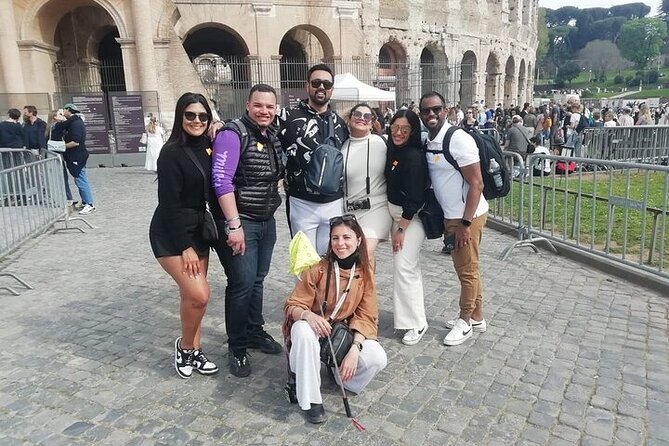
This private tour is a strong fit if you care about three things: access, context, and pace. Arena-floor entry is the big draw, and you’ll enjoy it even more if you like a guided story that connects the Colosseum to what came before and around it in Roman civic life.
It’s also a good match for groups who want less stress than big group touring. The private format helps keep the day calmer. Families and mixed-age groups can do it too, since it’s described as usable by most travelers, but you’ll want to judge your own walking tolerance for the Forum and Palatine Hill segments.
If you’re the type who just wants to wander, take photos, and move on with minimal talking, you might find a private guide less necessary. But if you want the Colosseum to feel like a place with purpose—not just a famous wall of stone—this tour’s structure is built for you.
Should you book the Colosseum + Forum private tour?
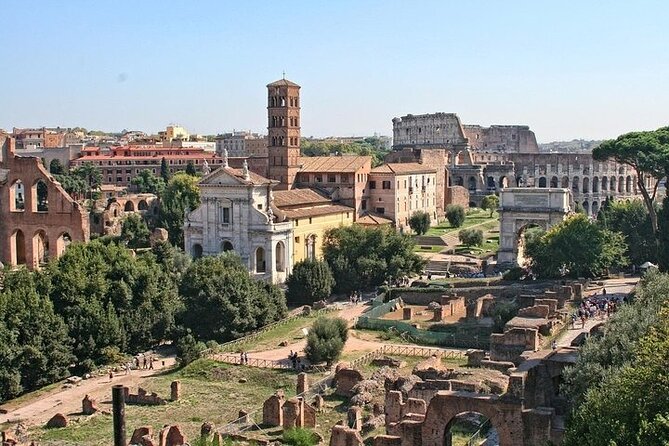
I’d book it if arena-floor access is high on your Rome priorities and you want the Forum and Palatine Hill explained in a way that makes sense right away. The price hurts a little, but the included access changes the whole feel of the day, and the private guide helps you get value from every minute you pay for.
Before you hit the book button, do two simple checks. First, confirm the ID details for every person match exactly what you’ll carry that day. Second, be realistic about weather—this is stated to require good weather, and if conditions are bad you may be offered a different date or a refund, while changes for other reasons aren’t refundable.
If you want Rome that feels personal, focused, and anchored in the most important viewpoint of the Colosseum, this one is a smart use of your time in the city.
FAQ
How long is the Private Guided Tour Colosseum and Ancient Rome?
It’s approximately 2 hours 30 minutes.
Is the tour private or shared with other groups?
It’s a private tour/activity, and only your group participates.
What’s included with the tour?
The tour includes a private tour of the Colosseum Arena Floor, a guided tour of the Roman Forum and the Palatine Hill, a private and professional English-speaking guide, and a custom group size. A ticket for admission is included.
Where does the tour start and end?
You’ll meet at Piazza del Colosseo, 00184 Roma RM, Italy, and the activity ends back at the meeting point.
What is the Gate of Death?
The tour route includes walking under Porta Libitinaria, also known as the Gate of Death, directly on the reconstructed Arena floor.
Do I need a mobile ticket?
Yes, the tour uses a mobile ticket.
What ID do I need for entry?
You must present a valid passport or ID document that matches the name provided at booking for successful entry to the Colosseum and Roman Forum.
What happens if weather is bad?
This experience requires good weather. If it’s canceled due to poor weather, you’ll be offered a different date or a full refund.
If you tell me your travel dates and the ages/mobility needs in your group, I can help you decide whether the 2.5-hour format is the right fit.