REVIEW · WARSAW
Private Tour: Warsaw’s Jewish Heritage by Retro Fiat
Book on Viator →Operated by WPT1313 Warsaw Private Tours · Bookable on Viator
A vintage Fiat drives you through Warsaw’s memory. You’ll trace Jewish life in Warsaw from centuries back through the Nazi era and into today’s remembrance, with a private driver-guide doing the interpreting as you ride between meaningful stops.
I love the private pace and the fact that your guide can tailor what matters most, like pointing out places connected to The Pianist film. I also love the retro Fiat 125p setting, which makes the tour feel like you’re seeing the city up close, not just checking boxes.
One drawback to plan for: the Nożyk Synagogue and the Jewish Cemetery can be closed during the Sabbath (Friday evening through Saturday), so your time slot matters.
In This Review
- Key highlights to know before you go
- Warsaw’s Jewish Heritage by Retro Fiat: what this tour does differently
- Price and value: why $108.28 can make sense here
- Private comfort and the vintage Fiat experience
- Stop-by-stop: Warsaw’s ghetto perimeter, community life, and WWII memory
- Start: Fragment of the Ghetto Wall and commemorative plaques
- Chłodna Street: the Footbridge of Memory and Adam Czerniaków’s building
- The Warsaw Ghetto in Muranów (former Large Ghetto)
- Monument to the Ghetto Heroes (Pomnik Bohaterów Getta)
- Treblinka departure point reminders and the uprising-related memorials
- POLIN Museum (outside view) and the option to add entry
- Nożyk Synagogue: the living synagogue that survived
- Jewish Cemetery: remembrance with graves of more than 200,000 people
- Muranów and the modern city: how the guide helps you read what’s changed
- What to watch for: Sabbath closures, head covering, and booking smart
- Sabbath closures on Friday evening and Saturday
- Head covering may be required
- Older-car quirks
- Personalizing the route
- Getting more from your guide: names you may encounter and how to use that
- Should you book this Warsaw Jewish Heritage tour by Retro Fiat?
- FAQ
- What’s included in the tour price?
- Is this tour private?
- What language is the tour offered in?
- Do I need to pay admission to see the main sites?
- Are the Nożyk Synagogue and Jewish Cemetery open on weekends?
- Do I need to cover my head at these sites?
- Where does the tour start and how do pickup details work?
Key highlights to know before you go
- Vintage Fiat 125p transport with hotel pickup and drop-off in the city center
- Ghetto Wall fragments + commemorative plaques for a fast, clear start
- Muranów area walk-through to understand the former Large Ghetto’s edges
- Nożyk Synagogue as a living place of worship, not just a museum stop
- Jewish Cemetery visit focused on graves of more than 200,000 people
- Head covering may be required at some Jewish sites
Warsaw’s Jewish Heritage by Retro Fiat: what this tour does differently
This tour has a simple superpower: it connects places you can see to the stories you need to understand. You’re not just looking at monuments. You’re riding through Warsaw with someone who can translate what the city hides in plain sight, from ghetto-era structures to today’s streets.
The vintage car is more than a fun photo prop. It slows you down. You notice buildings, street turns, and small details that you’d miss if you were hopping in and out of public transport. Plus, because it’s private, you can ask practical questions as you go instead of waiting until the end.
I also like the way the tour moves in a logical flow through Warsaw’s Jewish history. It starts with the ghetto perimeter and Nazi imprisonment, then builds toward sites of Jewish community life and, later, remembrance. That order helps your brain build a timeline, even when the subject matter is heavy.
You can also read our reviews of more private tours in Warsaw


Price and value: why $108.28 can make sense here
At about $108.28 per person for roughly four hours, this tour isn’t trying to be the cheapest way to tour Warsaw. It’s priced for a very specific kind of value: private guiding plus direct transfers between sites that are spread out.
Here’s what you’re really paying for:
- Private driver-guide attention (you can ask questions and steer the route slightly)
- Hotel pickup and drop-off (no hassle with meeting points for logistics)
- Transport in a Retro Fiat 125p (part of the experience, not just transit)
- A concentrated selection of major Jewish heritage and WWII memory sites in one sitting
If you’re the type of traveler who wants meaning, not just movement, that value adds up fast. If you prefer to wander alone and read plaques at your own pace, you might spend less money with a self-guided plan. But you’ll also miss the context that makes these places click.
One more practical note: this tour is often booked about a month in advance on average. If your dates are fixed, I’d book early so you have more time-slot choices, especially if you’re trying to avoid the Sabbath closure window.
Private comfort and the vintage Fiat experience
Pickup is part of the deal. You can meet at the starting area near the Palace of Culture and Science, or your guide can collect you from your hotel lobby if it’s within the pickup area. If your hotel isn’t in range, you’ll need to coordinate for the best solution, since pickup is only offered from the city center.
On the road, you’re riding in a Retro Fiat 125p. For groups of 4+, the tour uses a vintage minivan instead. That matters because the feel changes a bit: the Fiat experience is tighter and more “in the moment,” while the minivan is smoother for group spacing.
Language is English, and you’ll receive a mobile ticket. The tour is designed so most travelers can participate. Still, with memorials and cemeteries in the mix, you’ll want comfortable walking shoes and patience for emotional pauses.
Stop-by-stop: Warsaw’s ghetto perimeter, community life, and WWII memory
The emotional weight of this tour is real. What keeps it from becoming just a sad checklist is how each stop answers a different question: What happened? Where did it happen? Who lived here? How does Warsaw remember now?
Start: Fragment of the Ghetto Wall and commemorative plaques
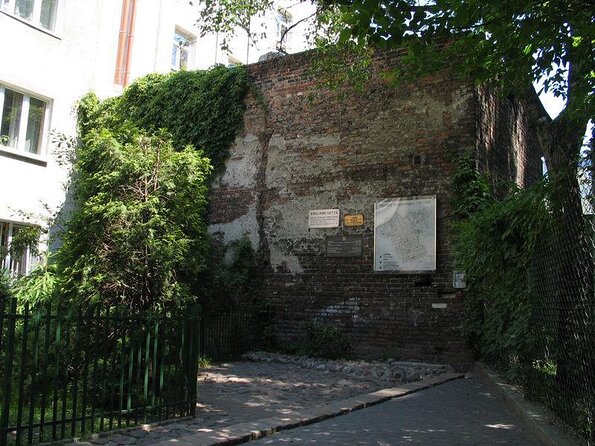
You begin with the remains of the ghetto wall from 1940, where more than 400,000 Jews were imprisoned. You’ll see surviving segments with commemorative plaques. Even in a short stop, it gives you an anchor point: you can look at a real boundary and understand what confinement meant in daily terms.
Expect about 15 minutes here, with no admission ticket required.
You can also read our reviews of more historical tours in Warsaw


Chłodna Street: the Footbridge of Memory and Adam Czerniaków’s building
Next is Chłodna Street, where you’ll see the Footbridge of Memory and a building connected to Adam Czerniaków, who was president of the Jewish Community (Judenrat). This stop helps connect the geography of Warsaw to leadership, bureaucracy, and the brutal choices forced on community institutions.
You’ll have about 10 minutes at this location, and admission isn’t required.
The Warsaw Ghetto in Muranów (former Large Ghetto)
Then you move into the Muranów district, the former Large Ghetto area. This is where the tour becomes more about interpretation than sight-seeing. Today’s streets and buildings look modern, and that’s exactly why a guide is valuable: you learn what used to stand here, and how the city’s layout shaped life and movement inside the ghetto.
You’ll typically get around 30 minutes here, with no admission ticket required.
Monument to the Ghetto Heroes (Pomnik Bohaterów Getta)
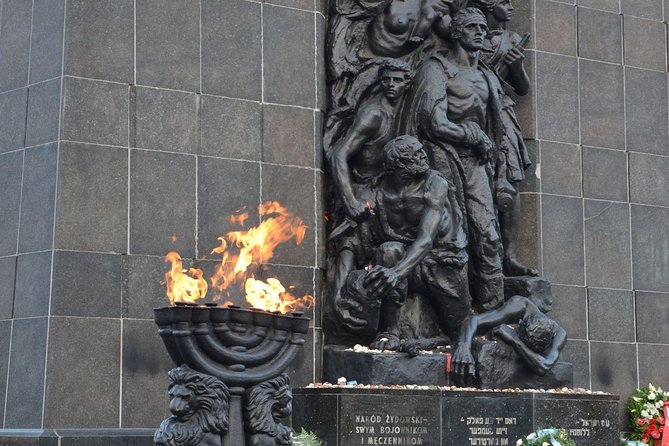
After that comes the Ghetto Heroes Monument, commemorating the Warsaw Ghetto Uprising of 1943. It’s a direct reminder that resistance happened, even when the situation was impossible to win.
Expect roughly 15 minutes here.
Treblinka departure point reminders and the uprising-related memorials
Along the way, you’ll also be shown key memory elements connected to deportation to Treblinka extermination camp with gas chambers, plus a memorial for those who committed group suicide during the Ghetto Uprising. There’s also a stop connected to a street segment that survived from both sides in the broader ghetto area.
The tour doesn’t treat these as trivia. Your guide connects them back to the larger story you’ve been building since the wall fragments.
POLIN Museum (outside view) and the option to add entry
POLIN is a major stop, even if you only see it from the outside during your main route. You’ll get that outside look with an optional add-on: if you want to go in, the guide can leave you there after the tour.
This museum option is not included in the base tour, and you’ll likely need to plan extra time if you decide to add it.
Nożyk Synagogue: the living synagogue that survived
Now for one of the most powerful contrasts on the route: the Nożyk Synagogue. It’s the only surviving prewar Jewish house of prayer in Warsaw, and it’s active today, so you’re visiting a place that still functions as part of Jewish community life.
The big practical point is the closing schedule. The synagogue is closed from Friday evening through Saturday due to Sabbath observance. If you’re touring during that window, you’ll need to accept that interior access won’t be possible.
You’ll have about 30 minutes for this stop, and admission is not included.
Jewish Cemetery: remembrance with graves of more than 200,000 people
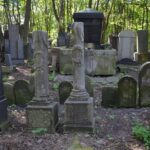
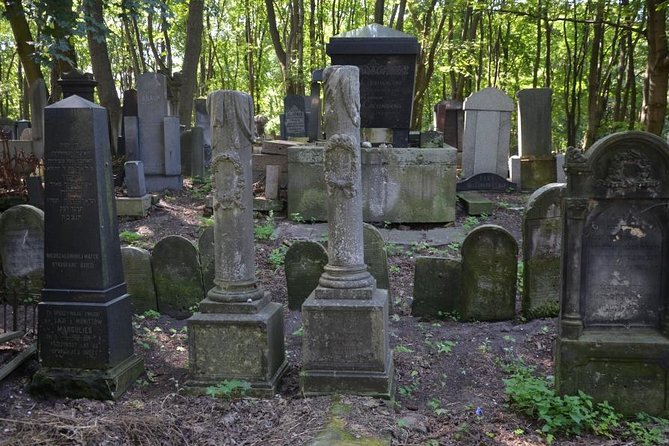
The final major emotional stop is the Jewish Cemetery. Here, you’ll see remnants of graves of over 200,000 people, including spiritual and political leaders, creators of Jewish culture, and many nameless victims. It also includes graves of multiple generations of Warsaw Jews.
Like the synagogue, the cemetery can be closed Friday evening through Saturday due to Sabbath.
Plan for around 30 minutes here. Admission isn’t included.
At the end, you return to your original departure point. This matters because you don’t finish the tour stranded or forced into quick decision-making about transport.
Muranów and the modern city: how the guide helps you read what’s changed
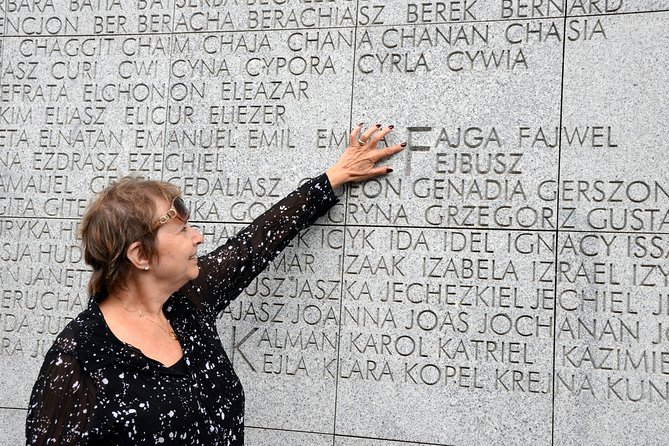
Warsaw can look clean and new from a distance. That’s one reason this style of tour works: your guide turns ordinary streets into a readable map of history.
In the Muranów area, you’re not just seeing street art and modern buildings. You’re learning where the former Large Ghetto sat in relation to what exists now. That gives you a sense of scale: the ghetto wasn’t just one landmark. It was a whole neighborhood, with daily routines being shaped by imprisonment and fear.
I also like that this segment isn’t just “WWII talk.” A good guide connects past and present so your brain doesn’t treat history like something locked away behind glass.
In past experiences, guides have also helped link Warsaw’s Jewish history to film locations from The Pianist. If that’s your interest, tell your guide early. It’s the kind of add-on that makes the city feel familiar in a new way.
What to watch for: Sabbath closures, head covering, and booking smart
This tour can be profoundly meaningful, but there are a few things that can change your day.
Sabbath closures on Friday evening and Saturday
The Nożyk Synagogue and the Jewish Cemetery can be closed from Friday evening through Saturday. Since this is the heart of the tour’s in-person experience, I’d treat it like a scheduling priority.
If your travel dates land in that window, you should contact the operator in advance and ask what will be available for your exact day and time slot. One of the most common issues people run into is thinking the tour includes interior access when the sites are actually closed.
Head covering may be required
You may need to cover your head at some Jewish sites. I’d bring something simple just in case, like a scarf. It’s an easy way to avoid stress when you arrive at a place with strict observance.
Older-car quirks
The Retro Fiat 125p is part of the charm, but it’s still an older vehicle. Plan for the reality of an antique car on a busy street. If your priority is comfort and zero fuss, you might prefer a newer vehicle tour. On the other hand, if you like the character and the slower pace, the Fiat is a big part of why this works.
Personalizing the route
Because it’s private, you should use that power. Tell your guide what you want emphasized, such as:
- WWII ghetto history and resistance
- prewar Jewish community life
- connections to The Pianist
- specific buildings tied to named figures like Adam Czerniaków
Guides have been praised for adjusting to your interests, including strong history framing and clear answers.
Getting more from your guide: names you may encounter and how to use that
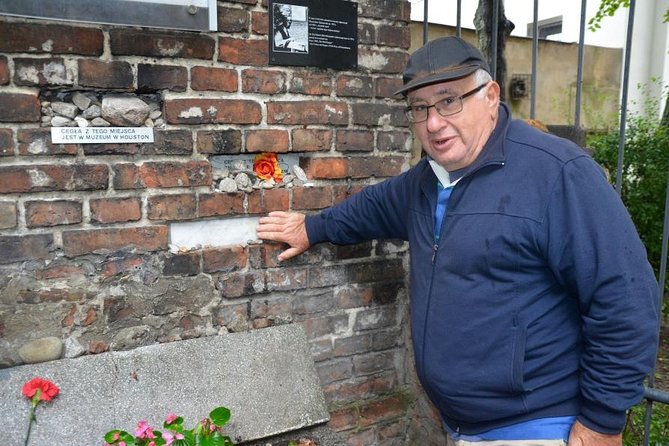
You won’t control who you get, but you can recognize the kind of guidance you’re likely to receive. Past tours have been led by guides named Alex, Alec, Max, Konrad, Karol, Marcin, Martin, and Conrad. The common thread across these names is the ability to explain complex history in a way you can actually follow in real time.
I’d recommend arriving ready with at least two questions. For example: What does this neighborhood look like in the timeline of the ghetto? Why does this synagogue matter specifically as a surviving prewar site? Those questions help your guide steer the story without turning the day into a lecture.
Some guides have also been willing to include short, practical stops around the synagogue area if it connects to what you care about, like mezuzot sold at a place called Mi Polin near the synagogue area. If that kind of detail interests you, bring it up gently, early, and keep the stop short so you stay on time.
Should you book this Warsaw Jewish Heritage tour by Retro Fiat?
Book it if you want a guided, high-context route through Warsaw’s Jewish history and WWII memory sites, with private pacing and direct hotel pickup. The vintage Fiat ride is a real part of the experience, not just marketing, and the stop sequence helps you build a usable timeline fast.
I’d think twice if:
- Your dates fall in Friday evening to Saturday and you really need synagogue and cemetery interior access.
- You dislike older vehicles or prefer minimal walking.
- You’d rather self-guide and read everything at your own pace with no guiding interpretation.
If you do book, your best move is simple: message your needs before you go. Ask what’s open on your day, confirm head-covering expectations, and tell your guide what you want emphasized. Do that, and this stops being a tour. It becomes a guided route through a Warsaw that you can finally understand.
FAQ
What’s included in the tour price?
The tour includes hotel pickup and drop-off, a professional driver-guide, and transport by private retro Fiat 125p (or a vintage minivan for groups of 4+). Optional museum entry isn’t included.
Is this tour private?
Yes. It’s a private tour, meaning only your group participates.
What language is the tour offered in?
The tour is offered in English.
Do I need to pay admission to see the main sites?
Admission is free for the ghetto-related stops, while the Nożyk Synagogue and Jewish Cemetery entries are not included. POLIN Museum entry is also not included.
Are the Nożyk Synagogue and Jewish Cemetery open on weekends?
They’re closed from Friday evening through Saturday due to Sabbath observance.
Do I need to cover my head at these sites?
You may be required to cover your head when visiting some Jewish sites.
Where does the tour start and how do pickup details work?
The meeting point is near the Palace of Culture and Science (pl. Defilad 1). Pickup is available from hotel lobbies in the city center, or you can meet the guide in front of the building; if your hotel is outside the pickup area, you’ll need to contact the provider to arrange the best solution.