REVIEW · ATHENS
Ancient Agora: Audiovisual self-guided tour with 3D models
Book on GetYourGuide →Operated by Culture App · Bookable on GetYourGuide
Athenian politics in your pocket. This self-guided Ancient Agora experience uses audio, videos, and 3D models to make the site easier to picture. I especially like the integrated map for monument identification and the mix of text plus audio for 16 stops; it helps you learn at your speed. One thing to plan for: the entrance ticket is not included, so you’ll likely pay entry separately on top of the app price.
You can carry the Agora’s story from spot to spot without waiting for a group or a guide to catch up. With 360° panoramic views and reconstructions for many monuments, you’re not stuck looking at blank stone—at least, not for long. The trade-off is practical: you’ll need a compatible smartphone, internet access for the tour content, and about 200MB of storage.
In This Review
- Key things to know before you go
- Ancient Agora on Your Phone: what the audiovisual guide covers
- Price and what you still need to pay on-site
- Getting set up right: Wi‑Fi download, internet, and storage
- How the integrated map keeps you oriented
- The civic heart: administration, courts, stoas, fountains, and workshops
- Where democracy was first established
- Socrates and philosophers: thinking in public space
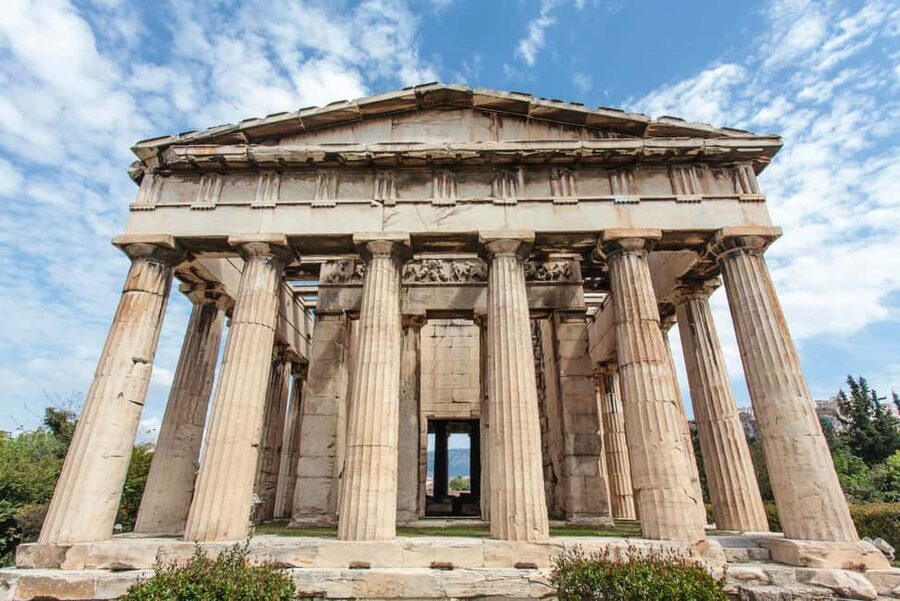
- Temple of Hephaistos: best-preserved and why the 3D helps
- The monument-by-monument media mix (what you actually get)
- A self-guided tour that fits real travel days
- Language options and who this tour suits best
- Should you book the Ancient Agora Culture App tour?
- FAQ
- Is the Ancient Agora entrance ticket included with this tour?
- What’s included in the Culture App experience?
- How long is the tour valid after purchase?
- Do I need a live guide during the visit?
- Which languages are available for the audio guide?
- Do I need internet access?
- Can I download the content in advance?
- How much storage does the tour need on my phone?
- When can I use the tour?
Key things to know before you go
- 3D models + 360° views for 14 monuments: you’ll see reconstructions from different angles, not just flat signage.
- Audio and text for 16 monuments: good for both quick listening and slower reading when you want names and context.
- Integrated map for navigation: helps you keep your bearings across the Agora’s many areas.
- Related stories for 13 monuments: context that connects buildings to daily life and ideas.
- Valid 5 days from first activation: you can spread it out before or after your main visit.
- Multi-language audio (8 options): English, Greek, German, Spanish, Italian, French, Dutch, and Chinese.
Ancient Agora on Your Phone: what the audiovisual guide covers

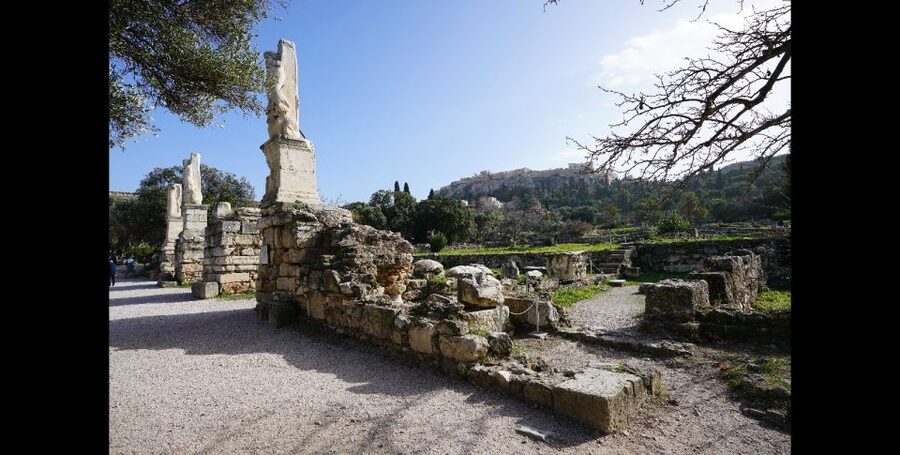
The Ancient Agora is where a lot of Athens life collided: politics, trade, religion, public debate, and everyday meetings. The clever move here is how the Culture App turns that big, stone-and-ground layout into a guided sequence you can follow at your own pace. Instead of relying only on what you can see on site, you get an audiovisual layer—text, audio, images, videos, 3D models, and 360° views—built around specific monuments and themes.
The tour covers 6th-century BC Athens Agora and focuses on the place as the political and administrative hub as well as a commercial center. You’ll also get the themes that make it emotionally hit: the early roots of democracy and the setting where philosophers taught. If you’ve ever stared at ruins and wondered what they used to look like or what happened there day-to-day, this format is designed for that exact problem.
Just keep expectations realistic: this is self-guided. You won’t get a person answering questions on the spot. What you will get is a lot of interpretive content delivered right where you are—plus an offline-ready package if you download properly.
You can also read our reviews of more guided tours in Athens


Price and what you still need to pay on-site
The app costs $7.89 per person, which is relatively low for a content-heavy tour package. But you should budget for the likely entrance fee separately. The listing is clear: entrance tickets are not included, with rates of €10 full and €5 reduced.
So how does it shake out in real value terms? The app fee is paying for:
- written info and audio for 16 monuments
- 3D models for 14 monuments
- 360° panoramic views for 14 monuments
- videos for 14 monuments
- related stories for 13 monuments
- a gift of 68 written and audio facts about culture and facts in ancient Greece
In other words, you’re not just buying a single audio track. You’re paying for a structured, media-rich learning experience that can help you understand what you’re walking past. If you’re trying to do Athens independently, that’s a solid deal—especially if you enjoy self-paced learning more than chasing a fixed itinerary.
The one cost that can sneak up on you is phone setup. The tour requires a smartphone and also expects you to have earphones. If you normally travel without those, add them to your packing list.
Getting set up right: Wi‑Fi download, internet, and storage
This tour isn’t just press play and go. It asks a few things from you so it runs smoothly.
You’ll need:
- an internet connection to use the tours effectively
- downloading content while on Wi‑Fi before your visit (unless you have enough data)
- roughly 200MB of storage on your phone
Compatibility matters too: it requires iOS 11.0+ or Android 5.1+.
My practical advice: charge your phone fully before you leave. Bring your earphones. And if you’re doing this on a busy day in Athens, treat the download like a pre-trip museum chore—do it early, not while you’re walking.
Also note how ownership works with the content: you can delete or retrieve the purchased content on your device anytime. That’s useful if storage is tight or if you plan to do multiple sites on different days.
How the integrated map keeps you oriented

The biggest challenge at the Ancient Agora is mental navigation. The site is spread out, and without a clear sequence it’s easy to wander around and miss the story thread.
This tour uses an integrated map for monuments identification. That matters because it doesn’t just give you random facts. It helps you link each media stop—audio, text, 3D, and 360° views—to where you are in the Agora layout.
Here’s what you gain from that:
- You can keep moving without losing time backtracking.
- You don’t have to interpret ruins alone. The media prompts the structure of what to look for next.
- You can choose how long to linger. If you’re more into the politics side, you can spend extra time there; if you’d rather focus on temples and sanctuaries, you can adjust.
This is especially helpful for first-timers who might otherwise get the Agora as a vague concept instead of a walkable set of linked places.
The civic heart: administration, courts, stoas, fountains, and workshops
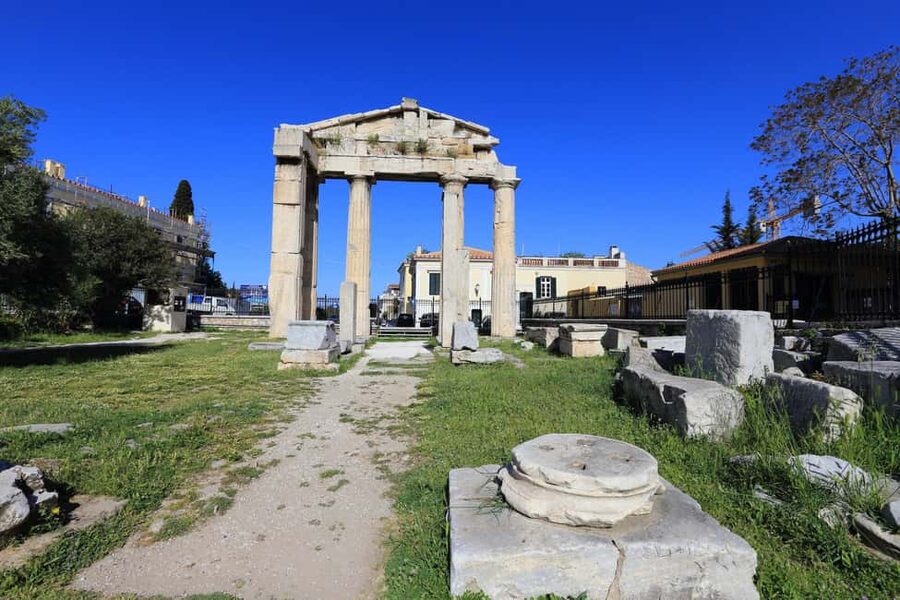
When people hear Ancient Agora, they often imagine a market. That’s true, but it’s only part of the picture. The tour emphasizes that the Agora was the heart of the city for administrative, political, and commercial life—plus religious and social activity tied to festivals and cults.
In your walk, expect sections that correspond to the main functions you’d want to understand in order to make sense of what you see:
- the seat of civil administration
- courts
- stoas (covered public walkways)
- fountains
- workshops
- temples and sanctuaries
What I like about this structure is that it forces a reality check. The Agora wasn’t only buildings; it was a system for how Athens ran itself. When you focus on administration, then courts, then commerce and crafts, the site feels less like scattered ruins and more like a functioning machine.
Possible drawback: because the tour covers a lot of categories, you might feel a bit “split” if you’re hoping for one tight storyline. The solution is simple—pick a theme for your visit. If you want governance, concentrate on civic administration and courts. If you want daily life, linger more on stoas, fountains, and workshops.
A few more Athens tours and experiences worth a look



Where democracy was first established
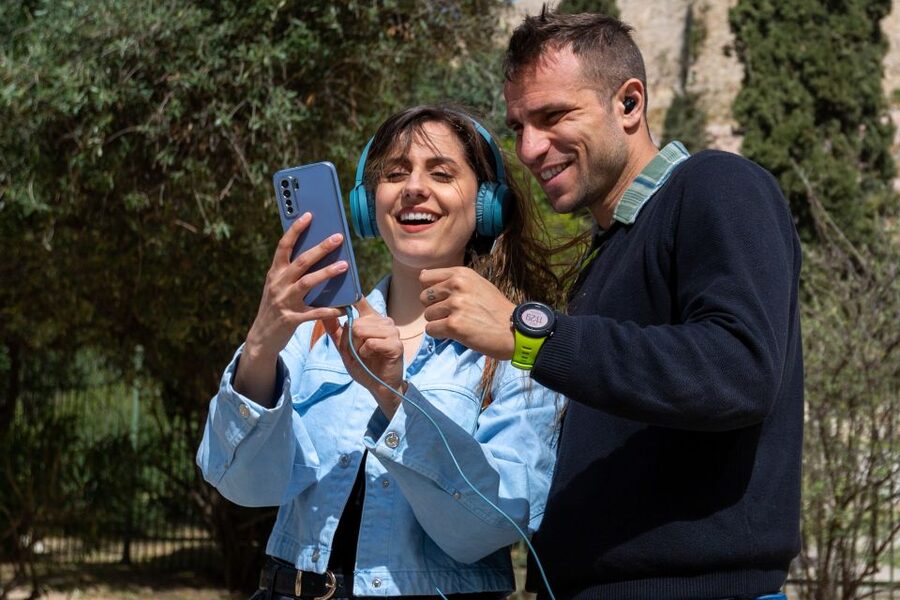
The Agora is presented here as the place where democracy was established for the first time in world history. Even if you’ve heard the headline idea before, standing in the general civic zone and hearing it connected to specific monuments can change how it lands.
Why it’s worth your time: democracy isn’t a concept you can fully grasp by reading about it. It’s an everyday process—meetings, decisions, rules, and public space for debate. In a self-guided format, you can take your time and match the idea to the physical setting.
This tour supports that by aligning its content to the Agora’s different aspects: the seat of civil administration, courts, and spaces where political ideas would have mattered. You’re not just told democracy existed—you’re guided through the kinds of locations where governance happened.
Practical tip: when the audio and text start talking about political life, pause for a moment and look for cues in the area around you. If you feel like you’re not sure what you’re looking at, rely on the map prompts and the reconstructions rather than guessing.
Socrates and philosophers: thinking in public space
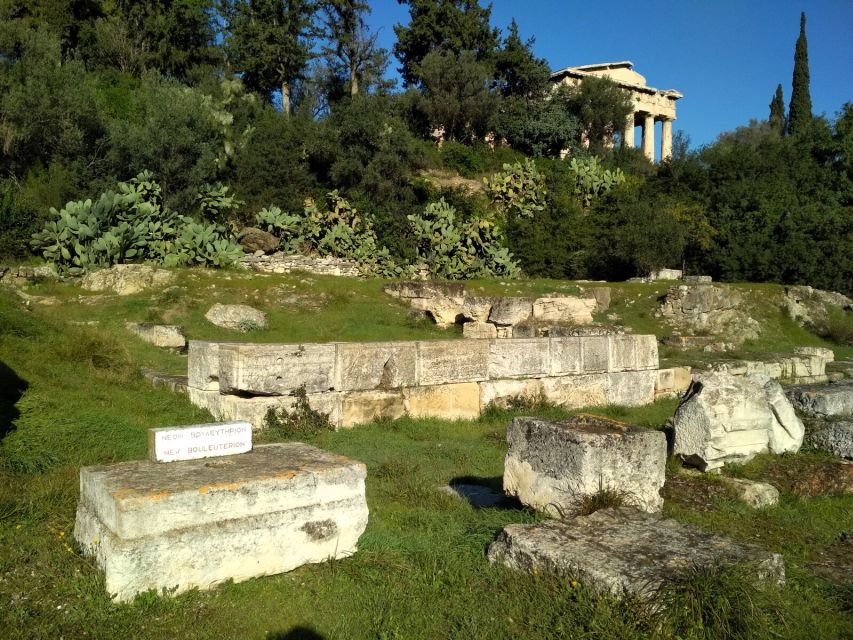
One of the most compelling themes highlighted is the place where Socrates and philosophers taught. That’s the kind of detail that can make ruins feel charged, but it only works if the tour connects idea to location clearly.
In this experience, the guide uses audio and stories to frame the Agora as a place of learning and debate within the city’s public life. You’re seeing how philosophy wasn’t separate from civic space—it was part of how people argued, questioned, and formed opinions in Athens.
If you’re the type who enjoys the human side of history, this section is probably where you’ll slow down the most. You get audio historical information and related stories tied to the monuments covered, and the format lets you stop and listen without feeling rushed.
Consideration: if you’re only interested in architecture, you might not get as much satisfaction from the teaching and philosophy angle. But if you like ideas as much as stones, this is the Agora’s special sauce.
Temple of Hephaistos: best-preserved and why the 3D helps
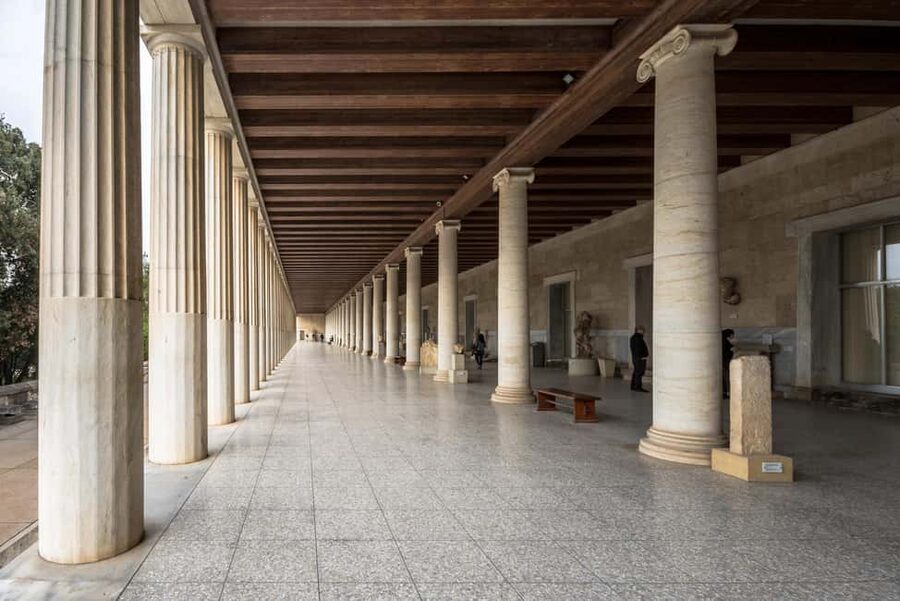
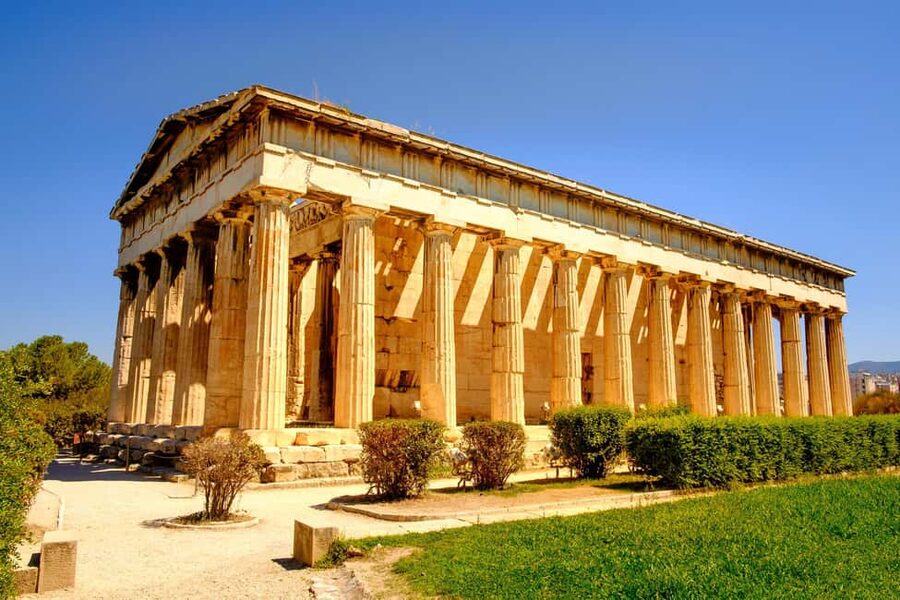
The Temple of Hephaistos is highlighted as one of Greece’s finest preserved monuments. It’s a major anchor in the experience, and it’s easy to see why: preserved sites help you build mental images of the past.
What makes this tour useful at a preserved temple is not just the fact that it’s still standing. It’s that the app layers context and visuals on top of what you can physically see. You get:
- 3D models for the relevant monument stops
- 360° panoramic views to understand sightlines and layout
- videos that explain what you’re looking at in a structured way
This is where the audiovisual format really justifies itself. If you’ve got limited time in Athens, you want the tour to give you the feeling of understanding quickly. With preserved architecture like Hephaistos, the app can help you read details you might otherwise overlook.
Practical note: don’t treat this as a quick selfie moment. The value is in combining your eyes on the actual structure with the app’s reconstructions and guidance.
The monument-by-monument media mix (what you actually get)
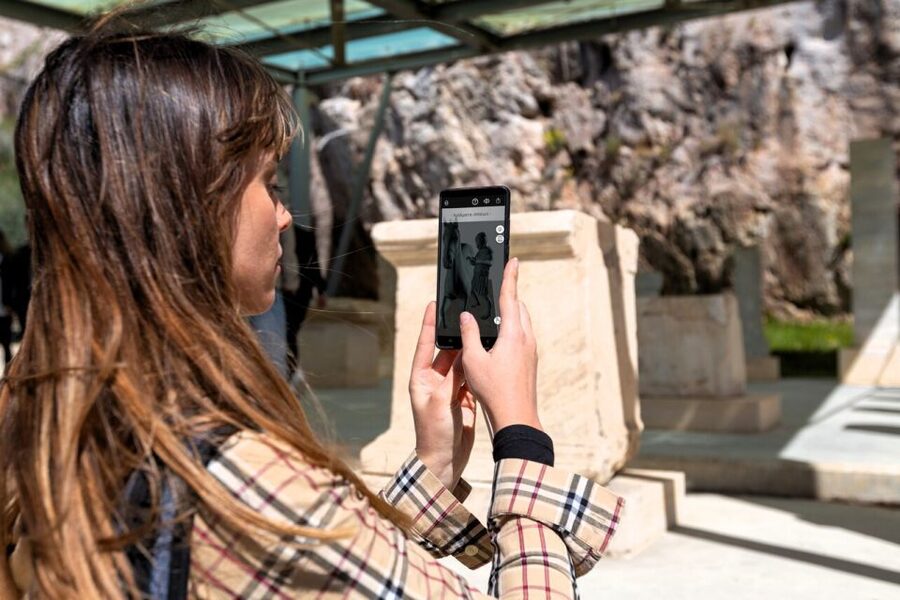
Here’s the content structure in plain terms, so you can plan how to use it:
- Written historical information for 16 monuments
- Audio historical information for 16 monuments
- 3D models for 14 monuments
- 360° panoramic views from 14 monuments
- Videos for 14 monuments
- Related stories for 13 monuments
- Gift: 68 written and audio facts about culture and facts in ancient Greece
That’s a lot of content. But it’s not overwhelming in practice because the guide ties it to specific stops. You can choose your method:
- Listen to audio when you’re walking or want the quick version.
- Read the text when something sparks a question in your mind.
- Use 3D models and 360° views when the ruins would otherwise be confusing.
I like tours that let me control the depth. This one does, because it’s self-guided and designed to be used while you’re moving through the site.
A self-guided tour that fits real travel days
The tour is valid for 5 days from first activation. That means you can:
- start it before your official visit day (if you want background)
- use it during your visit
- come back later for another pass and review what you missed
It’s also usable anywhere and anytime, before, during, or after your visit. That flexible window is practical in Athens, where weather and time often shift.
Also, because it’s self-guided, you avoid the pacing mismatch that happens when you’re with a group. If you’re a fast walker, you can keep moving. If you like to stop often, you can do that too.
One warning I’d give: this experience still depends on your phone being ready. If your battery dies or the download didn’t happen on Wi‑Fi, your day can slow down fast. That’s not a dealbreaker—just treat setup as part of the itinerary.
Language options and who this tour suits best
The audio is available in English, Greek, German, Spanish, Italian, French, Dutch, and Chinese. That’s a strong list and makes this a good option even if your travel buddy speaks a different language.
Who I think will enjoy it most:
- You want to explore Athens independently and learn without waiting for a group.
- You like visual learning: 3D models and 360° panoramas help when ruins are hard to interpret.
- You care about the big idea of democracy and want to anchor it to physical places.
- You’re interested in philosophers like Socrates and how that intellectual life fit into the Agora.
Who might find it less satisfying:
- If you prefer a live guide who can answer questions and tailor the story to you, a self-guided audio app won’t replace that.
- If you’re only interested in a single landmark and not the broader civic layout, the amount of content might feel like more than you need.
Should you book the Ancient Agora Culture App tour?
I’d book this if you want a structured, media-rich self-guided way to understand the Agora’s civic and philosophical significance—without paying for a full guided tour. At $7.89, it’s good value for the amount of content you get, especially because it includes both audio and text plus 3D and 360° for many monuments.
I’d skip it or reconsider if you know you’ll struggle with phone reliability (battery, storage, download limits) or you hate using apps while walking. Since the entrance ticket is separate, you also need to be okay with layering this experience on top of your on-site entry.
If you do book it, plan your day around one simple goal: pick a theme (politics/democracy, daily civic life, or philosophy/teaching) and let the app’s sequence guide your attention. That’s how you turn a complicated site into something you understand.
FAQ
Is the Ancient Agora entrance ticket included with this tour?
No. Entrance tickets are not included. The listed entrance fee is €10 full and €5 reduced.
What’s included in the Culture App experience?
You get monument identification with an integrated map, written and audio information for 16 monuments, plus 3D models, 360° panoramic views, videos, and related stories for many of the same stops. There’s also a gift of 68 written and audio facts about ancient Greece.
How long is the tour valid after purchase?
The tour is valid for 5 days from the first activation.
Do I need a live guide during the visit?
No. This is a self-guided audiovisual tour.
Which languages are available for the audio guide?
English, Greek, German, Spanish, Italian, French, Dutch, and Chinese.
Do I need internet access?
Yes, internet access is required to use the tours effectively.
Can I download the content in advance?
Yes. The instructions recommend downloading the content while on Wi‑Fi before your visit unless you have sufficient data.
How much storage does the tour need on my phone?
It requires about 200MB of storage space.
When can I use the tour?
You can use it anywhere and anytime, before, during, or after your visit, as long as the content is on your device.