REVIEW · ATHENS
Biblical Tour Letters to The Corinthians – St Paul’s Footsteps
Book on Viator →Operated by Athens Taxi Travel · Bookable on Viator
Mars Hill meets your inner Bible nerd. This private St. Paul footsteps day links Athens to Corinth with pickup and a route you can adjust, hitting big spiritual anchors like Areopagus Hill and the Bema. You’ll also get Corinth’s coastal and athletic-world stops, so Paul’s message feels less like trivia and more like something spoken in real places.
I especially love how many angles of Paul’s life you get in one trip: sermon grounds, ship-and-market routes, athletic crowds, and the Roman legal moment at the Bema. The second thing I like is the format—your driver-led commentary keeps things flowing without the stress of wrangling a license-holder at every stop.
One thing to consider: with about 8 hours and a full hit-list, the pace can feel tight if you like to linger. If you want slower walking time, it’s smart to ask your driver to keep your comfort front and center early.
In This Review
- Key highlights at a glance
- Why This St. Paul Footsteps Day Trip Works From Athens
- Your Private Ride: How Transport and Flexibility Change the Experience
- Areopagus Hill (Mars Hill): The Sermon for an Age of Questions
- Corinth Canal and the Diolkos: Where Ancient Shortcuts Become Modern Reality
- Isthmia and the Isthmian Games: Where Paul Could Hear the Crowd
- Museum Time at Isthmia: Glass Panels and Port Crossroads
- Ancient Corinth Walk: The Bema, the Marketplace Energy, and Paul’s Letters
- Temple of Apollo and Corinth’s Idol World in the Background
- Kechries (Cenchreae), Apostolou Pavlou, and Lunch by the Sea
- Akrokorinthos Fortress Views: The Day Wraps in One Big Look
- Price and Logistics: Is $386.18 Per Group Good Value?
- Who Should Book This St. Paul Footsteps Tour (and Who Might Skip It)
- Should You Book St. Paul’s Footsteps in Corinth?
- FAQ
- How long is the St. Paul’s Footsteps tour?
- How many people are in a group?
- Do you offer pickup in Athens?
- Is the tour private?
- What language is the tour in?
- What’s included in the price?
- Is lunch included?
- Do I need to pay entrance fees?
- Can I cancel for a full refund?
Key highlights at a glance
- Private and flexible route: your stops and timing can be adjusted to your group’s pace
- Paul-linked stops all day: Mars Hill to Corinth’s Bema, plus Isthmia and Cenchreae
- Driver commentary without site-hopping: drivers share context, then you explore on your own
- Comfort on the drive: air-conditioning, bottled water, and WiFi on board
- Mostly free entry sites: you only pay extra for Ancient Corinth and the Isthmia museum area listed
- Multiple guide styles can work: some days are powered by drivers like Pantelis, Alex, Kostas, and Michael (depending on your booking)
Why This St. Paul Footsteps Day Trip Works From Athens
This tour has a clear thesis: Paul didn’t talk in a museum. He spoke in cities with ports, temples, stadium noise, and Roman bureaucracy. By bundling Athens-area Mars Hill with Corinth’s world, you see the jump from ideas to real geography.
You’re also not trapped in a rigid bus tour. It’s private, and that matters here because the itinerary covers a lot of ground between Athens and the Corinth region. If your group is a mix—one person wants quiet photo time, another wants extra scriptural context—you can usually steer the day without derailing it.
And yes, this is a Christian history-focused route. If you’re here for that angle, it can feel inspiring in a practical way: you can trace how Paul’s letters sound when you stand near where he taught and traveled.
You can also read our reviews of more tours and experiences in Athens.

Your Private Ride: How Transport and Flexibility Change the Experience
The practical win is the door-to-door pickup. That means you’re not doing the Athens transit math before you even start. Your vehicle is air-conditioned, with bottled water and WiFi on board, which is a relief if the day runs warm.
You can also choose between several vehicle types. That’s not a small detail: a sedan can feel cramped when you’re all carrying water bottles, cameras, and phones. A larger or more comfortable option makes a long day of site-hopping feel less like a chore.
One key note: your driver is described as having deep history knowledge, but they’re not licensed to accompany you inside sites. So you’ll still do the walking and exploring yourself. The upside is that you control the pace. The downside is that you won’t get a full live guide walking shoulder-to-shoulder in every site unless you request a licensed tour guide (availability depends).
I found this “driver talks, you walk” style works best when you’re curious and ask questions in the car. That’s where your driver can explain the why behind each place—like how the Bema connects to Gallio’s decision—before you face the stones.
Areopagus Hill (Mars Hill): The Sermon for an Age of Questions
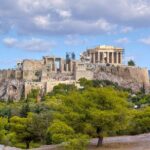
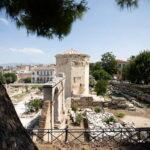
Areopagus Hill is often called Mars Hill, and that name alone is enough to set the tone: this is the hillside setting where Paul addressed the Athenian council context and brought up the idea of an Unknown God. Even if you’ve heard the story before, standing near the sacred grounds of the Acropolis area gives it a different weight.
What makes this stop good isn’t just the Bible connection. It’s the way the sermon links to the intellectual mood of the ancient world. Paul isn’t only preaching at people; he’s engaging a crowd that cares about ideas.
You get about 20 minutes here, and there’s no admission ticket cost listed for this stop. With that short timing, don’t plan on turning it into a long scenic detour. Use the time for orientation and questions, then save your slower wandering for the larger Corinth sites.
If you already visited the Parthenon and Mars Hill earlier in your Athens stay, you can sometimes skip repetition and shift time to Corinth spots. That flexibility shows up in the strong reviews, where the driver tailored the plan instead of forcing the default path.
Corinth Canal and the Diolkos: Where Ancient Shortcuts Become Modern Reality
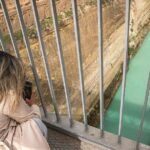
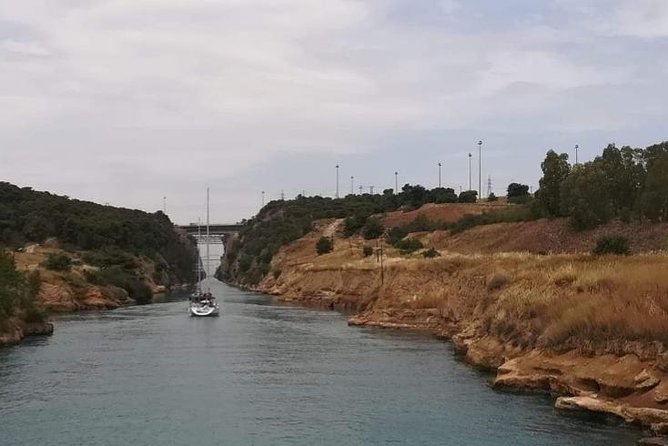
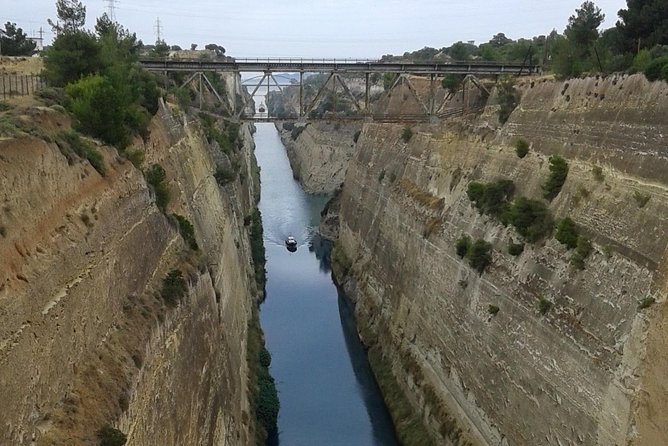
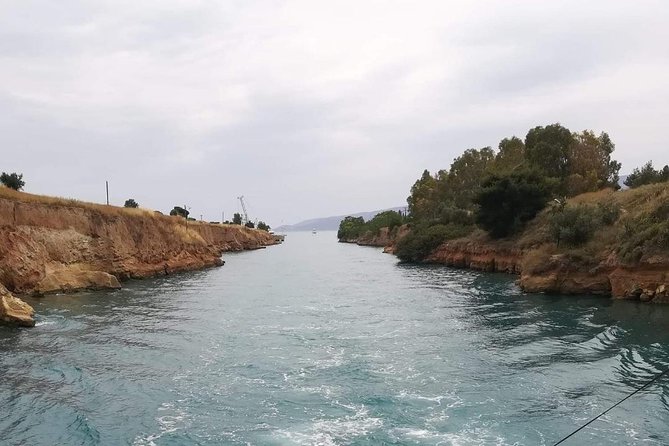
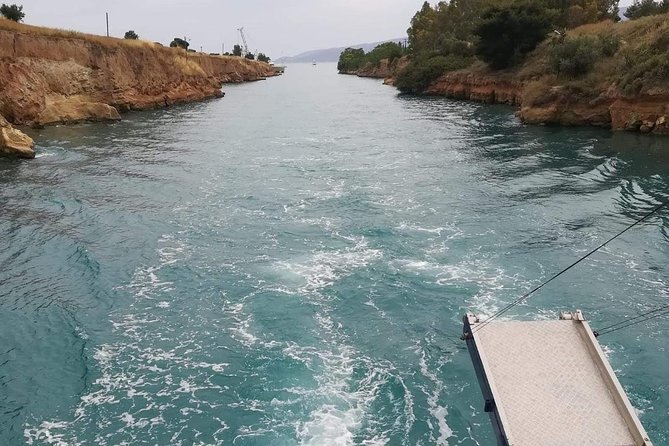
After Athens, the day shifts from hilltop debate to water routes and logistics. Corinth Canal is the first big engineering stop. It’s a 19th-century canal that cuts between the Gulf of Corinth and the Saronic Gulf, and it dramatically shortens travel compared with sailing around the Peloponnese.
What I like here is that the tour doesn’t treat the canal as a random roadside photo stop. It connects it to the ancient concept behind it, even mentioning that the idea dates back more than 2,000 years. That connection helps you feel the continuity: people have been trying to control sea traffic here for a very long time.
Then comes the Diolkos, an ancient transport system meant to move ships across the Isthmus of Corinth. If the canal is about modern power, the Diolkos is about ancient problem-solving. You can stand in the area and imagine merchants, sailors, and the constant movement of goods—exactly the kind of environment Paul traveled through.
Both stops are free of admission ticket costs on the provided plan. Time is short—around 20 to 30 minutes total across these two—so keep your camera ready and your questions ready too. This is where a driver’s explanations can turn a quick stop into something memorable.
Isthmia and the Isthmian Games: Where Paul Could Hear the Crowd
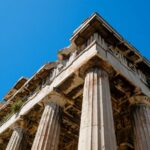
Isthmia is one of the most interesting stops on the route because it’s where religion and public life collide. You’ll explore the ancient worship and athletics center, including the Temple of Poseidon (rebuilt multiple times), the ancient stadium linked to the Isthmian Games, and the Sanctuary of Palaimon dedicated to the protector of sailors.
This is also where the Paul connection lands in a very tangible way. The tour notes Paul’s believed presence in the region, including working as a tentmaker and sharing the message of Christ with diverse crowds attending the games. Even if you don’t memorize every detail, you’ll feel the setting’s logic: travel brings people together, crowds gather, and in those moments faith spreads.
You’re given around 40 minutes for the archaeological site portion. That’s enough time to walk through the main areas without feeling like you need a full archaeology degree. You’ll also hear about the theater area tied to musical events during the Isthmian Games and about Isthmia’s strategic political and military meeting role. Those extra context notes matter, because they remind you Isthmia wasn’t only about sports. It was a gathering point where major decisions and international interest met.
If you’re the type who likes to slow down, this is the place to ask for it. Isthmia’s atmosphere is built for it, and the photos look great even without sunrise drama.
Museum Time at Isthmia: Glass Panels and Port Crossroads
The Archaeological Museum of Isthmia is the spot that helps you connect Paul’s world to objects, not just locations. The museum includes artifacts tied to the sanctuary of Poseidon and the setting around the games.
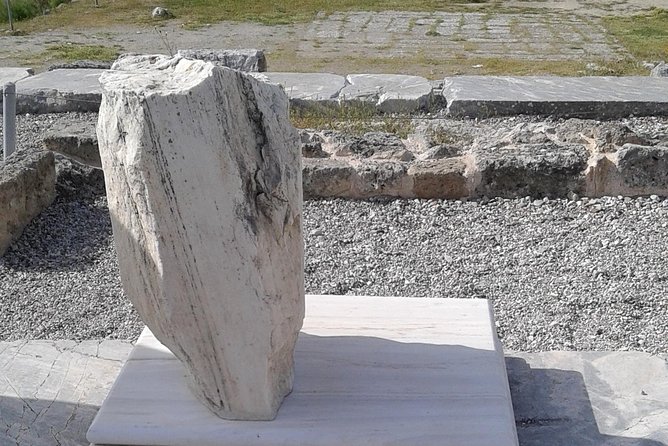
What stands out in the tour notes are glass panels from Kenchreai—the eastern port connected with Paul’s departure. That sort of detail turns the idea of travel into something you can point to and say, this is what the port world looked like.
The museum stop is about 30 minutes, and the admission ticket is not included. The price you might pay here is wrapped into the broader listed extra entrance fee category for the museum/Ancient Corinth items.
Also, your driver can often connect the dots between what you see and why it mattered for the letters. In the strong reviews, people repeatedly praised drivers and guides for making Paul’s travels feel real rather than abstract. This museum stop is where that style really pays off, because you’ll have something physical to hold onto while the explanations land.
Ancient Corinth Walk: The Bema, the Marketplace Energy, and Paul’s Letters
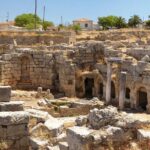
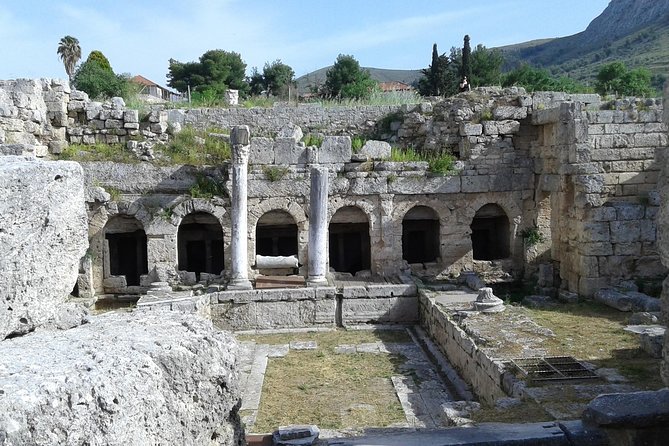
Ancient Corinth (Archaia Korinthos) is the core of the trip. You’ll spend about 1 hour here, and this is where Paul’s story snaps into place with the city’s geography.
Corinth matters because it was strategically located between mainland Greece and the Peloponnese, and it was a commercial and cultural hub. The tour also notes that Paul lived and preached here for over 18 months, which connects directly to the letters written to the Corinthians.
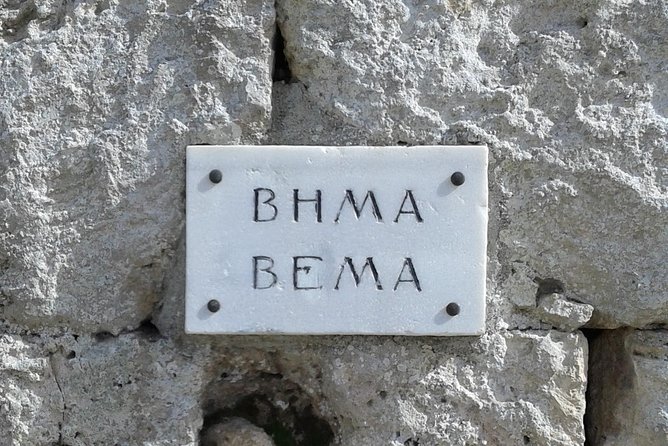
One of the biggest “stand here and picture the moment” stops is the Bema. The Bema is tied to Paul being brought before the Roman proconsul Gallio, and the tour frames it as a turning point: Gallio dismisses the case and Paul continues preaching without Roman interference.
That’s a powerful idea to take into the physical space. Stones don’t argue for you, but they make the scene feel plausible. You can almost hear the crowd reactions and the legal tones shift.
Admission for Ancient Corinth is not included and can be purchased on-site. So, budget for that in your planning and keep a little cash and card flexibility.
Temple of Apollo and Corinth’s Idol World in the Background
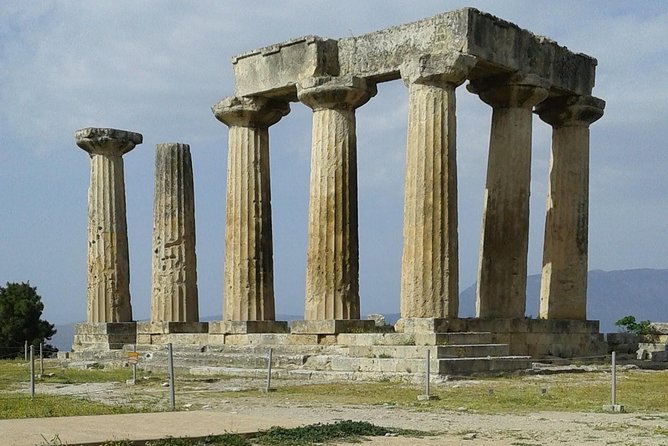
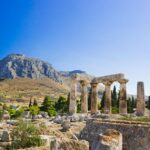
At the center of Ancient Corinth, you’ll visit the Temple of Apollo, with construction dating back around 560 BC. The columns that remain standing give you a sense of how dominant this kind of worship space was in daily sightlines.
The tour frames it clearly: when Paul arrived in Corinth, he would have seen this prominent idol-worship setting towering above the city. The contrast is the point. Paul’s message of one God and Jesus Christ crucified wasn’t delivered in a neutral setting. It was spoken in a place where religious variety was not just tolerated, it was built into the city’s identity.
You’ll have about 30 minutes here. That’s enough for a slow look at the architecture and a short mental reset: religion wasn’t hidden in corners. It shaped how people understood music, light, prophecy, and civic life.
Kechries (Cenchreae), Apostolou Pavlou, and Lunch by the Sea
Next up is Kechries, the site of ancient Cenchreae, Corinth’s eastern port. This is a quieter stop than the Bema and Temple of Apollo, which is good. You’ll walk in the footsteps of Paul during his second missionary journey, including the mention in Acts 18:18 about Paul cutting his hair to fulfill a vow before departing for Syria with Priscilla and Aquila.
Cenchreae is also tied to one of the earliest Christian community references, including Phoebe being commended in a letter connected to the church in Cenchreae. Even if you don’t go deep on names, this port stop gives you a sense of why travel mattered so much to Paul’s ministry.
Then you’ll visit Apostolou Pavlou, a church honoring the Apostle Paul and marking the area tied to his 18-month time in Corinth (around 51–52 AD). You’ll get about 20 minutes here—think of it as a reflection pause before the late-day views.
Lunch is listed as a stop for a traditional seaside Greek taverna, but lunch itself is not included in the tour package. That’s normal for these private tours: you’re being set up with the right timing and a good place to eat, but you should plan to pay your meal costs directly.
Akrokorinthos Fortress Views: The Day Wraps in One Big Look
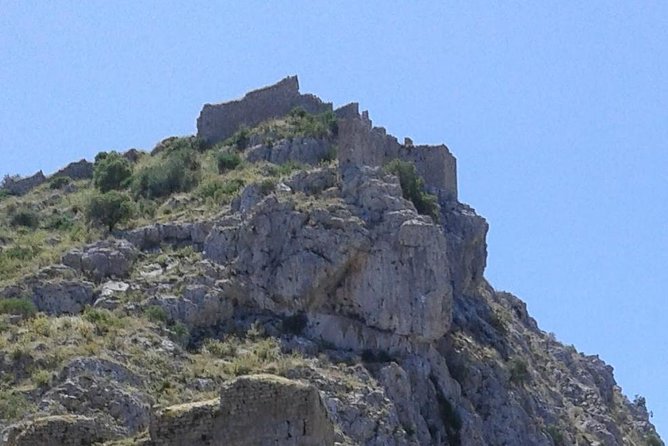
Akrokorinthos is the dramatic finish. This fortress towers above Ancient Corinth, and you’ll have about 40 minutes to walk up and take in the panoramas.
This stop works well at the end of the day because it helps you mentally zoom out. From here, Corinth’s layout makes more sense. You can see why the city mattered, why routes mattered, and why Paul’s mission unfolded through travel networks and city life rather than isolated preaching.
It’s also a fitting place for reflection. The tour frames Paul as having gazed down toward the city from this general area, so the feeling you’re left with isn’t just “I saw ruins.” It’s “I’m standing over the world that formed these messages.”
If your group is photogenic (or just hungry for views), ask your driver to time this so you don’t rush the best lookout moments.
Price and Logistics: Is $386.18 Per Group Good Value?
At $386.18 per group up to 4 people, this isn’t a budget grab—it’s a private day with a lot of driving and multiple major archaeological stops. The value depends on how you travel.
Here’s where it makes sense:
- You’re traveling in a small group, so the per-person cost stays reasonable for a private vehicle.
- You want flexibility and pickup without coordinating buses or taxis all day.
- You care about Christian history enough to want context between stops, not just standing and reading plaques.
What’s included is helpful for comfort: air-conditioning, bottled water, WiFi on board, and private transportation. That matters on a long day between Athens and Corinth-area sites.
The main extra cost to plan for is entrance to Ancient Corinth and the Archaeological Museum of Corinth, listed at €15.00 per person (purchase on-site). Everything else is marked as free of admission ticket costs on the tour outline.
Also note the timing reality: it’s around 8 hours. Some groups love the packed plan; others feel it’s rushed by hour 6. If you tend to linger, you’ll want to speak up early about your preferred pace.
Who Should Book This St. Paul Footsteps Tour (and Who Might Skip It)
Book this if:
- You want a Christian history day that connects the Bible to real-world geography.
- You travel with 1–4 people and prefer private transportation over bus schedules.
- You like learning from on-the-road explanations, then exploring at your own speed.
Consider a different option if:
- You hate tight itineraries and want long, slow museum time with no schedule pressure.
- You need a fully licensed guided experience inside every site. A licensed tour guide is listed as available on request depending on availability, so it’s not guaranteed.
One more practical point: the reviews are mostly glowing, with a 4.9 rating and many people highlighting driver skill and the way the day felt tailored. Names that came up with strong praise include Alex, Michael, Kostas, Spyros, Constantine, Vicky, Pantelis, and Pericles. That suggests the experience often rises or falls on who’s behind the wheel with the stories.
There is also one low rating where the tour was abandoned early due to an unpleasant interaction. Since private tours depend on the individual driver, it’s smart to set expectations early and ask for a professional, respectful ride style. If anything feels off, don’t wait until you’re trapped in a bad situation for hours.
Should You Book St. Paul’s Footsteps in Corinth?
I’d book it if you want a high-impact day that turns Paul’s letters into a route you can walk. The strongest part is the pairing of famous anchor scenes like Mars Hill and the Bema with places tied to travel and public life—ports, engineering, and the Isthmian Games setting.
If you’re sensitive to pace, go in with a plan: tell your driver you want breathing room and ask where to slow down. Also budget the €15 per person for Ancient Corinth and the museum entrance.
One last tip: this type of private, religious-history-focused trip often sells ahead. Planning early helps you get your preferred pickup time.
FAQ
How long is the St. Paul’s Footsteps tour?
The tour is about 8 hours.
How many people are in a group?
It’s priced per group for up to 4 people.
Do you offer pickup in Athens?
Yes. This is a private tour with pickup from your place.
Is the tour private?
Yes. Only your group participates.
What language is the tour in?
The tour is offered in English.
What’s included in the price?
Included items are WiFi on board, bottled water, an air-conditioned luxurious vehicle, and private transportation with professional drivers who provide history commentary (drivers are not licensed to enter sites).
Is lunch included?
No. Lunch is not included, even though lunch is planned as a stop.
Do I need to pay entrance fees?
You can expect extra entrance fees for Ancient Corinth and the Archaeological Museum of Corinth: €15.00 per person. Other listed stops are marked as free of admission.
Can I cancel for a full refund?
Yes. There is free cancellation, and you can cancel up to 24 hours in advance for a full refund.