REVIEW · ROME
Cleopatra & the Women of Ancient Rome Tour: Livia, Agrippina…
Book on Viator →Operated by Storytelling Rome Tours & Walks · Bookable on Viator
Roman women, in full color. This 2.5-hour walk turns famous figures like Cleopatra and Livia into stories you can actually follow, using the ruins themselves as your backdrop.
I love how the guide links events like a TV plot, with clear explanations and modern comparisons that help the politics make sense fast. I also like the way the route mixes famous landmarks with quieter corners, so you’re not stuck repeating the same Roman highlights everyone posts.
One consideration: it moves at a walking-tour pace, so some stops are brief (especially the shortest ones), meaning you’ll get impressions and context rather than long, slow lingering.
In This Review
- Key highlights you’ll feel right away
- Why This Cleopatra Tour Feels Like History With a Plot
- Where You Start at Via dei Fori Imperiali (and Finish in the Jewish Quarter)
- Piazza del Campidoglio: Empress Power Meets a Ridgeline View
- Arco di Giano: A Lesser-Known Corner With Big Atmosphere
- Foro di Cesare: Cleopatra Comes Into Focus Among Caesar’s Ruins
- Tempio di Portuno: A Short Stop That Helps You Reset
- Teatro di Marcello: Octavia’s Story and Augustus vs Cleopatra
- Il Portico di Ottavia: Livia, Augustus, and the First Lady Myth That Actually Fits
- What Makes Massimo’s Storytelling Click
- Timing, Crowds, and the Reality of a 2.5-Hour Walk
- Price and Value: Is $46.96 Worth It?
- Who Should Book This Women of Ancient Rome Tour?
- Should You Book Cleopatra & the Women of Ancient Rome?
- FAQ
- How long is the Cleopatra & the Women of Ancient Rome tour?
- Where does the tour start?
- Where does the tour end?
- How much does the tour cost?
- Is this a mobile ticket tour?
- How big is the group?
- Is admission required for the stops?
- What is the cancellation policy?
Key highlights you’ll feel right away
- A women-of-power storyline built across multiple reigns and relationships
- Stops chosen for viewpoints over the Roman Forum and Palatine Hill
- Little-known angles of Rome beyond the usual top-10 list
- Short, lively scenes at real ruins instead of classroom lectures
- A small group (max 20) that keeps the experience personal
Why This Cleopatra Tour Feels Like History With a Plot
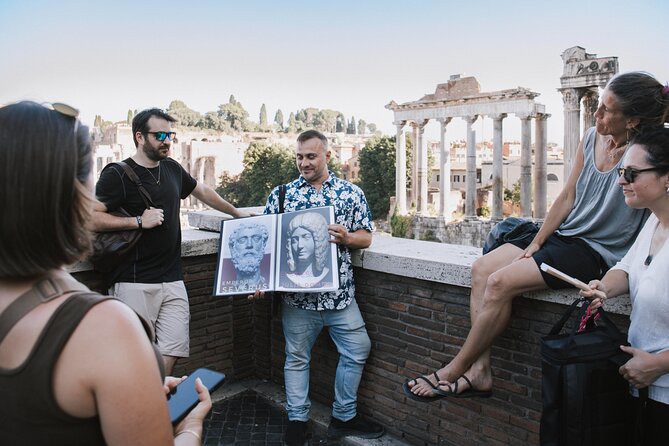
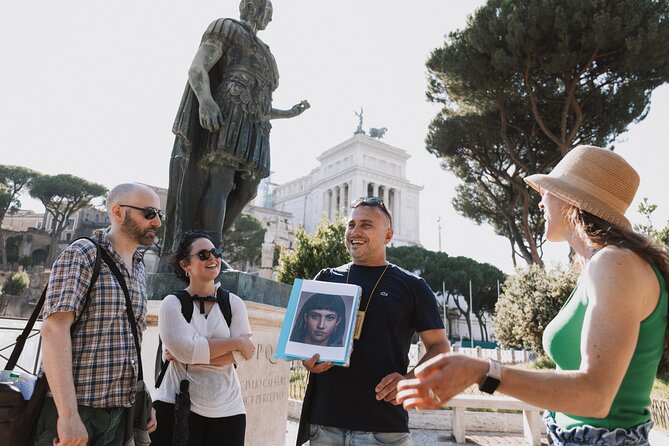
This isn’t a lecture where you watch a guide talk at you. It’s more like a storyline walk where each location acts as a stage, and the women’s decisions drive what comes next. You’re hearing about Cleopatra, but you’re also seeing how Roman power really worked—through alliances, family ties, and influence behind the throne.
The guide’s name is Massimo, and the tone that comes through in the descriptions is practical and dramatic in the best way: clear, timed explanations, then the next scene. You’ll get psychological angles on the women he covers, not just dates and labels. That matters because it turns history from trivia into something you can understand in real time while you stand in the setting.
And yes, you’ll still get the big empire context. The story lens is women, but the political engine stays Roman—emperors, rivals, succession pressure, and the way public image could decide survival.
You can also read our reviews of more tours and experiences in Rome.
Where You Start at Via dei Fori Imperiali (and Finish in the Jewish Quarter)
The tour starts at Via dei Fori Imperiali, 1, in a straightforward, central meeting spot near the ancient core. You’ll be walking off from there into the Fori area, where Rome’s layers of power literally sit on top of each other.
The tour ends at the Portico of Octavia and then continues out to the Jewish Quarter area. That ending is convenient because you can drop into dinner mode right after the walk, with lots of restaurants and wine bars nearby. There’s also a taxi stand a short walk away, which helps if you don’t want to navigate back on foot.
Planning tip: this tour is often booked ahead (on average about 72 days). If your dates are fixed, grab your spot earlier rather than later—especially for peak seasons.
Piazza del Campidoglio: Empress Power Meets a Ridgeline View
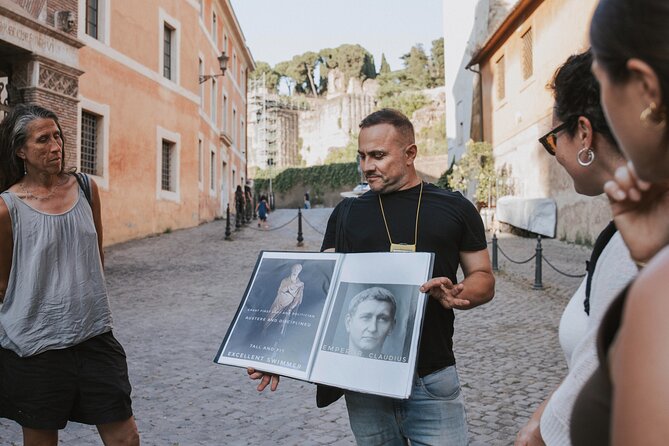
Your first stop is Piazza del Campidoglio, a hilltop position that naturally frames the Roman Forum below. The view is part of the “wow,” because it helps you visualize what it meant to rule from Rome’s highest prestige areas while the rest of the city moved below.
From here, you’ll hear stories connected to Julia Domna and the Vestal Virgin priestesses. This is a smart opening because it sets two tracks at once: women who hold influence through role and status, and women whose power is tied to religion and symbols of Rome’s permanence.
A practical takeaway: even if you’re not a “history facts” person, this start helps you get bearings fast. You’re not just being told where you are—you’re being shown why that location mattered.
Arco di Giano: A Lesser-Known Corner With Big Atmosphere
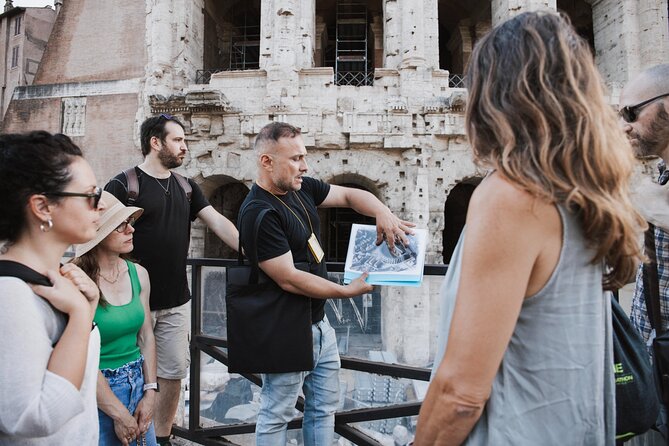
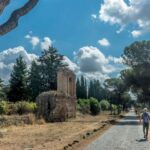
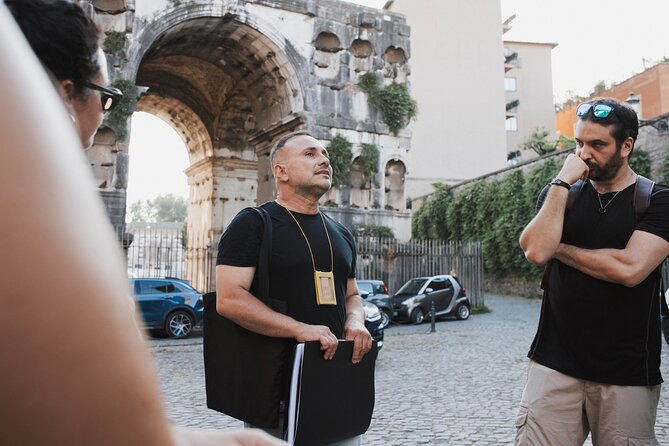
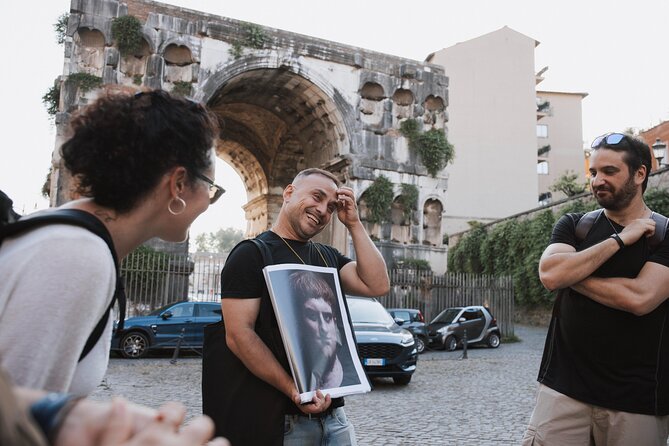
Next up is Arco di Giano, a spot that’s often overlooked but gives you a great change of pace. You get a different angle toward Palatine Hill, and that shift matters because it helps you see Rome as a set of relationships between places, not isolated monuments.
This area is also stacked with time periods: you’ll see the Arco degli Argentari from the 3rd century AD, the Temple of Hercules from the 2nd century BC, and the San Giorgio al Velabro church from the 13th century. Standing in a square like this, you’re reminded that Rome never truly “stops.” It keeps building on what came before.
Drawback to keep in mind: because it’s a story walk, you’ll likely get a concentrated slice of this zone rather than a long, slow architectural study. If you like reading every carved detail, take photos and plan to revisit on your own later.
Foro di Cesare: Cleopatra Comes Into Focus Among Caesar’s Ruins
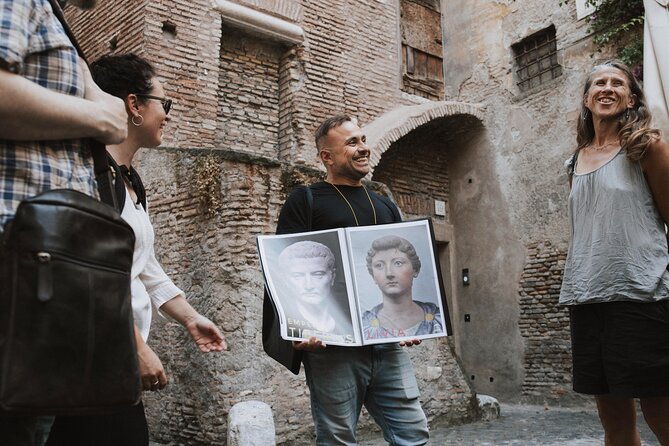
At the Forum of Caesar area, the tour narrows the topic into the politics behind the name Cleopatra. You’ll focus on the ruins connected to the Temple of Venus Genetrix, commissioned by Julius Caesar, and you’ll see how the guide uses reconstructions to explain what the temple may have looked like.
This stop is valuable because it connects personal power to public storytelling. Cleopatra’s story can turn into stereotype fast if you only know the Hollywood version. Here, you’re being shown how leaders used symbols, family narratives, and Roman political support to build legitimacy.
You’ll also learn how the Forum environment shapes the meaning of the story. Even when you’re looking at fragments, you’re being guided to interpret what they signaled in their time—and why those signals still matter when you see the remains today.

Tempio di Portuno: A Short Stop That Helps You Reset
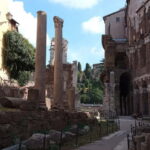
Then you shift to Tempio di Portuno, which functions like a breather on a walking tour. It’s described as a fantastic archaeological area full of remains, and that’s the key benefit: you get a calmer moment to absorb stone and layout before the next heavier political scene.
Why it works: short pauses like this keep the tour from feeling like one long sprint. You’re still getting context, but you’re also getting a reset for your legs and your attention.
Because this stop is brief (about 10 minutes), treat it as a “pause and look” moment. If you want to spend more time here, you’ll probably want to return later under your own pace.
Teatro di Marcello: Octavia’s Story and Augustus vs Cleopatra
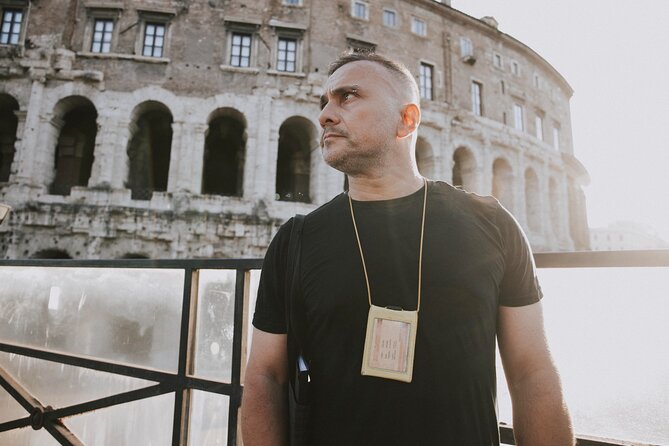
One of the most engaging stops is Teatro di Marcello, tied to Marcellus and the women around him—especially Octavia. You’ll hear how Octavia was married off to Mark Antony, and the story places her inside the political chessboard rather than as a side character.
This stop also brings in a dramatic Roman detail: the guide shows a recreation of the Columna Bellica. The story here centers on Emperor Augustus throwing a spear dipped in blood against that column in the 1st century BC, tied to informing people that Rome was going to war against Cleopatra.
This is where the tour’s tone really pays off. You’re not just hearing what happened—you’re connecting the action to the physical symbols around Rome’s public spaces. And you’re seeing how war messaging, religion-like ceremony, and political performance all blended into Roman power.
Practical note: because the focus is on the story beats, you’ll only have a short window here (about 5 minutes). It’s enough for the meaning, but you’ll want to look around briefly yourself too—just to let the setting sink in.
Il Portico di Ottavia: Livia, Augustus, and the First Lady Myth That Actually Fits
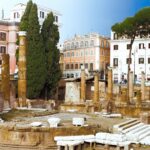
The closing scene is at Il Portico Di Ottavia, where the guide brings it all together with Empress Livia, wife of Augustus. She’s described as the first First Lady in the Western world—an attention-grabber phrase, but the point is more useful than it sounds: the tour explains how her influence worked and why her story mattered.
This final stop lasts about 30 minutes, which gives you the sense that the tour is finishing on a major theme rather than squeezing one last name at the end. You’ll be left with a clearer understanding of how a woman’s position could shape institutions, family futures, and how people understood authority.
If you like story arcs, this ending lands well. You start with women tied to Rome’s spiritual identity and imperial atmosphere, move through Cleopatra’s political rise, and then close with Livia as a quieter kind of power—less dramatic in style, but still deeply political.
What Makes Massimo’s Storytelling Click
A big part of why people give this tour top ratings is how well Massimo ties facts into narrative. The pacing is described as movie-like, with links that make you feel the story moving forward rather than stopping for random trivia.
One standout strength is clarity. You get explanations without long, dead air monologues, and there’s attention to how the women think—choices, motivations, and consequences. That turns names you might partially recognize (Cleopatra, Agrippina, Nero’s world, Livia) into characters with decisions you can track.
Another plus: modern comparisons. That’s not about making Rome modern. It’s about using everyday reference points so the power structures don’t feel locked behind academic walls. If you’ve ever tried reading Roman history and felt lost in relationships, this style is a friend.
And you’ll also notice the tour is designed for real people. A recurring theme in the experiences shared is that the walk includes a bathroom or beverage break. That sounds small, but on a 2.5-hour outdoor walk it keeps the experience comfortable enough to enjoy every stop.
Timing, Crowds, and the Reality of a 2.5-Hour Walk
This is about 2 hours 30 minutes, and it’s designed around short themed scenes, not long museum-style immersion. That works well if you want a concentrated Rome experience with story payoffs at each location.
The locations also naturally break up the city into manageable chunks: a hilltop viewpoint, a lesser-visited square, a Forum-focused stop, a quick archaeology moment, a theatre-area scene, then the portico finale. You’re not walking a huge distance with nothing to look at.
In practical terms, you should plan for outdoor uneven surfaces typical of ancient areas. Wear comfortable shoes. This kind of walking tour is usually best when you’re ready to look down sometimes and not rush your photos.
Price and Value: Is $46.96 Worth It?
At $46.96 per person, you’re paying for a guided, story-driven route across multiple major ancient zones in central Rome. What makes the value feel fair is that the stops are described as free admission viewing points, so your money goes to interpretation and walking time, not expensive ticket add-ons.
Also, the group size is limited to a maximum of 20 travelers. That usually means more personal attention and fewer “wait for your turn” moments at each stop. For a storytelling tour, that matters because the best parts are often in the connections between characters, not just the physical stones.
If you’re comparing costs to big-ticket Rome attractions, this is a strong alternative: you get deep context in a short window and you leave feeling like you understand Roman power from a fresher angle.
Who Should Book This Women of Ancient Rome Tour?
Book it if you want Rome in a smarter order. It’s ideal if you’ve visited the Colosseum and Vatican-style classics already (or you’re just avoiding the biggest crowds) and you want something that feels different without needing a long transit ride.
It’s also a great fit if you like people-driven history: relationships, ambition, influence, and how reputations were shaped. This tour doesn’t treat Cleopatra as a costume character. It treats her like a political actor in a real empire.
And don’t worry if you’re not hunting specifically for a women-only angle. The women’s stories pull you through the emperor system, succession pressure, and major political names—so you still get the big picture, just through a different set of eyes.
Should You Book Cleopatra & the Women of Ancient Rome?
Yes, if you want a route that helps you see ancient Rome as a living political drama. I’d book it if you like storytelling that stays clear, with strong connections between scenes, and you appreciate lesser-known viewpoints as much as the famous ones.
I’d think twice if you’re the type who needs long stays at each monument. This tour is designed for snapshots with meaning. You’ll learn a lot in 2.5 hours, but you won’t get hours of free roaming at each site.
If you’re booking ahead, aim to secure your slot early since it’s commonly reserved well in advance. Then plan your evening meal in the Jewish Quarter, because you’ll finish in a fun place to keep the Rome momentum going.
FAQ
How long is the Cleopatra & the Women of Ancient Rome tour?
It lasts about 2 hours 30 minutes.
Where does the tour start?
The meeting point is Via dei Fori Imperiali, 1, 00186 Roma RM, Italy.
Where does the tour end?
It ends at the Portico of Octavia area in Rome, and the finish is in the Jewish Quarter area.
How much does the tour cost?
The price is $46.96 per person.
Is this a mobile ticket tour?
Yes, it includes a mobile ticket.
How big is the group?
The tour has a maximum of 20 travelers.
Is admission required for the stops?
The listed stops are marked as admission ticket free.
What is the cancellation policy?
You can cancel for a full refund up to 24 hours before the experience starts. If you cancel less than 24 hours before, the amount paid is not refunded.