REVIEW · LISBON
City Tour, wonders of ancient Lisbon through the monuments
Book on Viator →Operated by Experience Tour · Bookable on Viator
Lisbon’s best sights stack up fast. In 1 hour 45 minutes, this private monuments tour ties together classic neighborhoods and big viewpoints, with guides like Carlos or Andre pausing for photos, and it lists free admission tickets at the stops. You end up with a strong feel for Lisbon’s layers, from medieval churches to post-earthquake squares.
What I like most is the way the route works for real visitors: you get multiple perspective changes without burning half your day on steep climbs. The second big win is that the tour hits several top photo points in one go, including the balcony view over the Tagus from Miradouro Das Portas Do Sol.
One consideration: the time at each highlight is short (some stops are around 5–15 minutes), so if you want museum-length visits or lots of wandering, plan to come back for extra time later.
In This Review
- Key things to love about this Lisbon monuments tour
- Why this 1 hour 45 Lisbon route is a smart hit-of-the-city
- Parque Eduardo VII: a quiet start with a King of England connection
- Lisbon Cathedral: 1147 beginnings on a former Muslim mosque site
- Santa Engrácia: baroque architecture and a national pantheon status
- Alfama: Fado’s supposed birthplace area and a ginjinha moment
- Miradouro Das Portas do Sol: the Tagus balcony view
- Miradouro da Senhora do Monte: Lisbon’s highest point near São Jorge Castle
- The Royal Palace square (pre-1755): where disaster shaped the city
- The Marquis monument: reconstruction mentorship after 1755
- Pedro IV (Pedro I) square and Lisbon’s Brazil connection
- The grand train station moment near Rossio Square
- Price and value: what $36.05 gets you (and why it adds up)
- Guide style: why Carlos and Andre keep showing up
- Who this tour suits best (and who should look longer)
- Should you book this Lisbon wonders monuments tour?
Key things to love about this Lisbon monuments tour
- Private group pacing with flexible, caring guides (Carlos and Andre come up a lot in the guide feedback)
- Free admission at each listed monument stop, so your tour cost stays straightforward
- Two high-view moments at Miradouros Das Portas do Sol and Senhora do Monte (the Tagus view and the highest viewpoint)
- A cathedral story you’ll actually remember, starting in 1147 on the site of a Muslim mosque
- Lisbon’s earthquake reconstruction told in squares and monuments, including where the Royal Palace stood before 1755
Why this 1 hour 45 Lisbon route is a smart hit-of-the-city
This is the kind of tour you book when you want momentum. Lisbon’s old areas reward slow wandering, but they also punish wasted time. Here, the plan is to move you efficiently between viewpoints and major landmarks, which means you get that first-day Wow factor even if you’re jet-lagged.
The tour is private, so you’re not stuck waiting for a crowd. You’re also not stuck with fixed pacing that ignores your needs. The feedback on Carlos includes flexibility, and Andre is noted for taking extra care with photos. In practical terms, that means you spend more time at the places you came for and less time trying to coordinate group logistics.
Also: pickup is included, with air conditioning, Wi‑Fi, and water in the vehicle. That sounds like a small detail, but in warm weather—or after a day of stairs—it can make the whole experience feel easier.
You can also read our reviews of more tours and experiences in Lisbon.



Parque Eduardo VII: a quiet start with a King of England connection
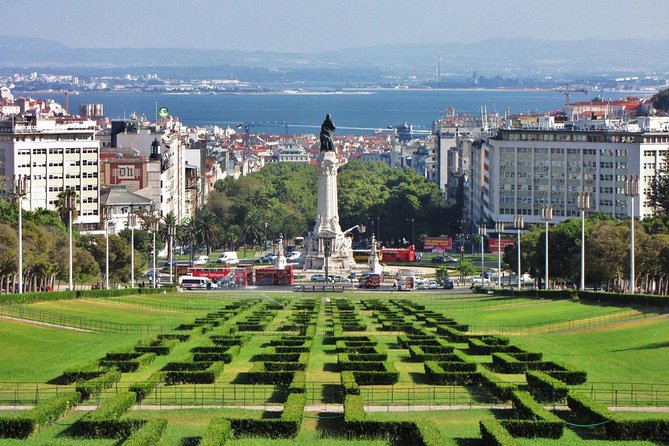
You begin at Parque Eduardo VII, and it’s a good opener. Instead of launching straight into crowds and camera angles, you get a contemplative garden visit. The park is described as being built in honor of the King of England, which gives you a nice historical anchor before you go deeper into Lisbon’s religious and royal landmarks.
You’ll usually get only about 5 minutes here, so think of it as a reset. Look for the garden setting and the change of tone: calmer, greener, and slower. It helps you get your bearings before the route starts climbing and turning toward the old city.
Lisbon Cathedral: 1147 beginnings on a former Muslim mosque site
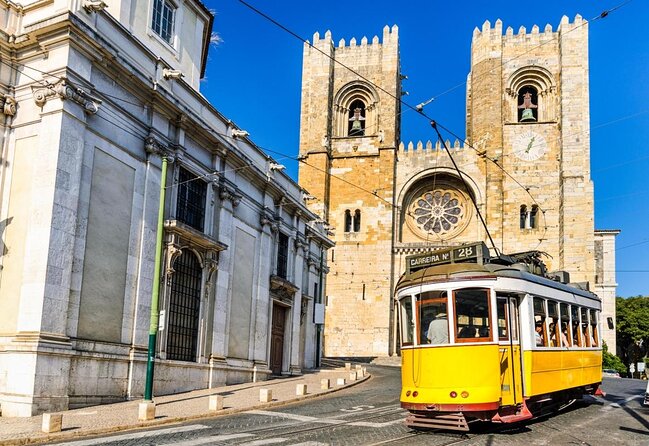
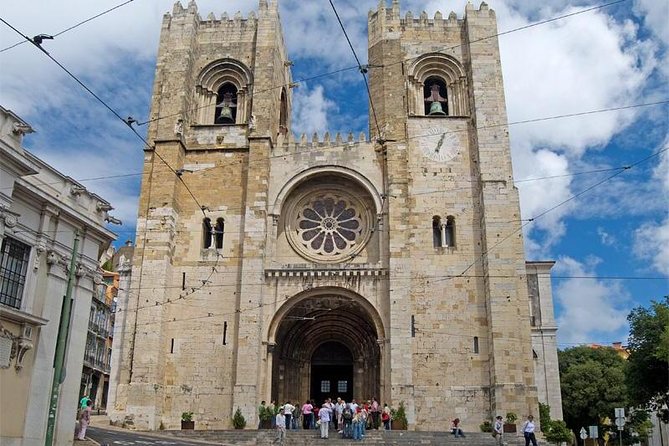
Lisbon Cathedral is where the story turns sharp. Construction began in 1147, and it started on the site of a Muslim mosque. That single fact changes how you see the building, even if you’re just standing outside and taking it in.
You’ll have about 10 minutes at this stop. That’s not long enough to do a deep architectural study, but it is enough to absorb the key narrative: this is a site that has belonged to different eras and different faiths. Your guide can tie that into what you’ll see later—Lisbon keeps reusing its most important locations.
The practical upside of a timed stop: you won’t lose the day to one landmark. The drawback: if you’re the type who likes to linger, you may want to schedule a longer cathedral visit on another day.
Santa Engrácia: baroque architecture and a national pantheon status
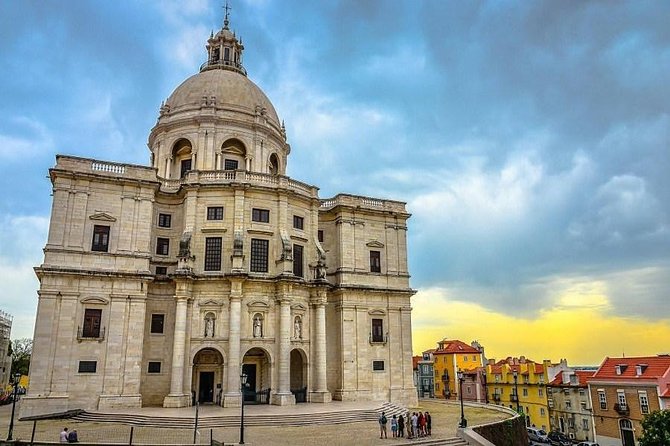
Next comes the church of Santa Engrácia, noted for its baroque architecture, and for being designated the Pateão Nacional in 1966. Even if you only spend a short amount of time here, the national-pantheon detail is the kind of thing that sticks. It frames the church not just as a church, but as a country landmark.
Baroque can be visually intense, but in a short tour stop it works best when you choose your focus: pay attention to what stands out visually rather than trying to read every detail. The good news is that the tour’s pacing supports this. You’re not fighting the clock while everyone else wants to sprint.
One thing to keep in mind: since the overall tour is tightly timed, you’ll likely be appreciating rather than thoroughly exploring. If that’s your style, great. If you want to go deeper, plan a separate longer stop for Santa Engrácia later.
Alfama: Fado’s supposed birthplace area and a ginjinha moment
Alfama is the neighborhood that makes Lisbon feel like Lisbon. You’ll spend about 15 minutes here, which is enough time to get the atmosphere without feeling rushed to death.
The tour focuses on the area near a fountain, described as being supposedly where Fado was born. That’s a fun storytelling hook, even if you keep it in the realm of legend. Then you add the practical, very Portuguese side: you can taste ginjinha, the cherry liqueur people associate with this part of town.
Here’s the key value of the stop: it connects music and place. Instead of treating Fado as a performance you go to, you see the neighborhood mood that made it. You also get a taste of local life through food and drink, not just monuments.
Possible drawback: Alfama’s lanes and viewpoints can feel busy, and 15 minutes goes quickly if you stop for photos and snack. If you’re hoping to buy souvenirs or go really slow, you’ll probably want to extend your Alfama wandering on your own after the tour.






Miradouro Das Portas do Sol: the Tagus balcony view
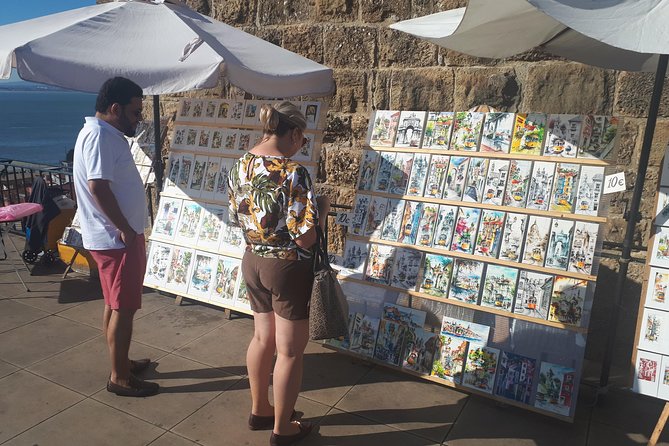
Miradouro Das Portas do Sol is described as a large balcony with a privileged view of the Tagus. This is a classic Lisbon move: put you on a lookout, let the river open the city up, and then send you back down into the streets with a mental map.
You’ll get about 10 minutes here. That’s enough time to walk to a solid spot, take pictures, and watch the light shift a little. In Lisbon, that “river first” moment is important because it helps you understand why the city is built the way it is.
If you care about photos, treat this as your priority stop. Don’t try to do too much multitasking here. The view is the point, and the tour timing is built around squeezing in several major viewpoints.
Miradouro da Senhora do Monte: Lisbon’s highest point near São Jorge Castle

If Portas do Sol gives you the river view, Miradouro da Senhora do Monte adds height and scale. It’s described as the highest point in Lisbon, and it sits on the shores of São Jorge Castle, overlooking the old city.
You’ll spend about 10 minutes at this stop, so again, think short-and-focused. The height changes your perspective on Alfama and the maze of rooftops. You can also see why the castle area is such a magnet. From here, it all makes more sense.
This is also a good moment to slow down mentally. After multiple stops, your guide’s stories tend to line up visually: “Oh, that’s why the city rebuilt in certain places,” and “That’s how these neighborhoods relate.”
If the weather is clear, this viewpoint is a big part of why people book a tour like this. If it’s overcast or windy, you can still appreciate the layout, but you may want to keep your expectations modest for photo drama.
The Royal Palace square (pre-1755): where disaster shaped the city
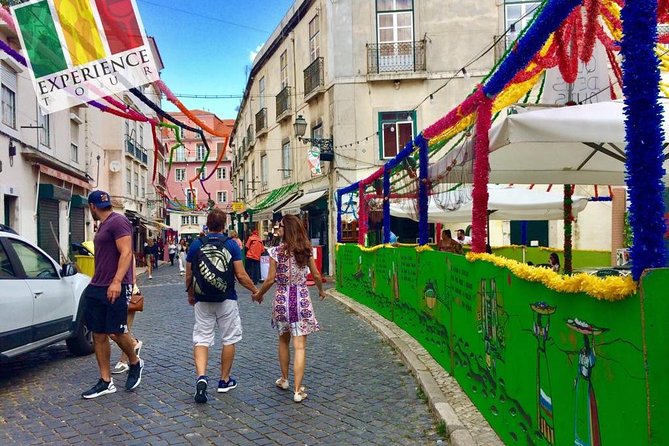
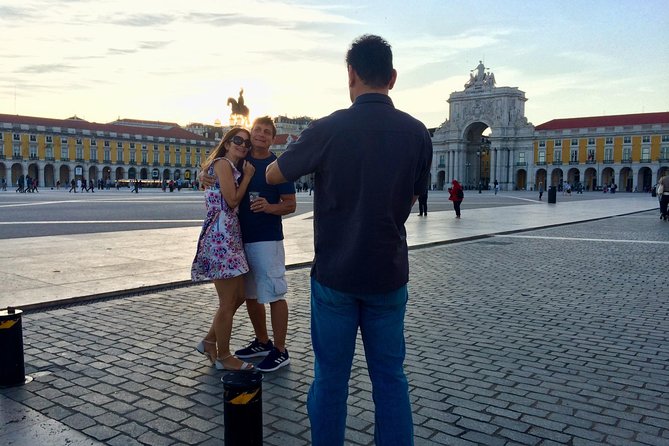
Next you reach a place tied directly to Lisbon’s turning point. This is the site where the Royal Palace was located before the 1755 earthquake. Today, it’s described as a large square surrounded by 18th and 19th century buildings.
This stop is valuable because it explains Lisbon’s present-day shape. You’re standing in a space created by reconstruction, not just by time. A square can look like an empty pause, but here it functions like a living historical marker.
Since the tour is limited to 1 hour 45, you’re likely there briefly, but the context makes it more than a quick glance. It helps you connect the monuments you see after this moment to the idea of rebuilding and rethinking.
The Marquis monument: reconstruction mentorship after 1755
Right after the Royal Palace reference, the route includes a monument honoring the Marquis who was the mentor of the reconstruction of Lisbon after the 1755 earthquake.
This is one of those stops where a guide makes a difference. Names and stories are easy to miss on your own, and the tour gives you a reason to notice the monument rather than walking past it like generic sculpture.
If you like learning why cities look the way they do, this section delivers. It’s not just “look at a statue.” It’s “this statue represents the person linked to rebuilding.”
Pedro IV (Pedro I) square and Lisbon’s Brazil connection
You’ll also stop at a beautiful central square with the statue of Pedro IV or Pedro I in Brazil. This is a clever inclusion because it broadens Lisbon beyond Portugal’s boundaries, showing how royal figures and influence traveled.
A short stop here still works because the statue is the focal point. Your job is simple: get your bearings, look at the square layout, and connect the Portuguese royal story to the broader Portuguese-speaking world.
Again, the tour timing means you won’t linger like you might in a long self-guided stroll. But the value is that you’re getting multiple landmark contexts in one morning-afternoon block.
The grand train station moment near Rossio Square
The final major highlight described is one of Lisbon’s most beautiful train stations, inaugurated at the end of the 19th century, and located on the outskirts of Rossio Square.
Even if you don’t take a train, this stop gives you an architectural contrast. After churches, viewpoints, and reconstruction squares, the station adds a more modern (in historic terms) rhythm: movement, iron-and-glass grandeur, and a building designed to impress.
Because this is a city tour stop, you’ll likely get a brief window. Still, it’s worth treating it like a mini photo session. Stations are where you can get both architectural shots and people-life shots without forcing extra walking uphill.
Price and value: what $36.05 gets you (and why it adds up)
At $36.05 per person for about 1 hour 45 minutes, this tour can be good value—mainly because you’re paying for organization, not just sightseeing.
Here’s why the math can work in your favor:
- You’re in a private group, not sharing guide time with other groups.
- Pickup is included in a comfortable vehicle with air conditioning, Wi‑Fi, and water.
- The tour lists free admission tickets at the major stops, so you aren’t piling on extra costs for entry fees.
If you tried to do this with taxis, you’d likely spend more than the tour price for the distances and frequent transfers needed in Lisbon’s hilly old areas. If you tried to do it on foot, you’d feel the steepness fast. This tour sits in the middle: efficient and guided, without turning into a bus full of people.
If you’re on a budget, this is the kind of itinerary that helps you spend money on experiences instead of paying entry fees one by one.
Guide style: why Carlos and Andre keep showing up
The names Carlos and Andre show up in the tour feedback for a reason: guides seem to handle the tour like a human, not a checklist.
Carlos is repeatedly praised for:
- taking good care of the group,
- providing excellent viewing points,
- being flexible about pickup,
- and covering major attractions in a way that feels adequate rather than rushed.
Andre is noted for:
- lots of photos at each stop,
- taking photos with permission,
- and sending photos by email after the tour.
One more practical detail: there’s mention of guides extending the tour upon request. That matters because Lisbon weather and photo cravings can shift. If you’re enjoying the flow, that extra time can turn a good tour into a great one.
Who this tour suits best (and who should look longer)
You’ll probably love this tour if:
- it’s your first day in Lisbon,
- you want a concentrated overview without doing hours of steep walking,
- and you like getting multiple viewpoints in one organized flow.
You might want a different option if:
- you’re the type who needs long museum-level time,
- you hate short stops,
- or you’re planning to go deep into one place (for example, spending a long afternoon in Alfama or at a single viewpoint).
The tour’s strength is breadth and timing. The potential weakness is depth. If that trade-off fits your trip, it’s a great match.
Should you book this Lisbon wonders monuments tour?
If your goal is to get oriented fast, take great viewpoint photos, and understand Lisbon’s layers without overplanning, I’d book it. The combination of private pacing, pickup comfort, and listed free admissions at the stops makes the price feel fair for what you cover.
Book it especially if you want a guided route that helps you handle Lisbon’s hills without exhausting yourself. If your plans are flexible, you also have the option for free cancellation as long as you cancel at least 24 hours before the start time.