REVIEW · LISBON
Lisbon Jewish Heritage and History – Private Tour Van
Book on Viator →Operated by Essência da Latitude Turismo Lda · Bookable on Viator
Lisbon hides Jewish stories in plain sight. This private van tour ties Sephardic Lisbon and Crypto Judaism to real street corners, viewpoints, and museum stops. You’ll cover the kinds of places that usually take serious research to stitch together.
I love the private, undivided attention you get with a guide who actually teaches as you walk. I also like the mix of scenery and stop-insides: Alfama viewpoints plus two museums where the artifacts do the talking.
One thing to think about: this tour does not include a synagogue visit, so if that is non-negotiable for you, you may want to plan separately.
In This Review
- Key highlights to look for
- Why Lisbon Jewish Heritage is easier to understand in a private van
- The real win: private guide attention (not a lecture you can’t follow)
- Miradouro da Senhora do Monte: setting the stage from Lisbon’s high hill
- Alfama’s UNESCO-era lanes: Jewish presence you can still feel
- Baixa de Lisboa: Small Jerusalem and the 1755 earthquake aftermath
- Money Museum stop: a medieval wall with 1,000 years of secrets
- Chiado families and Rossio Square’s Inquisition story
- Carmo Museum: Jewish archaeological finds you can actually see
- World War II and refuge: Lisbon’s role in later Jewish history
- Price and value: what you’re paying for at $187.53 per person
- Timing tips so you don’t feel rushed
- Who should book this tour
- Should you book this Lisbon Jewish Heritage and History private tour?
- FAQ
- Is pickup included for this private tour?
- How long is the tour?
- Are synagogue visits included on the tour?
- Which museums are included, and are entrance fees covered?
- Are there museum days when the tour can’t visit everything?
- Is the tour suitable for mobility issues or children?
Key highlights to look for
- Hotel, cruise terminal, or airport pickup plus an air-conditioned mini van to beat the hills
- Alfama on foot in Lisbon’s oldest-district feel, with viewpoint time at Senhora do Monte
- Crypto Judaism and Inquisition-era sites explained with context, not just dates
- Money Museum and Carmo Museum included, so you get more than streets and plaques
- Guides who teach like professors, with names like Daniel, Diogo, and Vasco mentioned often
- A small, private group so you can ask questions as you go
Why Lisbon Jewish Heritage is easier to understand in a private van
Lisbon is one of those cities where history isn’t locked behind a fence. It’s sitting on rooftops, in stairways, and around the turns of narrow streets. The catch is that without a guide, you might see the same buildings but miss the story tying them together.
This tour works because it connects big chapters of Lisbon history—Sephardic life, Renaissance intellectual culture, forced conversion and secret practice, and later refuge—back to physical places you can point at. And the private van helps you do this without spending half your day fighting buses, taxis, and the city’s steep streets.
You can also read our reviews of more private tours in Lisbon



The real win: private guide attention (not a lecture you can’t follow)
The best part is the guide’s rhythm. On this kind of route, you want someone who can slow down when you ask a question and move on when you’re ready for the next layer.
You’ll likely spend time with guides who are described as teacher-type communicators—people like Daniel and Diogo come up repeatedly for explaining details clearly. Vasco is also mentioned with a long teaching background, and that shows in how the day flows.
If you like history with cause-and-effect—why a community grows, how it changes, what happens after catastrophe—this is built for that.
Miradouro da Senhora do Monte: setting the stage from Lisbon’s high hill
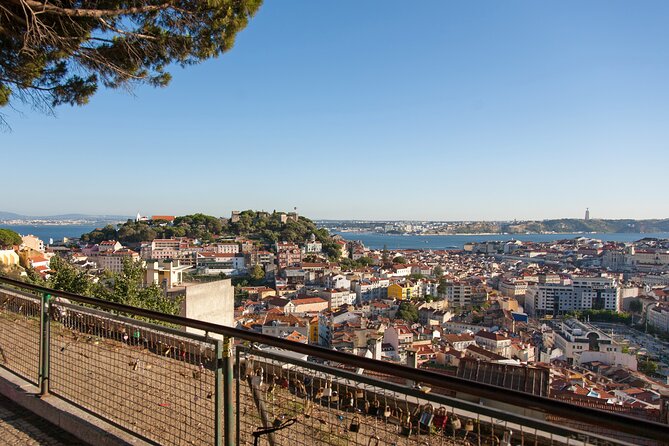
You start up high at Miradouro da Senhora do Monte, which is a practical trick. Views first help your brain build a map before you start weaving through neighborhoods below.
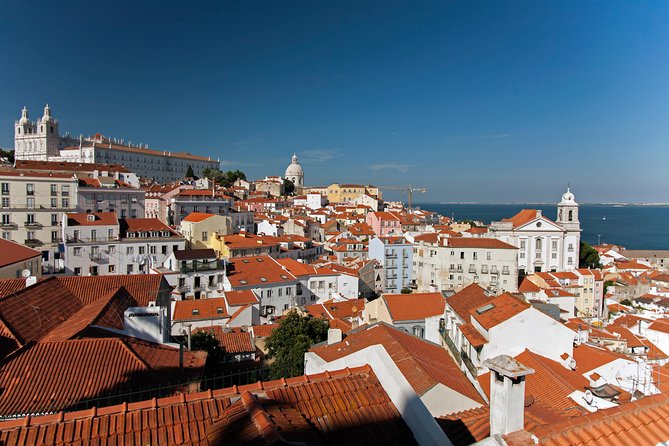
From this hillside viewpoint (about 20 minutes), you get a sweep of Lisbon: old quarters, major monuments, and those bright colors you see all over town. More importantly, your guide uses the skyline to explain how different eras overlapped in the city—so when you later walk Alfama and the older downtown areas, you aren’t guessing what you’re looking at.
This stop is easy on your feet, and it’s also a good moment to spot where you’ll go next. If you’re arriving without a lot of orientation, this is a smart warm-up.
Alfama’s UNESCO-era lanes: Jewish presence you can still feel
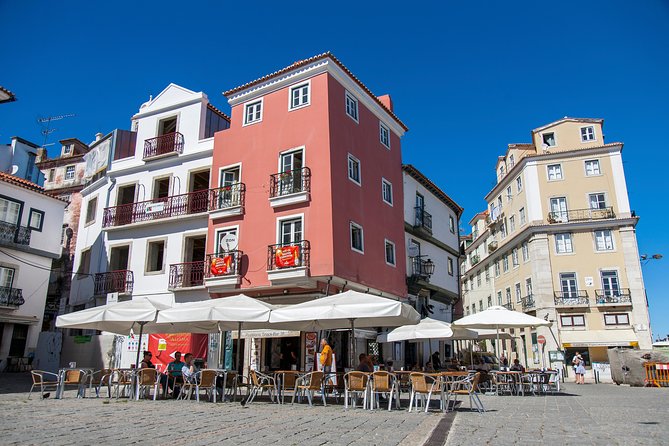
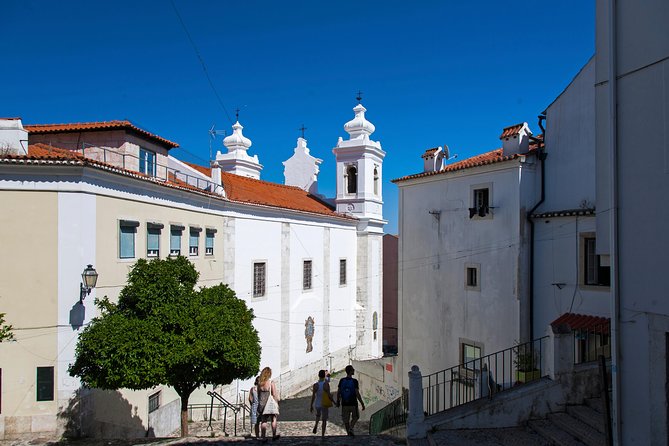
Next comes Alfama, Lisbon’s oldest district and a UNESCO-listed area in spirit and streetscape. The walk time is about 45 minutes, and you’ll notice fast: narrow lanes, uneven ground, and that dense old-town feel that makes Lisbon so distinct.
What you’re after here is not just atmosphere. Your guide points out physical signs that Jewish culture and community life shaped parts of the neighborhood. It’s the kind of place where a plaque on a wall isn’t enough—you need someone to connect architecture and street layout to what those communities did day to day.
Practical note: Alfama’s streets are uneven. Wear comfortable shoes with grip. If you have mobility limits, this is the part that can slow you down.
Baixa de Lisboa: Small Jerusalem and the 1755 earthquake aftermath
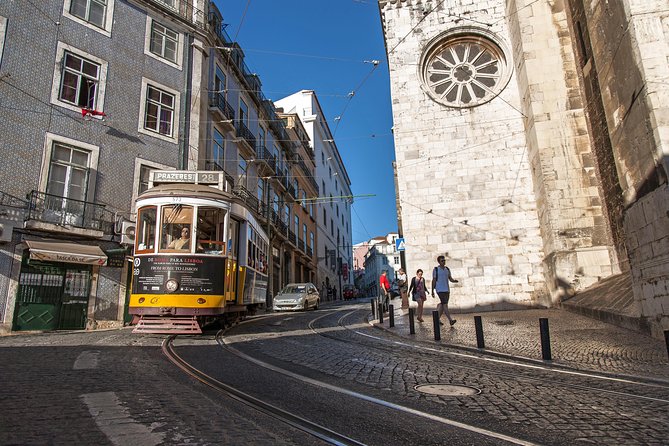
After Alfama, you move to the Baixa de Lisboa area, where the tour focuses on the remnants of what was once called Small Jerusalem. This is about 30 minutes, but it packs emotional weight because it’s tied to disaster and rebuilding.
Your guide explains how Lisbon’s Jewish community contributed to Portugal during the Golden Age—and what changed when the earthquake of 1755 devastated much of the area. Even when you can’t see the old neighborhood exactly as it was, the story helps you read the present city differently.
You’ll also hear about Crypto Judaism—how Jewish identity survived through secrecy for centuries—and how that thread became part of Portuguese identity. It’s one thing to say it in a book; it lands differently when you’re standing in the downtown fabric where communities once lived.
You can also read our reviews of more historical tours in Lisbon






Money Museum stop: a medieval wall with 1,000 years of secrets
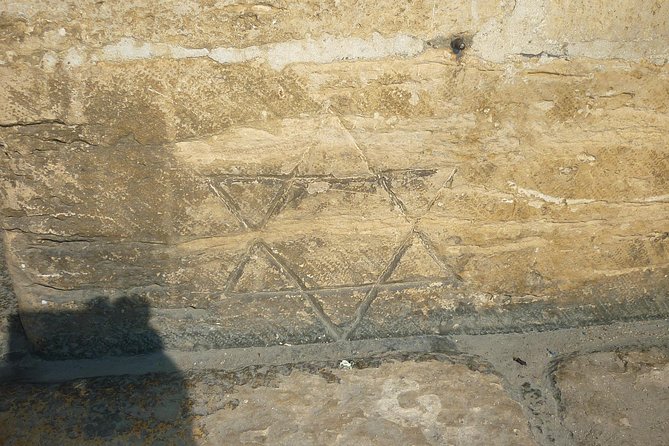
One of the most valuable parts of the day is Museu do Dinheiro (Money Museum). This is where the tour shifts from streets and stories to objects and place-specific evidence, and that balance matters.
You’ll spend about 30 minutes here. The highlight is a medieval wall that holds centuries of history—think of it as a time layer embedded in the building itself. Your guide uses that backdrop to connect Lisbon’s Jewish past to what people needed day to day: civic life, trade, and the systems that shaped community survival.
From there, you also walk through the surrounding area connected to the smallest Jewish quarter, so you get a bit of street-level context right after the museum context. This sequencing is smart: museum first, then neighborhood reading.
If you want a single stop that most directly answers the question, What did life look like? this is it.
Chiado families and Rossio Square’s Inquisition story
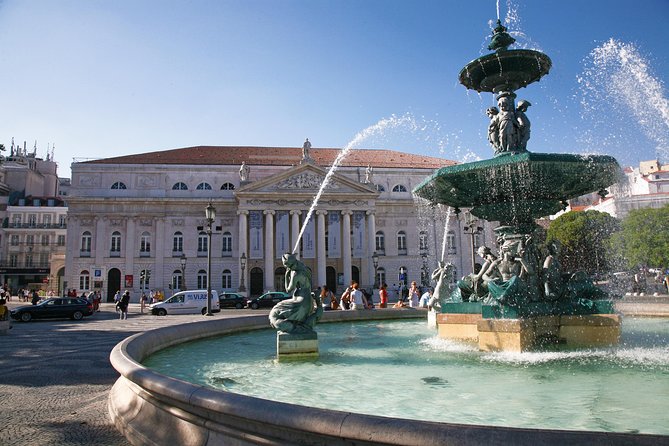
Then the tour heads into Chiado (about 30 minutes), where you learn about influential Jewish families in the Portuguese Kingdom. This is a shift from neighborhoods to people, and it helps you understand why Jewish life mattered beyond survival. It’s about networks—intellectual, social, and economic influence.
After that, you go to Largo de São Domingos at Rossio Square for the darker chapter: the Portuguese Inquisition. This stop is about 30 minutes and includes the presence of a Jewish memorial tied to Portuguese Jewish history.
This is the moment when the day becomes very real. The guide doesn’t just recite dates; it’s framed as a chain of decisions and consequences. If you’re the type who wants context—why persecution happened, how it changed public life—this will keep your attention.
Carmo Museum: Jewish archaeological finds you can actually see
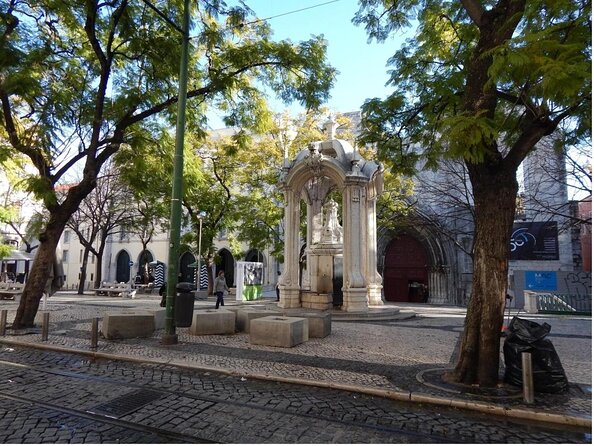
The final major stop is Museu Arqueologico do Carmo, where you’ll spend about 40 minutes. This museum relates to a building history from the 14th–15th centuries, and it holds Jewish archaeological finds connected to daily life and belief.
What I like about finishing here is that it anchors the whole tour. After viewpoint, streets, and memorials, you end with tangible evidence: artifacts and exhibits that help you visualize how people lived, practiced, and carried identity across difficult eras.
Two practical cautions based on the tour’s operating days:
- Carmo Museum is closed on Sundays
- Money Museum is closed on Mondays and Tuesdays
If your travel dates fall on those days, you’ll want to double-check your schedule so you don’t lose a key part of the day.
World War II and refuge: Lisbon’s role in later Jewish history
Along the way, your guide also addresses Lisbon’s role during World War II, including how it became a sanctuary for European Jews seeking refuge from the Holocaust. Even if you’ve heard the headline version before, the tour’s geography helps.
You’ll understand this as more than a global event. It becomes a map story—how a city can shift from Renaissance influence to later refuge, all within the same familiar streets you’re standing on.
This is one reason the private format shines. You can ask questions like What changed in how people lived? or How did earlier patterns shape later survival?
Price and value: what you’re paying for at $187.53 per person
At about $187.53 per person for roughly 4 hours, this isn’t the cheapest option in Lisbon. But it’s also not trying to be.
You’re paying for:
- Private van + full-time driver/guide (you’re not sharing the route with strangers)
- Pickup from central Lisbon hotels, the cruise terminal, or the airport
- Entrance fees to two museums (Money Museum and Carmo Museum)
- Limited luggage transport (up to 4 medium suitcases), plus fresh water
For many people, the biggest value is time. Lisbon’s hills and tight streets make self-guided routes slower and more stressful. With a guide, you spend your energy on learning instead of figuring out logistics.
Also, the tour is described as highly recommended with a perfect star rating and a huge share of travelers recommending it. That doesn’t automatically mean it’s right for everyone, but it does suggest the format consistently works.
Timing tips so you don’t feel rushed
This is a set start time tour, and you need to show up when it begins. If you’re running late by more than 30 minutes, it can be treated as a no-show.
Because part of the day is walking in Alfama, plan like a local: comfortable shoes, water, and a lightweight layer. In Portugal from October to March, it gets dark from about 6pm, so if you’re touring later in the day, you’ll likely appreciate good daylight for photos and wayfinding.
Who should book this tour
Book it if you want:
- A Jewish heritage in Lisbon tour that connects neighborhoods to major historical themes
- A guide who teaches in a way that keeps kids and teens engaged (a 14-year-old staying interested comes up in feedback)
- A balance of outdoor street time + museum time, so your learning has both context and evidence
Consider skipping or adjusting if:
- You’re expecting synagogue visits. This tour does not include a synagogue stop.
- You have mobility concerns. The tour involves walking around Alfama, where the ground is uneven.
If you’re Jewish, you’ll likely appreciate the emotional accuracy and the “why it matters” framing. If you’re not, this is still worthwhile because it shows how Jewish life shaped Lisbon in visible and lasting ways.
Should you book this Lisbon Jewish Heritage and History private tour?
Yes—if you want a well-paced, private day that turns Lisbon’s older streets into a story you can follow. The strongest case is the combination of Alfama + downtown Jewish-quarter remnants + Money Museum + Carmo Museum, all handled by a guide who can explain both the good and the hard chapters.
If synagogues are the main goal, don’t force this tour as a substitute. Instead, pair it with separate synagogue planning and use this day for the broader historical geography.
If you’re deciding when to go, aim for a day when both Money Museum and Carmo Museum are open, since those closures can break the flow of the most important stops.
FAQ
Is pickup included for this private tour?
Yes. Pickup is included from central Lisbon hotels, the Lisbon Cruise Terminal, or Lisbon Airport.
How long is the tour?
The duration is about 4 hours.
Are synagogue visits included on the tour?
No. The tour does not include any visit to a synagogue.
Which museums are included, and are entrance fees covered?
Entrance fees are included for two museums: Museu do Dinheiro (Money Museum) and Museu Arqueologico do Carmo. The Money Museum stop includes an admission ticket, and Carmo Museum admission is included.
Are there museum days when the tour can’t visit everything?
Yes. Carmo Archaeological Museum is closed on Sundays, and Money Museum is closed on Mondays and Tuesdays.
Is the tour suitable for mobility issues or children?
Children must be accompanied by an adult. The tour is not recommended for travelers with mobility issues because it involves walking around Alfama on uneven ground.