REVIEW · SAVANNAH
Civil War Savannah!! Guided Walking Tour
Book on Viator →Operated by Savannah Walks · Bookable on Viator
Civil War Savannah hits the sidewalk hard. You’ll walk the Savannah Historic District with a guide who ties dates, strategy, and real street-level details into one tight story. Expect history that’s built around places you can actually see, not just names on a page.
I love two things most: first, starting at Warren Square and linking it to Sherman’s 1864 message after the Union took the city, and second, seeing the architecture and general’s homes that still shape how Savannah feels today. Guides like Will and Zack (not the same person every time) have a way of making the facts move, with humor and easy pacing.
One consideration: the Civil War part is real, but Savannah’s streets also force detours into earlier colonial context and the broader “how did this city work?” story. With a roughly 1 hour 45 minute walk, you may want more battle detail if that’s your main goal.
In This Review
- Key highlights worth knowing
- Warren Square to Sherman’s headquarters: the route that makes the story click
- The Historic District context that the Civil War can’t escape
- How Savannah’s war timeline starts before the headlines
- What you actually see: general’s homes, strategy talk, and a Union map
- The guide experience: humor, accuracy, and staying on pace
- Civilian hardship stories are the real emotional anchor
- Timing and comfort: a short tour with a real walking rhythm
- Who this tour suits best—and who might want a different focus
- Practical logistics that keep you from wasting time
- Should you book Civil War Savannah with Savannah Walks?
- FAQ
- How long is the Civil War Savannah walking tour?
- Where does the tour start and end?
- What’s included in the tour price?
- Is transportation or hotel pickup included?
- What language is the tour offered in?
- How big are the groups?
- Can I bring a pet?
- What if I need to cancel?
Key highlights worth knowing
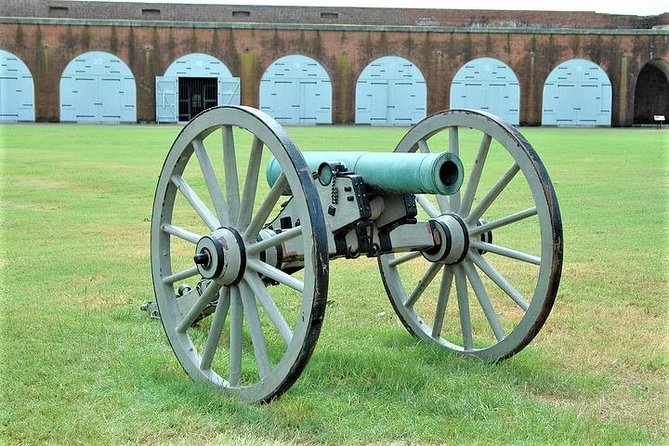
- Warren Square start with the occupation context and Sherman’s famous telegram
- Historic District perspective on why Savannah mattered long before 1861
- Civil War timeline clarity including the Georgia move at Fort Pulaski in early 1860
- General’s house views and architecture that anchors the era you’re learning about
- A confiscated Union map moment (yes, you’ll get to see one)
- Small-group feel with a maximum of 30 people and a true walking pace
Warren Square to Sherman’s headquarters: the route that makes the story click
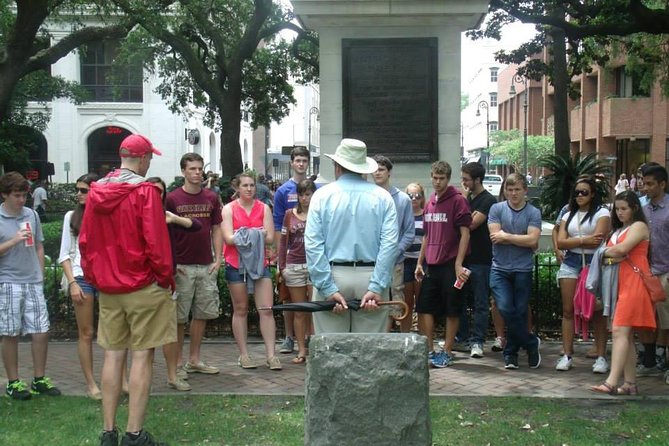
This tour has a clean arc. You meet near 22 Habersham St and begin at Warren Square, then you finish at the Green-Meldrim House, commonly tied to Sherman’s headquarters, at the corner of Bull and Harris streets by Madison Square.
That start-and-finish structure matters. It keeps the Civil War story from feeling abstract. Instead of bouncing between random landmarks, you’re walking from the city center outward with an explanation of what each location meant to the conflict—and what it meant to everyday people caught in the middle.
The walking distance is manageable, and the guide stops often enough that you can follow along. One frequent note: it’s not a “penny loafers only” outing. Plan for real walking time, likely around a couple miles total.
You can also read our reviews of more walking tours in Savannah

The Historic District context that the Civil War can’t escape
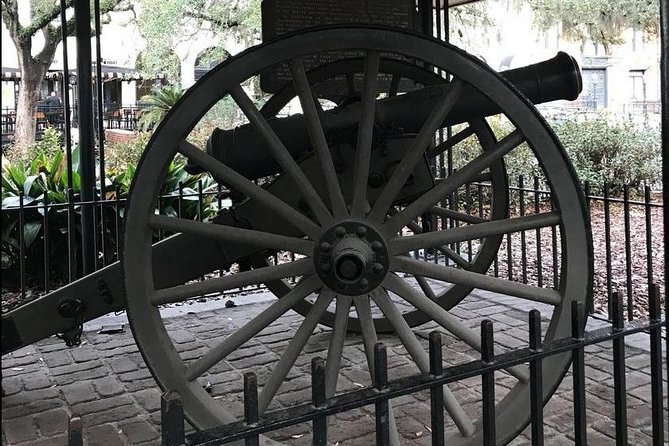
Savannah’s Historic District is one of the big reasons this tour works. The area served as the colonial government center in the 1700s, and it’s tied to early Georgia independence events—like the first reading of the Declaration of Independence in Georgia.
So you’re not just learning about 1860s battles. You’re learning why the city’s layout, power centers, and prominent homes mattered once war arrived. That helps explain the tone of the walk: the guide often spends time setting up the “what this city is” story before going deep on the “what happened during the war” story.
If you’re the type who likes connecting dots—politics, geography, and buildings—this part is a big plus. It also answers a practical question you’ll feel on your feet: why Savannah’s streets still read like a plan, not a random jumble.
How Savannah’s war timeline starts before the headlines
One of the most useful moments comes early: Savannah’s Civil War story begins in January 1860, months before the better-known start date tied to Fort Sumter.
Here’s the key move you’ll hear about: Georgian troops seized Fort Pulaski first. That push comes three months before the Charleston attack that often gets treated as the official war start in textbooks. Learning this shifts your mental map of the war. It places Georgia not as a side note, but as an early stage for the conflict.
Then the tour keeps going with how strategy looked from both sides. You’ll hear about what Northern and Southern forces were trying to do, and you’ll also get the part that’s easy to miss: what it felt like for civilians when war moved from distant rhetoric to local hardship.
What you actually see: general’s homes, strategy talk, and a Union map
The tour includes views of homes connected to some of the South’s most prominent generals. Even when you’re looking at residential facades, the guide frames what made those areas important—visibility, influence, and proximity to power.
You’ll also be guided through Savannah’s Civil War-era architecture, which does something textbooks can’t: it shows scale. When buildings survive for a century and a half, you can sense how decisions were made inside real rooms, not just on diagrams.
One standout “what the heck is that?” moment: you may get a look at a confiscated Union map. That’s a great tool for understanding how the conflict was assessed on paper—like how an invading army tried to read a city.
And you’ll get some history cleanup along the way. A common theme in the tour’s explanations is that Sherman’s reputation can be exaggerated. You’ll hear that Savannah wasn’t burned by Sherman, and you may hear comparisons about how Meridian, Mississippi and Columbia, South Carolina fit into the story more than people expect. You’ll also hear a reminder that the Confederates burned Atlanta. This kind of context doesn’t erase tragedy, but it does sharpen your understanding.
The guide experience: humor, accuracy, and staying on pace

This tour lives or dies by the guide. The good news: the program is built around professional guiding, and the tone from multiple guides is consistently engaging.
Guides such as Will, Brad, and Zack have shown up with a mix of humor and firm historical accuracy, plus a willingness to answer questions. One guide even extended the tour a bit when the group’s pace allowed, and another offered extra sightseeing and food recommendations that fit the walk’s themes.
You should still expect a few “slow down and listen” moments. Savannah is full of interesting angles, and the guide stops when it’s time to connect what you’re seeing to the bigger war story. One important practical tip: wear shoes you don’t mind breaking in. Even a smart, funny guide can’t make cobblestones disappear.
You can also read our reviews of more guided tours in Savannah


Civilian hardship stories are the real emotional anchor
A common complaint about Civil War content is that it can turn into pure tactics or pure talking points. This walk tends to lean into what made the war difficult for people living in Savannah.
You’ll hear about hardships during the conflict, and you’ll also hear about how local conditions shaped military choices. For example, there’s a specific kind of detail that helps you picture the reality: the area didn’t have rocks indigenous to it, so forts were built using dirt rather than the kind of stonework people imagine.
It’s the kind of “small but real” fact that changes your sense of scale. An earth fort isn’t just a footnote—it affects how long defenses hold, how crews work, and how weather turns military plans into survival problems.
Timing and comfort: a short tour with a real walking rhythm
The tour runs about 1 hour 45 minutes. That’s long enough to cover a meaningful number of stops and themes, but short enough that you can still do other Savannah sights afterward.
Because it’s an outdoor walk, plan around heat and sun. If you’re going in summer, take it seriously. One guided experience note: even in months that feel “normal” to locals, it can get brutal fast. Bring water and a hat if you run hot. And if storms move in, don’t assume Savannah will follow your schedule.
The tour also works best when you show up with your day open for questions. If you like asking why a decision happened, or how a rumor started, this is the kind of guide-led format that can answer those things in context.
Who this tour suits best—and who might want a different focus
This tour is a strong pick if you want:
- A walking-based Civil War explanation that connects to the city’s layout
- Context before conflict, especially Savannah’s colonial role and early national connections
- Strategy and hardship—not just who fought, but what it meant for people
It may be less perfect if you want nonstop action or battlefield detail. Part of the challenge is that Savannah doesn’t turn every corner into a battlefield marker. So you’ll get a broader story that includes earlier history and the lead-up logic.
Also, Sherman in Savannah can feel less dramatic than the myth. If you’re expecting a heavily fire-and-smoke plotline, you might feel the emphasis is more on the overall impact, occupation context, and how the war shaped daily life.
Practical logistics that keep you from wasting time
You’ll need to start at 22 Habersham St and end near 14 W Macon St, at the Green-Meldrim House area by Madison Square. The tour ends at Sherman’s headquarters at Bull and Harris streets, so it’s helpful to know you’ll likely be in that midtown historic zone for your next stop.
A mobile ticket is part of the setup, and the tour is offered in English. Group size tops out at 30 travelers, which usually keeps it from becoming a shuffle through the crowd.
Pets are welcome, and the route is near public transportation, which helps if you want flexibility for parking or getting back to your hotel.
Should you book Civil War Savannah with Savannah Walks?
I’d book it if you like your history with a walking map attached. The combination of Warren Square, Savannah’s broader Historic District setting, and the ending at Sherman’s headquarters gives the Civil War story a shape you can remember.
I’d pass or look for a different match if your must-have is heavy battlefield recounting or constant Civil War action. This is more about strategy, timing, and what the war did to Savannah than about big frontline battles you can point to on every block.
Bottom line: if you want a smart, human scale Civil War explanation in one compact outing, this is a strong Savannah value.
FAQ
How long is the Civil War Savannah walking tour?
It runs about 1 hour 45 minutes.
Where does the tour start and end?
The tour starts at 22 Habersham St, Savannah, GA 31401 and ends at 14 W Macon St, Savannah, GA 31401. It ends at the Green-Meldrim House on the west side of Madison Square at Bull and Harris streets.
What’s included in the tour price?
The tour includes a professional guide and history of Savannah’s role in the Civil War.
Is transportation or hotel pickup included?
No. Hotel pickup and drop-off are not included.
What language is the tour offered in?
It’s offered in English.
How big are the groups?
The tour has a maximum of 30 travelers.
Can I bring a pet?
Yes, pets are welcome.
What if I need to cancel?
You can cancel for a full refund up to 24 hours in advance of the experience’s start time. If the minimum number of travelers isn’t met, the tour may be canceled and you’ll be offered an alternative or a full refund.