REVIEW · NEW DELHI
Delhi City Tour: Heritage and Cultural Gateways
Book on Viator →Operated by India Voyages · Bookable on Viator
Delhi can feel like a moving target. This private city tour turns it into a clear route of major sights, with a car and a plan from the start.
I like two things most: the mix of Old Delhi Mughal landmarks and New Delhi icons in one day, and the fact you’re not stuck haggling for taxis. You also get a real chance to move efficiently across neighborhoods while staying comfortable in an air-conditioned, chauffeur-driven vehicle.
One thing to keep in mind: a few top stops require entry tickets you’ll need to arrange yourself, and the day is designed to cover a lot, so it won’t feel slow and leisurely.
In This Review
- Key points to know before you go
- Why this Delhi car tour works (even if you only have a day)
- Red Fort: the Mughal power center in two hours
- Jama Masjid and Raj Ghat: huge scale, then quiet weight
- India Gate and Viceroy’s House: New Delhi’s ceremonial axis
- Humayun’s Tomb: where the garden-tomb idea shows up
- Lotus Temple: a peaceful architectural stop that’s very easy to enjoy
- Qutub Minar’s monument cluster and Birla Mandir’s garden-sprawl
- Price and logistics: what $30 really buys you
- Your driver’s impact: punctual, professional, and flexible
- Timing tips: how to make the day feel less rushed
- Who this Delhi city tour suits best
- Should you book this Delhi Heritage and Cultural Gateways tour?
- FAQ
- What time does the tour start?
- How long is the Delhi city tour?
- Is this a private tour?
- Do I get hotel pickup and transfers?
- Which major attractions are free, and which are not included for admission?
- Is the vehicle air-conditioned?
- What’s included in the tour price?
Key points to know before you go
- Private, car-based sightseeing saves time in Delhi traffic and avoids taxi negotiation
- Old + New Delhi in one day so you see multiple eras without planning two separate trips
- Your driver’s role is big: punctual, professional, and flexible with your priorities
- Some entrances cost extra (Red Fort, Humayun’s Tomb, Qutub Minar), while others are free
- Early start works well for fitting in the most important sites by 8:00 am
Why this Delhi car tour works (even if you only have a day)
The biggest practical win here is the private vehicle. Delhi sightseeing sounds simple on paper, but distances and traffic can eat your time fast. With an air-conditioned, chauffeur-driven car and transfers, you spend less effort “figuring it out” and more time actually seeing.
This tour also has a smart pacing structure. It keeps your stops clustered: Old Delhi monuments early, then New Delhi landmarks mid-day, then additional major heritage sites before the day ends. That matters because a “scattershot” day often turns into a lot of waiting around.
And yes, the price is very entry-level for a full-day private setup. At $30 per person, the value is strongest if you want a planned route and you don’t want to pay for extra rides between neighborhoods.
You can also read our reviews of more city tours in New Delhi

Red Fort: the Mughal power center in two hours
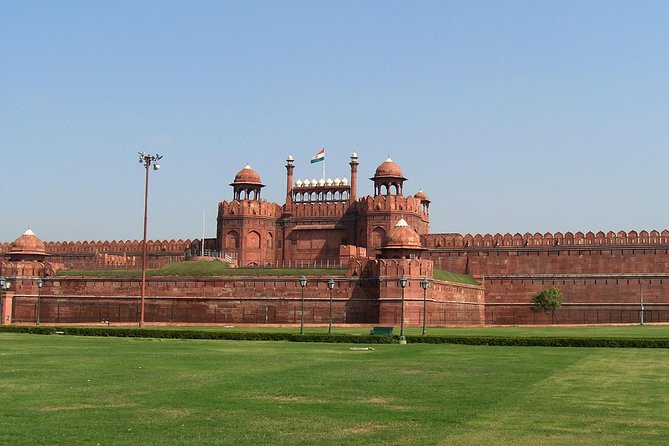
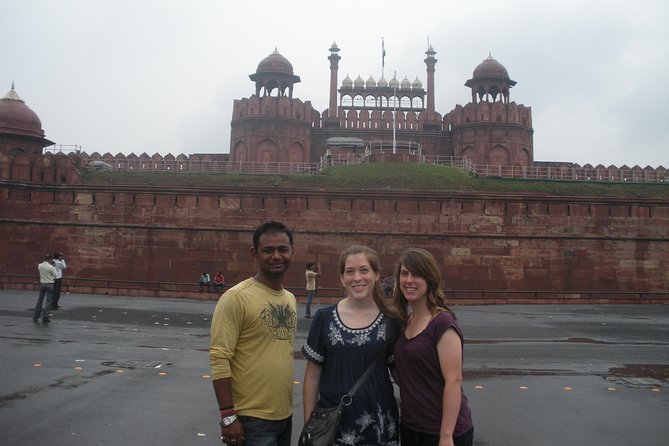
Your day begins at the Red Fort, the Mughal-era capital and residential fort that ruled for over 200 years. It was built in 1639 by the fifth Mughal Emperor Shah Jahan, and it includes museums, courtyards, and heritage spaces within the fort complex.
Two hours is enough to get oriented, see major parts, and still have time to absorb what you’re looking at. It’s also one of those places where the “structure” is part of the experience: you’re not just looking at a single building, you’re stepping into a whole walled world.
Important planning note: Red Fort admission isn’t included. If you want this stop to feel smooth, budget time for ticketing and consider buying in a way that matches your schedule.
Jama Masjid and Raj Ghat: huge scale, then quiet weight
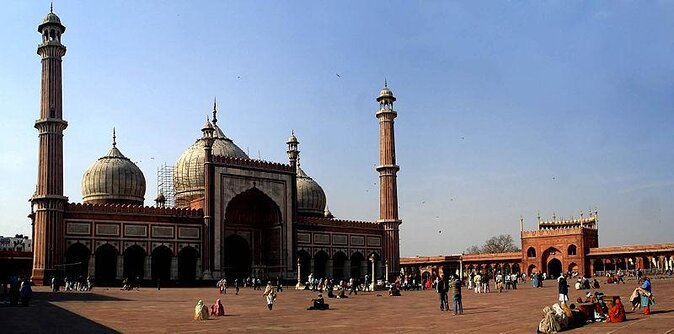
Next comes Jama Masjid, commissioned by Shah Jahan between 1644 and 1656. It’s the largest mosque in Delhi and can accommodate more than 25,000 people at prayer time.
Even if you’re not there for worship, the scale hits you. It’s the kind of stop that makes you understand why Delhi became such an important crossroads of faith, empire, and public life.
Then you move to Raj Ghat, the cremation site connected with leaders including Mahatma Gandhi, Jawaharlal Nehru, Lal Bahadur Shastri, Indira Gandhi, and several others. This is a shorter stop, about 30 minutes, but it’s a meaningful pause in the middle of a day packed with big structures.
Both of these stops are free for admission, which makes the schedule more comfortable. You can put the saved money toward paid entrances later—or toward an unplanned snack break.
India Gate and Viceroy’s House: New Delhi’s ceremonial axis
India Gate is a classic New Delhi photo and walking moment. It’s a 42 m high war memorial arch on Rajpath, built in memory of Indian soldiers who died in the First World War in France and the Third Anglo-Afghan War.
It’s not a long stop—about 20 minutes—so don’t show up expecting a full museum visit. Instead, treat it like a landmark reset. Take a moment to orient yourself in New Delhi, then keep moving while momentum is high.
The route also includes the Viceroy’s House, currently the official residence of the President of India. Even if you’re only viewing it from the outside, it’s a useful context marker. You’re connecting imperial-era architecture and later national identity, all within the same New Delhi corridor.
This segment gives the day a clear shift: from Old Delhi’s fort-and-mosque gravity to New Delhi’s broad avenues and monumental symbolism.
Humayun’s Tomb: where the garden-tomb idea shows up
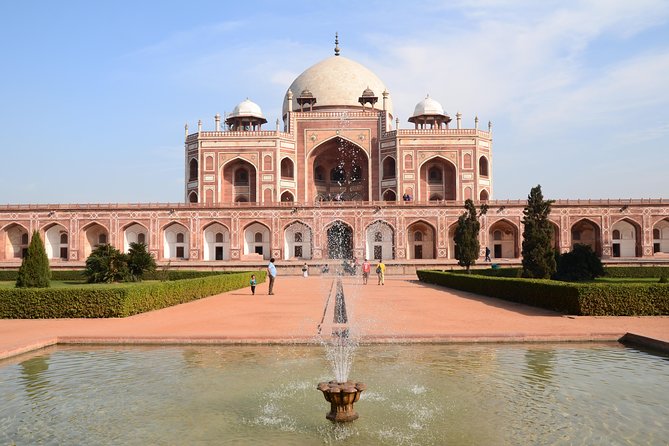
After the New Delhi stretch, you head toward Humayun’s Tomb, the tomb of the second Mughal Emperor Humayun in Delhi. The big “why this matters” detail is that it was the first garden-tomb in India, commissioned by Humayun’s first wife Bega Begum in 1569–70, and designed by Persian architects.
One hour is a decent window if you’re there to see the overall plan rather than hunt every small detail. Garden-tomb architecture often rewards a slower gaze, but the schedule here is built to keep you moving between major highlights, so you’ll get the essentials.
Admission for Humayun’s Tomb is not included, so it’s one of the planned extra costs. Still, it’s a strong choice if you want to see Mughal design language reflected in a carefully planned landscape.
You can also read our reviews of more historical tours in New Delhi





Lotus Temple: a peaceful architectural stop that’s very easy to enjoy
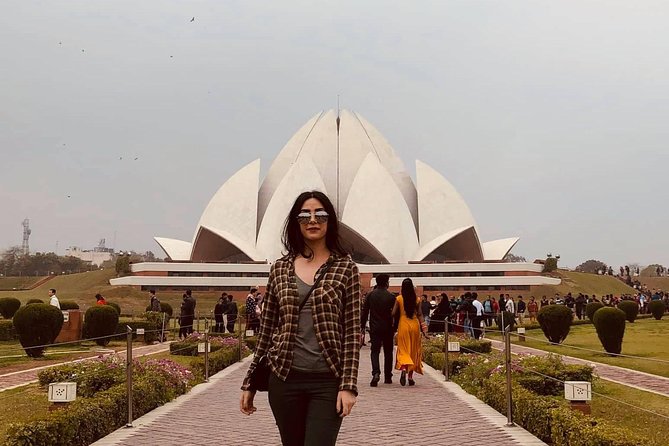
Then the mood shifts. The Lotus Temple is officially the Bahai House of Worship in Delhi, known for its flowerlike shape. It’s one of those places that feels open even when you’re around lots of people, and CNN reported it was the most visited building in Delhi as well as in the world in 2001.
You get about an hour here. For most visitors, this is the part of the day where you can breathe, take photos, and enjoy an architectural experience that doesn’t require museum-time to appreciate.
Admission is free, which makes the Lotus Temple one of the easiest “value wins” in the itinerary. If you like mixing big-ticket monuments with calm, modern iconic sites, this stop is a good balance.
Qutub Minar’s monument cluster and Birla Mandir’s garden-sprawl
The next heritage block is Qutub Minar, a site with several historic monuments including the Qutub Minar, Quwwat-ul-Islam Mosque, the Iron Pillar of Delhi, and Smith’s Folly.
Expect about an hour. You’ll see more than one structure, but this is still a highlight-and-move day, so focus on the main pieces rather than trying to read every inscription.
One more ticket note: Qutub Minar admission isn’t included. If you’re planning the extra cost anyway, this stop is worth it because the cluster nature lets you see multiple artifacts of the same historic zone.
Then you wrap with Birla Mandir Temple (Lakshmi Narayan). This stop is shorter, around 30 minutes, but it comes with a lot of character. It was the first large Hindu temple built in Delhi, inaugurated by Mahatma Gandhi. The grounds are spread over 7.5 acres, with shrines, fountains, and a large garden containing Hindu and nationalistic sculptures.
Admission is free, and the grounds feel like a “rest stop” after the densest monument areas. If you’re trying to pace yourself, this is where you can slow down just enough to feel you finished the day on your own terms.
Price and logistics: what $30 really buys you
At $30 per person, the tour price is best seen as paying for the heavy lifting: a private air-conditioned vehicle, driver expenses, and transfers. The package also includes taxes, parking, inter-state taxes, tolls, and handling charges—so you’re not constantly surprised by add-ons during the drive.
What’s not included is also clear. Any personal expenses, driver tips, optional tours, and meals are on you. Also, multiple entrances aren’t included: Red Fort, Humayun’s Tomb, and Qutub Minar (and those can shape your total cost for the day).
Here’s the practical value equation:
- If you’re okay buying tickets at the paid stops, the rest of the day becomes excellent value because several major sights are free (Jama Masjid, Raj Ghat, India Gate, Lotus Temple, Birla Mandir).
- If you hate ticketing or prefer everything fully inclusive, you might feel the paid entrances more than you’d expect.
For most people, though, the structure makes sense: you’re paying to move efficiently and cover major highlights without the time drain of arranging transport between Old and New Delhi.
Your driver’s impact: punctual, professional, and flexible
This is where the reviews point clearly. A standout theme is Sumit—mentioned as punctual and professional, with serious, careful driving. One guest wrote that Sumit was punctual and that it was a pleasure to travel with him, recommending him broadly.
Another common theme is flexibility. People appreciated that the route could adapt to personal wishes and time limits. One solo female traveler noted Sumit as especially helpful and flexible, including adding places not on their original plan, like a Lotus statue.
There’s also a “short-notice and airport start” advantage. Someone booked close to arrival and had the tour start from the airport with Sumit on time waiting, which is exactly what you want when you land and immediately need a workable sightseeing plan.
If you’re the type who likes a bit of guidance but also wants freedom, this style of private car tour fits well.
Timing tips: how to make the day feel less rushed
Start time is 8:00 am, and the schedule is approximate. Traffic can shift the exact order and timing, but the overall flow is built to keep the best-known highlights covered in a single day.
A few planning moves will make this feel smoother:
- Wear comfortable shoes. You’ll be moving between major monument areas quickly.
- Expect a lot of “short focus moments.” Several stops are 20–60 minutes, so it’s more highlight mode than long wandering.
- Dress appropriately for all weather conditions, since the tour operates in all weather.
The tour also includes mobile ticketing and is described as near public transportation. That usually means you’re not stuck in a remote area if you need to adjust plans, but the car-based structure is still the core convenience.
Who this Delhi city tour suits best
This experience is ideal if you want:
- A private Delhi route with no group pace and less hassle between neighborhoods
- A full day that balances Old Delhi and New Delhi
- Strong highlight coverage without needing a complex itinerary
It’s also a good fit for solo travelers who value comfort and clear logistics, especially when they want a driver they can rely on.
You might think twice if you:
- Want a slow, unstructured day with long stays per monument
- Are trying to avoid any extra spending for attractions, since key sites need separate ticket costs
Should you book this Delhi Heritage and Cultural Gateways tour?
I’d book it if your priority is maximum Delhi highlights in one day with minimal stress. The private car setup, hotel transfers, and mix of major sights make it a practical way to see a lot without turning the day into transportation math.
I’d hesitate only if you hate paid admissions or want more time inside each site. In that case, you’d probably prefer a smaller subset of monuments or a slower tour format.
If you’re trying to make Delhi work in limited time, this is a solid, straightforward way to do it—forts, mosques, memorials, major tomb architecture, and iconic modern worship spaces, all linked by a car and a plan.
FAQ
What time does the tour start?
The start time is 8:00 am.
How long is the Delhi city tour?
The duration is about 9 hours (approx.), and the exact timing can change based on the time of day and traffic.
Is this a private tour?
Yes. It’s a private tour/activity, and only your group will participate.
Do I get hotel pickup and transfers?
Yes. Hotel transfers are included.
Which major attractions are free, and which are not included for admission?
Admission is free for Jama Masjid, Raj Ghat, India Gate, Lotus Temple, and Birla Mandir. Admission is not included for Red Fort, Humayun’s Tomb, and Qutub Minar.
Is the vehicle air-conditioned?
Yes. The tour uses an air-conditioned vehicle with a chauffeur-driven setup.
What’s included in the tour price?
The tour includes taxes, parking fees, inter-state taxes, toll taxes, driver expenses, and handling charges. Personal expenses, driver tips, optional tours, and meals are not included.