REVIEW · NEW DELHI
3-hour Old Delhi Heritage Walking tour with Rickshaw Ride
Book on Viator →Operated by Go City Adventures · Bookable on Viator
Old Delhi hits your senses fast. This 3- to 4-hour heritage walk turns chaos into a guided route through Jama Masjid, street bazaars, and Sikh history, with rickshaws and snacks to keep you moving.
I especially like the mix of big landmarks and everyday lanes, so you see both the monuments and the market life right around them. I also like the practical feel: shoe rules, short stops, and enough stops to cover a lot without feeling like a sprint.
One thing to consider: timing can get tight in crowded areas, and some stops can feel shop-heavy depending on the guide.
In This Review
- Key things I’d note before you go
- Price and what you actually get for $7.92
- Meeting at Connaught Place: starting point and practical prep
- Jama Masjid: Mughal courtyards and how the guide makes it readable
- Dariba Kalan and Kinari Bazaar: two market lanes that teach you how people shop
- Naughara: painted havelis and a quick photo pause
- Jain temple stop: serene carvings and why it’s worth the rules
- A quick pass by Paranthey Wali Gali: the classic stuffed-bread lane
- Gurudwara Sis Ganj Sahib: langar life and community cooking you can watch
- Khari Baoli spice market: cycle-rickshaw ride and big sensory payoff
- Transportation mix: why metro and rickshaws make the tour feel doable
- The most praised parts: what keeps people coming back
- Where this tour can disappoint—and how you protect your time
- Shopping pressure
- Missing or shortened food stops
- Jain temple closure or a tighter pace
- Who this tour fits best
- Should you book this Old Delhi heritage walking tour?
- FAQ
- FAQ
- How long is the Old Delhi heritage walking tour with rickshaw ride?
- Is pickup and drop-off included?
- Is the Jama Masjid entrance fee included?
- What transport is included?
- What food and snacks should I expect?
- Are there rules for clothing and shoes at places of worship?
Key things I’d note before you go

- You get a structure for Old Delhi: major religious sites plus classic lanes like Paranthey Wali Gali
- A rickshaw ride is built in: plus a cycle-rickshaw moment in the spice market area
- Shoe and clothing rules matter: knees and shoulders covered; shoes off at worship spaces
- Jama Masjid has a separate entrance fee: plan for ₹450 per person
- The spice market is truly sensory: plan for strong smells and dense crowds at Khari Baoli
- Tour length is short: you should expect a fast, packed route across key highlights
Price and what you actually get for $7.92
At about $7.92 per person, this is priced like a value tour—and it mostly delivers on that promise. You’re paying for three things that are hard to piece together on your own in Old Delhi: an English-speaking guide, a guided route through multiple major sites, and transport help (including a metro/subway ticket and rickshaw time).
What’s not fully included is the Jama Masjid entrance fee (₹450 per person). That extra cost is common for landmark temples/mosques with ticketed entry, so I’d mentally budget for it rather than treat it as a surprise. Also note that gratuities are recommended, so if you’re thinking ultra-budget, it helps to know that guides earn income partly through tips.
In short: this is a good deal if you want a guided sampler of Old Delhi in just a few hours. If you want slow wandering or lots of downtime, you may feel rushed.
You can also read our reviews of more walking tours in New Delhi



Meeting at Connaught Place: starting point and practical prep
The tour starts and ends back near United Coffee House in Connaught Place. That matters because Connaught Place is a clear reference point in a city where meeting details can otherwise get messy.
Old Delhi is walk-heavy and religious sites are involved, so pack like a realist:
- Wear shoes that are easy to remove and put back on quickly.
- Plan for knee and shoulder coverage at places of worship.
- Bring something to cover your face if you’re sensitive. One useful tip: the Khari Baoli area can be extremely crowded and the spice smell can be intense.
Comfort-wise, the tour expects moderate physical fitness. You’ll do steady walking plus some quick transitions between areas. With a group size capped at 50, you usually won’t feel like you’re in a stampede—but the lanes can still feel tight.
Jama Masjid: Mughal courtyards and how the guide makes it readable
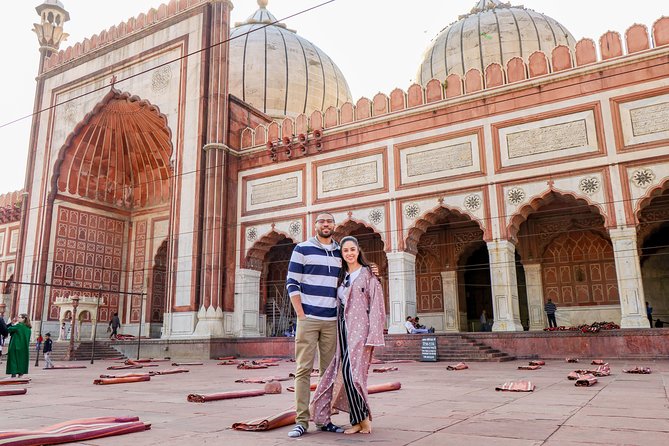
Your first major stop is Jama Masjid, one of India’s largest mosques. You’ll spend about 45 minutes there. Admission is not included, and you should expect the ₹450 ticket to come up once you arrive.
What makes this stop work on a short tour is that it’s not just photos and moving on. A good guide will explain the big Mughal-era story tied to Shah Jahan and help you understand what you’re actually seeing in the courtyards and domes. If you’re new to Old Delhi, this context is a big deal. Without it, the place can feel like sheer scale. With it, it becomes a map of meaning.
Downside: you need to treat this as a real worship space. That means quiet, patience, and following shoe rules. Also, it can be crowded and you may feel time pressure on a packed day—so keep your jacket/phone/keepsakes sorted before you go in.
Dariba Kalan and Kinari Bazaar: two market lanes that teach you how people shop
After Jama Masjid, you move into Dariba Kalan, described as a jewellers’ lane. Even with only about 10 minutes here, it’s a useful palette cleanser. The shops line up in a way that shows how trade clusters in Old Delhi—craft stores, ornament displays, and old façades all in one compressed area.
Then comes Kinari Bazaar, a colorful wedding and trousseau market. Think laces, borders, sequins, and decorations—things you may never notice in a normal sightseeing day. Here’s the real value: you learn that “market” isn’t just retail. It’s part of a cultural system for weddings and celebrations, and the products tell that story instantly.
If you’re sensitive to shopping pressure, you’ll want to stay focused on the walking and the viewing here rather than getting pulled into sales chatter. Some guides keep it simple and others can steer you toward purchases. You can still enjoy the atmosphere without buying anything—just keep an eye on how your guide is pacing the shop time.
Naughara: painted havelis and a quick photo pause

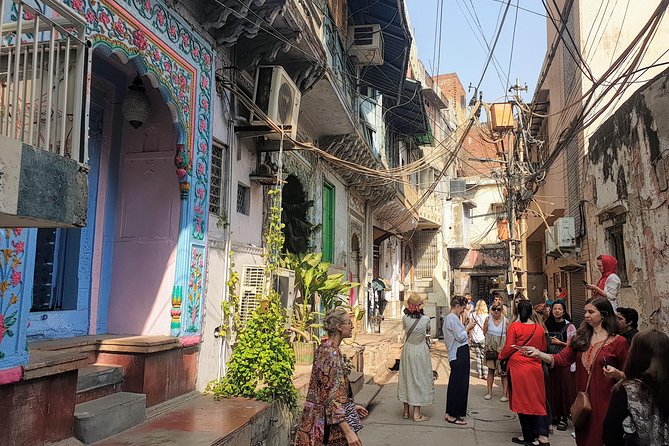
Next is a quieter stop around Naughara – Row Of Nine Houses, a cul-de-sac with beautifully painted havelis. This is about 20 minutes and it’s one of the best “rest your feet” moments on the route.
What you gain here is a contrast. After loud bazaars, you get architecture and a calmer street scene. Your guide can point out Jain merchant history and architectural details, which is a helpful way to see that Old Delhi isn’t only Islamic and Sikh landmarks. It’s multiple communities layered in the same neighborhoods.
It’s short, but it gives you something to anchor your memory. When you look back at photos later, this is often the section that feels most distinct.
You can also read our reviews of more historical tours in New Delhi





Jain temple stop: serene carvings and why it’s worth the rules
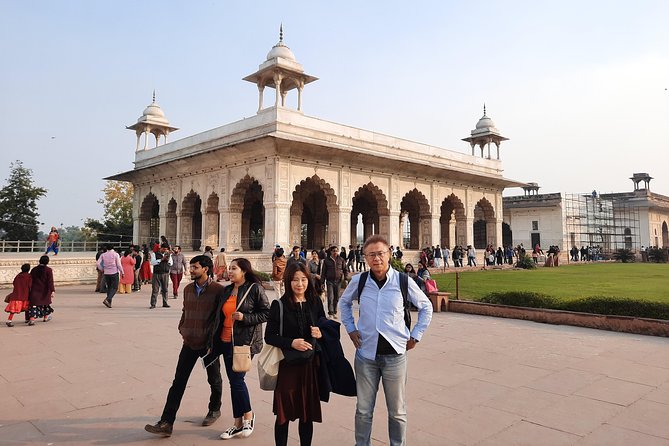
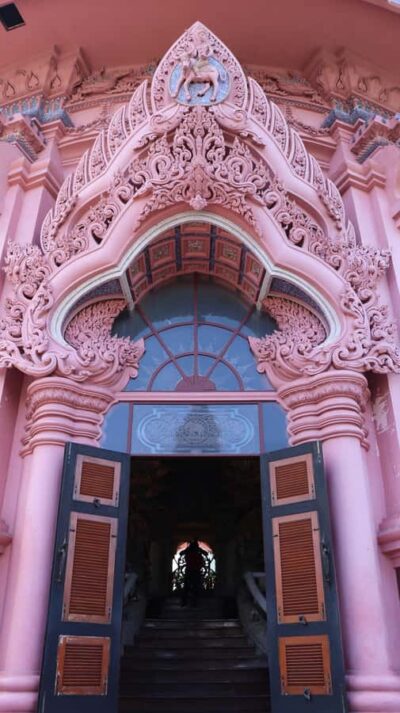
The Jain Temple stop is around 15 minutes and is free for entry. This is a chance to slow down slightly and pay attention to details—intricate carvings, painted ceilings, and the calm rituals that reflect Jain principles of non-violence and simplicity.
In practice, this is also a clothing-and-behavior test. Expect more reminders about covering yourself and removing shoes. In crowded areas, people can brush past you, so keep your space calm and your movements slow.
One note: if the Jain temple is unexpectedly closed on your day, you’ll miss that specific contrast. It didn’t happen for every tour, but it can. Still, the surrounding architecture and nearby lane feel should keep the day interesting.
A quick pass by Paranthey Wali Gali: the classic stuffed-bread lane
You’ll also stroll past Paranthey Wali Gali, known for sizzling stuffed breads. You may not get a long sit-down here, but it adds a recognizable Old Delhi flavor point.
This is exactly the kind of stop I like on short tours: it’s not just a sight, it’s a clue about how Old Delhi feeds itself. Even if you don’t order there, knowing the lane’s reputation helps you understand why the streets are full of snack smells and steam at certain times.
Gurudwara Sis Ganj Sahib: langar life and community cooking you can watch

One of the most meaningful stops is Gurudwara Sis Ganj Sahib, with about 30 minutes. It’s free to enter.
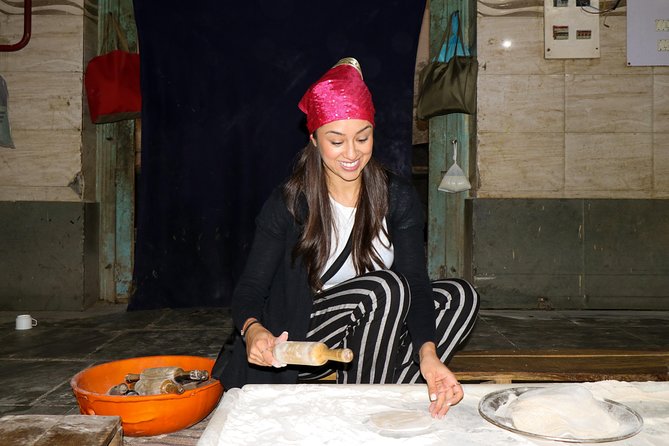
This stop gets attention for a reason: you’re not just seeing architecture. You’ll explore the langar, the community kitchen, and you’ll likely see volunteers cooking and serving. That’s the practical side of Sikh faith—food as care, not just ceremony.
In a short tour, this is also one of the best “pause” moments. It can feel quieter than the bazaar lanes, and it helps you connect the dots between religion, daily life, and how crowds are managed respectfully.
If you’re into food culture, this is where your understanding will deepen most.
Khari Baoli spice market: cycle-rickshaw ride and big sensory payoff
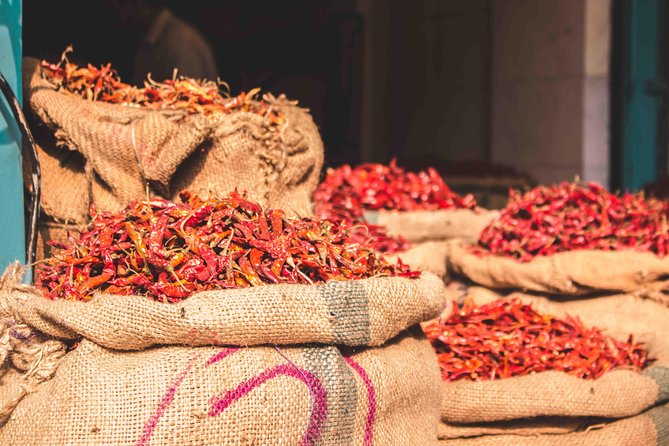
The final major activity is Khari Baoli, where you’ll ride a cycle rickshaw into Asia’s largest spice market. Then you’ll walk through the fragrant lanes for about 30 minutes.
This portion is the sensory highlight of the day: smells are intense, and the crowd density can feel high. Your guide should connect what you’re seeing with how spices get used in cooking and also how Ayurveda views spices—though you’ll absorb that best if you ask questions instead of passively listening.
This stop also gives you something physical to remember. The rickshaw ride through the market streets can feel like moving through a living machine: narrow lanes, stacked goods, voices calling out, and trading happening in real time.
Small caution: if strong smells bother you, consider wearing a face mask. It’s not a luxury item here—it’s comfort.
Transportation mix: why metro and rickshaws make the tour feel doable
A normal first-time Old Delhi mistake is spending your whole day stuck in traffic or walking too far between far-apart spots. This tour handles that by mixing transport:
- Metro/subway ticket included
- Rickshaw ride included
- Cycle-rickshaw ride in Khari Baoli
- Pickup/drop-off offered (and upgrades may exist depending on where you start)
Even if you’ve never used Delhi transit before, this structure helps you learn how the city moves without turning your day into a logistics headache. Several guides are noted for guiding people between modes smoothly, and you’ll feel safer knowing there’s a plan for getting you back.
The most praised parts: what keeps people coming back
The tour’s reputation is strong, and the reasons repeat:
- The rickshaw experience is consistently described as fun, especially through chaotic lanes where a solo walker would feel lost.
- Street food moments like jalebi, samosa, and chai show up as memorable highlights when the tour includes the snack stop as described.
- Langar at the Gurudwara is often the emotional peak, because you’re witnessing community service, not just looking at a building.
- Feeling safe is another major theme. Old Delhi is busy, and good guidance makes it feel manageable.
- Guides like Deepak, Neha, Isha, Nikhil, Suneel, Kanika, and Abby are named in positive accounts, often for clear English and steady care.
Where this tour can disappoint—and how you protect your time
There are a few issues worth taking seriously before you book:
Shopping pressure
Some people felt they were steered toward shops, including carpet or rug stops. That’s frustrating on a short tour because time is limited. While a market stop can be part of the point, you should protect your schedule.
What I suggest: have a simple mindset going in. If you’re not shopping, keep your focus on viewing. If your guide starts turning the schedule into a sales pitch, ask calmly how much time is left for the next sight. If you feel pushed, you can still choose to step back.
Missing or shortened food stops
The tour overview says snacks are included and street food is part of the idea. Some experiences reported snacks not happening as expected. If food is part of your motivation, gently confirm when the snack stop is coming, and if it’s not happening, ask for a quick chance to eat something locally.
Jain temple closure or a tighter pace
A closed Jain temple on some days can change the feel. And because Old Delhi is fast-moving, the pace can feel packed.
If you need a slower rhythm, you might prefer a longer private walk or a tour focused only on one zone.
Who this tour fits best
This is a great fit if:
- You’re short on time but want a true Old Delhi sampler.
- You’re a first-timer who needs help moving through crowded religious and market areas.
- You like street-level culture: snack lanes, spice trading, wedding bazaars, and places where people actually gather.
- You want an organized route that reduces the risk of getting turned around.
It might be less ideal if:
- You dislike shopping stops.
- You need a lot of quiet time or long sitting breaks.
- You’re uncomfortable with crowded lanes and strong spice smells.
Should you book this Old Delhi heritage walking tour?
Yes, with a few smart expectations.
If you want a compact, high-impact morning/afternoon that hits Jama Masjid, Gurudwara Sis Ganj Sahib, and Khari Baoli, this is one of the better ways to do it without spending your whole day figuring things out. The value is strong, especially because transport help and key experiences (rickshaw ride, langar viewing, spice-market entry by rickshaw) are built into the route.
But go in prepared. Wear coverage for worship spaces, plan for shoes-off moments, and expect a busy schedule. If shopping pressure pops up, stay polite but firm about your priorities. With that mindset, this tour can give you an Old Delhi day that feels like you understand the place, not just that you walked through it.
FAQ
FAQ
How long is the Old Delhi heritage walking tour with rickshaw ride?
It runs about 3 to 4 hours, depending on the flow of the walk and timing between stops.
Is pickup and drop-off included?
Hotel/accommodation/airport and railway station pickup & drop-off are listed as included, and upgrades may be available depending on where you’re staying in Delhi.
Is the Jama Masjid entrance fee included?
No. The Jama Masjid entrance fee is not included and is listed as ₹450 per person.
What transport is included?
A metro/subway ticket is included, plus rickshaw time (including a cycle rickshaw ride into Khari Baoli).
What food and snacks should I expect?
The tour description says you’ll taste street food dishes and that snacks are included.
Are there rules for clothing and shoes at places of worship?
Yes. Knees and shoulders must be covered at places of worship, and you’ll need to remove shoes and slippers. They will be safely stored for you during the visit.