REVIEW · ROME
Private Tour – Ancient Ostia
Book on Viator →Operated by Rome Guides · Bookable on Viator
Ostia Antica is Rome’s underused time machine. In about three hours at Parco Archeologico di Ostia Antica, you get an easy break from the city and see an ancient Roman harbour through the key places—baths, theatre, homes, religious sites, and a compact museum—explained by a private guide.
I like that the stops are focused, not frantic: you’ll see the Thermal bath area plus the theatre and residential zones in a way that helps you understand daily life, not just point at stones.
One thing to plan for: it involves moderate walking, and it isn’t recommended if you have walking disabilities.
In This Review
- Key things to know before you go
- Why Ostia Antica feels different from the usual Rome ruins
- Meeting at Ostia Antica and planning your 3:30 pm timing
- Parco Archeologico di Ostia Antica: what you’ll actually see in 3 hours
- Thermal bath area
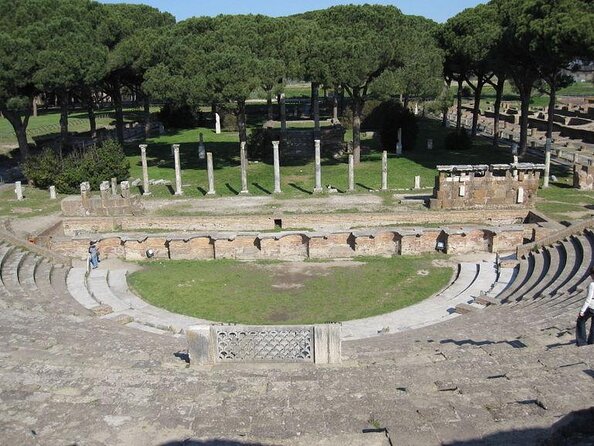
- Theatre
- Houses and villas
- Religious places
- Museum stop: small time investment, strong payoff
- The museum part: why the sculptures and sarcophagi matter
- How the private guide turns ruins into real city life
- What you can do at the end: café time inside the site
- Price and value: is $156.19 per person fair for Ostia Antica?
- Who this private Ancient Ostia tour is best for
- Should you book this Private Tour – Ancient Ostia?
- FAQ
- How long is the Ancient Ostia private tour?
- What does the tour include?
- Is the admission ticket included for the archaeological site?
- Where do I meet, and where does the tour end?
- What time does the tour start?
- Is this only for my group?
- Is the tour suitable for people with mobility issues?
Key things to know before you go
- 3 hours, private, and in English so you can move at your pace and ask questions.
- Ancient harbour city layout—baths, theatre, houses/villas, and religious spaces all within one archaeological park.
- Museum included with a small but important collection of ancient sculptures and sarcophagi.
- Time-friendly start (3:30 pm) for a later-afternoon Roman break.
- Mosaics and building details are part of what people come away talking about, with guides pointing out what matters.
- No private transport and the tour ends inside the site near the café, so you’ll handle your own getting there.
Why Ostia Antica feels different from the usual Rome ruins
Rome gets all the spotlight. That’s exactly why Ostia Antica works so well. You’re not chasing the same big-name sights everyone crowds into. Instead, you’re wandering a real port city—one that helped feed Rome, trade with it, and run its daily machinery.
What I love about this experience is how the place rewards attention. With a good guide, you start noticing city planning and everyday infrastructure, not just dramatic architecture. In particular, people highlighted the way mosaics look here and how the ruins connect to real life—shops, homes, movement of goods, and the practical side of Roman living. That makes the site feel less like a backdrop and more like a functioning town.
You also get an easy win: the whole circuit fits in about 3 hours. That’s huge if you’re trying to see more than one side of Rome without turning your day into a marathon.
You can also read our reviews of more private tours in Rome

Meeting at Ostia Antica and planning your 3:30 pm timing
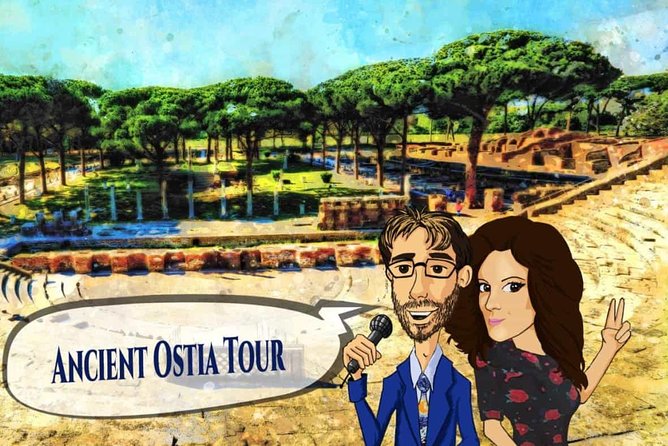
Your meeting point is Ostia Antica, at Viale dei Romagnoli, 717, 00119 Roma RM. The start time is 3:30 pm, and the tour ends inside the archaeological site in front of the Café degli Scavi (still at the same Viale dei Romagnoli address).
That timing matters. A late start often means you can avoid the harshest sun and still finish with daylight (seasonal weather changes that, but the schedule is built for a smoother afternoon). It’s also a nice match for people who want to keep their mornings light—maybe you’ve been doing central Rome already and you just want one focused “Roman life” stop.
Practical heads-up: this tour includes admission and guiding, but it does not include private transportation or hotel pickup/drop-off. Public transportation is described as nearby, so plan your route like you would for any independent day trip—just with a guide waiting for you at the meeting point.
Parco Archeologico di Ostia Antica: what you’ll actually see in 3 hours
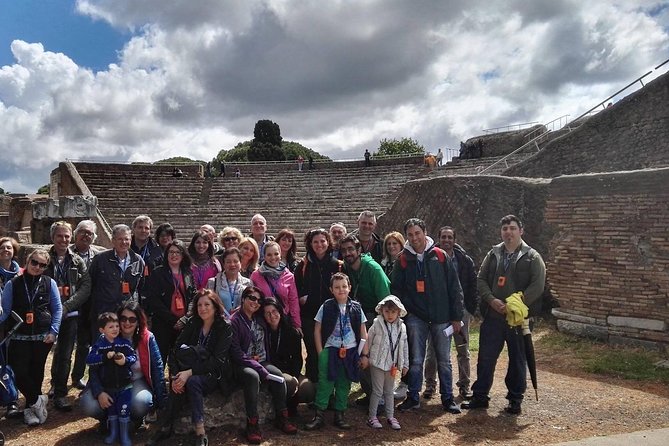
The core of the tour is a walk through Parco Archeologico di Ostia Antica, and the route covers several major areas so you get a full picture rather than a single highlight.
Thermal bath area
You’ll start by visiting the Thermal bath. This is one of the best ways to understand Roman daily rhythm because baths weren’t just for hygiene. They were social space and routine space—somewhere people met, relaxed, and kept moving through their day.
With a guide, the baths stop being “cool ruins” and start becoming a system. You can learn what parts were used, how the space was laid out, and why this kind of infrastructure mattered in a working city.
Theatre
Next up is the theatre. In many Roman sites, you can see the shell and move on. Here, it’s more useful to have someone explain how entertainment fits with the city’s role. Ostia wasn’t remote—people lived here, worked here, and came here to trade and do business—so places for public gatherings matter.
A guide’s job is to help you see how this theatre relates to the rest of the town’s activity, so you understand it as a piece of civic life.

Houses and villas
Then you’ll move through houses and villas. This is where “Roman city” becomes “Roman neighbourhood.” The point is not just to appreciate what’s standing, but to understand the differences in space and how daily routines would have worked inside.
When a guide points out building layout and construction choices, you start noticing that a city isn’t random. It’s organized. That’s one of the biggest value-adds of taking the private route instead of wandering without context.
Religious places
The tour also covers religious places. Even if you don’t get into temple details, these stops matter because they show what mattered to the people living there. In a harbour city with constant movement of goods and visitors, religion and ritual helped anchor identity.
If you enjoy the human side of ruins—beliefs, community space, everyday priorities—this part helps tie the city together.
Museum stop: small time investment, strong payoff
The tour includes a museum visit with a small but extremely important collection of ancient sculptures and sarcophagi. This is smart for a short tour: you’re not spending your whole afternoon indoors, but you still get artifacts that help explain what you’re seeing outside.
I like this mix because it helps your brain connect the outdoor architecture to real objects and the people behind them.
The museum part: why the sculptures and sarcophagi matter
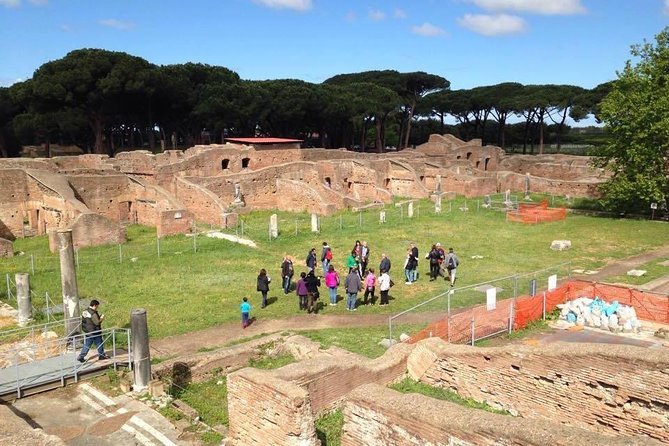
In a place like Ostia Antica, it’s easy to get tunnel vision. You see walls, floors, and arches, and you might miss the bigger point: people lived here, worked here, celebrated here, and—yes—died here too.
That’s where the museum helps. The collection includes ancient sculptures and sarcophagi, which gives you a deeper sense of how residents and visitors expressed identity and memory. Even in a compact format, it makes the outdoor ruins feel more personal.
A good guide will use the museum to clarify what you just walked through. That pacing is part of the value: you don’t finish feeling like you saw “a bunch of stuff.” You finish feeling like you understood why it belonged together.
How the private guide turns ruins into real city life
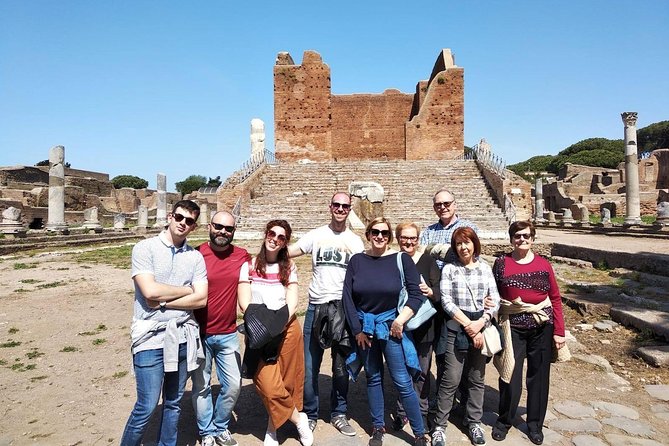
Here’s the practical truth: without interpretation, ruins can feel like a highlight reel. With the right guide, you understand the connections.
Participant feedback put a strong spotlight on guide style. One guide named Vincenzo was described as warm and friendly, with stories that helped people picture what life might have looked like. Another guide named Roberto was praised for being on time, enthusiastic, and for painting a believable picture of Roman life—commercial spaces, retail activity, political sections, and the everyday roles that made the city work (traders, bakers, soldiers, shopkeepers, bars, and restaurateurs).
You’ll get the benefit of that kind of storytelling in a private format. You can ask follow-up questions. You can linger where your curiosity pulls you. And you can skip what you don’t care about without feeling guilty, which is harder in group settings.
The tour also explicitly emphasizes a guided explanation of the complex ruins, which is exactly what you want when the site is large and the details matter.
What you can do at the end: café time inside the site
The tour ends inside the archaeological site, in front of the Café degli Scavi. Coffee or tea aren’t included, but the café is there if you want a break without heading back out first.
This is a small detail with real value. After a focused 3-hour walk, you want an easy transition—water, a snack, or just a chance to sit and process what you saw.
Price and value: is $156.19 per person fair for Ostia Antica?
At $156.19 per person for roughly 3 hours, the price sits in the middle-to-higher range for Rome. The question is whether you’re paying for logistics or for interpretation—and here, you’re paying primarily for a guided, private experience with admission included.
What justifies the cost:
- Admission ticket included for the archaeological park.
- Professional guide and local guide listed as part of the experience, plus a private guided format.
- A route that covers multiple major zones (baths, theatre, houses/villas, religious areas, and museum) instead of leaving you to piece together the site on your own.
What you should know before you decide:
- Private transportation and pickup/drop-off aren’t included, so you’ll add your own cost to get to Ostia Antica.
- You’re paying for your time in a short, curated format. If you’re the type who likes long, independent wandering, you may feel boxed in. If you like clarity and context, you’re in the right place.
Also, this tour tends to get booked early—on average 105 days in advance. That’s a sign of popularity and limited availability, so if your dates are fixed, don’t wait until the last minute.
If your schedule is flexible, there’s free cancellation up to 24 hours before the experience start time (full refund). That lowers the risk if you’re comparing options.
Who this private Ancient Ostia tour is best for
This is a smart fit if you want a Roman city snapshot without spending an entire day. It works especially well for people who:
- enjoy ruins but want a clear guide-led path
- like mosaics and city-planning details more than just big monuments
- prefer a short outing that fits alongside other Roman priorities
- want the flexibility of a private group and an English-speaking guide
It may be less suitable if you:
- have mobility limits, since it requires moderate physical fitness
- want pickup or private transport (you’ll need to handle getting there)
- are hoping for a very slow, stop-everywhere “wandering” pace
Should you book this Private Tour – Ancient Ostia?
I’d book it if you’re craving Roman everyday life—baths, theatre, neighbourhood spaces, and the small museum that adds meaning. The private format plus included admission makes it a clean value proposition, and the 3:30 pm start gives you a tidy schedule break from central Rome.
Skip it if you want a DIY stroll with no interpretation, or if mobility is an issue. In that case, you might enjoy a different setup with fewer walking demands.
For most people, though, this is a high-impact choice: Ostia Antica in a few hours, explained in a way that helps you connect mosaics, infrastructure, and daily life into one believable city story.
FAQ
How long is the Ancient Ostia private tour?
The tour runs for about 3 hours.
What does the tour include?
It includes a professional guide/local guide/private guide experience, plus admission tickets.
Is the admission ticket included for the archaeological site?
Yes, admission tickets are included.
Where do I meet, and where does the tour end?
You meet at Ostia Antica, Viale dei Romagnoli, 717, 00119 Roma RM, Italy. The tour ends inside the archaeological site in front of the Café degli Scavi at the same address.
What time does the tour start?
The start time is 3:30 pm.
Is this only for my group?
Yes. It’s a private tour/activity, so only your group participates.
Is the tour suitable for people with mobility issues?
The tour requires a moderate physical fitness level and is not recommended for travelers with walking disabilities.
If you’d like, tell me your travel dates and what else you’re doing in Rome that day, and I can help you decide whether a 3:30 pm Ostia Antica slot fits your plan.