REVIEW · ATHENS
From Athens: Ancient Sparta and Mystras Private Day Trip
Book on GetYourGuide →Operated by Olive Sea_Travel · Bookable on GetYourGuide
Two Greece eras in one packed day. This private trip takes you from Athens to Laconia, where ancient Sparta history meets Byzantine-era Mystras, plus a dramatic stop at the Corinth Canal and a ghost-city walk through Mystras.
I like how the day is built around contrasts: sunlit engineering at the canal, then serious stone history on the Peloponnese. One possible drawback to plan for: parts of Sparta and Mystras are self-guided, so if you want wall-to-wall narration in every site, you may feel the pacing is a bit light on guidance.
In This Review
- Key highlights you’ll actually feel on the day
- Ancient Sparta Meets Byzantine Mystras: What This Day Trip Really Offers
- Corinth Canal on the Way Out: A 19th-Century Engineering Stop With Big Views
- Mystras: The Ghost City Where Byzantine Life Still Smolders
- The St. Demetrios detail you should look for
- Monasteries: not a dead museum
- What if you’re not a history person?
- Sparta: Leonidas’ Trail, Ruins With Meaning, and Self-Guided Reality
- Ancient citadel and the theater reveal
- Leonidas Monument and the Spartathlon clue
- Archaeological museum: helpful, but check your priorities
- The Olive and Olive Oil Museum Stop: Small Time, Local Payoff
- Driver, Language, and the Key Rule: Who Can Guide You Inside
- Price and Value: Is $566 Per Person Worth It for One Day?
- Who Should Book This Tour (and Who Might Want to Rethink It)
- Should You Book This Athens to Sparta and Mystras Day Trip?
- FAQ
- How long is the Sparta and Mystras day trip?
- What stops are included on the route from Athens?
- Is a licensed guide included?
- Are entrance fees included in the price?
- Does the driver accompany you inside the sites?
- Is the tour wheelchair accessible?
Key highlights you’ll actually feel on the day
- Mystras feels like a city frozen midlife, with churches, towers, palaces, and even ordinary houses from the Byzantine period
- Corinth Canal gives you an instant wow moment from the pedestrian bridge over a channel in operation since 1892
- Sparta’s Leonidas connections are easy to spot, from the Leonidas monument stop to the Spartathlon-related stadium marker
- Monasteries in Mystras may still be active, so you could get a human glimpse of how the site works today
- An optional licensed guide can turn self-guided ruins into a more interpretive experience
- The olive and olive oil museum is a practical, local-food-style stop that helps explain why the region matters beyond ancient battles
Ancient Sparta Meets Byzantine Mystras: What This Day Trip Really Offers
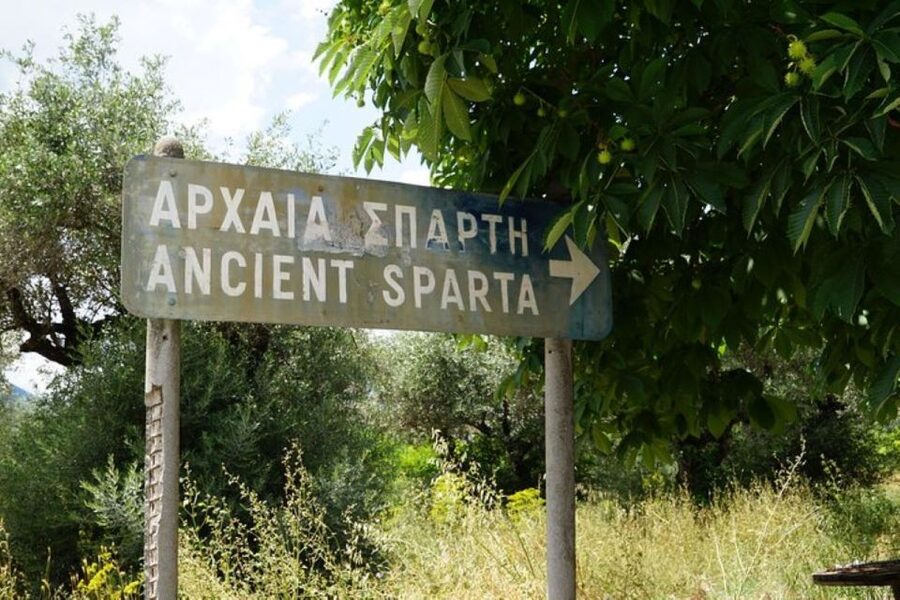
This is one of those Athens day trips that feels like two trips in one. You’re traveling west into Laconia, then bouncing between Ancient Greek military legend and medieval Byzantine survival—often within the same overall setting of stone walls, towers, and hilltop viewpoints.
The trip is private, with hotel pickup and drop-off and an airconditioned van. That matters on a long day like this: you’re not fighting buses, and the driver gets you in and out smoothly while you focus on the stops. It also means you can usually move at a sensible pace for photos, viewpoints, and walking.
The big theme is the time jump. Ancient Sparta is the myth-to-history story (kings, soldiers, Thermopylae). Mystras is the later story of Byzantine decline, Frankish influence, and faith living inside fortifications. If you’re the kind of traveler who likes places with layers—Greek, medieval, and lived-in—you’ll probably love this structure.
You can also read our reviews of more private tours in Athens

Corinth Canal on the Way Out: A 19th-Century Engineering Stop With Big Views
Your first major stop is the Corinth Canal area, usually a short visit designed for photos and a quick feel of the place. You’ll have a scenic drive along the way, passing Greek seaside villages and getting a look toward Salamis Island, tied to the historical naval battle between Athenians and Persians.
Then comes the canal itself. It’s been operating since 1892, and it divides the Peloponnese Peninsula from the rest of Greece while connecting the Saronic Gulf to the Corinthian Sea. That’s not just a trivia fact—seeing the canal from the pedestrian bridge makes the “why it matters” instantly believable. This is geography as engineering.
On some days, bungee jumping is even an option. You might not do it (and the tour doesn’t position this as an activity), but it helps you understand the canal as a real, active place—not just a viewpoint pull-off.
Practical tip: treat the canal as a quick recharge. Use it for photos, stretch your legs, and reset before the longer drives to Mystras and Sparta.
Mystras: The Ghost City Where Byzantine Life Still Smolders
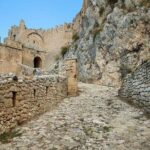
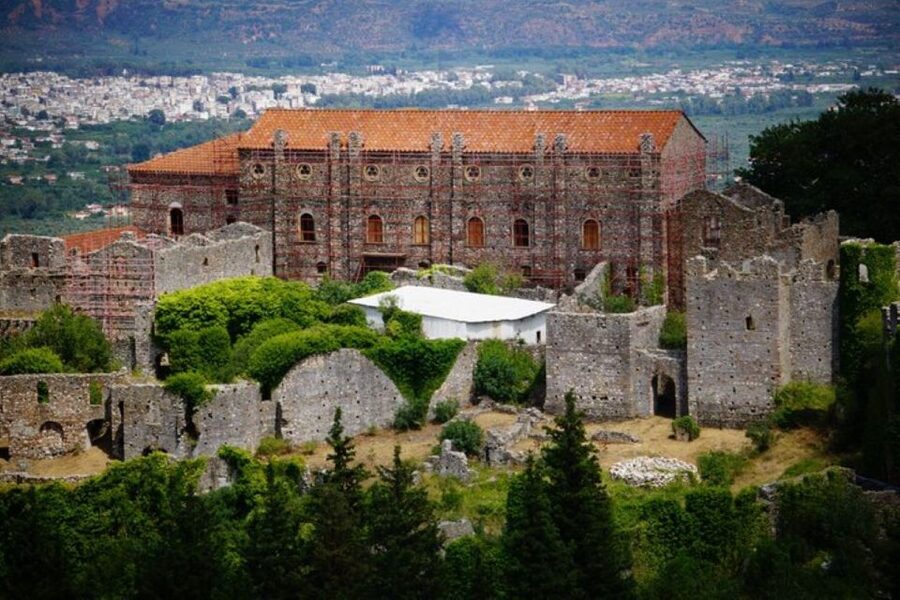
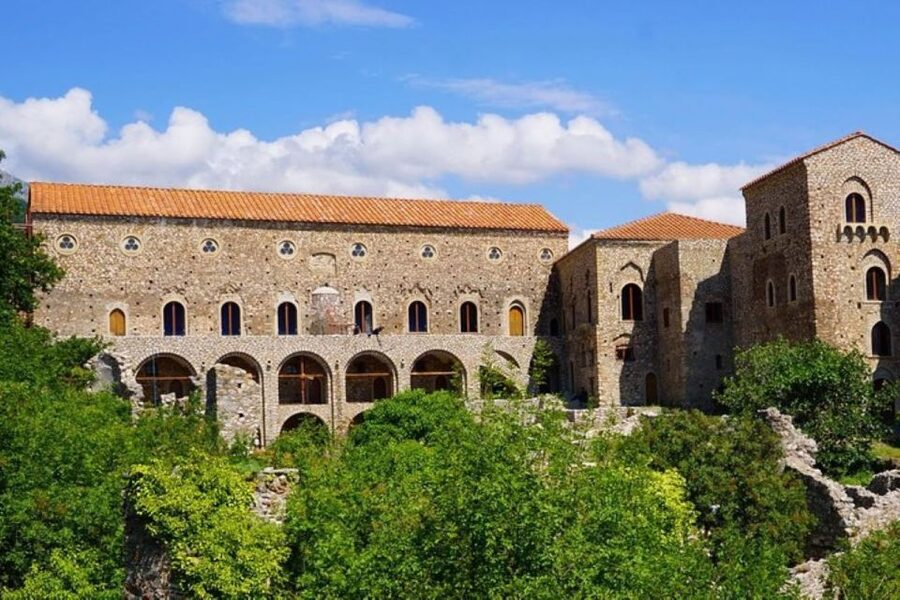
If you remember just one stop from this tour, make it Mystras. The site is often described as a ghost city, and that label fits—fortifications and hillside ruins look quiet from a distance. But up close, it’s not empty. You can see churches, towers, palaces, and even ordinary houses and larger mansions, mixing Byzantine elements with Frankish touches.
This is why Mystras works so well for a day trip. It isn’t only about famous monuments. It shows how a whole community lived on a fortified hill—upper areas for defense, then downhill spaces where palaces and royal courtyards sit.
You’ll start with a self-guided tour time window, then also get time specifically for the upper Mystras Castle area. Plan for walking and stairs. Even if you go slowly, you’ll want to keep stopping for views because the site rewards patience.
The St. Demetrios detail you should look for
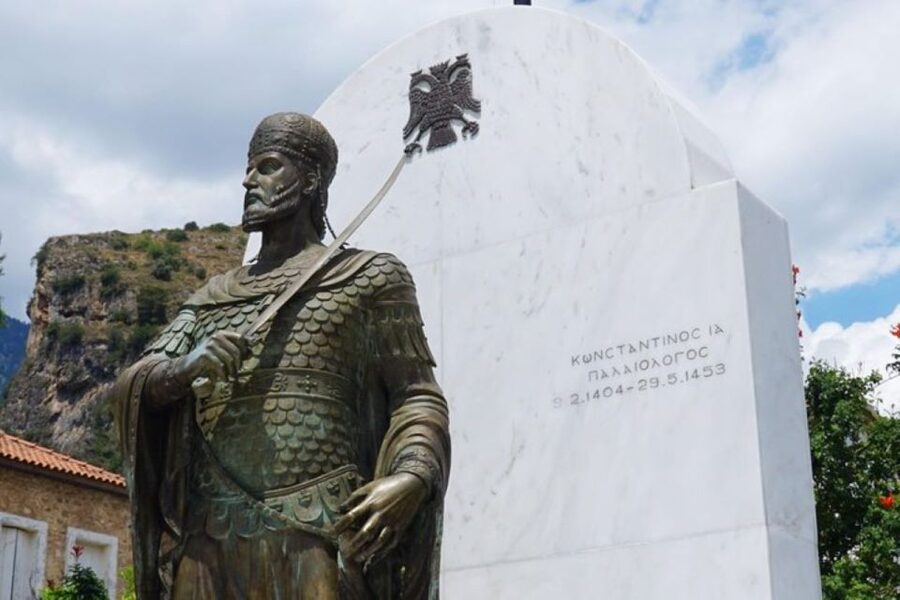
One standout moment is the chapel of St. Demetrios. There’s a surviving floor plaque that includes a symbol connected to Byzantium: a two-headed eagle. The tour’s description also notes that Konstantine Palaiologos knelt there before being crowned as the last Byzantine emperor.
Even if you don’t know the full story ahead of time, this is the kind of detail that makes the stones feel personal. That’s the value of Mystras: it’s history that still has “where it happened” moments.
Monasteries: not a dead museum
Another reason Mystras feels real is that some monasteries are still in use. The description suggests that monks may be glad to show you around their small society. That’s not the same as a formal guided tour, but it can add a human pace to the visit.
A few more Athens tours and experiences worth a look

What if you’re not a history person?
You can still enjoy Mystras even if Ancient Greece myths aren’t your main interest. The architecture and views do the job. Still, if you want a lot of explanation at every turn, you may want to consider adding a licensed guide (more on that later).
Sparta: Leonidas’ Trail, Ruins With Meaning, and Self-Guided Reality
After Mystras, you’ll head to Sparta, a place forever linked to the story of Leonidas and the 300 Spartans. The tour frames Sparta as Athens’ rival in the ancient world, and it’s hard to miss the logic: Sparta was built around a military society, with a different cosmology and values than the Athenian model of democracy.
You’ll also hear the broader background: Sparta’s earlier connections to the Mycenaean period and figures like Helen and Menelaus, then the later Spartan structure with two kings and aristocratic rule.
Ancient citadel and the theater reveal
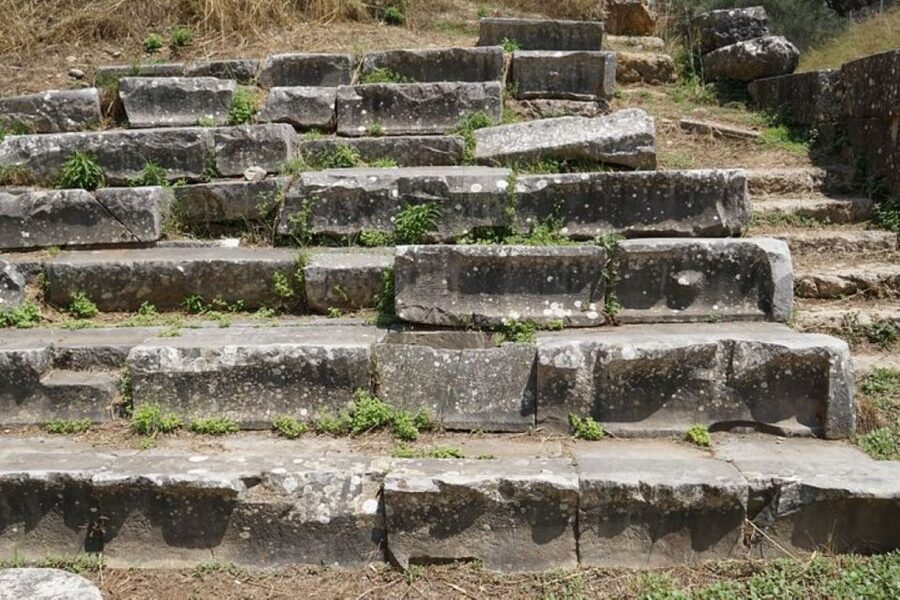
The first Sparta stop is the ancient citadel, with a visit that’s set up for gradual discovery. A theater ruin is described as showing itself little by little as you move around. That kind of “reveal” matters because it helps you read the site better without needing every wall labeled.
Leonidas Monument and the Spartathlon clue
Next is the Leonidas Monument stop. It’s brief—around ten minutes—but it connects you to the modern cultural echo of Spartan legend. The tour also mentions the stadium area where a Leonidas statue marks the ending point of the Spartathlon race, which runs from Athens to Sparta.
If you like travel details that make a place feel current, this is a good one. It turns Sparta from a distant textbook word into something people actively reference.
Archaeological museum: helpful, but check your priorities
The itinerary includes the archaeological museum of Sparta. Entrance fees aren’t included, so plan for that cost. If you want context for the ruins you’re seeing outside, this museum can be the bridge between “I saw stones” and “I understand what I saw.”
One important consideration: the Sparta portion is self-guided. If you’re expecting lots of interpretive signage or constant guidance, you might find the experience leaner than the Mystras stop. For that reason, this trip is strongest when you’re comfortable reading a site on your own or when you pair it with extra guide support.
The Olive and Olive Oil Museum Stop: Small Time, Local Payoff
One of the more practical parts of the day is the Museum of the Olive and Greek Olive Oil, included as a guided stop of about 30 minutes. You’re not just leaving with photos of ruins—you also leave with a sense of what Laconia’s production and daily life have revolved around.
This is also where the trip can surprise you. Ancient legends can make you think Sparta is all war and armor. The olive museum nudges you toward the slower story: farming, food traditions, and the work behind survival.
Do you need this stop? Not everyone does. But if you like local context that feels connected to how people live now, you’ll appreciate it. It’s also a good “sit down” pause during a long driving day.
One caution: the day runs on time. If you’re the type who hates being pushed by schedules, keep in mind there can be surprises with opening hours at attractions like this. If something matters deeply to you, you might want to confirm hours before the day.
Driver, Language, and the Key Rule: Who Can Guide You Inside
Here’s the setup that affects your experience more than most people realize: the driver is not licensed to accompany you into any site along the tour. That means you can’t assume you’ll get full inside-site commentary at every stop.
What you will get depends on how you approach the day:
- Much of Mystras and Sparta is built as self-guided walking time, so you’ll explore at your own pace.
- The tour includes a host or greeter in English, and the overall experience is run as a private trip with an English-speaking presence.
- For deeper interpretation inside sites, you can request a licensed guide (listed as an extra cost).
In real-world terms, the day often becomes a mix of: driver storytelling during the drive plus self-guided walking where you read signage and look carefully. Many visitors love this style because it keeps the pace flexible. Others want more guided explanation, especially at Sparta, where ruins can feel minimalist without much context.
If you’re traveling with a history nerd friend, or you simply prefer a full narrative at each site, asking for the licensed guide can be a smart spend.
Price and Value: Is $566 Per Person Worth It for One Day?
At $566 per person for a private day trip, you’re paying mainly for three things:
- Private transportation from Athens and back, with pickup/drop-off
- Time efficiency: you cover Corinth Canal, Mystras, and Sparta in one day
- The experience design that pairs two major “must-see” regions that are hard to manage alone in a single timeframe
Entrance fees are not included (listed as €34 per person), and there’s also the museum/guide situation noted above. Food is also not included, though you may stop for a meal around the Mystras area.
So the value question becomes simple: do you want the convenience of a single-day route, guided mainly by the drive plus self-guided site time? If yes, the price starts to make sense because you’re buying logistics. If you’d rather spend long stretches in each site with constant interpretation, you may want to add the licensed guide to stretch the day’s meaning.
In short: this isn’t a cheap sampler. It’s a focused “hit the big names” day, with Mystras as the emotional centerpiece.
Who Should Book This Tour (and Who Might Want to Rethink It)
This tour fits best if you:
- Love Ancient Greece and medieval Byzantine history enough to enjoy the shift between eras
- Like walking through fortified ruins and taking in viewpoints from higher ground
- Want an Athens day trip that uses private transport to compress distance
You might rethink it if you:
- Want a fully guided experience inside every site without self-guided time
- Prefer museum time over ruins time, because Sparta’s outside portion is self-led and the visit windows are short
- Are very sensitive to schedule pressure, since a long day means you’ll be moving between stops consistently
Also, if you’re expecting Sparta to feel as packed with monuments as Mystras feels, manage expectations. Sparta’s story is powerful, but the site visit is more minimalist by comparison.
Should You Book This Athens to Sparta and Mystras Day Trip?
I’d book this day trip if your goal is a one-day highlight route that mixes legendary Sparta with the real, physical atmosphere of Mystras. The reason is simple: the Mystras experience is the kind that stays with you, and the canal stop gives a clean “reset” moment between eras.
I’d think twice if you want lots of on-site guiding inside ruins, or if you dislike self-guided exploration. In that case, adding a licensed guide can help the day feel more complete, especially for Sparta.
If you match the style—drive storytelling plus self-paced stone-and-view walking—this is a strong private way to experience Laconia without the stress of planning and timing.
FAQ
How long is the Sparta and Mystras day trip?
The duration is 1 day.
What stops are included on the route from Athens?
You’ll go to the Corinth Canal for a photo stop, visit Mystras (including the castle area), stop at the Leonidas Monument in Sparta, and include the Museum of the Olive and Greek Olive Oil. You’ll also visit the archaeological museum of Sparta.
Is a licensed guide included?
A licensed guide is not included by default. It can be requested for an additional fee.
Are entrance fees included in the price?
No. Entrance fees are listed as €34 per person.
Does the driver accompany you inside the sites?
No. The driver is not licensed to accompany you into sites.
Is the tour wheelchair accessible?
Yes, the tour is listed as wheelchair accessible.