REVIEW · NARA
Nara: Bike Tour in Ancient Capital UNESCO World Heritage
Book on GetYourGuide →Operated by Heijo-Kyo Bike Tour · Bookable on GetYourGuide
Big gates, quiet roads, real ruins.
This 2-hour bike tour takes you through Nara’s UNESCO Heijo-kyo palace grounds at an easy pace, with a licensed guide named Kay keeping the story clear and the stops flowing. I love that it mixes photo-ready moments like Suzakumon Gate with calmer stretches where you can feel the atmosphere of the ancient capital. One heads-up: it’s not a long walk-and-stay kind of visit, so if you’re craving deep museum time, the schedule may feel a bit tight.
I especially like the way the tour turns the site into something you can understand fast, from the preserved excavation displays to the ceremonial buildings around the palace. The Excavation Site Exhibition Hall and the chance to try Tenpyo (Nara period) clothing make this more than a simple ride-by. The possible drawback is that parts of the complex are reconstructed and some areas are essentially “what’s left,” so if you only want fully restored sights, you may find 2 hours slightly long.
In This Review
- Key highlights I’d plan around
- Why bike the UNESCO Heijo-kyo site instead of doing Nara Park first?
- Meeting point: where the tour starts and how to not stress about it
- Suzaku-Gate: the main entrance photo stop that sets the scale
- Toin Garden and the East Palace Garden: architecture, rocks, and quiet rhythm
- The excavation area museum: where the story is literally in the ground
- Hishiage Ancient Tomb: grave goods and what they imply
- Daiichiji Daigokuden and Nammon (South Gate): ceremony in building form
- Riding around Mizukami Pond: the calm break that makes it feel local
- Heijo Palace Site Museum and the overall palace-view payoff
- Tenpyo costume experience: photos you’ll actually want to keep
- Pace, group size, and bike comfort: 2 hours that move
- Price and value: what $22 buys you (and what it doesn’t)
- The Nara-period focus: what you’ll come away understanding
- Who should book this bike tour (and who should skip)
- Should you book it? My quick decision guide
- FAQ
- How long is the Nara bike tour?
- What’s included in the price?
- Where do I meet the tour guide?
- What languages are available for the guide?
- Is there a limit on group size?
- Is food included?
Key highlights I’d plan around
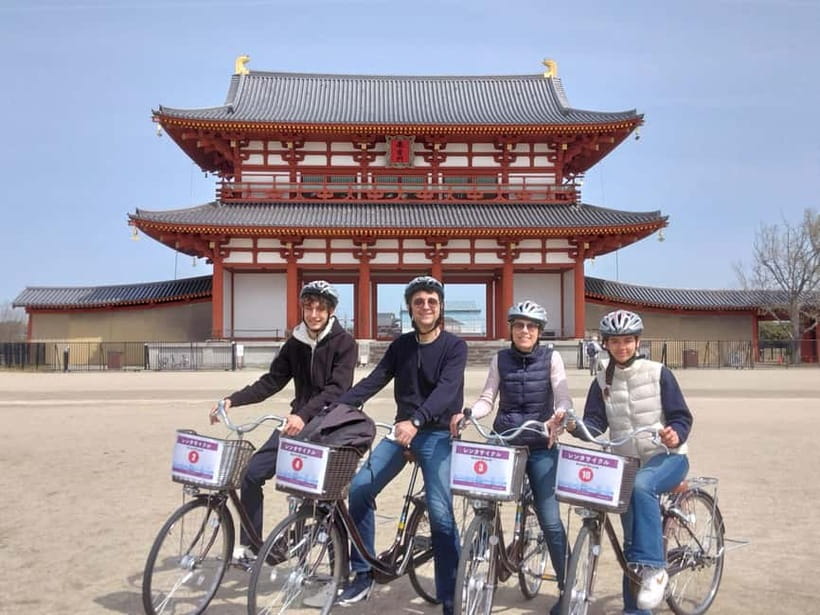
- Small group (up to 8) means more time at each stop and fewer bottlenecks for photos
- National government licensed guide (Kay) keeps the Nara-period context straight and practical
- UNESCO Heijo-kyo palace grounds by bike covers more ground than you’ll manage on foot
- Excavation Site Exhibition Hall shows remains where they were found, not just in a generic display
- Mizukami Pond ride adds that calm, local-feeling break from the palace buildings
- Tenpyo costume time turns learning into a memorable photo moment
Why bike the UNESCO Heijo-kyo site instead of doing Nara Park first?
Nara can be a split personality. One half is deer, temples, and crowds. The other half is the quieter story of how Japan’s early capital functioned—politics, ceremonies, and daily life organized around a grand palace plan.
This tour leans hard into that second half. By getting you onto bikes, it lets you move around a massive archaeological site without turning your whole day into a slog. You’re still outside, still seeing real spaces, but you’re not stuck walking from gate to gate with no clear route.
The best part for me is the balance: you get “big visual anchors” (like the main palace gates and the audience-hall area) plus smaller, thoughtful stops (tomb remains and excavation displays). That combination is what makes the Nara-period atmosphere click instead of just feeling like a list of names.
You can also read our reviews of more tours and experiences in Nara.
Meeting point: where the tour starts and how to not stress about it
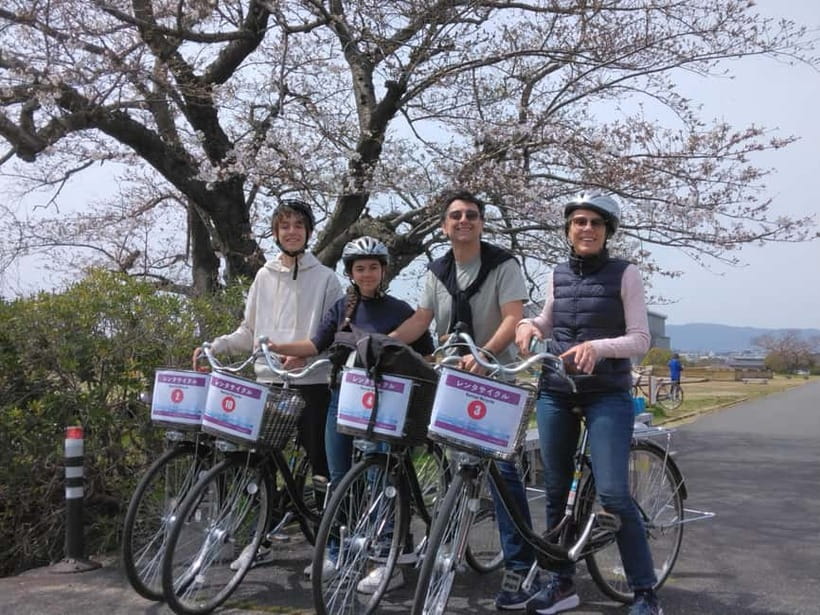
You meet at the rental bike reception counter at Miharashi-Kan in Suzaku-Mon Square (34.68628944048124, 135.7926401146025). Plan to arrive 10 minutes before the start time so you can get your bike, helmet, and any quick briefing without rushing.
From a practical standpoint, this is a good location because it sits right where you want to begin—at the palace core. If you’re using public transit, the tour info lays out several routes from major Nara stations (bus + short walk), so you should be able to line it up even if you’re changing stations mid-day.
Bike helmets and the rental bike are included, so you don’t have to hunt down gear. Also, bike insurance isn’t included, so treat it as a normal rental-bike day and ride carefully.
Suzaku-Gate: the main entrance photo stop that sets the scale
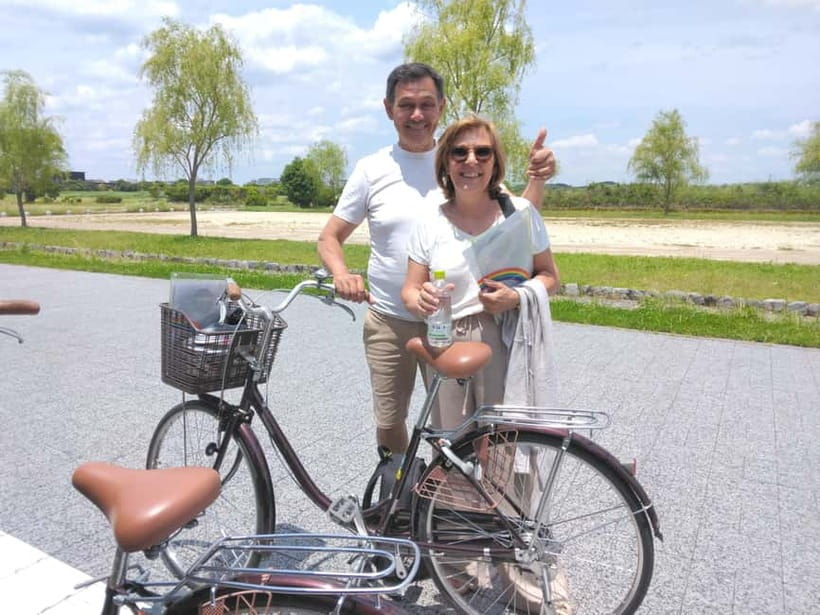
The first big stop is Suzakumon Gate, the main entrance of Heijo Palace. Even if you’ve never studied Japanese capitals before, this is the kind of site that instantly helps you understand the size and importance of the complex.
You’ll get a photo stop plus guided explanation, around 15 minutes. That timing matters. You’re not stuck staring at one spot too long, but you’re also not moving on before the guide finishes framing what you’re looking at.
This is also a smart way to start because it gives you a mental map. After Suzakumon, the other buildings and museum sites stop feeling random. They start feeling like parts of a planned city.
Toin Garden and the East Palace Garden: architecture, rocks, and quiet rhythm
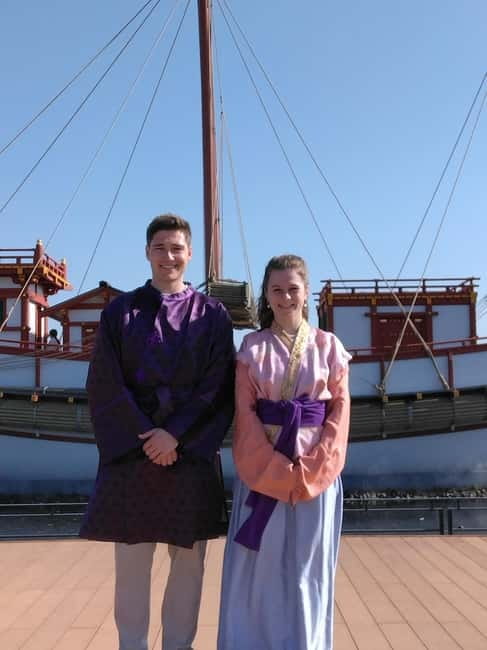
Next up is the To-in Garden area, also described as the East Palace Garden (a Japanese garden style tied to the palace setting). This stop lasts about 10 minutes, with another photo stop and guided tour.
What you’re looking for here isn’t just “a pretty garden.” It’s the arrangement: bridges, buildings, rocks, and how garden design supports a ceremonial palace mood. The guide’s job is to connect the visual layout to how the palace world worked.
If you enjoy subtle design details, this is a nice change of pace. If you want more time in a garden, you might wish the stop ran longer—but at least you don’t feel like you’re cutting the bike tour experience short.
The excavation area museum: where the story is literally in the ground
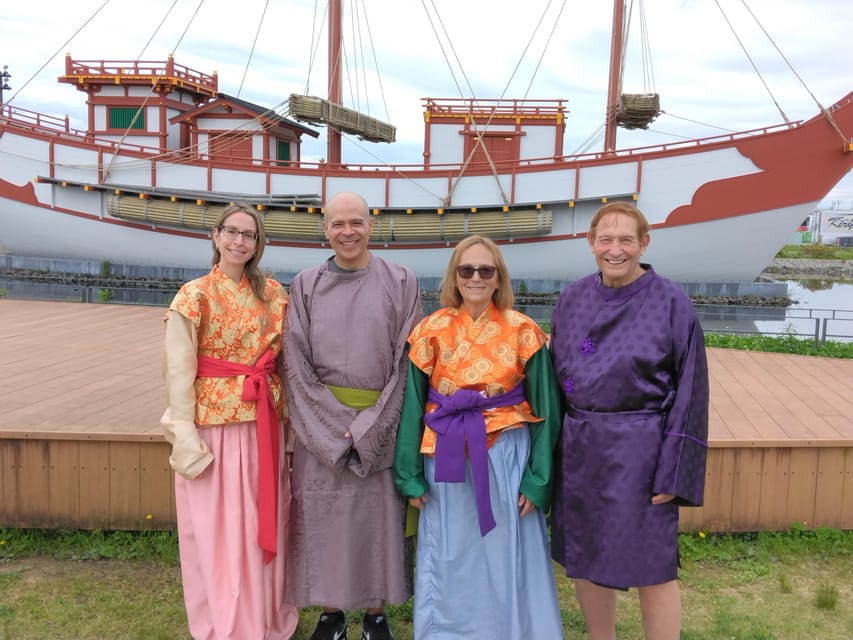
One of the most important stops is the Excavation Site Exhibition Hall. You’ll spend about 10 minutes here, with a guided explanation while remains are preserved and displayed in the condition they were discovered.
This is where the tour earns its “UNESCO” label. Instead of only pointing at reconstructions, it shows you remnants of the ancient capital as archaeological evidence. That makes it easier to understand why some structures are rebuilt while others are shown through what’s left.
In a 2-hour tour, museum time can feel rushed. Here, the design of the stop helps: you’re not expected to read a small library. You’re guided through what matters—why these remains matter, and what they reveal about the Nara-period capital.
Hishiage Ancient Tomb: grave goods and what they imply
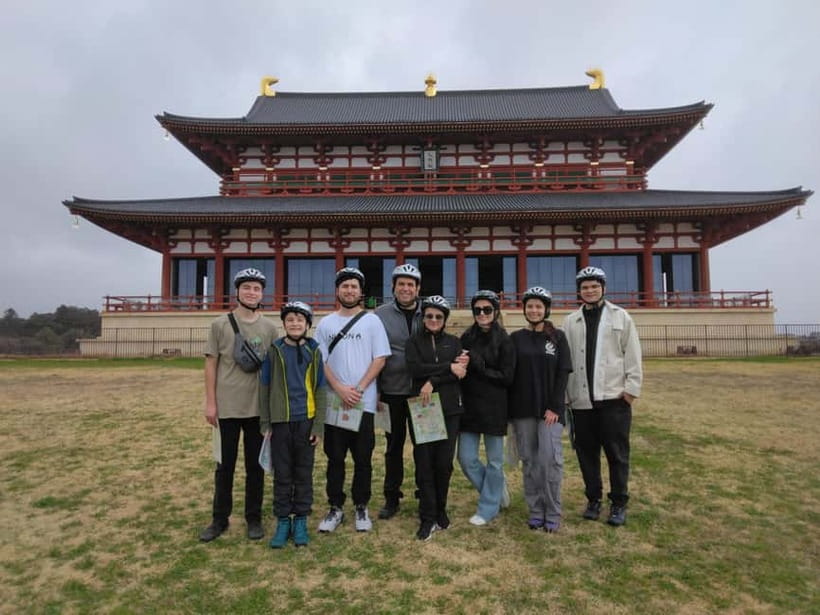
After the museum, you head to Hishiage Ancient Tomb for about 10 minutes of guided viewing. This is another stop where the guide’s storytelling is the difference between seeing a mound and understanding its significance.
This is also a “tempo” break from larger palace structures. Tombs tend to shift your mental focus toward the people and the social system behind the palace, not only the palace itself.
Keep your expectations realistic: like many archaeological sites, you’re not getting a full restoration scene. But if you like connecting artifacts and spaces to human meaning, this stop delivers.
Daiichiji Daigokuden and Nammon (South Gate): ceremony in building form
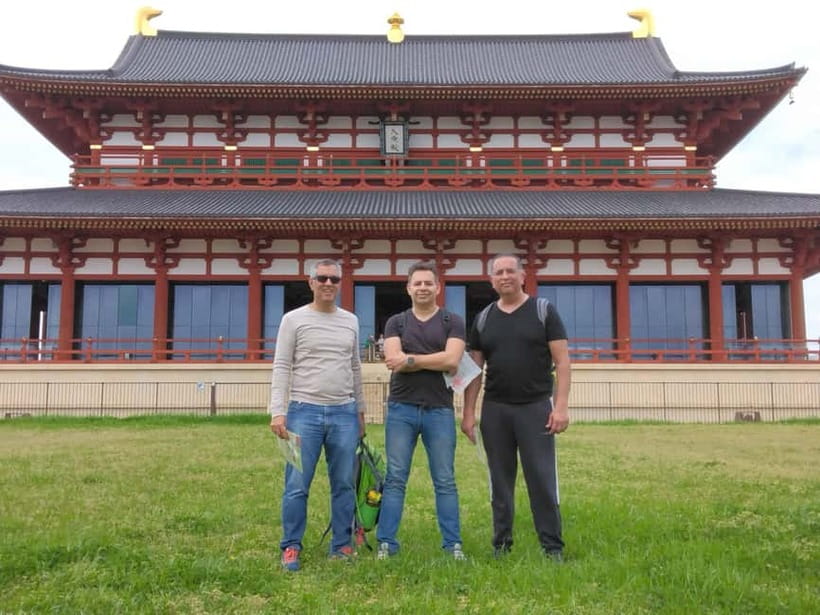
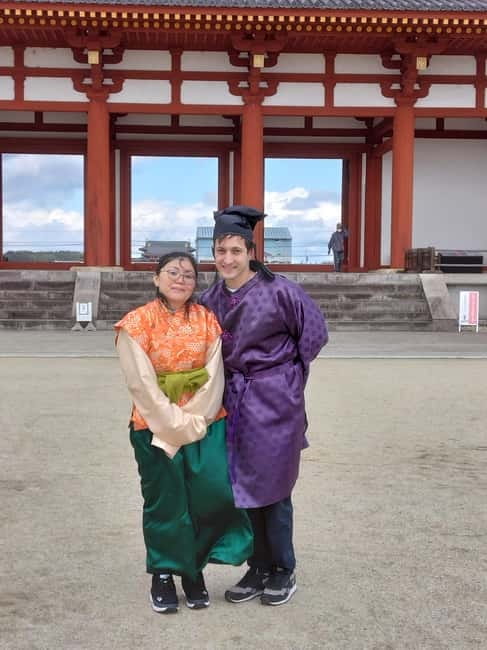
Next come several palace-related points around the ceremonial core: Daiichiji Daigokuden and then Daiichiji Daigokumon (Nammon, South Gate). Together, you’re there for about 15 minutes and 5 minutes, respectively, with photo opportunities and guided explanations.
These stops help you see how the palace functioned as a stage for special occasions. The tour describes Daigokuden as the Imperial audience hall, used for special ceremonies, and even notes that it’s a reconstruction of a major Nara palace building.
Here’s the consideration: reconstructions can be hit-or-miss depending on what you want. But with a guide, the reconstructed pieces become clues. You’re learning what the layout suggests about authority, order, and ceremonial use.
Also, the Nammon/South Gate stop is short on purpose. It gives you the visual anchor without dragging the schedule.
Riding around Mizukami Pond: the calm break that makes it feel local
Then you shift gears to Mizukami Pond, where you bike around the area and soak up the quieter side of the palace grounds. The tour info highlights breeze sounds, birds, and even ducks and turtles as part of the atmosphere.
This is one of those moments that changes the whole feel of the tour. Up to this point, you’re orbiting gates, buildings, tombs, and museums. Around the pond, the story softens into everyday nature.
Even better: it’s a “movement stop.” You’re not just standing still and waiting to be done. You’re still getting guided interpretation, but your body is in bike mode, so the time feels lighter.
Heijo Palace Site Museum and the overall palace-view payoff
You wrap up with time at the Heijo Palace Site Museum for a guided visit around 10 minutes. The emphasis here is on the oldest museum on the Heijyo palace site, with highlights like ancient tiles, wooden tablets, and models.
That “models” part is key. A palace complex can look huge but confusing if you only see fragments. Models help you connect the dots quickly, so the site starts working as a coherent whole instead of separate stops.
You also get the payoff of views that help you picture the full palace site. It’s the kind of final segment that makes your earlier photos feel more meaningful, because now you understand where those structures sit in the bigger plan.
Tenpyo costume experience: photos you’ll actually want to keep
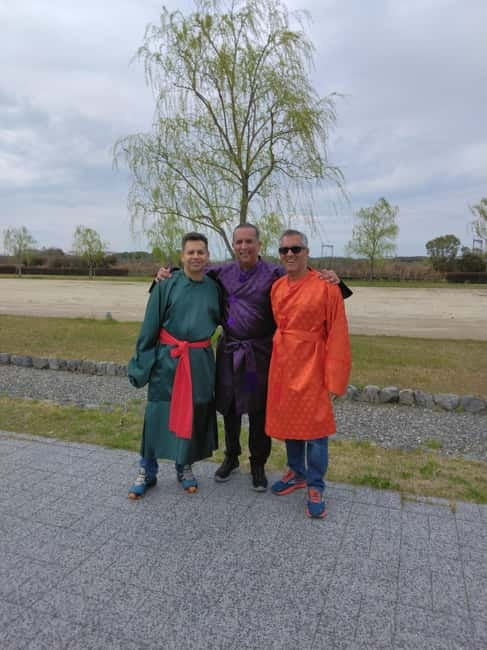
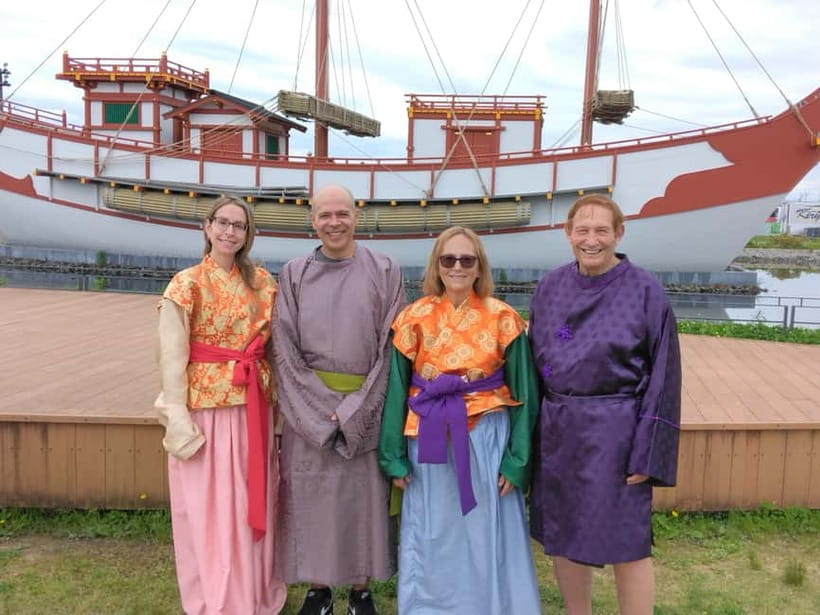
One reason this tour is more memorable than many “history walks” is the costume experience. You get to wear Tenpyo (Nara period) clothing and take photos.
This is a small time investment compared with a full photo shoot, but it changes the emotional takeaway. After learning about ancient life and ceremony, you step into the visual language of the period for a few shots.
I like this because it’s fun without derailing the day. It also works well for families—people in the group are often excited to try something hands-on, not just hear descriptions.
Pace, group size, and bike comfort: 2 hours that move
This tour runs for 2 hours and is limited to 8 participants, which keeps it manageable. The guide can slow down for questions and still hit the core stops.
From a “will I be okay on the bike?” angle, the tour isn’t a gentle wanders-only experience. It’s for people who can ride a bike comfortably. The tour data is clear that it isn’t suitable for those who can’t ride, wheelchair users, and visually impaired people, and it’s not set up for pregnant travelers.
Helmets are included, which is a nice basic safety touch. The course is around the palace grounds—so you should expect some unevenness and normal outdoor riding factors. If you’re sensitive to that, plan to take your time when you stop and start.
Price and value: what $22 buys you (and what it doesn’t)
At $22 per person for a 2-hour guided bike tour, the value comes from what’s bundled:
- Rental bike + helmet
- Guide
- All admission to the museum stops
- Traditional costume experience
What you don’t get is also clear: food and drinks, plus bike insurance. There’s also no hotel pickup.
In plain terms, you’re paying mostly for time and access: a licensed guide, entry fees, and the equipment that lets you cover a UNESCO-level site without turning it into an all-day logistics project. If you were to pay a guide separately and buy multiple admissions, the cost would likely climb fast.
The Nara-period focus: what you’ll come away understanding
This tour is built around the Nara period palace world—how the capital’s layout, ceremonial spaces, and archaeological remains fit together.
In other words, it’s not a tour where you leave with random trivia. You leave with a working picture:
- how the palace gates function as entrances and statements of order,
- how garden layout reflects a palace setting,
- why excavation remains matter,
- how tombs relate to social structure,
- and how reconstructed ceremonial halls fit into what we know.
That’s why people who’ve visited Nara before still like it. It moves you away from the most crowded, deer-focused zone and toward the UNESCO site story itself.
Who should book this bike tour (and who should skip)
I think this is a great fit if:
- you want a quieter side of Nara away from the highest crowds,
- you enjoy history that’s explained with clear stop-by-stop context,
- you like biking because it lets you cover a huge area efficiently,
- you want a family-friendly activity that works even with younger kids (the guide is described as patient, and the ride pace works well for families).
I’d skip it if:
- you can’t ride a bike,
- you need wheelchair access,
- you’re visually impaired and can’t handle the environment,
- you’re looking for only fully restored sights with no archaeological viewing.
Also keep in mind that the site includes reconstructions and preserved remains. If you’re expecting polished “attraction-level” buildings at every stop, you might find some parts underwhelming.
Should you book it? My quick decision guide
Book this tour if you want an easy, well-paced way to experience the Heijo-kyo UNESCO site—especially if you like the idea of learning Nara-period context while still getting fresh air and a calm ride around Mizukami Pond. The bundled price also makes sense because you’re getting bike rental, admissions, and Tenpyo costume photos in one shot.
Skip it if you’re mainly in it for temples-and-views vibes, or if you get frustrated by archaeological sites where what you see is partly what’s left. In that case, you may prefer a longer walking tour that gives more time at the places you’ll love.
If you’re on the fence, here’s the simple logic: 2 hours is short enough to be doable, but structured enough to feel worthwhile. For most people heading to Nara for the first time, that’s exactly the sweet spot.
FAQ
How long is the Nara bike tour?
The tour lasts 2 hours.
What’s included in the price?
It includes biking tour, guide, rental bike, helmets, all admission, and the traditional costume experience.
Where do I meet the tour guide?
Meet at the rental bike reception counter at Miharashi-Kan in Suzaku-Mon Square (10 minutes early is recommended).
What languages are available for the guide?
The live tour guide is available in English and Japanese.
Is there a limit on group size?
Yes. The tour is a small group limited to 8 participants.
Is food included?
No. Food and drinks are not included.