REVIEW · NARA
Nara World Heritage PRIVATE TOUR
Book on Viator →Operated by 888tour · Bookable on Viator
Nara is all about big symbols and small moments. This private tour strings together the must-sees around Tōdai-ji and Nara Park with a local guide, so you’re not wandering in circles. You’ll also get the one-of-a-kind deer cracker feeding that makes Nara feel like Nara.
Two things I like right away: you cover major landmarks in just 3–4 hours, and the tour handles the key entrances and deer feeding up front. You won’t need to stop and figure out what costs extra or where to go next.
One thing to consider: it’s outdoors walking, and summer can hit brutal heat—temps often exceed 35°C, and one recent guest mentioned around 39°C. Also, the guide experience can depend on communication and interaction style, so ask questions and keep expectations clear if you want lots of dialogue.
In This Review
- Key highlights you’ll feel immediately
- A Private Half-Day in Nara: Temples, Deer, and Fast Orientation
- Price and Value: What $96.67 Buys You (and What It Doesn’t)
- Todai-ji Museum and Nandaimon: The Big-Gate Warm-Up
- Tōdai-ji Grounds and the Daibutsu: Why This Stop Matters
- Nara Park and Ukimido Pavilion: Deer Feeding and Quiet Water Views
- Kōfuku-ji and the Five-Story Pagoda: Ending with a Classic Profile
- How the Walking Route Feels: Staying Comfortable in Real Nara
- Guides, Interaction, and Your Expectations
- Who This Tour Fits Best (and Who Might Want Another Option)
- Where to Start and Where You’ll End
- Should You Book This Nara World Heritage Private Tour?
- FAQ
- How long is the Nara private tour?
- Is the deer feeding included?
- Are entrance fees included for the temples and shrines?
- Where does the tour start and where does it end?
- Is this a private tour?
- What should I do about hot weather?
- What is the cancellation policy?
Key highlights you’ll feel immediately

- Private pacing that keeps you moving without feeling rushed
- Deer feeding included with one packet of crackers for the sacred deer
- World Heritage heavy-hitters around Tōdai-ji and other top temple stops
- Smart route flow from gates and museum context into the main Buddha hall
- Nara Park time with photo-friendly stops like Ukimido Pavilion
- Options for quick orientation so you can explore freely afterward
A Private Half-Day in Nara: Temples, Deer, and Fast Orientation
This is a first-timer-friendly Nara plan that keeps the “where do we start?” stress low. In a short walk, you’re placed at the right angles to understand why Tōdai-ji and the surrounding temple world matter.
The tour leans into two signature Nara experiences: towering temple scale and the city’s famous deer presence. You’ll start with context, then move into the dramatic main grounds, and finish with other classics like Kōfuku-ji.
You’ll feel the value most if you like a guide who helps you connect the dots fast. A lot of people do Nara on their own, but the best part here is that your time gets organized.
You can also read our reviews of more private tours in Nara
Price and Value: What $96.67 Buys You (and What It Doesn’t)
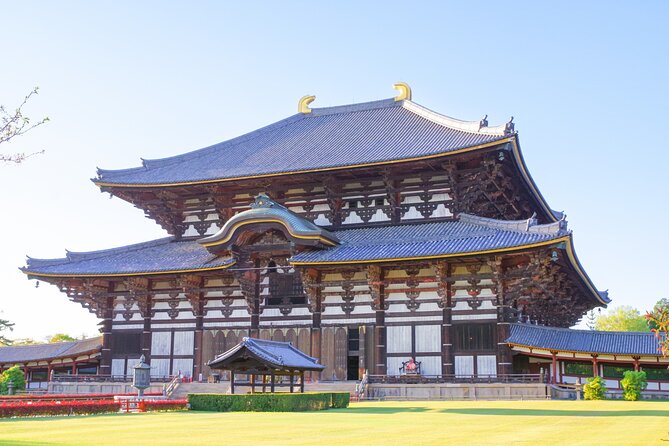
At $96.67 per person for a private tour, the best way to judge value is what’s included. You’re not just paying for someone to walk with you—you also get a professional guide, entrance fees for the temple/shrine stops on the route, and the deer feeding cracker packet.
That matters because Nara can add small costs quickly if you’re buying tickets hop by hop. Here, the key admissions are handled so you can focus on the sights and the story.
What’s not included is also clear: you’ll pay for any extra street food and drinks you want during the walk. Think of this as a guided itinerary with set stops, not an all-you-can-eat day.
Todai-ji Museum and Nandaimon: The Big-Gate Warm-Up
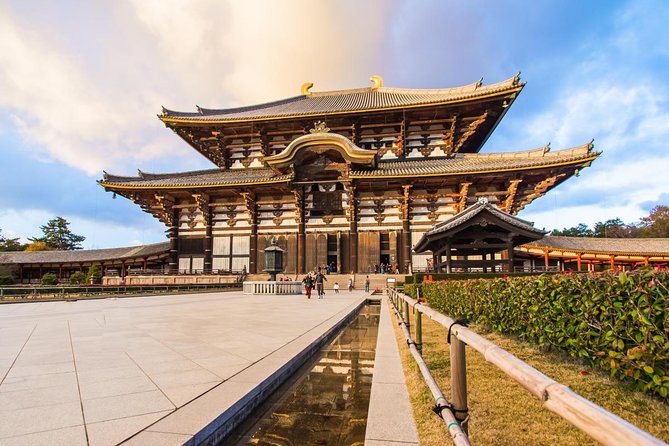
You begin at Todai-ji Museum inside the Todai-ji Cultural Center area. This first stop works like a buffer between travel fatigue and the massive scale you’re about to see. Even if you only spend about 10 minutes, the museum gives you a mental map for what the temple complex means.
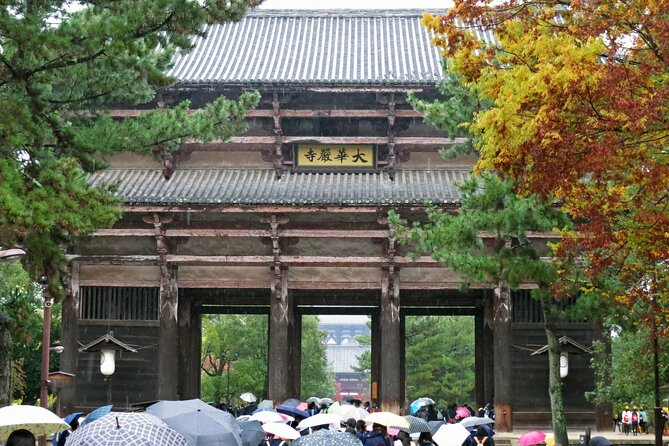
Next up is Tōdai-ji Nandaimon (Great South Gate), the grand wooden gate that helps set the tone. The tour spends about 10 minutes here, which is long enough to notice the gate’s size and feel the shift from everyday streets into temple space.
The upside of this two-step start is flow. You’re not jumping straight into the biggest buildings without any frame, and that makes the main Buddha hall hit harder.
The only drawback is time. If you’re the type who loves museums and wants to read everything, you might wish the first stop had more than a quick pass.
Tōdai-ji Grounds and the Daibutsu: Why This Stop Matters
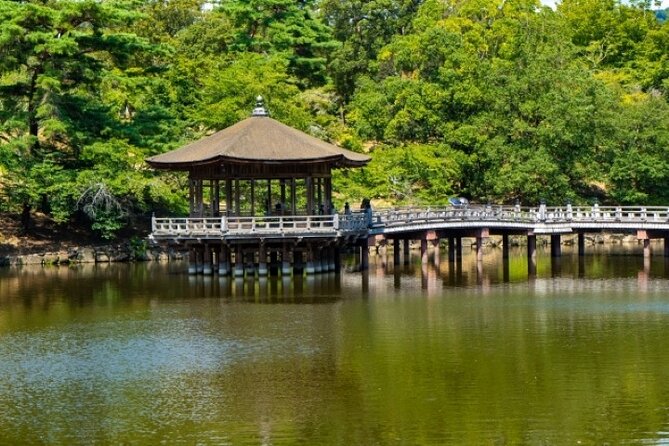
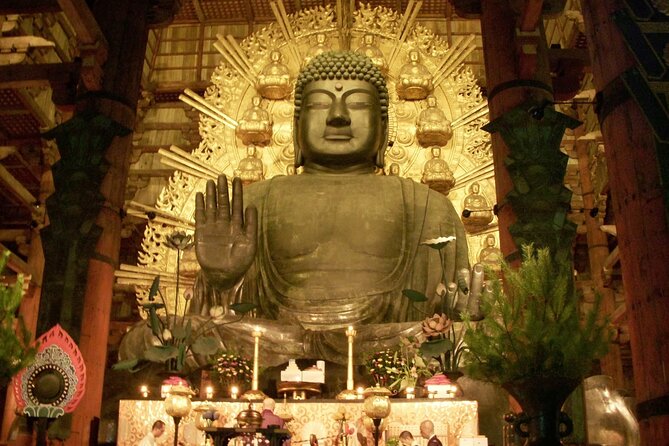
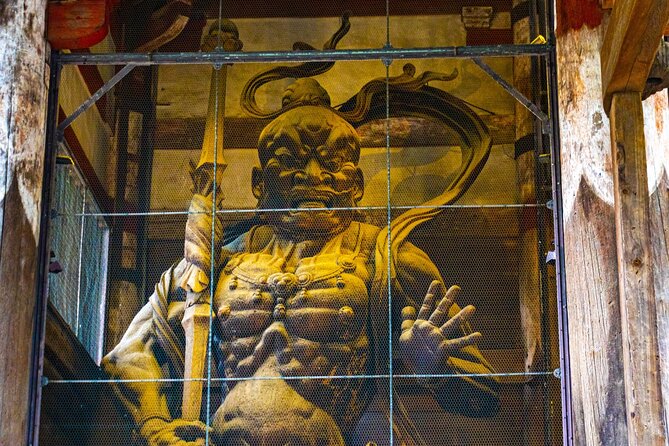
Then comes the main event: Tōdai-ji itself, with about 1 hour 5 minutes on site. This is the World Heritage anchor of the day and the place famous for having the largest Buddha statue in Japan.
What makes this stop special is how the grounds function as a whole space. You’re walking around an enormous compound where nature and architecture share the stage, so even before you focus on the statue, you get that “scale shock” moment.
Practical tip: keep an eye on where you’re standing as you move. The Daibutsu experience isn’t only about the final view—it’s about how the perspective changes as you approach and then step back.
If you want photos, aim for a calm rhythm. At peak times you’ll likely see plenty of people, so let your guide point you to sensible vantage angles rather than relying on the most obvious crowd spot.
Nara Park and Ukimido Pavilion: Deer Feeding and Quiet Water Views
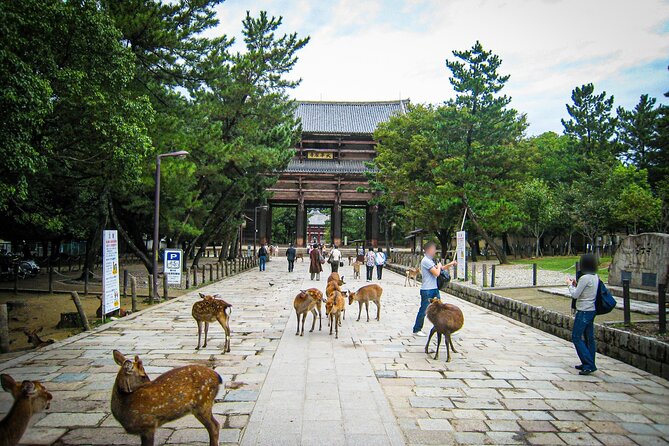
After Tōdai-ji, you shift to Nara Park for about 35 minutes. This is where Nara turns playful. The park is home to roughly 1,200 freely roaming deer, and the tour gives you the chance to feed them with the included deer crackers.
That feeding moment is the “only in Nara” style of experience. It’s also why this tour is worth booking instead of just strolling the park on your own—you get guidance on how to do it and you don’t waste your time guessing what to do.
One smart nudge from the way guides approach the park: go with a mindset that deer are part of the scenery. Stay calm, move predictably, and enjoy the odd comedy of it all.
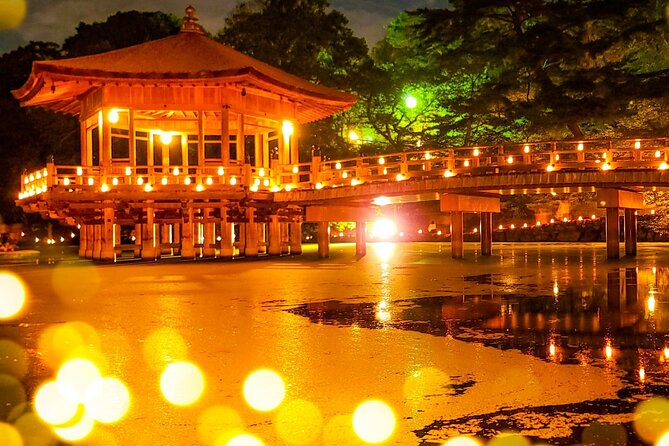
Then you head to Ukimido Pavilion, spending about 30 minutes. This is a hexagonal hall on the water at Sagiike, and on clearer days you can see it reflected, with blue sky and green nature framing the scene.
The appeal here is pacing and variety. After the temple intensity, the pavilion gives you a different kind of Nara beauty—more still, more view-based, and very “postcard but real.”
You can also read our reviews of more historical tours in Nara


Kōfuku-ji and the Five-Story Pagoda: Ending with a Classic Profile
You finish with Kōfuku-ji, including time around 30 minutes and a strong highlight: the Five-Story Pagoda. The pagoda is famous for its traditional design and for being about 50 meters tall.
This stop is valuable because it rounds out what you’ve seen earlier. Tōdai-ji is the giant Buddha story. Kōfuku-ji shifts you into a different angle of Japanese temple architecture and history, and it’s a satisfying way to close the loop.
One nice thing about ending here is how easy it is to continue on your own. After the tour, you disperse near Kintetsu-Nara Station, so you’re not stuck figuring out transit from a far-off edge of the city.
If you like temples with clear silhouettes and “here’s the landmark” views, this is a strong finish.
How the Walking Route Feels: Staying Comfortable in Real Nara
The route is built for a short half day: museum → gate → main temple grounds → park → pavilion → Kōfuku-ji. That tight structure is great when your schedule is limited, but you should still plan for outdoor walking.
The tour is listed as about 3 to 4 hours. That’s the right range for first-time orientation, as long as you don’t expect unlimited lingering at every photo spot.
Heat is the main real-world challenge. Nara’s summer can be intense, and one guest experience included around 39°C temperatures. If you book during hot months, bring serious hydration plans and sun protection—parasols can help a lot, and shade breaks matter.
Crowds are also a reality around the biggest sites. A guide can help you choose an order that reduces your time in the densest clusters, and it also helps you avoid the awkward stop-and-go of indecision.
Guides, Interaction, and Your Expectations
In a private tour, the guide has outsized impact. Some guides are described as friendly and polite, with tons of background details that make the landmarks easier to understand. Others are described as less interactive—like they follow a script more than a conversation.
If you want lively Q&A, you’ll get the best experience by asking early. Simple questions work well: what should I notice first at Tōdai-ji, or why is this gate so important?
Names you may see associated with this style of guiding include George, Kimu, and Kim. In the better-described experiences, guides bring patience (especially with kids) and keep the pacing comfortable even when it’s hot.
Who This Tour Fits Best (and Who Might Want Another Option)
This private tour is a strong match for:
- First-timers who want major sights without planning
- Families who need structure (and time management in heat)
- Travelers who want a mix of temples plus the deer experience
It may be less ideal if:
- You want long museum time or slow drifting at each site
- You hate outdoors walking and heat exposure
- You need an extremely conversational guide and don’t want any chance of a more scripted delivery
If you’re traveling with a tight schedule, this tour is one of the easiest ways to get Nara’s backbone in a single morning or afternoon.
Where to Start and Where You’ll End
You’ll start at Todai-ji Museum, located inside the Todai-ji Cultural Center area in Nara. The end point is near Kintetsu-Nara Station, which is convenient for continuing your day.
Because it’s private, you can also disperse based on your destination after the tour. That flexibility is a practical perk if you’re staying in a different part of town or connecting to Kyoto later.
For your own sanity, check your meeting spot the day before. Temple-area directions can be a little confusing if you arrive while everyone else is walking in the same direction.
Should You Book This Nara World Heritage Private Tour?
I’d book it if you want a guided way to hit the classic Nara highlights without turning your day into a logistics puzzle. The included entrance fees and deer crackers make it feel like you’re paying for your time and comfort, not nickel-and-diming each stop.
It’s especially worth it if you’re visiting for the first time and want fast orientation. You’ll leave with enough context to explore more on your own—without needing to rebuild your route from scratch.
Just go in with two expectations: it’s an outdoor walking day, and guide interaction can vary. If you’re prepared for heat and you communicate what you want from the guide, this tour becomes a very efficient and memorable way to experience Nara.
FAQ
How long is the Nara private tour?
It runs about 3 to 4 hours.
Is the deer feeding included?
Yes. You get one packet of cracker to feed the deer during the tour.
Are entrance fees included for the temples and shrines?
Yes. Entrance fees for the temples and shrines visited on the route are included.
Where does the tour start and where does it end?
It starts at Todai-ji Museum in the Todai-ji Cultural Center area. It ends near Kintetsu-Nara Station, and you can disperse based on your destination after the tour.
Is this a private tour?
Yes. It’s private, so only your group participates.
What should I do about hot weather?
Japan’s summer can be very hot, especially in August. Bring water, use sun shade if you can (such as a parasol), and take heat precautions since the tour involves time outdoors.
What is the cancellation policy?
You can cancel for a full refund up to 24 hours before the experience starts. If it’s canceled due to poor weather, you’ll be offered a different date or a full refund.