REVIEW · WARSAW
Warsaw: Jewish Heritage & Holocaust Walking Tour
Book on GetYourGuide →Operated by Orange Umbrella Tours Warsaw · Bookable on GetYourGuide
Warsaw’s Jewish story runs through the whole city. This 150-minute walking tour connects 600 years of community life to the Warsaw Ghetto and the Ghetto Uprising sites, with on-the-street context that helps you read the city in a new way. It’s timed like history class, but it feels human, not like a lecture.
I especially like how the tour uses old photographs and maps to contrast pre-war life with what survived. I also like that more than half the walk is about the Holocaust of Warsaw’s Jews, including the creation of the ghetto, life behind the wall, and deportations to Treblinka, then it closes with the uprising locations.
One thing to consider: the subject matter is heavy, and the walking can get cold in winter. If your group is on the larger side, you may want more space to think between stops.
In This Review
- Key points worth knowing before you go
- Where the tour starts: Castle Square and Sigismund’s Column
- Six hundred years on foot: how the timeline actually makes sense
- Medieval Jewish quarter and early expulsions: the roots of Warsaw’s Jewish community
- Jurydki in the 1700s: living within magnates’ boundaries
- The 1800s and pre-war Jewish district: old photos you can read on the street
- The Warsaw Ghetto: creation, life behind the wall, deportations to Treblinka
- Big Ghetto and the fighting sites: where the Uprising happened
- Seeing ruins with pre-war photos: why the contrast hits hard
- Guides that keep it human: examples of what to expect in the group
- Price and value: what $20 gets you for 150 minutes
- Practicalities that will make your tour smoother
- Should you book this Warsaw Jewish Heritage & Holocaust walking tour?
- FAQ
- How long is the Warsaw Jewish Heritage & Holocaust walking tour?
- Where do I meet the guide?
- What does the tour cost?
- What’s included in the price?
- Is the tour wheelchair accessible?
- Is there an age limit?
- What should I bring and what’s not allowed?
Key points worth knowing before you go
- Castle Square start point: meet by Sigismund’s Column and look for an orange umbrella with a British flag
- 600-year storyline: from medieval Jewish quarters and early expulsions to the 1800s Jewish district
- Big Ghetto focus: you’ll see the area tied to fighting during the Ghetto Uprising
- Holocaust portion is substantial: creation of the ghetto, life behind the wall, and deportations to Treblinka
- Photos on the street: you’ll compare what was there then versus what you see now
Where the tour starts: Castle Square and Sigismund’s Column
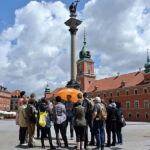
You’ll begin at Castle Square, right by Sigismund’s Column. It’s hard to miss: the column is about 20 meters tall, topped with a statue. For the tour, look for a guide holding an orange umbrella with a British flag.
That start matters. Castle Square is a good “orientation anchor” because it sits in the heart of the old city. From there, you can connect the past to today without having to figure out your own route. And if you’re new to Warsaw, having a clear visual landmark helps you get oriented fast.
You can also read our reviews of more walking tours in Warsaw
Six hundred years on foot: how the timeline actually makes sense
The big win here is the way the tour turns time into geography. Instead of treating Jewish history in Warsaw as a pile of facts, it builds a chain: origins and medieval life, then later Jewish settlement patterns, then the 1800s Jewish district, and finally the ghetto and the Holocaust.
You’re also walking through different layers of the city’s story. Some places are about continuity: neighborhoods and patterns of community life. Others are about rupture: war-altered streets and spaces where people were forced into new realities.
The duration is 150 minutes, which is long enough to cover multiple eras, but short enough that you won’t feel like you’re stuck in one long, static lesson. Still, it’s not a quick highlight walk. If you’re the type who likes to stop, ask questions, and take in details, plan to do that.
Medieval Jewish quarter and early expulsions: the roots of Warsaw’s Jewish community

The early part of the walk is centered on the long history of Warsaw’s Jewish community, reaching back to the Middle Ages. This is where you learn how Polish Jews fit into wider European patterns—where communities came from, how they formed, and why they lived under changing rules.
You’ll also hear about early expulsions. That piece is important because it sets expectations for the rest of the story: this community’s experience wasn’t steady or guaranteed. It was shaped by law, authority, and political shifts, and those pressures didn’t disappear just because people built lives and institutions.
If you like history with cause-and-effect, this section is a strong start. It gives you language for the later shifts: when rights expand, when they shrink, and how those changes affect everyday life.
Jurydki in the 1700s: living within magnates’ boundaries
Next comes the 18th-century Jewish settlements within jurydki—areas under the jurisdiction of Warsaw’s magnates. Even if the name is new to you, the idea is simple: not everything inside a city was governed in the same way.
This part helps you understand why Warsaw could have pockets with different rules. For practical travelers, it also explains why the urban map of the Jewish community can feel “patchy” when you look at it later. The city’s structure wasn’t uniform, and neither was the lived experience.
And you’ll connect this to the Haskalah, the Jewish Enlightenment. That’s not just a slogan. It helps explain shifts in education, culture, and outlook that show up later in how communities lived in the 19th century and beyond.
The 1800s and pre-war Jewish district: old photos you can read on the street
Then the tour turns toward the 19th century and pre-war Warsaw. This is one of the most effective sections because it uses old photographs to show everyday scenes and neighborhood life.
You get more than a timeline here. You start noticing that the ghetto and wartime tragedy didn’t appear out of nowhere. People had routines, social spaces, and built environments. Seeing those details through photographs makes the later devastation more than an abstract idea.
One of the clearest ways this tour helps is that it trains your eye. As you move, you learn to compare: what you see today versus what photos show used to be there. That comparison becomes a kind of “map” in your head.
You can also read our reviews of more historical tours in Warsaw





The Warsaw Ghetto: creation, life behind the wall, deportations to Treblinka
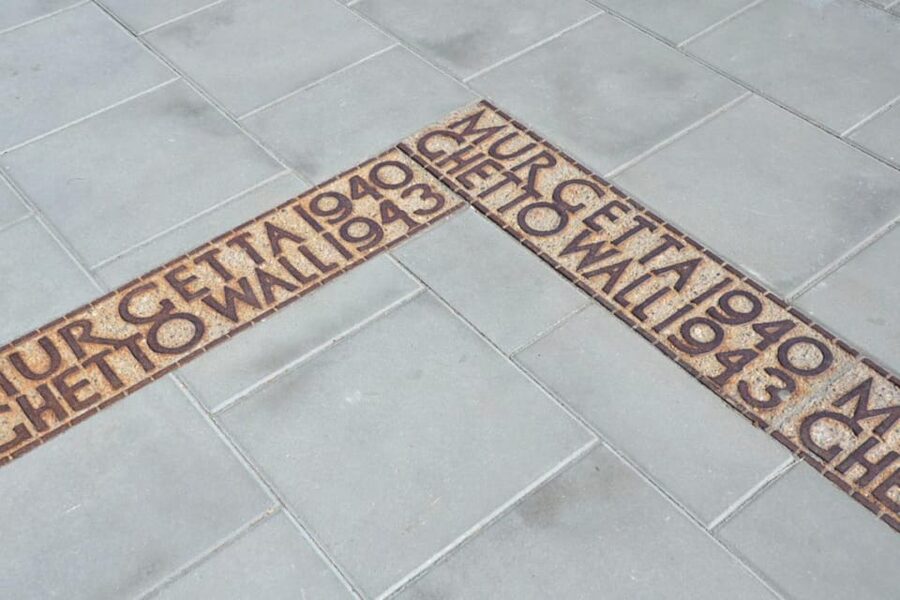
More than half of the tour is dedicated to the Holocaust of the Warsaw Jews. Expect the tone to turn heavier as the guide explains the creation of the Warsaw Ghetto, the conditions of life behind the wall, and the deportations to Treblinka.
This section is vital because Warsaw’s ghetto wasn’t just a location—it was a mechanism of control, segregation, and destruction. Hearing about the deportations to Treblinka death camp gives the story its terrifying endpoint.
I like how the tour keeps you grounded in place. You’re not only learning terms. You’re connecting those terms to streets and spaces you can stand on. That’s how it becomes real.
Also, because it’s walking-based, you naturally slow down at each stop. That matters with a topic like this. If you try to rush, you lose the chance to process what you’re seeing.
Big Ghetto and the fighting sites: where the Uprising happened
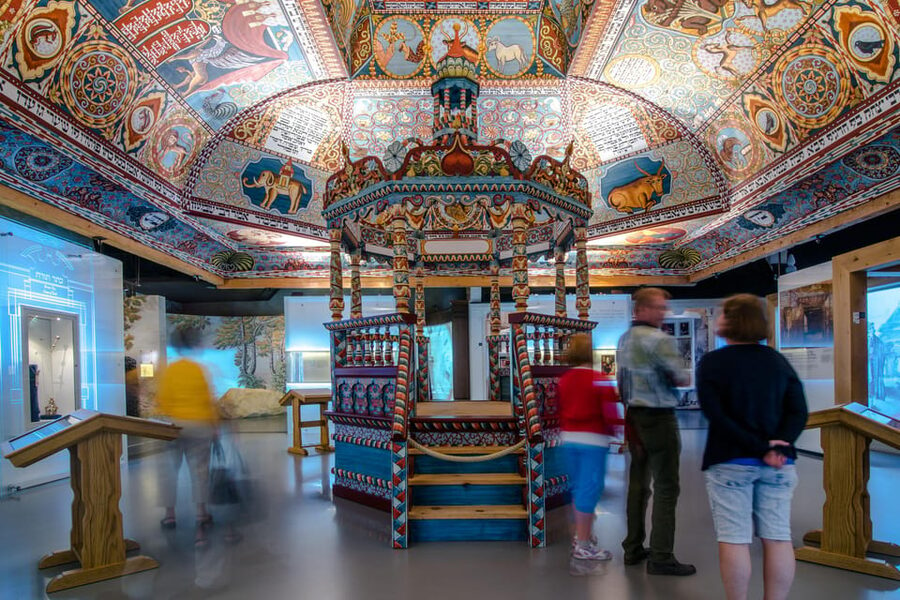
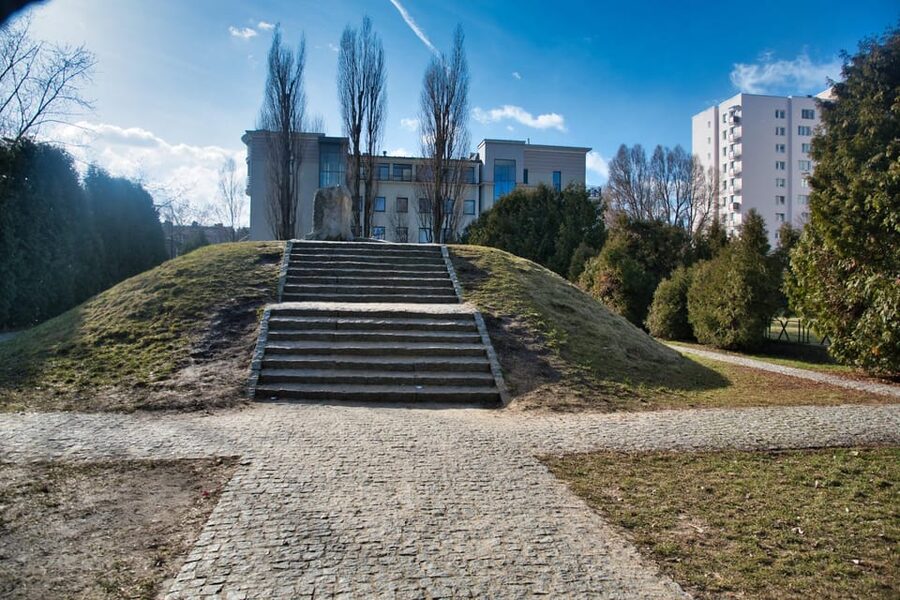
The tour then shifts from the ghetto’s creation and daily reality to the Ghetto Uprising. You’ll see major places connected with the fighting, including the area known as the Big Ghetto—the setting where battles of the uprising took place.
This is where history stops being only about confinement and becomes about resistance. The guide frames what happened and why it mattered, not as a footnote, but as a defining moment of agency under impossible conditions.
It’s also one of the best sections for travelers who want structure. You know you’re moving through key points rather than wandering. And as you’ve already learned the setup (ghetto life and deportations), the uprising has context instead of feeling like an isolated event.
Seeing ruins with pre-war photos: why the contrast hits hard
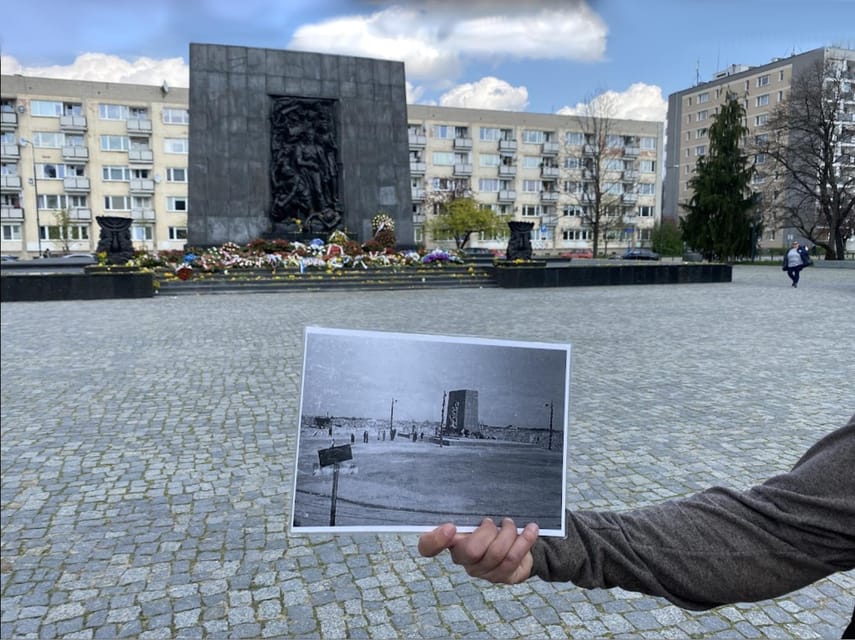
A distinctive feature of this tour is that you repeatedly compare war-altered reality with pre-war images. This isn’t just “look at a photo.” It becomes a method.
When you stand in a place and then see what existed there before, you start to grasp what war erased. The guide’s use of photographs and maps supports this, so you’re not only absorbing sadness—you’re learning spatial truth. That makes it easier to remember later, and it also makes the places feel more specific.
Winter advice: the later part of the walk can feel very cold. If you’re going in December or January, wear layers and accept that you might need more warm breaks than you planned.
Guides that keep it human: examples of what to expect in the group
The experience lives or dies by the guide, and the pattern of high ratings comes through strongly: guides are described as enthusiastic, organized, and able to answer questions with clarity and care.
You might encounter guides such as Magda, Gawel, Martin, Albert, Goska, or Peter Hardy—all names that show up in feedback praising how they explain tough material in a compassionate way. I’m glad you can get that mix of structure and humanity. It keeps the walk from turning into a list of dates.
You may also notice practical touches. For example, one guide built in time for a coffee stop when people were freezing. That kind of small adjustment can be the difference between tolerating the walk and actually absorbing it.
Group size can vary. One review noted a large group (up to around 30) can feel uncomfortable. If you’re sensitive to crowding, consider going on a less busy time of day or earlier in the tour window, when you can still think clearly between stops.
Price and value: what $20 gets you for 150 minutes
At $20 per person for 150 minutes, this is strong value—especially because it’s not only about monuments. You’re getting:
- a professional live guide,
- a walking route that connects multiple eras,
- and visual support through photos and maps.
The tour doesn’t include entrance fees to attractions. That’s fine. The main value here is interpretation and context on the street.
Is it a bargain? For Warsaw, it’s priced like a smart add-on day activity: long enough to matter, short enough to fit your schedule, and focused enough that you won’t feel like you paid to “just walk.” If Holocaust history is a priority for your trip, this cost is genuinely reasonable for the time and depth.
Practicalities that will make your tour smoother
Bring:
- comfortable shoes (this is a walking tour with multiple stops),
- water,
- and a head covering or kippah.
Not allowed:
- smoking.
A small planning note: this tour is not suitable for children under 10. That doesn’t mean kids can’t handle history. It means the subject is intense, and the guide may need to pitch pacing and content accordingly.
Good to know:
- The tour is English, live guided, and wheelchair accessible.
If you’re the type who likes to ask questions, you’ll likely appreciate the chance to do so. Several comments emphasize that the guides make room for answers. On a topic this serious, that matters.
Should you book this Warsaw Jewish Heritage & Holocaust walking tour?
Book it if you want more than surface-level sightseeing. This tour connects Warsaw’s Jewish heritage to the ghetto and then to the Uprising sites, using photos and maps that make the timeline easier to grasp. At $20 for 150 minutes, the value is solid.
Skip it or rethink if you’re not prepared for a heavy history that takes up more than half the walk. This isn’t a light stroll. It’s a route through one of the darkest parts of European history, told with care.
If you like learning by seeing places, and you want the city’s layers explained step by step, you’ll probably leave with a clearer mental map and a deeper understanding of what you’re standing on in Warsaw.
FAQ
How long is the Warsaw Jewish Heritage & Holocaust walking tour?
It lasts 150 minutes.
Where do I meet the guide?
Meet in Castle Square, by Sigismund’s Column (the 20-meter column with a statue on top). Look for a guide holding an orange umbrella with a British flag.
What does the tour cost?
The price is $20 per person.
What’s included in the price?
You get a professional English-speaking guide and a walking tour.
Is the tour wheelchair accessible?
Yes, it is wheelchair accessible.
Is there an age limit?
It’s not suitable for children under 10.
What should I bring and what’s not allowed?
Bring comfortable shoes, water, and a head covering or kippah. Smoking is not allowed.