REVIEW · ATHENS
Ancient Corinth, Epidaurus, Nafplio private tour from Athens
Book on Viator →Operated by My Athens Transfers · Bookable on Viator
Three ancient stops in one day.
This private route is packed, yet it feels smart: Corinth Canal views from above, Paul’s Corinth, and Epidaurus’ theatre, then you wrap with wandering in Nafplio.
I really like two things about this experience. First, you get a private air-conditioned vehicle so the day runs on your group’s pace, not fixed bus timing. Second, the driver work is practical: clear English commentary that helps you make sense of what you’re seeing, without dumping a script on you.
One consideration: major site entrance fees aren’t included, and the driver won’t go inside the archaeological areas with you—so you’ll want a little flexibility for ticket lines and self-guided time.
In This Review
- Key things I’d book this for
- Price and value: what you’re paying for with a private day trip
- How the day feels with a private car from Athens
- Corinth Canal: a quick stop with a big wow factor
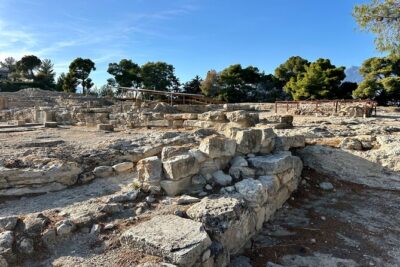
- Ancient Corinth: ruins tied to real stories
- Temple of Apollo and Akrokorinthos: the views are the payoff
- Temple of Apollo (about 15 minutes)
- Akrokorinthos / Acrocorinth (about 30 minutes)
- Epidaurus Archaeology Museum: why it’s worth the extra ticket
- The Ancient Theatre of Epidaurus: acoustics you can feel
- Sanctuary of Asklepios: healing cult, rival sites, and religious power
- Nafplio: where the day softens from ruins to wandering
- Bourtzi: the water castle photo stop
- Acronauplia and Palamidi: castles with different vibes
- Driver-led storytelling: what you’re actually buying
- Who this day trip fits best
- Should you book the Ancient Corinth, Epidaurus, and Nafplio private tour?
- FAQ
- How many people can you book for on a private vehicle?
- Is pickup and drop-off included?
- Are entrance tickets included in the tour price?
- Will the driver go into the archaeological sites with me?
- What’s included for comfort on board?
- Do you get time for lunch in Nafplio?
- What’s the cancellation policy?
Key things I’d book this for
- Private door-to-door pickup from Athens, with drop-off back to the same place you started
- Corinth Canal viewpoints that are perfect for photos and for watching ships pass below
- Ancient Corinth plus the museum to connect ruins to real objects
- Epidaurus theatre acoustics paired with the Sanctuary of Asclepius
- Nafplio free time plus the harbor and fortresses for classic Argolis views
Price and value: what you’re paying for with a private day trip
At $558.71 per group (up to 3), you’re basically paying for one private vehicle and a driver for a full day. For many people, that cost makes sense because this route is long and site-heavy. You’re not just getting “transport.” You’re buying fewer headaches: one pickup point, one driver, and no transferring between towns.
There’s also an extra value angle. The tour notes it can work for larger groups too, with a pay-one-price-per-vehicle setup (up to 15 passengers). So if you’re traveling with friends or family, splitting that vehicle cost can make the day trip feel like a bargain rather than a splurge.
You can also read our reviews of more private tours in Athens


How the day feels with a private car from Athens
Expect about 8 to 9 hours of total time in transit and on-site. The big win is comfort. You’re in an air-conditioned vehicle with Wi‑Fi and bottled water, which matters because the drive takes you across the Peloponnese and the weather can be warm.
Pickup is flexible. Your driver can meet you at your hotel lobby, apartment entrance, or—if you’re flying or cruising—at the arrival hall or port gate with a sign showing your name. Even if plans shift a bit, having the driver track your flight for airport pickup reduces the “Where are you?” stress.
Also note how the experience is staffed: you get a driver who’s fluent in English and can answer questions, but the driver is not a licensed guide inside archaeological sites. That’s not a deal-breaker. It just means the best use of your time is to go in with curiosity, then ask your driver questions during transitions and viewpoints.
Corinth Canal: a quick stop with a big wow factor
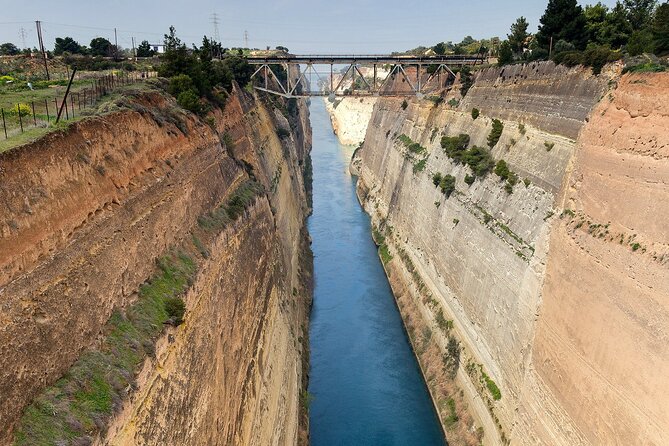
Your first stop is the Corinth Canal—short, scenic, and photo-friendly. It cuts through the narrow Isthmus of Corinth, separating the Peloponnese from mainland Greece. It’s only about 6.4 kilometers long and, importantly, it has no locks. That means many ships pass through under their own power, which you can sometimes spot from higher viewpoints.
This is one of those stops that works because it gives you perspective fast. From up above, you can watch vessels moving through the steep limestone walls. It’s also a useful mental warm-up: once you see the canal, the rest of the day makes more geographic sense.
Practical tip: even though the stop is around 15 minutes, wear shoes you can stand in. You’ll likely want to walk a little to get a cleaner line of sight for photos.
Ancient Corinth: ruins tied to real stories
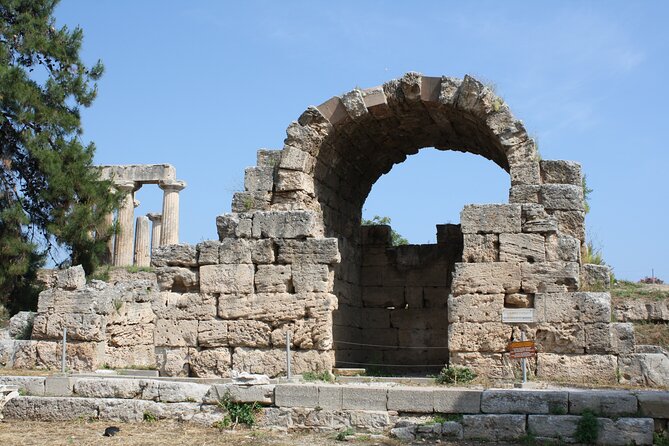
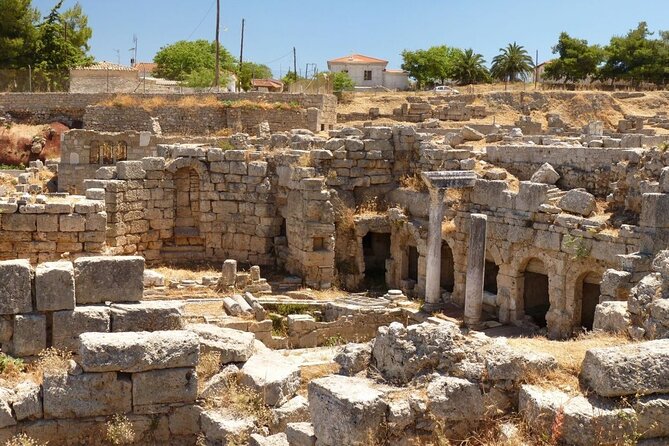
Ancient Corinth is the kind of site where you feel the layers. Corinth was a major city-state on the isthmus—roughly halfway between Athens and Sparta. In the ancient world, it mattered for trade routes and power, which is why you see it described as one of the largest and most important cities of Greece.
The tour also frames Corinth in two very recognizable storylines:
- Paul’s missionary journeys, including references from the New Testament letters connected to Corinth
- The later Roman era, when Corinth was demolished in 146 BC and then rebuilt as a provincial capital
You’ll also get museum time at the Archaeological Museum of Corinth (about 30 minutes on-site time in the plan). That pairing is smart. If you only do the ruins, you can miss how the excavations fit together. The museum sits within the archaeological area, and it was built in the early 1930s to display findings from ongoing digs. Even with a short visit, you’ll typically find it easier to “read” what you see outside afterward.
Drawback to plan for: entrance fees are not included for Ancient Corinth and the museum. You can purchase on-site (given as €15.00 per person). If you hate waiting, arrive ready with a calm mindset.
Temple of Apollo and Akrokorinthos: the views are the payoff
After Corinth proper, you’ll have two shorter, high-reward stops that feel like you’re leveling up the perspective of the day.




Temple of Apollo (about 15 minutes)
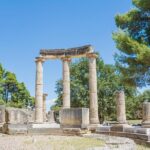
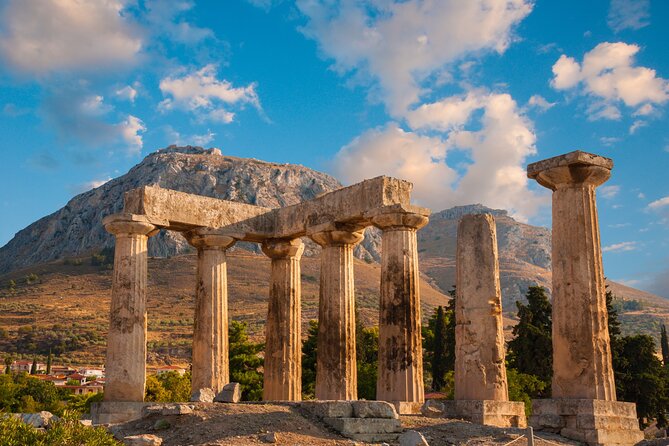
This temple dates to around 550 BC. Even if you don’t spend long here, it acts like a landmark. You’re seeing how religious space anchored civic life.
Because the time is brief, don’t expect a museum-style walkthrough. Instead, use this stop to orient yourself and connect the place to the larger sanctuary culture of ancient Greece.
Akrokorinthos / Acrocorinth (about 30 minutes)
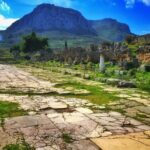
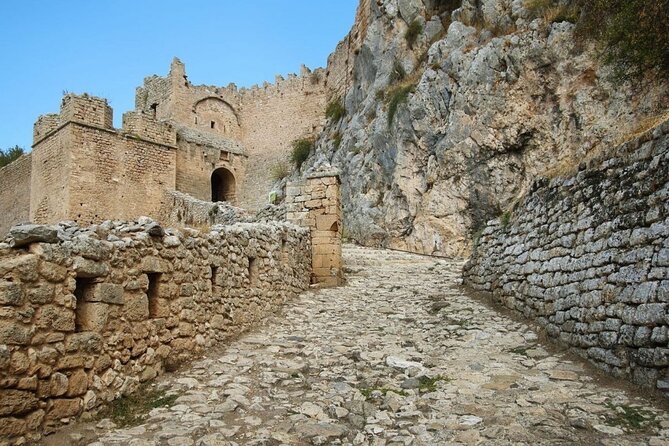
This is the dramatic one. Acrocorinth is an enormous rock complex with a fortress on top. The fact that it controlled routes into the Peloponnese made it a repeated “last line of defense” position. In other words: you’re not just looking at a view—you’re looking at why people fought for this spot.
It’s a great mid-day stress-break. The drive keeps you moving, but the fortress stop gives you open air and a wide horizon. You also get a tangible sense of how geography shapes history. The isthmus control theme keeps repeating, and this stop makes it obvious.
Entrance is listed as free for Akrokorinthos, which is another quiet value win.
Epidaurus Archaeology Museum: why it’s worth the extra ticket
You’ll head to Epidaurus and spend time at the Epidaurus Archaeological Museum (about 30 minutes in the plan). The museum is known for reconstructions and for displaying columns and inscriptions tied to what was found around the site.
If you’re the type who likes to understand what you’re seeing—not just pose for pictures—this museum time helps. It can also make the theatre stop more meaningful because you’re seeing how the sanctuary and architecture were designed.
The entrance is not included. The provided info gives the on-site ticket price for Epidaurus & the Epidaurus Archaeological Museum as €20.00 per person.
The Ancient Theatre of Epidaurus: acoustics you can feel
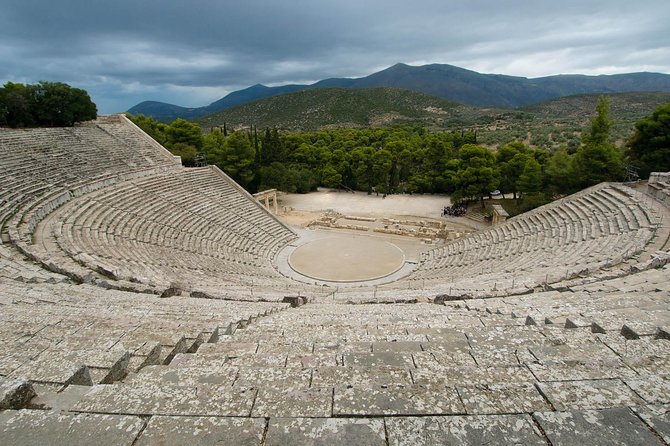
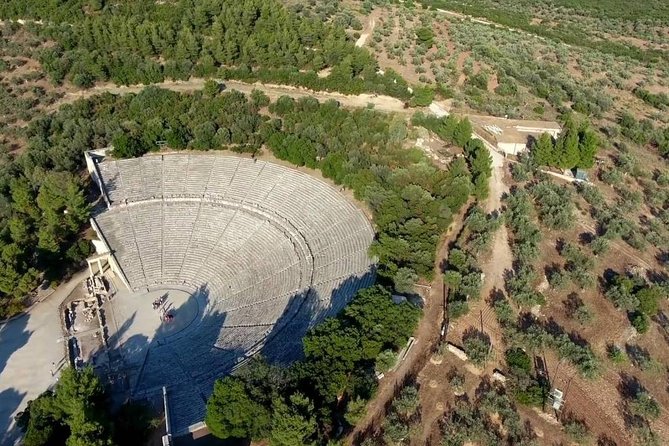
The highlight stop is the Ancient Theatre of Epidaurus. It’s famous for acoustics and for its visual design. It has the classic Greek theatre structure: theatron, orchestra, and skene. The plan gives you around 30 minutes here, which is enough to sit and take in how the space works.
What I like about this stop is that it’s not just “old seats.” It’s a performance space whose design aimed at hearing and sightlines. Even if you don’t catch a show, you can still experience the intent by simply observing from different vantage points.
If you’re short on time, focus on this: take 2 or 3 minutes to sit where you can face the orchestra area. Then shift slightly. You’ll understand why this theatre earned its reputation.
Sanctuary of Asklepios: healing cult, rival sites, and religious power
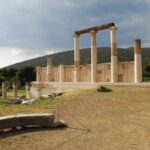
Not far from the theatre zone is the Sanctuary of Asklepios. The tour gives about 10 minutes at this stop, and it’s one of the places where the story behind the stones is the point.
Asclepius was the medicine god, and this sanctuary was the main holy site devoted to him. The tour also notes it was a rival to other major cult centers like Zeus at Olympia and Apollo at Delphi. That tells you something important: this wasn’t a minor local shrine.
The temple is dated to the early 4th century BC, and the sanctuary’s later history is tied to the closing of non-Christian worship under late Roman policies. Even in a short visit, the context helps you see why people traveled here.
Entrance is listed as free for the sanctuary stop, which makes it easy to fit in.
Nafplio: where the day softens from ruins to wandering
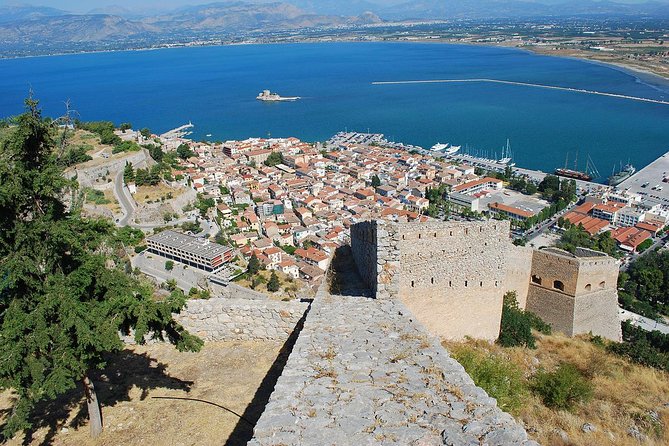
After the long ancient stretch, Nafplio feels like a reward. You get about 1 hour 30 minutes of free time for lunch, coffee, shopping, or just drifting through the old town.
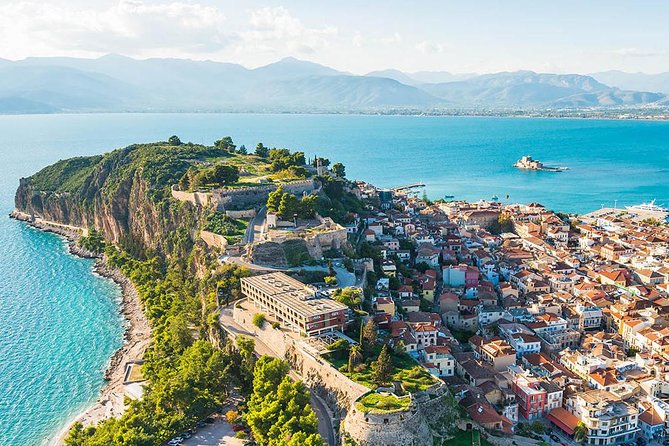
Nafplio is nicknamed the Naples of the East, and for good reason. You’ll notice Venetian architecture, cobbled squares, and towering castles with views over the Argolic Gulf. The town also has a political backbone: it served as capital of the First Hellenic Republic and later the Kingdom of Greece after the 1821 revolution until 1834.
In practical terms, free time is where you can win the trip. Want a slow meal instead of another snack stop? This is your moment. Want a harbor stroll? You’ve got it.
Bourtzi: the water castle photo stop
You’ll also pause briefly for Bourtzi, the Venetian castle sitting in the harbor. It’s a quick viewpoint stop—around 10 minutes—so your job is simple: get your photos from the harbor side and enjoy the contrast between fortifications and calm water.
Acronauplia and Palamidi: castles with different vibes
The older fortified core is Acronauplia, the oldest part of Nafplion. The site evolved over time: Venetians and Franks turned it into part of the city’s fortifications, and later it was used as a prison. The plan notes that a hotel complex was built there because of the view—so you get a blend of history and modern use.
Then comes Palamidi Castle, on a hill east of Acronauplia. It’s Venetian-built during the second occupation (1686–1715). The hilltop gives you wide views over Nafplio and the Gulf.
There’s also a stamina check. The tour highlights that the climb involves 913 steps from town to the fortress, and locals joke it’s 999 steps. Even if you don’t count, you’ll feel it.
My practical take: if your legs are fresh, do Palamidi. If you’re dealing with heat, consider resting more during the drive and keep your stops short. This part is free, which makes it easier to choose based on your energy level.
Driver-led storytelling: what you’re actually buying
One of the most praised parts of this kind of day trip is feeling relaxed. The driver role matters here. In the feedback I’m using to guide my expectations, drivers like Tom and Kostas are singled out for being helpful and personable, and for giving just enough context to connect the sites.
That doesn’t mean you’ll get an official guided tour inside every museum. It means you’ll get answers. And you’ll get those answers at the right times: during the ride, at viewpoints, or while you’re deciding what to focus on for the limited on-site time.
So here’s a tip that makes a difference: during transitions, ask one simple question. Example: What would you notice first at the theatre? Or what’s the big idea behind Akrokorinthos? You’ll get a better visit from the same number of minutes.
Who this day trip fits best
This tour makes the most sense if you want a focused one-day sweep of three major areas:
- Corinth Canal + Ancient Corinth
- Epidaurus theatre and the Asklepios sanctuary
- Nafplio town time with castles and harbor
It’s ideal for:
- Families or small groups that prefer a private car over group schedules
- Travelers who like “see a lot, understand enough” pacing
- People who want comfort and easy pickup without handling logistics
It may not be your best match if:
- You want a deeply detailed licensed guide walking you through every museum hall
- You hate paying on-site for entrance fees and dealing with lines
- You’re trying to do this with very limited mobility, because some fortress walking (like Palamidi steps) is part of the payoff
Should you book the Ancient Corinth, Epidaurus, and Nafplio private tour?
Book it if you want an efficient, comfortable way to hit big-name sites with minimal hassle. The private vehicle changes the feeling of the day. You’re not waiting on strangers. You’re not stuck with a bus pace. And Nafplio’s free time makes the day feel like more than a checklist.
I’d also book it if you appreciate context. The driver commentary is designed to help you connect Paul-era Corinth, the sanctuary culture of Asklepios, and the theatre design into one coherent story. That’s the kind of payoff that makes the time feel worth it, even with short stops.
Only skip it if you’re hoping for a fully licensed museum-style guide inside every site, or if you’d rather spend more hours at fewer places. If that’s you, you might prefer a slower multi-day plan.
FAQ
How many people can you book for on a private vehicle?
The price is listed per group up to 3, and the tour also notes it can accommodate larger groups with one price per vehicle for up to 15 passengers.
Is pickup and drop-off included?
Yes. Hotel, airport, or port pickup and drop-off are included, and your driver can return you to the same place or to a point you prefer.
Are entrance tickets included in the tour price?
Entrance fees are not included for Ancient Corinth & the Archaeological Museum of Corinth (€15.00 per person) and for Epidaurus & the Epidaurus Archaeological Museum (€20.00 per person). Other stops listed as free do not require tickets per the tour info.
Will the driver go into the archaeological sites with me?
No. The drivers are not licensed to accompany you inside archaeological sites. They can provide commentary and answer questions, but they will not enter the sites with you.
What’s included for comfort on board?
You get an air-conditioned vehicle, Wi‑Fi, and bottled water.
Do you get time for lunch in Nafplio?
Yes. You’ll have about 1 hour 30 minutes of free time in Nafplio for lunch, coffee, shopping, or wandering.
What’s the cancellation policy?
You can cancel for free up to 24 hours in advance for a full refund. If you cancel less than 24 hours before the start time, the amount paid is not refunded.