REVIEW · GOA
Old Goa Heritage Walk by Make It Happen
Book on Viator →Operated by Make It Happen · Bookable on Viator
Old Goa tells a Portugal-sized story in two hours. I love how this walk focuses on Portuguese-era places and pairs the details with a storytelling, English-speaking guide. You get a handy Old Goa heritage map too, so the architecture and street layout start making sense fast.
My other favorite part is the pace: you’re not rushed through stops like a drive-by sightseeing list. You spend real time looking at places such as the Church of St. Francis of Assisi, then you reset your bearings at Viceroy’s Arch, and finish at the Church of Our Lady of the Rosary with its UNESCO-linked significance. One drawback to plan for is that this is a walking tour with a strict church dress rule, so you’ll want comfortable footwear and to dress smart for the heat.
In This Review
- Key things I’d circle before you go
- Portuguese Old Goa: why these churches matter
- Starting at Viceroy’s Arch: get your bearings first
- Stop 1: Church of St. Francis of Assisi and its baroque details
- Stop 2: Viceroy’s Arch as a gateway, not just a landmark
- Stop 3: Church of Our Lady of the Rosary and the UNESCO link
- The guide is the product: how storytelling changes the walk
- Price and value: what you’re really paying for at $12.27
- Comfort and timing: how to make the walking part easier
- What a private tour actually feels like here
- Who should book this Old Goa Heritage Walk
- Quick reality check: what’s not included
- Should you book this tour or skip it?
- FAQ
- How long is the Old Goa Heritage Walk?
- What does the $12.27 price include?
- Where does the tour start and end?
- Is there a dress code for the churches?
- How many people are in the group?
- What happens if the weather is bad?
Key things I’d circle before you go
- Entry fees are included, so you don’t waste time figuring out ticket costs street-by-street
- Heritage map provided, which makes the route feel ordered instead of random
- Small group size (max 20) with a private feel and personal Q&A time
- Church dress code (cover knees and shoulders), worth planning before you leave your hotel
- Guide-led storytelling, with reroutes if a major site is closed on the day
- A start point at Viceroy’s Arch, a great way to understand Old Goa’s layout from the first minute
Portuguese Old Goa: why these churches matter
Old Goa’s big theme is how Portuguese rule shaped the city’s most visible symbols—churches, convents, and the way religious life sat at the center of public space. On this walk, you’re not just looking at pretty facades. You’re getting the why behind the walls: what the Portuguese built, how it functioned, and what you’re seeing even if you don’t know the local timeline yet.
I like that the tour keeps the focus on the Portuguese layer rather than trying to cover everything in one go. In a compact 2 hours 30 minutes, that restraint is a gift. It helps you walk away with a clearer picture instead of a blur of names.
And yes, these churches have serious artistic detail. One stop in particular brings you close to baroque features like wall paintings and carved woodwork, which turns the whole visit into something you can actually study, not just photograph.
You can also read our reviews of more walking tours in Goa



Starting at Viceroy’s Arch: get your bearings first

You meet at Viceroys Arch, near Old Goa (403402). The location is a smart choice because an archway isn’t just decoration—it’s a statement. Viceroy’s Arch is described as a main entrance to Old Goa from the Mandovi river front, so you start by understanding how people moved into the heart of the city.
That matters because Old Goa’s streets can feel compact and winding. When your guide frames the space from the start, you stop feeling lost. You also get an easy photo moment early, before you’re tucked into church interiors and shade limitations.
If you’re traveling on your own, this is also convenient since the meeting area is noted as being near public transportation. You don’t need a special plan to get there, and you can spend your energy on the walking portion.
Stop 1: Church of St. Francis of Assisi and its baroque details

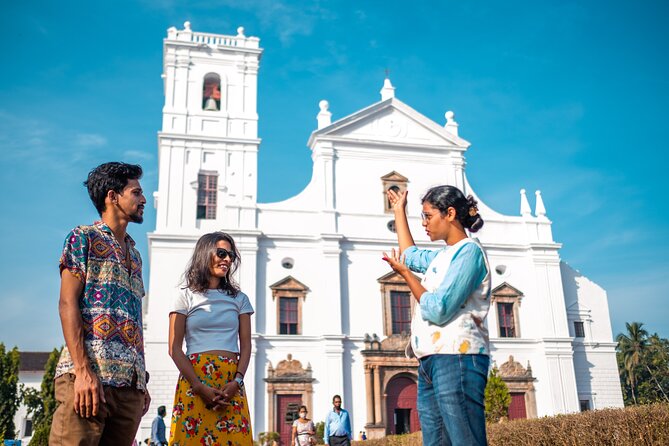
Your first major stop is the Church of St. Francis of Assissi. This church is known for a baroque style, with wall paintings and intricate woodwork that you really only notice when someone points them out with context.
The biggest value here is how the guide connects the visual details to the religious and cultural purpose. Look closely and you’ll start seeing how artwork functioned like communication—teaching, reinforcing belief, and shaping what visitors understood about faith and power.
Practical tip: church interiors can be cooler than the street, but they’re not where you’ll want to rush. Give yourself time to look upward and around, not only at the front altar area. If you come straight from a sunny walk, your eyes may need a minute to adjust.
Entry is included for this stop, and the tour timing gives you a short but meaningful window (around 5 minutes on the schedule). That’s enough for a first sweep when the guide is actively guiding you.
Stop 2: Viceroy’s Arch as a gateway, not just a landmark
Next comes Viceroy’s Arch again as its own moment (about 10 minutes scheduled). That might sound odd—why spend time at the start point? The answer is learning flow. Your guide uses the arch as a physical reference to explain the city’s structure and movement: the idea of Old Goa as a place people entered, not a site you just walked through randomly.
It’s also a nice break between church interiors. You’ll shift from enclosed, detailed spaces to open-air context, which helps you keep the story straight in your head.
If you like your photos more than your history notes, this is still worth it. The archway gives you a clean frame for Old Goa’s entrance energy, and it’s an easy spot to orient your phone camera before you move back into sacred architecture.
Stop 3: Church of Our Lady of the Rosary and the UNESCO link
The final stop is the Church of Our Lady of the Rosary, one of the most beautiful churches in Old Goa both architecturally and historically. What elevates this stop from a nice church visit to a meaningful one is its connection to the World Heritage Site of churches and convents of Goa.
That UNESCO-linked detail matters because it helps you understand why these sites are protected and how they’re viewed beyond local worship. You’re seeing part of a larger heritage story, where architecture carries evidence of the Portuguese-era imprint.
In the space itself, focus on how the building reads: lines, proportions, and the way decoration supports the church’s role as a communal anchor. Even if you’re not a religious architecture expert, the guide will help you interpret what you’re seeing in plain language.
This stop is also scheduled for around 10 minutes with admission included, which works well if you’re doing Old Goa as a half-day chunk. You end with a strong sense that the artistry has weight, not just beauty.
You can also read our reviews of more historical tours in Goa






The guide is the product: how storytelling changes the walk
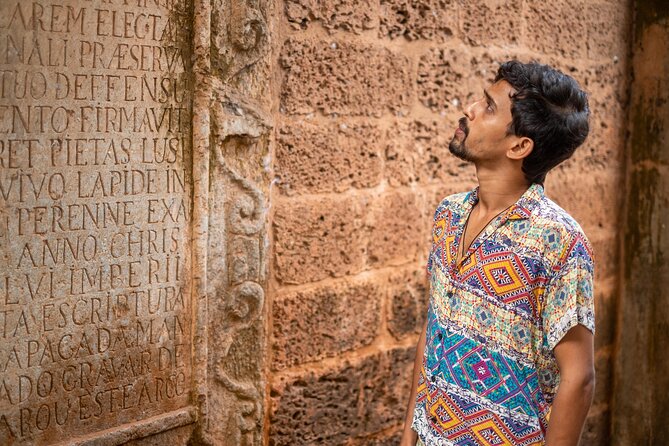
A “heritage walk” can mean anything from a facts-only lecture to someone talking while you stare at buildings. Here, the guide makes the whole difference. I’ve seen multiple named guides praised for the same strengths: lively storytelling, clear explanations, and patience with questions.
Names that come up include John Ferrão, Vimala Desouza, Yashasvi, Santoshi, Pawan, Mugdha, and Amreen. The common thread is how they handle real-world questions on the spot, especially when your group includes different ages. One group description specifically mentions a wide age range—from a toddler to grandparents—so the guide clearly adjusts.
Another smart element: itinerary flexibility. On one day, major sites like the Sé Cathedral and Basilica Bom Jesus were reportedly closed, and the guide adapted by taking the group to a different spot such as St Augustine Tower. That’s not something you can count on, but it’s comforting to know the tour has a plan B instead of just skipping the story.
One more example of guide value: at least one guide reportedly added extra time to visit the St Francis Xavier exposition. Don’t assume extra time will happen every day, but it signals that your guide is willing to respond to the moment and the group’s interest.
If you want a tour where you can ask why people built things a certain way and not just listen passively, this format fits.
Price and value: what you’re really paying for at $12.27

At $12.27 per person, this is priced for real budget travelers. But the real value isn’t the number—it’s what’s bundled.
The price includes:
- Entrance fees for the stops on the route
- A friendly English-speaking host/guide
- An Old Goa heritage map
When entry fees are included, you avoid a small but constant friction: stopping to confirm ticket prices, where to pay, and whether you’re missing something. That matters in a walking tour because time is limited. You only have 2 hours 30 minutes, so fewer logistics steps means more story time.
You also don’t pay extra for an air-conditioned vehicle because one isn’t included. That sounds like a negative if you want comfort in a car, but it’s also part of the reason the tour stays affordable. You’re investing in guided walking rather than transportation.
If you’re comparing alternatives, think of this as paying for interpretation and access, not just a stroll. With a competent guide, the map and entry inclusions make it feel like a real deal, especially for first-time visitors.
Comfort and timing: how to make the walking part easier
This tour doesn’t include an air-conditioned vehicle, and snacks aren’t included either. That means you need to manage your own comfort: shoes, shade breaks, and water.
Dress code is the big non-negotiable. You must cover knees and shoulders to enter churches. Don’t treat that as optional or something a quick workaround will fix. Plan clothes before you leave your hotel, especially if you’re doing this after beach time.
Also wear comfortable walking shoes. One of the best practical tips that’s been shared is exactly that: show up with shoes you can walk in for the full route. Old Goa involves enough movement that stiff or fancy shoes can turn “heritage walk” into “heritage limp.”
Timing can help too. One recent group highlighted an early start time (8:30 AM) as a way to avoid the sun getting oppressive. If you have flexibility, pick an earlier time slot. You’ll enjoy churches more when you’re not already overheated.
What a private tour actually feels like here
The tour is described as private, with flexibility and personal attention from your guide. In real terms, that usually means you can ask questions without trying to shout over other people, and you can slow down for details your group finds interesting.
Group size is capped at a maximum of 20 travelers. That’s a sweet spot for a walking itinerary: big enough that the tour doesn’t feel cramped, small enough that the guide can notice when people are stuck or confused.
If you like learning at your pace—stopping to look closely, asking about political or cultural context, then moving on—this format is a good fit.
Who should book this Old Goa Heritage Walk
This walk is best for you if:
- You’re short on time but want a strong “Portuguese Old Goa” focus
- You want an English-speaking guide to connect buildings to meaning
- You prefer walking with breaks at specific monuments rather than a scattershot drive-around
- You like churches and want to understand what you’re looking at without needing a guidebook translator
It’s also a smart choice for families and mixed-age groups because the guides described are comfortable answering questions and adjusting explanations for different ages.
If you’re allergic to churches, or you’re traveling with someone who can’t meet the dress code requirement, you might feel constrained. And if you absolutely need an air-conditioned ride as part of your comfort routine, you’ll need to plan your day around that.
Quick reality check: what’s not included
No snacks are included, and there’s no mention of water being provided. Plan to grab a drink before you start. You’ll also be doing the walking without the cushion of an included transport vehicle.
One more thing to keep in mind: church closures can happen. When that happens, your guide may adjust to keep the story going, but the exact sites you see can vary. That’s normal for live heritage sites, not a special failure of the tour.
Should you book this tour or skip it?
I’d book the Old Goa Heritage Walk if you want a focused, affordable way to understand how Portuguese rule shaped what you see today. The entry fees included, the heritage map, and the consistently praised guide storytelling make it feel like more than a basic sightseeing loop.
Skip it only if you strongly dislike church interiors, you can’t meet the dress code, or you’re counting on an air-conditioned ride as part of the experience. For everyone else, this is a practical way to get oriented in Old Goa and leave with specific places in your memory, not just vague impressions.
FAQ
How long is the Old Goa Heritage Walk?
It runs about 2 hours 30 minutes.
What does the $12.27 price include?
The tour includes a friendly English-speaking host, an Old Goa Heritage Map, and the entrance fee(s) for the stops.
Where does the tour start and end?
It starts at Viceroys Arch, Goa Old Goa, Goa 403402, India, and ends back at the meeting point.
Is there a dress code for the churches?
Yes. You must cover knees and shoulders to enter churches.
How many people are in the group?
The tour has a maximum of 20 travelers.
What happens if the weather is bad?
The experience requires good weather. If it’s canceled due to poor weather, you’ll be offered a different date or a full refund.