REVIEW · JAIPUR
3 Days Private Khajuraho Historical Tour with Breakfast
Book on Viator →Operated by 5 Senses Walks · Bookable on Viator
Stone romance in 3 days. Khajuraho delivers that fast: you trade Delhi’s modern buzz for 10th-century temples, all wrapped in UNESCO heritage and carved details, including erotic sculptures often linked to the Kamasutra tradition. The plan is tightly paced, but not rushed—built around temple art you can actually take in.
I like two things a lot. First, the logistics are handled for you: you fly Delhi–Khajuraho round-trip, get two hotel nights, and move in a private car with a professional guide. Second, the guide work feels personal; in particular, Anurag’s explanations made the carvings and temple design feel more than decoration—they feel like a language.
One thing to consider: breakfast is included, but food and beverages aren’t. Also, on the final day you’re back at the airport around 3:00 pm, so you’ll want to avoid late, extra sightseeing on day three.
In This Review
- Key highlights worth your attention
- From Delhi to 10th-Century Khajuraho: the pace that makes it work
- Khajuraho’s temples and why the erotic carvings matter
- Day 1: arrival, check-in, and an early reset from city life
- Day 2 Sacred art circuit: Javari, Chausath Yogini, and Kandariya Mahadev
- Javari Temple: UNESCO and the feeling of an artistic workshop
- Chausath Yogini Temple: 64 shrines, each yogini in a different posture
- Kandariya Mahadev Temple: entrance drama, linga worship, and corridor detail
- Day 2 Hindu masterpieces: Lakshmana and Varaha’s animal-powered symbolism
- Lakshmana Temple: three heads, four arms, and love scenes carved in stone
- Varaha Temple: the boar-headed Vishnu and Saraswati with her veena
- Day 3’s finale: Dulhadev, Parshwanath Jain, and Devi Jagadamba before you fly home
- Dulhadev Temple: Shiva as a bridegroom and a seven-horse chariot shape
- Bhagawan Parshwanath Digambar Jain Mandir: Jain motifs and musical goddess idols
- Devi Jagadamba Temple: pyramidal roof and imaginative mythical creatures
- Guide quality and local support: why the temple talk feels personal
- Price and value: what $435 a person buys you here
- Who should book this Khajuraho tour
- Should you book this 3-day private Khajuraho tour?
- FAQ
- What time does the tour start?
- How long is the experience?
- Does the price include flights?
- What’s included in the tour besides hotel and flights?
- Are meals other than breakfast included?
- Is transportation private?
- Do I get a guide at the temples?
- What is the cancellation policy?
- Is this tour suitable for most people?
Key highlights worth your attention
- Direct flights and private car keep your time focused on temples, not transit.
- Hindu and Jain mix across major monuments, so you see more than one tradition.
- UNESCO Javari Temple plus the 64-shrine Chausath Yogini complex.
- Iconic stone themes: Makara torana entrance motifs, linga worship, and animal-headed deity art.
- Anurag-led storytelling that makes the carvings easier to read.
- Local livelihood focus through local guides and support for nearby businesses.
From Delhi to 10th-Century Khajuraho: the pace that makes it work
The tour starts late afternoon in Delhi, with a scheduled departure around 3:30 pm. You fly to Khajuraho and land around 4:50 pm, check in, then sleep in the town for the night. That matters, because Khajuraho isn’t a quick stop you can do comfortably after a full day in motion. Starting with the flight is what makes this a realistic 3-day hit instead of a long, exhausting scramble.
On day two you start after breakfast, and then it’s a classic temple-hopping rhythm: short visits at multiple key sites, each timed to help you see a lot without burning out. You get admission tickets included at the temples along the way, so you’re not spending time figuring out entrances or payments mid-journey.
Day three is the tradeoff for all that coverage. You’ll be taken back to the airport around 3:00 pm, fly out at roughly 5:10 pm, and arrive back in Delhi around 6:25 pm. If you like lots of unplanned wandering, you’ll feel a bit boxed in on the last day. If you like a plan that hits the must-sees, this structure is a win.
You can also read our reviews of more private tours in Jaipur

Khajuraho’s temples and why the erotic carvings matter
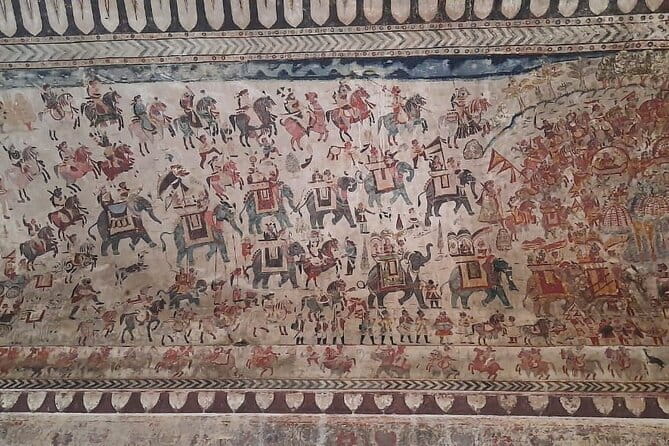
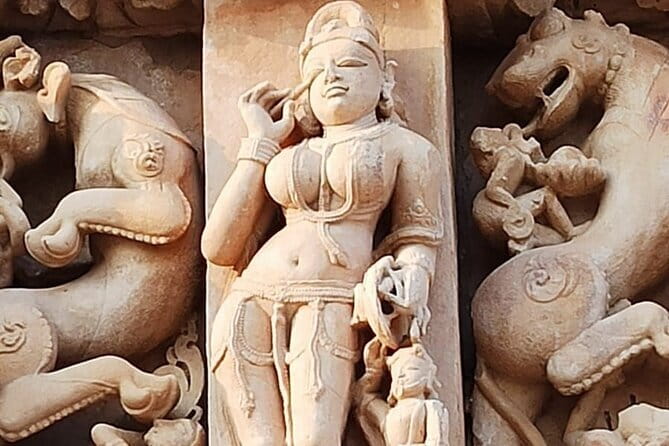
Khajuraho is famous for a temple complex with 22 temples, where Hindu and Jain traditions share the same sacred architecture world. The reason you’ll hear the word Kamasutra attached to Khajuraho isn’t because the whole site is a single theme park of romance. It’s because some carvings show human intimacy and desire in stone—an artistic way of talking about life, spirituality, and the human experience.
What makes this tour rewarding is that you’re not just “looking at figures.” You’re moving through temples with very different purposes and design choices. One site emphasizes dramatic entrances. Another focuses on yogini shrines and posture. Another centers on linga worship and temple corridors. That mix turns the erotic carvings into part of a broader visual program, not a random distraction.
And if you care about authenticity, this tour is built around local involvement. Five Senses Walks is recognized by India’s Ministry of Tourism and is a member of IATO, and their stated mission is to support local livelihoods by employing local guides and supporting local businesses.
Day 1: arrival, check-in, and an early reset from city life
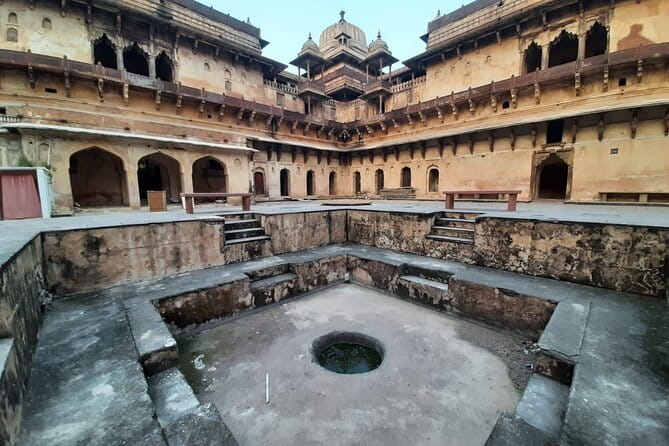
After your Delhi flight lands, you check in to your 2-night hotel stay in Khajuraho. Day one is intentionally light: it’s about getting you comfortable enough to start fresh the next morning. That’s helpful because the real work starts day two with multiple major temples back to back.
You’ll also get one of the best benefits of this area right away: you’re escaping Delhi’s noise, traffic, and pollution for calmer, rural Central India. Even one night out there changes your headspace before the first carvings start drawing you in.
Day 2 Sacred art circuit: Javari, Chausath Yogini, and Kandariya Mahadev
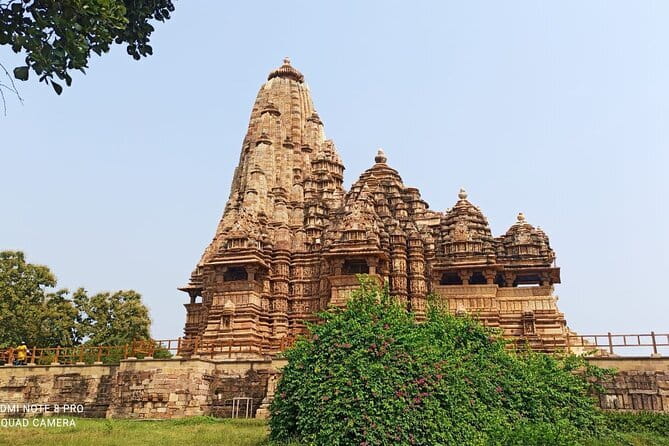
Breakfast sets you up for a full day of temple art, with included admission tickets at each stop. The day is built around some of the most recognizable Khajuraho designs, and they each teach you something different.
Javari Temple: UNESCO and the feeling of an artistic workshop
You visit Javari first, a UNESCO World Heritage Site. The temple sits on a high pedestal, and the point is scale plus detail. You’ll notice how the carvings work both on the outside and in the interiors. This is one of those places where the stone doesn’t just decorate—it explains.
What to watch for: look at how the temple’s elevated setting and exterior ornamentation connect to what you find inside. Even at a 30-minute stop, you can get a strong sense of the craft if you slow your eyes down.
You can also read our reviews of more historical tours in Jaipur



Chausath Yogini Temple: 64 shrines, each yogini in a different posture
Next is the Chausath Yogini Temple, where the idea is simple but impressive: 64 shrines, one for each yogini, plus a central shrine that’s described as the largest. The central area includes Shiva with Parvati beside him, with Nandi the bull.
What really draws you in here is the emphasis on individuality. Each yogini statue has a different posture, and the temple is mostly built of granite. That makes the sculptural work feel dense and intentional, like each figure has its own character.
Practical note: since you only have about 30 minutes here, go in with a plan—spot the central shrine first, then look for how posture changes across the surrounding figures.
Kandariya Mahadev Temple: entrance drama, linga worship, and corridor detail
Kandariya Mahadev is the big “wow” for many people. It was designed and built by Chandela King Vidyadhara in the early 11th century, and the story around it includes the region being invaded and damaged after which it was rebuilt. That historical interruption matters because it adds a layer of resilience to what you’re seeing.
You’re guided to focus on key features fast: a striking Makara Torana (a sacred entrance motif), intricate interior hallways, and the main hall where the prime deity is Lord Shiva as a linga. There’s also mention of a notable painting of a four-footed incarnation of Shiva called Chatuspada.
Why it feels special: this is where the temple becomes more like architecture you walk through, not just a monument you stand in front of.
Day 2 Hindu masterpieces: Lakshmana and Varaha’s animal-powered symbolism
After Kandariya, you continue to two more major sites that add different tones to the day.
Lakshmana Temple: three heads, four arms, and love scenes carved in stone
Lakshmana Temple is associated with the Chandela ruler King Yashovarman in the 10th century. The main idol is Lord Vaikuntha, described with three heads and four arms. You’ll also see that Vaikuntha is accompanied by avatar figures: Narasimha (lion avatar) and Varaha (boar avatar).
The carvings also include statues of beautiful women with their partners, which is one of the ways Khajuraho’s famous erotic themes show up in the wider decorative program. In other words: it’s not only one temple. The motifs reappear across the complex.
Varaha Temple: the boar-headed Vishnu and Saraswati with her veena
Varaha is another Vishnu incarnation, shown with a boar head on a human body and four arms. The carvings described here are detailed, especially a scene of Goddess Saraswati playing her veena. That kind of artistry gives you a break from purely human-focused scenes and shows how wide the symbolic world is in these temples.
Both Lakshmana and Varaha are shorter stops—around 20 minutes each—so you’ll want to treat them like art sprints. Let the guide point you at the main figures first, then use your remaining minutes for the smaller details you can spot quickly.
Day 3’s finale: Dulhadev, Parshwanath Jain, and Devi Jagadamba before you fly home
Day three starts at the last Hindu stop, then shifts into Jain, then ends back with a goddess-focused temple—an intentional mix that gives you a sense of how Khajuraho’s religious world shares form while keeping different identities.
Dulhadev Temple: Shiva as a bridegroom and a seven-horse chariot shape
Dulhadev depicts Shiva as a bridegroom, which is tied to the name idea behind dhuladeo. The temple is described as the last built in the group and located on the banks of the Khodar River. The form is said to be a saptadhara shape, like a chariot driven by seven horses.
A 30-minute stop is enough to catch the symbolic shape and understand the theme, especially if your guide gives you the design logic rather than only reciting the story.
Bhagawan Parshwanath Digambar Jain Mandir: Jain motifs and musical goddess idols
Next you visit the Digambar Jain Mandir dedicated to Parshwanath, built by Chandela ruler Dhanga in the early 10th century. The walls feature motifs described as including male and female figures, Gemini, trees and flowers, and river references like Ganga and Yamuna.
Inside, there are many idols of female goddesses playing instruments such as gandarva, manjeera, shankha, mridanga, and vadya. That musical detail is one of those touches that makes a short visit feel richer than the time suggests.
Devi Jagadamba Temple: pyramidal roof and imaginative mythical creatures
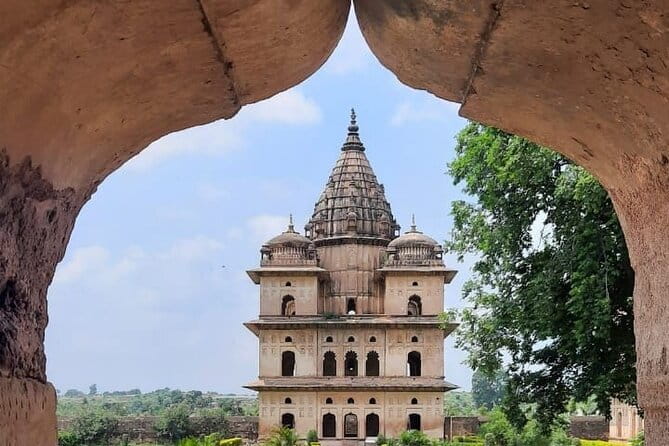
The final temple stop is Devi Jagadamba, with a gorgeous statue of Goddess Parvati. The roof is described as intricately designed and pyramidal. The carvings include imaginative beasts and mythical renditions, such as bodies combined with heads of other animals.
When you finish here, it’s a strong way to close the tour. You end on a visually playful temple world right before heading back to the airport.
By 3:00 pm, you’ll be dropped to the airport, then you fly out around 5:10 pm and arrive back in Delhi around 6:25 pm.
Guide quality and local support: why the temple talk feels personal
This is the part that quietly makes the tour better than a standard checklist. You’re with a professional guide throughout, and the carvings get explained in a way that helps you connect the dots.
In the experience’s feedback, Anurag is called out for being brilliant and patient—exactly what you want when stone details include animal-headed figures, multiple avatars, and complex iconography. You also see names like Vivek and Ram Sewak connected with careful planning: hotels, transportation, help with local restaurant choices, and the selection of local guides.
And since Five Senses Walks says the model supports local livelihoods, it’s not just a company running a schedule. It’s a tour that aims to keep travel dollars working locally through guides and nearby businesses.
Price and value: what $435 a person buys you here
At $435 per person, this tour isn’t trying to be a low-cost bus ride. It’s built around specific value drivers:
- Round-trip economy flights from Delhi to Khajuraho and back
- Two nights of hotel in Khajuraho
- Private car with you during temple days
- Professional guide for the temple circuit
- Breakfast included
- Admission tickets included at each listed temple stop
If you were to DIY this, you’d likely spend time coordinating flights, finding a driver, booking hotels, and sorting out ticket logistics. Even when you save money on paper, you often pay for it in stress and lost time. Here, the schedule is tightly managed around the sites you’ll want to see in three days.
The one tradeoff is also clear: food and beverages aren’t included. Plan on covering lunch and dinner on your own those two days.
Who should book this Khajuraho tour
This is a great fit if you want:
- a time-efficient temple-focused trip (without spending hours on planning),
- an art-and-symbols experience guided by someone who can explain what you’re seeing,
- a mix of Hindu and Jain monuments in one package,
- a trip that gets you out of city chaos and into a calmer setting for a couple of nights.
It may feel less ideal if you want free-form wandering or long stays at a single temple. The stops are intentionally timed—perfect for coverage, less perfect for lingering.
Should you book this 3-day private Khajuraho tour?
I’d book it if your priority is seeing major Khajuraho temples in a short, well-run window, and you care about understanding the stone art rather than just taking photos. The included flights and hotel remove the biggest headaches, and the guided focus helps you read the carvings, including those Kamasutra-linked erotic themes, as part of a larger spiritual and artistic program.
If you hate tight timelines, or if you’re the type who needs unplanned extra hours on day three, then you might want a slower option instead. But for a first Khajuraho visit, this plan is hard to beat.
FAQ
What time does the tour start?
The tour start time is listed as 3:30 pm.
How long is the experience?
It runs for 3 days (approx.).
Does the price include flights?
Yes. Economy flight tickets from Delhi to Khajuraho and return are included.
What’s included in the tour besides hotel and flights?
You get two nights’ hotel in Khajuraho, breakfast, a private car, a professional guide, and admission tickets for the listed temple stops. You also get a mobile ticket.
Are meals other than breakfast included?
No. Food and beverages are not included.
Is transportation private?
Yes. The tour includes a private car, and it’s described as a private tour/activity for your group.
Do I get a guide at the temples?
Yes. The tour includes a professional guide for the experience.
What is the cancellation policy?
You can cancel up to 3 days in advance for a full refund. If you cancel less than 3 days before the experience starts, the amount paid will not be refunded. If the experience is canceled due to poor weather, you’ll be offered a different date or a full refund.
Is this tour suitable for most people?
The additional info says most travelers can participate.