REVIEW · GOA
Panjim Heritage Walk for a cultural immersion in Goa
Book on Viator →Operated by 5 Senses Walks · Bookable on Viator
Goa’s capital has a personality you can walk into. This Panjim Heritage Walk strings together the Latin Quarter, old squares, and two big spiritual stops so you can connect the dots between Portuguese influence and everyday life in Panaji. It lasts about 3 hours, stays small (up to 10 people), and you won’t waste time paying for admissions.
I especially like two things: you get professional guiding that focuses on stories and details (not just landmarks), and you’re treated to snacks plus coffee or tea so the walk stays comfortable. One thing to plan around: this experience depends on good weather, and you may need a different date if conditions are rough.
In This Review
- Why Panaji’s Portuguese-era streets work better on foot than on a bus
- Fontainhas Latin Quarter: Portuguese bureaucrats and the streets they shaped
- Sao Tome Old Quarter: the square behind the tobacco story
- Maruti Temple: Hanuman’s presence in everyday Panaji
- Church of Our Lady of the Immaculate Conception: sailors, a hill, and Bollywood recognition
- Snacks, coffee/tea, and pacing on a 3-hour heritage walk
- Meeting point and how to plan your morning in Panaji
- Who should book this Panaji Heritage Walk (and who might not)
- Should you book Panjim Heritage Walk?
- FAQ
- How long is the Panjim Heritage Walk?
- How many people are on the tour?
- What does the price include?
- Are there any entry fees for the stops?
- Where does the tour start and end?
- Is pickup or drop-off provided?
- What if the weather is bad or I need to cancel?
Why Panaji’s Portuguese-era streets work better on foot than on a bus
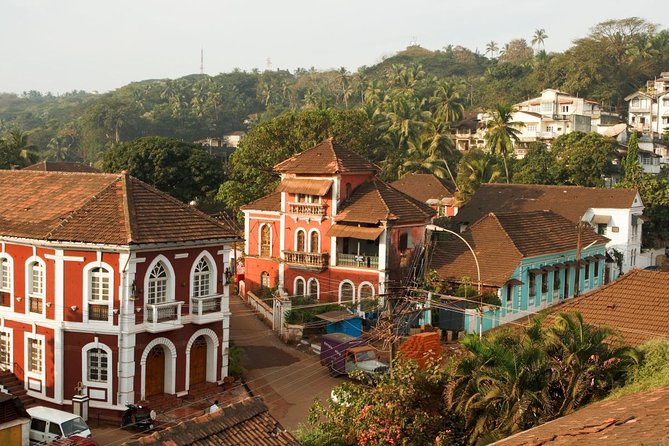
Panaji is the kind of city where history doesn’t sit behind ropes. It’s built into street layouts, neighborhood names, and the way buildings and faith sites show up close to each other. A guided walk is the best way to make sense of that—because you’re not just looking. You’re being taught how to read the place.
This tour is built for that exact goal. You start in the Latin quarter area of Fontainhas, then move through older neighborhood blocks tied to trade and colonial administration, and finish with a temple and a church that are instantly recognizable in the wider Goa story. And because it’s limited to a maximum of 10 travelers, you’re more likely to get direct answers when questions pop up.
For value, I like that the main costs are handled upfront: the price covers a professional guide, coffee/tea, snacks, and entrance charges. Plus, the stops are described as free for entry—so you’re not juggling cash at each site.
Fontainhas Latin Quarter: Portuguese bureaucrats and the streets they shaped
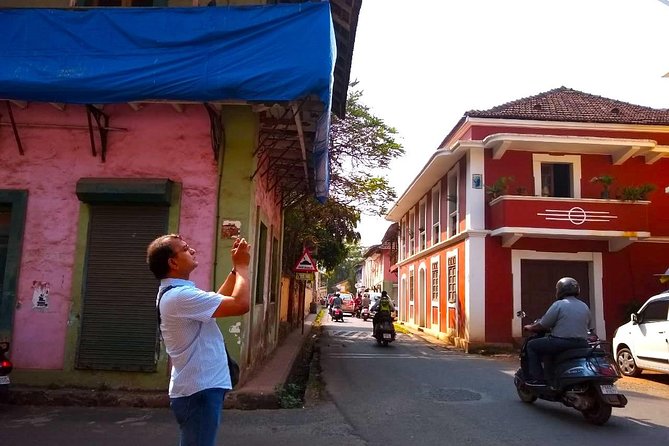
Your walk begins in Fontainhas, the Latin quarters designed historically for Portuguese officials and servants. That’s not just a trivia point; it changes how you look at the neighborhood. You’ll notice how the area gets described and why it was among the earliest settlements in Panaji city.
The payoff here is perspective. With a good guide, this first stop sets the tone for the whole tour. You start learning how Panaji’s Portuguese chapter shows up not only in churches and streets, but in the very idea of a neighborhood planned for administration and daily work.
What to watch for: pay attention to the flow of lanes and the residential feel. Even when you’re only here for about 30 minutes, the goal is to get your bearings for the Portuguese side of Goa before you move on.
Potential drawback: Fontainhas is a walking neighborhood. If you’re used to hopping between big sights with lots of recovery time, this start may feel a bit “small-scale.” But that’s the point—this is street-level cultural context.
You can also read our reviews of more walking tours in Goa



Sao Tome Old Quarter: the square behind the tobacco story
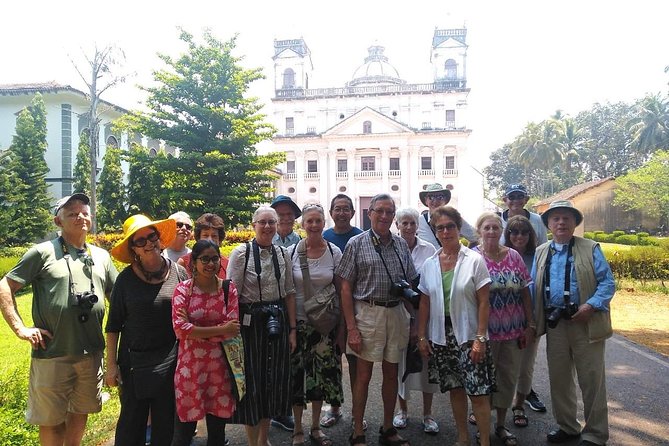
Next you head toward the Sao Tome Old Quarter, where you’ll reach a square tied to the area’s older economy. The square’s name connects to tobacco trading across the river, and the same space later served multiple roles: police headquarters, customs and mint area, and eventually a place that accommodates other uses today.
That sequence matters. Places like this are proof that cities reuse space. Over time, power shifts, trade changes, and a square that once handled enforcement and money becomes something else. A guided heritage walk helps you see those layers as a timeline rather than random building blocks.
You’ll spend about 30 minutes here, which is enough time to understand the “why” behind the square’s identity—without turning it into a long history lecture.
Tip for you: if your brain loves patterns, treat this stop like a mini-lesson. Ask yourself: Who controlled the square? Who used it? What changed, and what stayed?
Maruti Temple: Hanuman’s presence in everyday Panaji
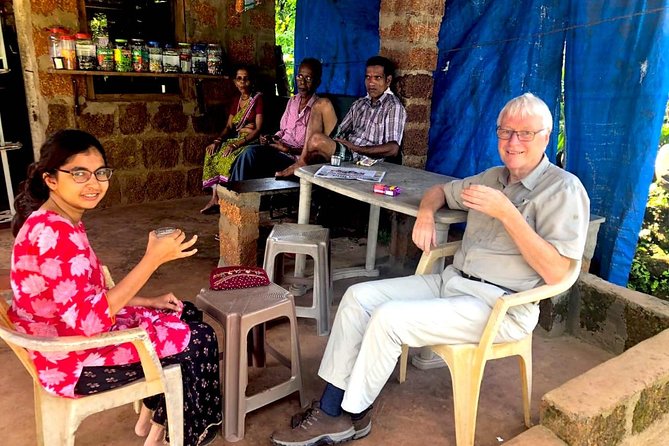
Then comes Maruti Temple, dedicated to Lord Hanuman—the monkey god. This is only about 15 minutes, but it’s a powerful contrast point after the Portuguese-linked neighborhood stops.
Why? Because the walk keeps balancing the cultural equation. Goa’s Portuguese influence is big, but it’s not the only story. A Hindu temple stop reminds you that religious life in Panaji isn’t a museum topic. It’s part of how people move through their day.
What you’ll get in a short time: context on what the temple is, why Hanuman is represented here, and how that fits into a wider Goa you can actually stand in.
Consideration: since it’s a shorter stop, go with a mindset of noticing rather than expecting lots of time for deep questions. If you want to ask more, keep your questions ready for your guide during the temple moment and the walk between sites.
Church of Our Lady of the Immaculate Conception: sailors, a hill, and Bollywood recognition
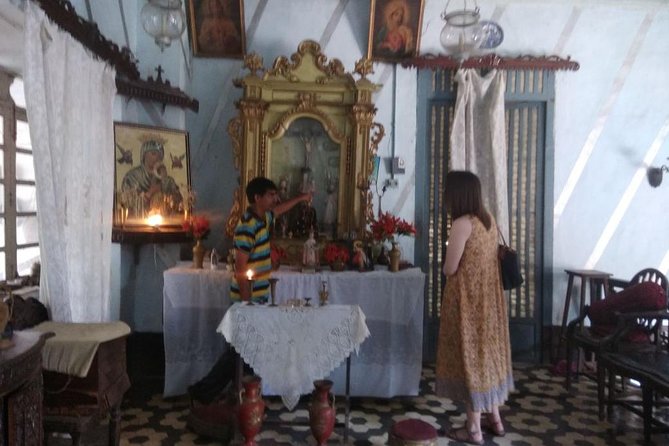
Next is the Church of Our Lady of the Immaculate Conception. This one has two layers you can’t miss: first, the story of why it was built; second, the visual familiarity created by its use as a representation of Goa in Bollywood films.
The church was constructed on a hill for sailors in 1541, after a temple was demolished. That detail is a reminder that colonial-era religion and politics often moved fast—and left physical marks. Seeing it after the neighborhood stops helps the meaning land. You’re no longer only learning about a monument. You’re watching how city decisions shaped belief spaces.
The stop is about 30 minutes, which is enough time to take in the architecture and absorb the guide’s explanation without rushing.
If you care about film and memory: even if you don’t watch much Bollywood, it’s still interesting to see how a single location becomes shorthand for an entire place. You’ll probably catch why people associate Goa with this kind of church-and-sunlit-hill imagery.
Snacks, coffee/tea, and pacing on a 3-hour heritage walk
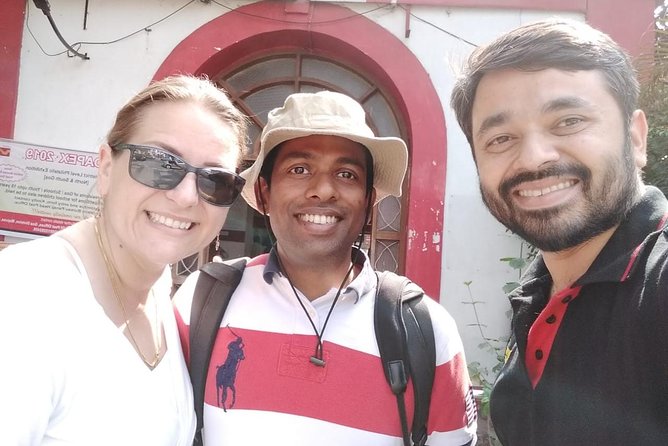
A big reason I recommend this tour is the small comfort touches. You’ll get snacks during the walk, plus coffee and/or tea included in the price. That matters in Goa, where walking around town can feel more tiring than you expect—especially if you’re arriving after a day of sightseeing.
The duration is about 3 hours, and the schedule breaks that time into tight chunks:
- Fontainhas (~30 minutes)
- Sao Tome Old Quarter (~30 minutes)
- Maruti Temple (~15 minutes)
- Church (~30 minutes)
The pacing is practical. You’re not stuck at any single site long enough to lose interest, but you’re not sprinting from one place to another either. It’s more like a guided “thread” you follow through Panaji.
Value note: since entrance charges are included and the itinerary describes free admission at each stop, the tour price is largely about the guide, time, and the cultural storytelling. For $30 per person, that can feel fair—especially with a group capped at 10 travelers.
You can also read our reviews of more historical tours in Goa






Meeting point and how to plan your morning in Panaji
You’ll start at Garcia de Orta (FRXH+Q44), near Municipal Garden, Panaji, Goa 403001. The tour ends back at the meeting point, so you don’t need to think about transport to get home after.
It’s also described as near public transportation, which helps a lot if you’re mixing this walk with other Panaji stops. If you like planning in layers, you can pair this with a light meal afterward, since it returns you right where you started.
One more practical note: there’s no pick up or drop included. That’s easy enough to handle, but you’ll want to make sure you know how you’re getting to the Municipal Garden area.
Who should book this Panaji Heritage Walk (and who might not)
This tour fits best if you want:
- A cultural, story-led way to understand Panaji rather than a checklist of buildings
- A comfortable group size where you can actually ask questions
- A mix of Portuguese-era context and local religious sites
It’s also a good pick if you’re short on time but want your first Panaji day to feel meaningful. You’ll cover several key areas in about 3 hours, plus you’ll be fueled with snacks and coffee/tea.
I’d think twice if:
- You’re trying to fill a very schedule-tight day with lots of back-and-forth transit (because you need to get yourself to the start point)
- You dislike walking in neighborhoods with smaller streets and less “tourist-park” feel
- Weather is a big gamble for your dates (the experience is weather-dependent)
Should you book Panjim Heritage Walk?
If you’re trying to understand Panaji beyond postcard views, I’d book this. The biggest strength is the way the tour connects places: Portuguese-era Fontainhas, the Sao Tome square’s trade-and-administration story, then a Hindu temple and a famous church that tie into the broader Goa narrative.
The other reason I’d choose it: small-group attention plus snacks and coffee/tea for a fixed price. You’re not paying extra for each stop, and you’re not spending the day waiting around.
One caution: because it requires good weather, keep your plans flexible. If your schedule can bend, this is the kind of guided walk that leaves you with real understanding of what you’re looking at.
FAQ
How long is the Panjim Heritage Walk?
It runs for about 3 hours (approximately).
How many people are on the tour?
The tour has a maximum of 10 travelers, which helps keep the group small.
What does the price include?
The price includes a professional guide, coffee and/or tea, snacks, and entrance charges.
Are there any entry fees for the stops?
The tour information indicates no entry fees will be required, and each stop lists free admission.
Where does the tour start and end?
It starts at Garcia de Orta (FRXH+Q44), near Municipal Garden, Panaji, and ends back at the same meeting point.
Is pickup or drop-off provided?
No. Pickup and drop are not included.
What if the weather is bad or I need to cancel?
This experience requires good weather. If it’s canceled due to poor weather, you’ll be offered a different date or a full refund. You can also cancel for a full refund up to 24 hours in advance.