REVIEW · GOA
Heritage walk in Old Goa to relive the golden age of Velha Goa
Book on Viator →Operated by 5 Senses Walks · Bookable on Viator
Old Goa feels like a time machine. In just about 3 hours, you trace the 1500s power and faith behind Velha Goa, moving from gateways to UNESCO churches tied to Portuguese victories.
I like two things right away. First, the route hits major sights in a tight walk so you can see the city’s big ideas without burning half your day. Second, the plan includes a guide, entrance charges, and coffee or tea, so you’re not juggling tickets while trying to understand what you’re looking at.
One thing to consider: this is a walk-and-look style tour with no pick up or drop off, and it needs good weather. If you’re aiming for a fully relaxed outing with zero walking outdoors, plan accordingly.
In This Review
- Key highlights you’ll actually care about
- Why This Old Goa Heritage Walk Fits 3 Hours So Well
- Viceroy’s Arch: the 1599 gateway that sets the whole story
- St Catherine of Alexandria Chapel (UNESCO): 1510 and the mica-shell windows
- Church of St Francis of Assisi (1517): Tuscan outside, Baroque inside
- Sé Cathedral: Manueline style and the Golden Rose connection
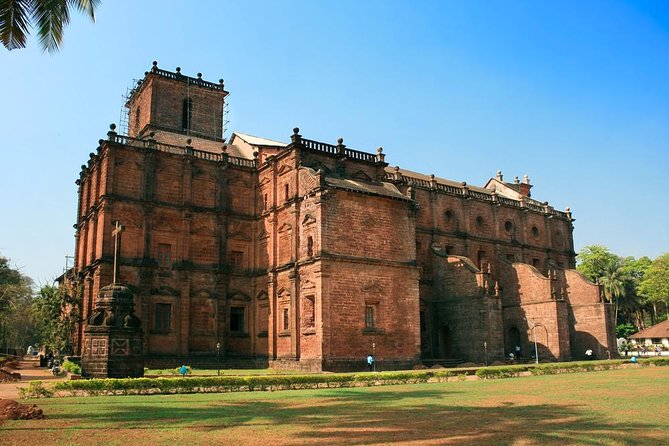
- Basilica of Bom Jesus (UNESCO): St Francis Xavier’s remains and Baroque drama
- St Augustine’s Tower (1600): when the belfry tells you what’s missing
- Church of Our Lady of the Rosary: fortress-like towers and Albuquerque’s vow
- Price and logistics: what $48 buys you in real terms
- What the guide style should feel like on this route
- Who should book this Old Goa walk (and who might skip it)
- Quick practical tips before you go
- Should you book this heritage walk of Velha Goa?
- FAQ
- How long is the heritage walk in Old Goa?
- How much does the tour cost?
- Where does the tour start and end?
- What’s included in the price?
- Is pick up and drop off included?
- How many people are in the group?
- Are tickets provided digitally?
- Which UNESCO sites are visited?
- What if the weather is poor or I need to cancel?
Key highlights you’ll actually care about
- Max 15 people keeps it personal enough for questions and stop-by-stop explanations
- Entrance charges are included, and the stop plan lists free admission at each site
- UNESCO stops: St Catherine Chapel and the Basilica of Bom Jesus
- Portuguese victory stories in stone, from Manueline style to St Catherine’s feast links
- Short visits (about 20–30 minutes each) fit a 3-hour pace
- Coffee or tea included, a small break that makes the walk easier
Why This Old Goa Heritage Walk Fits 3 Hours So Well
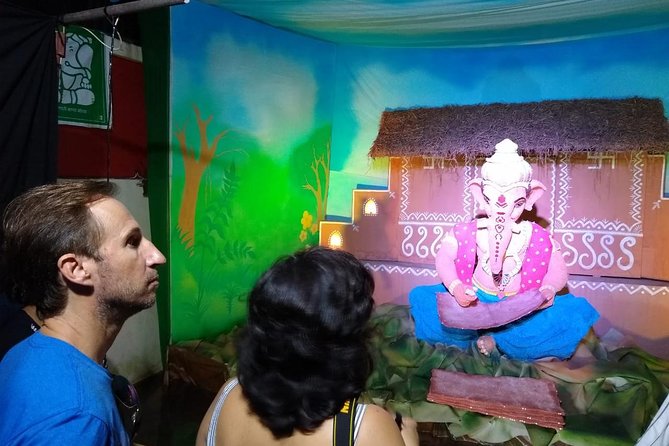
Old Goa can overwhelm you fast. Churches look similar until someone explains what makes each one different, and that’s where this walk earns its keep. The pace is built around quick, focused stops—mostly 20–30 minutes—so you can look closely without turning it into a marathon.
At a glance, you’re paying about $48 per person for a guided route that includes the guide, entrance charges, and coffee or tea. In practical value terms, that matters because Old Goa’s best details are inside the context: who built what, why they built it, and how Portuguese rule mixed politics and worship.
Also, you’re not stuck with a huge group. With a maximum of 15 travelers, it’s easier to hear the guide and keep your place when you move between monuments.
You can also read our reviews of more walking tours in Goa



Viceroy’s Arch: the 1599 gateway that sets the whole story
You start with a piece of stage-setting: Viceroy’s Arch, erected in 1599 by Viceroy Francisco da Gama. This arch didn’t just mark a route—it was meant to memorialize the achievements of Vasco da Gama, and the detail that Francisco was his great grand son gives the whole era a personal, dynastic feel.
Why this stop works:
- It gives you a mental map of where Portuguese power wanted visitors to enter Old Goa
- It frames the walk as more than architecture; it becomes a narrative of conquest, celebration, and identity
The only “watch-out” here is time. It’s listed as about 20 minutes, so you’ll want to take in the basics quickly and let the guide do the heavy lifting on the deeper meaning.
St Catherine of Alexandria Chapel (UNESCO): 1510 and the mica-shell windows

Next is the Chapel of St. Catherine of Alexandria, a UNESCO World Heritage Site. It was built in 1510 by Afonso de Albuquerque when he defeated the local Muslim ruler Adil Shah on St Catherine’s Day—25 November 1510.
The chapel’s standout detail is visual and specific: it has rectangular window panes in an Old Portuguese style, dressed in mica shells. That means it’s not only about religious symbolism. It’s also about craft—how materials, light, and design were used to make the chapel feel distinctive and intentional.
What you’ll likely appreciate most:
- The chapel is a physical reminder that dates and battles mattered to these builders
- The Portuguese design language shows up in elements you can actually spot, like the window panes
One practical consideration: chapels can feel dim, depending on the light outside. Bring your eyes for slow looking—especially at window details—because you’ll miss some of the neat stuff if you rush.
Church of St Francis of Assisi (1517): Tuscan outside, Baroque inside
The Church of St. Francis of Assissi traces back to 1517, when eight Portuguese Franciscan friars landed in Goa and established the church. The building is described as mixed construction style—and that’s the phrase that should matter to you.
Here’s the key contrast:
- The exteriors use Tuscan order
- The main altar is rich Baroque, with Corinthian features
This is one of those stops where the building itself becomes a lesson. You’re seeing how different design languages coexisted: simpler classical forms outside, then ornate religious emphasis where worship happens.
Why I think it’s worth slowing down:
- The mixed style makes it easier to understand the Portuguese approach as layered, not one-note
- The main altar area gives you a clear place to focus if you like structured viewing
The only drawback is that a lot of people will treat this as “another church.” Don’t. Let the Tuscan-vs-Baroque contrast guide where you look.
Sé Cathedral: Manueline style and the Golden Rose connection
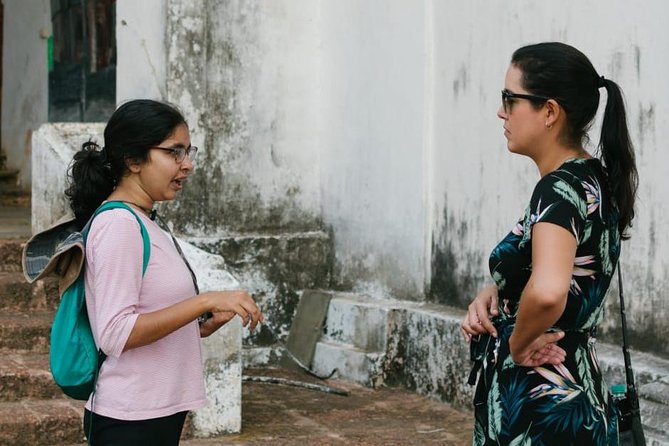
At Se Cathedral, you’re dealing with a building tied to victory and celebration. It’s built in Manueline style, and it was erected to showcase the Portuguese victory over an invading Muslim army in the early 16th century. The victory day connects to the Feast of Saint Catherine, linking the cathedral’s identity to a specific religious calendar.
Then there’s the famous extra layer: in the 20th century, Pope Pius XII presented the cathedral with an honorary Golden Rose. That Golden Rose is placed on the tomb of Saint Francis Xavier inside the cathedral.
This stop hits well if you like:
- Architecture that has a political backstory
- Artifacts that connect a European church tradition to Goa’s Christian center
A small consideration: the cathedral’s importance can make people move quickly. If you want the best experience, pace yourself. Give yourself a moment to orient inside before you look for the story details.
You can also read our reviews of more historical tours in Goa





Basilica of Bom Jesus (UNESCO): St Francis Xavier’s remains and Baroque drama
The Basilica of Bom Jesus is another UNESCO World Heritage Site and one of the top “wow” stops on this walk. It’s described as one of India’s finest examples of Baroque architecture.
Bom Jesus also matters beyond looks. The basilica holds the mortal remains of St. Francis Xavier. And he’s part of a bigger religious story: he founded the Society of Jesus along with St. Ignatius Loyola.
You also get a practical detail about worship artifacts: the Blessed Sacrament was earlier kept on the main altar under the statue of St Ignatius, and now it’s preserved in a gold tabernacle.
Why this is a core stop:
- It’s Baroque architecture with a clear, place-based reason for existence
- The church connects names and organizations you might have heard before, but here they’re tied to this specific site
Timing note: it’s listed for about 30 minutes. With that amount of time, you can usually do both: a quick overview, then focused looking for the most meaningful elements the guide points out.
St Augustine’s Tower (1600): when the belfry tells you what’s missing
St Augustine’s Tower was built in 1600, and it was one of the four towers of the St Augustine Church that once stood there. The tower was meant to serve as a belfry, and the original church complex had eight richly adorned chapels and four altars, plus a convent with many cells.
Here’s the clever thing about this stop: you’re not just looking at a tower. You’re looking at a remnant. The structure helps you imagine what the full complex used to be, even though it isn’t all standing anymore.
Why you’ll likely enjoy it:
- It changes how you look at ruins and survivors in Old Goa
- It’s a breather between larger churches, but still tied to the same Portuguese-era fabric
The drawback is also tied to that reality: since it’s one of fewer surviving parts, you get less “interior time” than at the big basilicas. If you’re hoping for lots of indoor viewing, manage expectations and focus on the structure itself.
Church of Our Lady of the Rosary: fortress-like towers and Albuquerque’s vow
You end at the Church of Our Lady of the Rosary, described as Goa’s oldest surviving church. Afonso de Albuquerque took a vow to build it as a token of gratitude to Our Lady of Victory while fighting the Islamic army of the Deccan Sultanate.
Architectural cues matter here. It has high altitude windows and round towers that give it a fortress look. That’s a great example of how these churches weren’t always meant to feel soft and peaceful. Sometimes they were built to project strength, safety, and authority.
Why this ending works:
- It gives the walk a strong visual payoff
- The fortress-like design helps you remember this whole region was shaped by conflict as much as faith
A practical note: since the tour ends outside this church, you might want to plan a quick snack or drink right after, especially if it’s warm.
Price and logistics: what $48 buys you in real terms
At $48 per person for about 3 hours, this walk is priced in the “worth it if you care about meaning” category. The key is what’s included:
- Guide
- Entrance charges
- Coffee and/or tea
- Mobile ticket
- Group size capped at 15
If entrance fees were added on top, the math would change. Here, the tour plan lists free admission at each of the stops you visit, and entrance charges are included in the price. So you’re mostly paying for guided time and coordination, not for access costs.
Also, the route is compact. You’re not paying for long hours of transit. You’re paying for a concentrated circuit through the main Portuguese-era monuments of Velha Goa.
Possible drawback on value: if you’re a “walk quietly and read nothing” type of traveler, you may not use the guide as much. But if you want context—names, dates, and why one church differs from the next—this is exactly the kind of structure that pays off.
What the guide style should feel like on this route
This walk lives or dies by the guide’s ability to turn architecture into story. Past guides connected with this route, including names like Ram and Sawani, are described as the sort who keep people interested and answer questions rather than just reciting dates.
So what should you do, as a smart participant?
- Ask one or two questions early, while you’re still fresh
- Pick a theme to follow, like Portuguese victories tied to feast days, or design changes like Tuscan versus Baroque
- Use the short stop times to pick a single detail to watch for, like mica-window panes or the Golden Rose reference
You’ll get more out of the time if you treat each stop like a mini scene, not a checklist.
Who should book this Old Goa walk (and who might skip it)
This tour is a great match if you:
- Want a guided route through Portuguese-era churches in Old Goa
- Like UNESCO sites but don’t want to spend all day bouncing between them
- Prefer a small group pace with about three hours total
It might be less ideal if you:
- Need a lot of independence and long, unstructured time inside each church
- Strongly prefer tours with pick up and drop off (this one says pick up/drop is not included)
- Are planning for days with unreliable weather and can’t adjust
Quick practical tips before you go
- Wear shoes you trust for an old, uneven heritage area. This is a walk with multiple stops.
- Bring a light layer. Even in warmer months, church interiors can feel cooler.
- Plan to look up. A lot of the best details here—windows, towers, architectural style cues—are above eye level.
- If you want the most from the story links, arrive ready to connect dates: 1510, 1517, early 1500s victory themes, and 1599 for Viceroy’s Arch.
Should you book this heritage walk of Velha Goa?
Yes, book it if you want a guided, story-driven way to understand why Old Goa mattered to the Portuguese in the 1500s—and why these churches look the way they do. The mix of UNESCO sites (St Catherine Chapel and Bom Jesus), Portuguese design styles (including Manueline), and the way the tour ties victories to feast days and monuments makes it more than a pretty church crawl.
Skip or reconsider only if you’re not interested in context and you want long, freeform time. With a timeboxed route and a focus on interpretation, you’ll enjoy it most when you’re in the mood to learn while you walk.
If you’re flexible with weather, have comfortable shoes, and like small-group guiding, this is one of the cleaner ways to experience Velha Goa’s golden-age feel without turning your day into a stressy logistics exercise.
FAQ
How long is the heritage walk in Old Goa?
It runs for about 3 hours (approx.).
How much does the tour cost?
The price is $48.00 per person.
Where does the tour start and end?
It starts at the Basilica of Bom Jesus on Old Goa Road (Goa 403402). It ends outside the Church of Our Lady of the Rosary (Old Goa).
What’s included in the price?
You get a guide, entrance charges, and coffee and/or tea.
Is pick up and drop off included?
No, pick up and drop off is not included.
How many people are in the group?
This tour has a maximum of 15 travelers.
Are tickets provided digitally?
Yes, a mobile ticket is included.
Which UNESCO sites are visited?
The Chapel of St. Catherine of Alexandria and the Basilica of Bom Jesus are both listed as UNESCO World Heritage Sites.
What if the weather is poor or I need to cancel?
The experience requires good weather. If it’s canceled due to poor weather, you’ll be offered a different date or a full refund. Free cancellation is available up to 24 hours in advance for a full refund.