REVIEW · GOA
Chandor Heritage Trail by Make It Happen
Book on Viator →Operated by Make It Happen · Bookable on Viator
Chandor history hits different. This 2-hour-and-change outing turns small-town Goa into a story you can follow stop by stop, with guide-led history and time at major landmarks like the Menezes Braganza House. I especially liked the way you’re not stuck in a classroom: you get snacks and soft drinks while the guide connects what you see to what life felt like before and during Portuguese times. One consideration: it is not a walking trail, so you’ll depend on group transport between sights, and the pace is more “story-heavy” than “wander at leisure.”
You start at a real church in Chandor and move through locations that shaped the village’s religious and social life. You also get direct interaction with local community members, which adds a human layer to the buildings. Guides like Alita and Pawan are repeatedly described as engaging storytellers, so expect conversation and context, not just quick photos.
If you want a laid-back route with lots of free time, this may feel a bit focused. If you prefer history, architecture, and the why behind religious landmarks, you’ll likely love it.
In This Review
- Key things to know before you go
- Chandor in Two Hours: Church Stops, House Stories, and Included Snacks
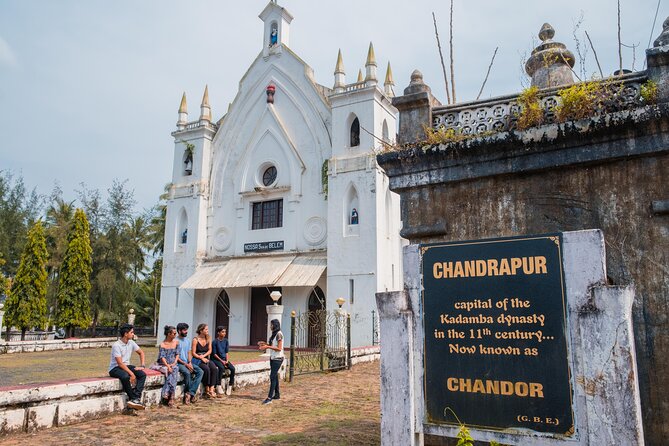
- Where the Tour Starts at Igreja de Nossa Senhora de Belém
- Stop 1: Igreja de Nossa Senhora de Belém and a First Look at 17th-Century Goa
- Stop 2: Menezes Braganza House, the Big Mansion on the Square
- Stop 3: Capela Nossa Senhora da Piedade on the Hillock
- What You Learn About Portuguese Times and Earlier Goa
- Interacting With the Local Community: Why It Changes the Feel
- Price and Value: Why $14.54 Makes Sense Here
- Timing and Pace: When This Tour Fits Best
- Should You Book the Chandor Heritage Trail by Make It Happen?
- FAQ
- How long is the Chandor Heritage Trail?
- Where do I meet for the tour?
- Is this tour mostly walking?
- What are the main places you visit?
- Are snacks and drinks included?
- Is entry included for any of the stops?
- What is the group size limit?
- Do I need to bring a ticket on my phone?
- What happens if the weather is bad?
Key things to know before you go
- Small group size (up to 20 people) makes it easier to ask questions and talk with your guide
- Not a walking trail, so plan on short moves by vehicle between stops
- Churches plus a monumental house means you see both spiritual and social history in one run
- Menezes Braganza House entry is included, with other listed stops also free
- Snacks and soda are included, which helps this fit comfortably into a busy day
- Two time layers show up: Portuguese-era stories and earlier legends and influences
Chandor in Two Hours: Church Stops, House Stories, and Included Snacks
Chandor is the kind of Goa most people race past. This tour slows you down, but not too much. At about 2 hours 15 minutes, you get a tight circuit that focuses on big places in the village square-and-church-zone world, rather than turning it into a long trek.
What makes it work is the combination of three elements: you have named sites, a guide who explains what matters about each place, and a bit of community contact along the way. The included soft drinks and light snacks also do more than fill your stomach. They give you a natural break while your guide keeps the story going.
You can also read our reviews of more historical tours in Goa



Where the Tour Starts at Igreja de Nossa Senhora de Belém
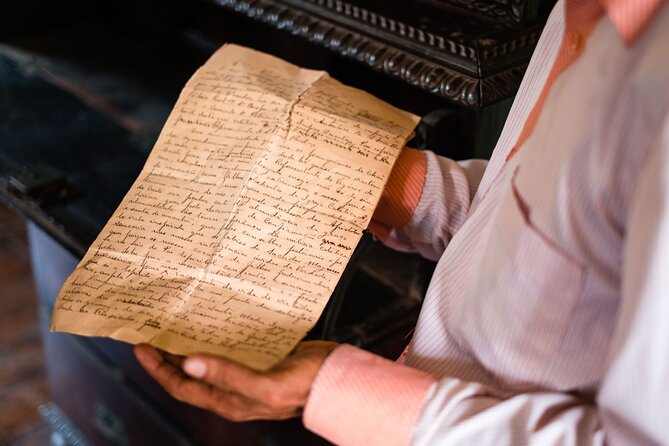
Your meeting point is Igreja de Nossa Senhora de Belém, 726V+HVP, Villa Formosa, Chandor, Goa 403714, India. Plan to arrive a little early so you can settle in before the route starts, especially if you’re juggling sightseeing from elsewhere in South Goa.
Because it’s listed as near public transportation, you don’t have to build your entire day around a private ride. Still, since the tour is not a walking trail, you should expect that you’ll use some form of group transport to reach the other sites.
Stop 1: Igreja de Nossa Senhora de Belém and a First Look at 17th-Century Goa
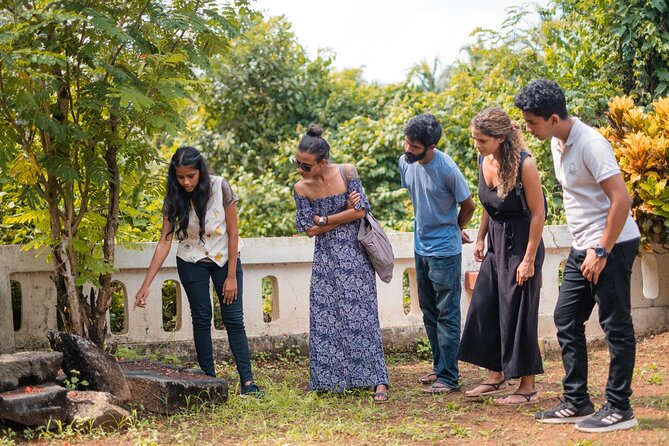
This start gives you a grounding in the religious side of village life. The tour begins at the Church of Nossa Senhora de Belém in Chandor, and the original build is described as dating to the 17th century.
Even with a shorter time here, this first stop matters because your guide can frame what you’re about to see next: powerful houses, chapels on hills, and the way faith shaped everyday choices. If you like context, this is the best moment to ask how the guide connects Portuguese-era influences to what came earlier.
A practical note: the tour is not set up as a long walk, so don’t plan to get your full steps in during this stop. Think of it as a launch point for the story and the landmarks that follow.
Stop 2: Menezes Braganza House, the Big Mansion on the Square
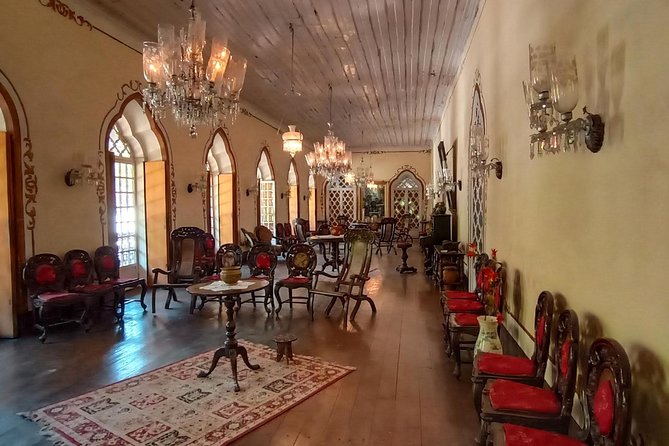
Next comes the standout landmark for many people: Menezes Braganza House. This massive residence was first built in the late 16th century and then rebuilt into its present form in the 18th century. It sits on one side of the village square, so it feels like a fixed anchor for the whole community.
This stop also includes the entry ticket, which is a real value point. You’re not just looking at an exterior photo opportunity. You get time to experience the scale and significance of the house as a historic marker of status, wealth, and social structure.
What you’ll enjoy here is the contrast: you start with a church, then you go to a home that shows how power and religion and community life could all overlap. The tour’s guide-led storytelling is where this becomes more than architecture spotting.
One small caution: if you’re hoping for tons of free roaming time inside, you may find the schedule stays structured. This is a guided heritage circuit, not an all-day do-your-own-pace exploration.
Stop 3: Capela Nossa Senhora da Piedade on the Hillock
The third key religious stop is Capela Nossa Senhora da Piedade. It’s described as sitting on a small hillock about 500 meters from the main church area. The chapel was built by Francisco Fernandes on 3 July 1748, rebuilt in 1758, and established on 14 March 1760.
That timeline is a big part of the experience. You’re not just seeing a chapel; you’re seeing repeated renewal and continued importance across decades. And because it sits slightly elevated, it tends to feel more like a landmark than just another church door.
This stop is also listed as free for admission. Combined with the included Braganza House, it keeps the overall cost lean while still hitting several major heritage sites.
If you’re the type who likes small details, this is a good moment to focus on how the chapel is positioned and why that might matter to a village community. Your guide can connect the geography to the role it played for worship and local identity.





What You Learn About Portuguese Times and Earlier Goa
The heart of this tour is the storytelling around village life through different historical layers. The tour focuses on what daily life looked like in the village during Portuguese times and also much earlier. That matters because Goa’s story is not one straight line. It’s a mix of influences, traditions, and legends that show up in buildings, names, and local memory.
Two guide names come up strongly: Alita and Pawan. People highlight that the storytelling is engaging and information-rich, sometimes described as knowledge-heavy. I’d treat that as a feature, not a flaw, if history and culture are your priorities. You’ll likely leave with names, dates, and connections that help your later sightseeing make more sense.
There’s also a note in the tour framing about legends and local spirituality, including mention of Shiva in the context of pre-Portuguese stories. I can’t promise which angle your guide will stress most, but the overall emphasis is clearly on layered belief and local tradition, not only Portuguese-era events.
Interacting With the Local Community: Why It Changes the Feel
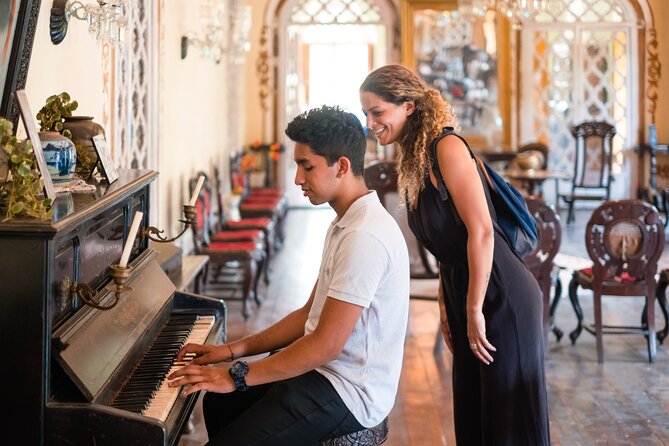
This isn’t just a checklist of old buildings. The tour includes meeting and interaction with the local community, which is where it becomes more than a photo stop.
In practical terms, that means your guide isn’t only reciting dates. They’re bringing you into a more conversational zone where people can share perspective on what these sites mean now. It can also make the history feel less abstract. You’re not studying the past from behind a bus window.
This is also part of why the group size limit matters. With a maximum of 20 people, your questions are less likely to get lost, and the tone can stay personal instead of scripted.
Price and Value: Why $14.54 Makes Sense Here
At $14.54 per person, this tour sits at a low-cost end for structured guided experiences in Goa. The value comes from the mix of things that typically cost extra on their own: entry at a major historic property (Menezes Braganza House) and included refreshments.
You’re also getting multiple stops in a single outing—churches and a major heritage house—within a tight time frame that’s workable on sightseeing days. The tour also includes light sweet snacks and soda/soft drinks, which is not always included even in cheap tours. Small detail, big difference for comfort and timing.
One more value angle: the start and finish are the same, and the tour ends back at the meeting point. That helps you keep your day simple without requiring a complicated itinerary handoff.
Timing and Pace: When This Tour Fits Best
The tour lasts around 2 hours 15 minutes, so it works well if you want history without sacrificing your whole day. It’s also listed as requiring good weather, so if clouds or rain are in the forecast, keep your eye on the conditions and be ready for date changes if weather forces a switch.
Because it is not a long walking trail, this is a good option if you want heritage sights but don’t want to spend hours on foot. Just remember you’ll still be moving between sites, so comfortable basics still help.
Finally, it’s a good fit for people who like guided context. If you’re someone who prefers silent sightseeing and minimal explanation, you might find the story-heavy approach less satisfying. But if you enjoy understanding why a chapel was rebuilt or what a monumental house signals about the village, you’re in the right place.
Should You Book the Chandor Heritage Trail by Make It Happen?
Book it if you want an efficient, guided history route through Chandor that connects churches, monumental homes, and real village context. The included refreshments, the entry at Menezes Braganza House, and the strong reputation for storytelling by guides like Alita and Pawan make this feel like good value rather than a rushed sightseeing add-on.
Skip it only if you’re mainly craving a long walking experience or you strongly dislike guided explanations in favor of free exploration. This one is built around guidance and heritage storytelling, with transport between short stops.
If you’re visiting South Goa and want something more specific than the usual beach-and-market loop, this is a smart choice.
FAQ
How long is the Chandor Heritage Trail?
It runs for about 2 hours 15 minutes.
Where do I meet for the tour?
The meeting point is Igreja de Nossa Senhora de Belém, 726V+HVP, Villa Formosa, Chandor, Goa 403714, India.
Is this tour mostly walking?
No. It is not a walking trail, and you’ll need transportation during the route.
What are the main places you visit?
You’ll see Igreja de Nossa Senhora de Belém, Menezes Braganza House, and Capela Nossa Senhora da Piedade. The tour also focuses on major historic Goan churches in Chandor.
Are snacks and drinks included?
Yes. Snacks and soft drinks are included.
Is entry included for any of the stops?
Menezes Braganza House has admission included. The other listed church and chapel stops are listed as free admission.
What is the group size limit?
The tour has a maximum group size of 20 people.
Do I need to bring a ticket on my phone?
A mobile ticket is part of the experience.
What happens if the weather is bad?
The tour requires good weather. If it’s canceled due to poor weather, you’ll be offered a different date or a full refund.