REVIEW · ST AUGUSTINE
St. Augustine Walking History Tour
Book on Viator →Operated by A Ghostly Encounter · Bookable on Viator
St. Augustine packs a lot into two hours. This walking history tour stitches together Spanish, British, and American eras through standout stops like the Old City Gates and the Castillo de San Marcos, with a guide who keeps the story clear. I like that it stays organized and walkable, and I also love the chance to pause at places that are still used today, especially the Memorial Presbyterian Church. One drawback: some streets are cobblestone, so comfy shoes matter.
You’ll see more than “pretty streets.” You get the kind of orientation that makes the rest of your day easier, from the big military landmark at Castillo to the quiet side of town at Huguenot and Tolomato cemeteries. The group stays small, with a max of 12 people, and the tour is offered in English with a mobile ticket—helpful if you’re juggling a busy schedule.
This is also a good value play at $30. You’re paying for guided context and route order, not just sightseeing, and the tour is typically booked about 38 days in advance, which usually means people find it useful. If you’re expecting a sit-down museum day, plan on doing a bit of standing and walking instead.
In This Review
- Quick hits before you go
- The 10:00 route: how this tour helps you plan your day
- Old City Gates: the founding story starts right at the threshold
- Castillo de San Marcos: the oldest masonry fort you’ll actually understand
- Memorial Presbyterian Church: free access, real artwork, active worship
- Oldest Wooden School House: chained down, storm ready
- Cemeteries that change the tone: Huguenot and Tolomato
- Ponce De Leon Hall and the Flagler connection
- Lightner Museum: art, science oddities, and Victorian-era collectibles
- Governor’s House Cultural Center and Plaza de la Constitución: power and public life
- St. George Street and the Cathedral Basilica: faith and downtown energy
- Price and value: why $30 makes sense for a tight schedule
- Who should book this walking history tour?
- Should you book this St. Augustine walking history tour?
- FAQ
- How long is the St. Augustine Walking History Tour?
- What time does the tour start?
- Where does the tour meet?
- Is the tour in English?
- How much does it cost?
- Is there a limit on group size?
- What kind of ticket do I receive?
- Are service animals allowed?
- Is tipping included in the tour price?
- How much walking is involved?
Quick hits before you go
- Max 12 people keeps it personal enough for questions without losing time
- Castillo de San Marcos brings Spanish military history to your feet
- Free, docent-led worship stop at Memorial Presbyterian Church adds art-and-architecture detail
- Hurricane-proof Oldest Wooden School House shows how locals adapted
- Huguenot + Tolomato cemeteries give you a quieter, deeper look at early settlers
- Downtown finishing circuit includes Lightner Museum, Plaza de la Constitución, St. George Street, and the Cathedral Basilica
The 10:00 route: how this tour helps you plan your day
I like tours that do two things well: they give you a storyline, and they get you into position for what’s next. This one starts at 12 St George St at 10:00am and runs about 2 hours, ending back at the meeting point. That loop format matters. You can treat it like a guided map of historic St. Augustine, then return on your own where something catches your eye.
The group size limit of 12 is a quiet win. With smaller groups, guides can pace around the slower walkers and still keep the schedule moving. Also, the tour notes promise no outside guests, so you’re not squeezed with random walk-ins mid-route.
One more practical point: the route includes some cobblestone streets. You don’t need hiking boots, but you should bring shoes you’re comfortable wearing for a solid couple hours. If you’re the type who forgets sunscreen until it’s too late, remember Florida sun is honest about consequences.
You can also read our reviews of more walking tours in St Augustine



Old City Gates: the founding story starts right at the threshold
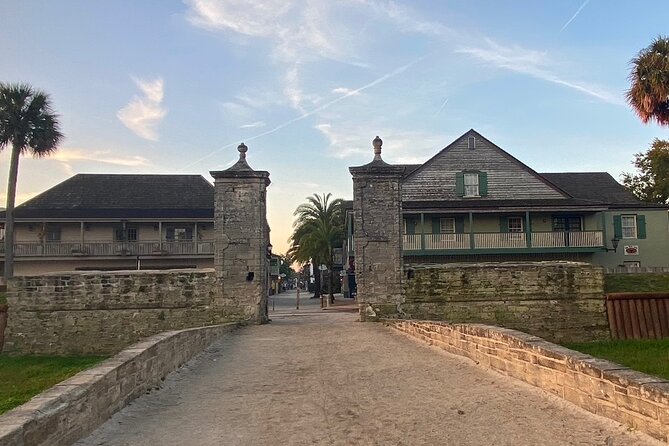
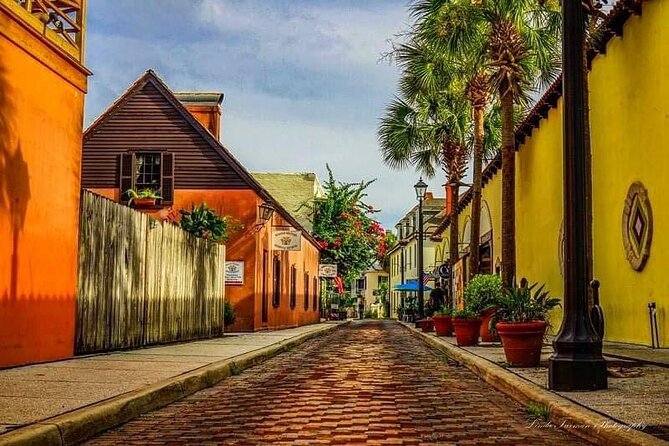
You kick things off by meeting at the historic Old City Gates on St. George Street. This is the kind of start that works because it’s not abstract. You’re literally standing where the city’s story begins, and the guide frames what St. Augustine was trying to be from the start—defended, settled, and connected.
A key detail you’ll hear here is the role of Pedro Menéndez de Avilés, tied to the city’s founding. That name can sound like a trivia prompt until a guide connects it to what you’re seeing in front of you: gate, street, and the idea that passage through this entrance meant risk, security, trade, and power.
Castillo de San Marcos: the oldest masonry fort you’ll actually understand
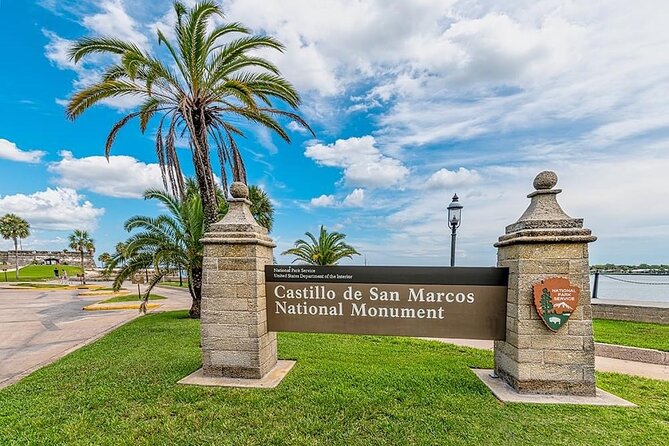
One of the strongest reasons to do this tour is the stop at St. Augustine’s Castillo de San Marcos National Monument. This isn’t just another fort-shaped postcard. The site is described as the oldest masonry fort in the United States and the only intact 17th-century fort. It was constructed by the Spanish in 1672, then later passed to the British and Americans.
Here’s why that matters to you: when history is presented as a sequence—Spain, then Britain, then the U.S.—the buildings stop feeling like they’re “floating in time.” You get a physical explanation for why St. Augustine was so fiercely fought over. And the tour ties it to major conflicts, including its crucial roles in the Civil War and the Spanish–American War.
If you’re a photo person, this is one of your best moments. If you’re not, it’s still worth paying attention to the stone-and-defense feel of the place. A guide can point out what to look for so you’re not just walking around and hoping it clicks.
Memorial Presbyterian Church: free access, real artwork, active worship
Next, you’ll spend time at Memorial Presbyterian Church, a landmark known for its towering spires and smooth white exterior stone. The main reason I’d put this stop near the top of your list is simple: it’s not just history on a plaque. The church is open for regular worship and you can join free, docent-led tours.
That combination gives you two benefits:
- You see the architecture from both a visual and historical angle.
- You experience a site that’s alive, not frozen.
If you’re short on time later and thinking about skipping interiors, don’t. The tour’s point is that standing outside only tells you part of the story. Inside, you get details about the building’s history and art, which is exactly what helps St. Augustine feel human instead of purely “old.”
Oldest Wooden School House: chained down, storm ready

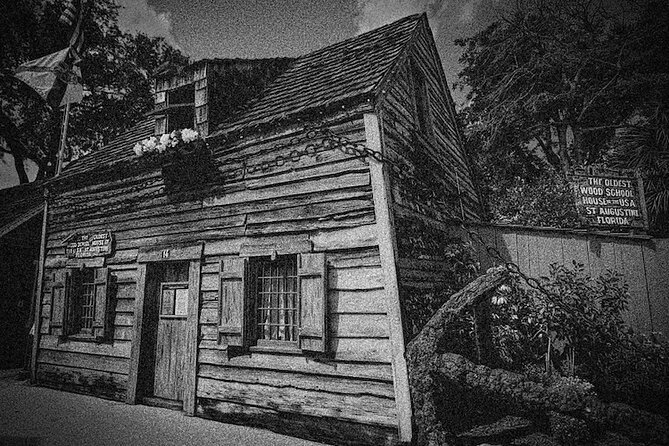
You also get to see the Oldest Wooden School House in St. Augustine, a small structure dating back to the 1700s. Here’s the practical detail I love: it’s chained to the ground to protect it from hurricanes.
That’s a great reminder for your brain. This city didn’t just survive wars and empires; it survived weather. A guide’s job here is to help you connect these layers, so the schoolhouse doesn’t become a weird curiosity—it becomes part of the same story of adaptation you’re hearing everywhere else.
During this stop, you may be able to see the schoolhouse, gardens, and a historic kitchen. Even if you move through quickly, the purpose is clear: education, everyday life, and how people kept going.
You can also read our reviews of more historical tours in St Augustine




Cemeteries that change the tone: Huguenot and Tolomato

If your goal is to get the full St. Augustine picture, you can’t avoid death. This tour smartly uses two cemetery stops to slow things down.
First is the Huguenot Cemetery on Orange Street. It’s described as a tranquil burial ground reflecting the diverse cultural heritage of the city’s early settlers. That word diverse is doing a lot of work here. This isn’t a single-family storyline—it’s multiple threads of who came, who stayed, and how community formed.
Then comes Tolomato Cemetery on Cordova Street, tied to the colonial era. The tone shifts again because you’re hearing stories about people laid to rest there. It’s a thoughtful way to understand how early settlers shaped the city—and how the city remembers them.
One consideration: if you’re sensitive to cemetery settings or you’d rather keep things strictly upbeat, this is the stretch where you’ll feel the mood change. For many people, though, it’s exactly what makes the tour feel real.
Ponce De Leon Hall and the Flagler connection

A major step in your downtown understanding comes with Ponce De Leon Hall. This building once housed the luxurious Ponce de Leon Hotel, a vision connected to Henry Flagler. Even if you’ve heard the name before, you’ll get a clearer sense of why St. Augustine became a destination and not just a military target.
This is one of those stops where a guide’s framing does more than deliver facts. You start to see the city’s economy shift—hospitality, prestige, and growth after the wars. It’s a key link between “defended outpost” and “place people wanted to visit.”
Lightner Museum: art, science oddities, and Victorian-era collectibles
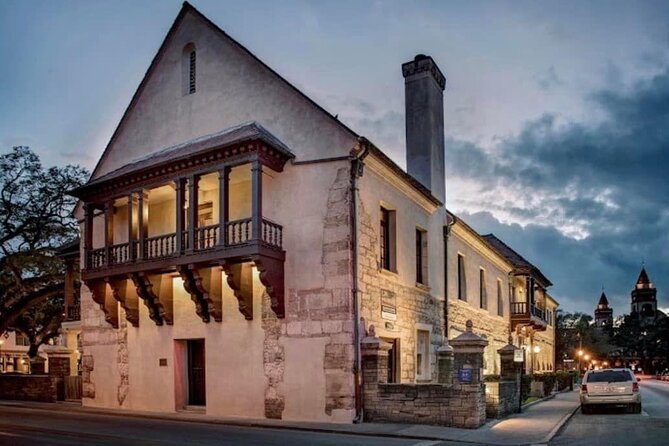
From there, you’ll pass the Lightner Museum, located in the former Alcazar Hotel. The museum’s collection is described as eclectic: fine and decorative art, natural history and geological specimens, Victorian collectibles, and Americana. There’s also a schedule of special events, exhibitions, and educational programs.
This stop is useful even if you don’t go inside right away. It gives you a clue about what St. Augustine turned into as a full-time city—part culture stop, part science-curiosity stop, part American nostalgia zone. If you like museums that don’t fit neatly into one category, you’ll likely want to plan a return.
Governor’s House Cultural Center and Plaza de la Constitución: power and public life
As you move through downtown, you’ll also pass the Governor’s House Cultural Center and Museum. The tour frames it as a landmark that offers insight into the political and social history of St. Augustine.
That matters because “political history” can sound dry until you pair it with what you’re seeing around it—streets, squares, and the public spaces people used. This is where the tour does a good job giving you context.
Then you reach Plaza de la Constitución, described as the historic heart of St. Augustine. This is a good spot to take a breath. It’s a public square setting, which makes it easier to imagine markets, gathering, and community life.
St. George Street and the Cathedral Basilica: faith and downtown energy
Next up is St. George Street, known as a pedestrian thoroughfare with shops, galleries, and cultural attractions. Even if you’re not shopping, it helps you understand the modern city overlay on the historic bones. You’re seeing how tourism and local life share the same streets.
Finally, you’ll admire the Cathedral Basilica of St. Augustine, described as a symbol of faith and resilience in the face of adversity. This is your big closing statement. The tour ends with a landmark that reads as both spiritual and stubbornly permanent, which makes the whole route feel coherent.
Price and value: why $30 makes sense for a tight schedule
At $30 per person, this tour is priced like a smart add-on, not a big splurge. For me, the best value isn’t the number on the ticket—it’s how much friction it removes. You’re not walking around trying to connect “what is that?” and “why should I care?” A guide ties stops together so you can move through the city with less guesswork.
A few value boosters:
- Small group (max 12) keeps the experience from feeling crowded.
- Mobile ticket reduces paper-hunt stress.
- English language is straightforward.
- Casual dress and comfortable shoes are all you need.
Also, the tour is typically booked about 38 days in advance, which hints that people find it worthwhile enough to plan early. If you’re traveling in busier seasons, that timing is a clue to lock it in.
Who should book this walking history tour?
This is a great fit if you want:
- A 2-hour orientation to historic St. Augustine with a guided storyline
- Stops that include Spanish military history, church architecture, and cemetery context
- A small group experience led by people who keep explanations easy to follow
From guide notes in the public reviews, guides like Andrew (aka the Chief) and Rob, plus Pepper, come up with strong praise for being patient, friendly, and clear. That kind of delivery matters if you don’t want history facts thrown at you like homework.
If you only want museum time, or you’re trying to avoid any cemetery settings, you might want to pick a different tour style. But if you want the city to make sense fast, this one does the job.
Should you book this St. Augustine walking history tour?
I’d book it if you’re visiting St. Augustine for the first time—or if you’ve been there before but you want a better framework. The route connects major landmarks and everyday life into one walkable story, and the $30 price tag feels fair for what you’re buying: guidance, pacing, and context.
Do it with practical expectations. You’ll walk for about two hours, you’ll hit cobblestone streets, and a couple stops carry a quieter, heavier mood. If that sounds okay, you’ll come away with a sharper sense of how this city grew, changed hands, adapted, and still stands.
If you want, tell me your travel dates and whether you prefer spooky stories, architecture, or military history most. I can help you decide what to prioritize right after this tour on your own time.
FAQ
How long is the St. Augustine Walking History Tour?
It lasts about 2 hours.
What time does the tour start?
The start time is 10:00am.
Where does the tour meet?
The meeting point is 12 St George St, St. Augustine, FL 32084, USA.
Is the tour in English?
Yes, it is offered in English.
How much does it cost?
The price is $30.00 per person.
Is there a limit on group size?
Yes. The tour has a maximum of 12 travelers.
What kind of ticket do I receive?
You get a mobile ticket.
Are service animals allowed?
Yes, service animals are allowed.
Is tipping included in the tour price?
No. Gratuity for your guide is not included. If you’d like to tip, it’s up to you.
How much walking is involved?
It is a walking tour, and you’ll be navigating some cobblestone streets. Comfortable walking shoes are recommended.