REVIEW · ST AUGUSTINE
Walking History Tour of St. Augustine’s Historic District
Book on Viator →Operated by Spyglass Tours · Bookable on Viator
Follow the fort to the graves. This guided walk connects St. Augustine’s founding era to the early 1900s, moving from the Castillo de San Marcos area past Flagler College and down to Tolomato Cemetery—about two miles on foot. I love the small-group size and how the guide keeps you moving street by street with Flagler-era details that make the city feel lived-in. One thing to plan for: the tour can run past the posted 1 hour 30 minutes, and some stops involve entry fees that are not included.
For $25 per person, you’re buying a whole storyline, not just photos from the sidewalk. You’ll get a mobile ticket, an English guide, and a route that returns to where you started. It’s also a nice way to see more than the big poster landmarks, because the tour includes places tied to Florida’s older Spanish and later Gilded Age chapters.
Bring comfortable walking shoes and water, especially if the sidewalks are busy or warm. The pace fits people with moderate physical fitness, and the group tops out at 15 travelers, which helps the guide actually answer questions instead of rushing through a script.
In This Review
- 6 Standout Reasons This Walking History Tour Works So Well
- Entering St. Augustine With the Right Mental Map
- The $25 Value: What You’re Really Paying For
- Where You Start: The Visitor Information Center on Castillo Drive
- Tolomato Cemetery: Oldest Ground in Town and the Love Tree
- What to watch for
- Grace United Methodist Church: Flagler-Era Faith and City Revitalization
- Memorial Presbyterian Church: A Beautiful Building With a Hard Story
- Flagler College (Former Ponce de Leon Hotel): Gilded Age Opulence, Now With Purpose
- How to make this stop click
- Plaza de la Constitución: 1599 Royal Power to 1933 WPA Recreation
- Why I like including this stop
- Castillo de San Marcos: Fort History That Explains Why the City Needed It
- Practical tip
- City Gate Spirits: The 1762 Entrance and a Demolition-Survival Story
- Walking Tour Reality Check: Timing, Shoes, and Staying Comfortable
- Who This Tour Is Best For (and Who Might Want Something Else)
- Should You Book This St. Augustine Historic District Walking Tour?
- FAQ
- How long is the Walking History Tour of St. Augustine’s Historic District?
- How much is the tour and what do I get for that price?
- Are admission tickets included for the stops?
- Where do I meet the tour?
- What should I bring and what’s the walking level like?
- What happens if the tour is canceled due to weather?
6 Standout Reasons This Walking History Tour Works So Well
- A nearly two-mile loop that covers centuries, not just one era
You’ll get a storyline from the city’s start through the early 1900s, with stops that represent different phases of St. Augustine’s growth.
- Flagler College and the Gilded Age are front and center
You’ll see the former Ponce de Leon Hotel and hear how Henry Flagler’s era shaped the city’s image and energy.
- Church stops that connect religion to redevelopment
You’ll visit Flagler-era church sites and hear why Henry Flagler’s revitalization mattered beyond tourism and buildings.
- Tolomato Cemetery adds real gravity (and a local superstition)
You’ll visit the oldest cemetery in the city, predating the Spanish arrival in 1562, plus the Love Tree—at your own risk.
- Two stops are free, which helps your budget
Plaza de la Constitucion and City Gate Spirits are listed as free, so you’re not paying entry again and again.
- Humor and question time make it feel like a conversation
Guides like Kevin Rose are described as funny, welcoming questions, and able to tie facts together in a way that sticks.
Entering St. Augustine With the Right Mental Map
St. Augustine can feel layered in a way that’s hard to decode on your own. You’ll see Spanish-era textures near later American development, and it’s easy to miss how the city’s “new chapters” were built on top of earlier ones.
That’s why this tour is such a good first move. It doesn’t just point at famous buildings. It explains how St. Augustine’s story moves from its earliest foundations into the long colonial era and then into the Gilded Age and beyond. Even if you don’t consider yourself a history person, you’ll start noticing patterns: why certain structures mattered, why the city expanded where it did, and how later residents reinterpreted older power and infrastructure.
And because it’s a walk through the historic district, you’re not stuck in one viewpoint. You get the sense of distance between key sites, which helps you understand why the fort, gates, and government spaces shaped daily life.
You can also read our reviews of more walking tours in St Augustine

The $25 Value: What You’re Really Paying For

Yes, $25 is the ticket price. But the real value is what that money buys you: a guided timeline across multiple sites that would take you a long time to stitch together yourself.
Think about what’s included in the experience you actually get:
- A live guide who ties together the Spanish, colonial, and later eras
- A route that hits major landmarks plus less-obvious stops like historic churches and Tolomato Cemetery
- A small group size, which helps you get answers instead of just hearing narration
Add in that the tour covers nearly two miles and includes outdoor time at major sites, and $25 starts to look like a bargain compared to paying for transportation or trying to self-tour every location without context.
One practical note: not every stop has admission included. Some places are listed as admission ticket not included, while others are free. When I’m budgeting for a guided walk like this, I treat it like a history class plus a few optional pay-to-enter stops.
Where You Start: The Visitor Information Center on Castillo Drive
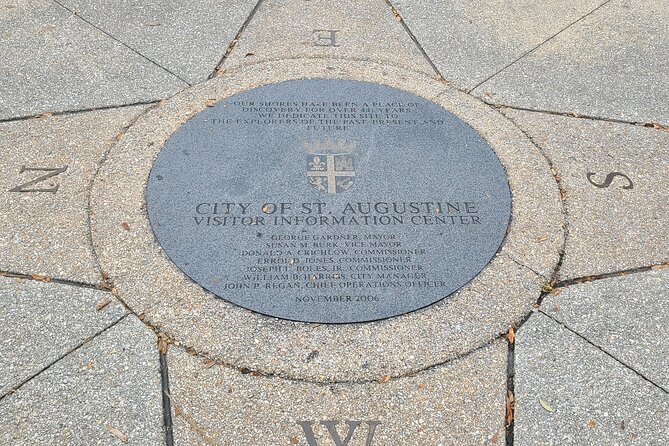
You meet at the St. Augustine and St. Johns County Visitor Information Center at 10 S Castillo Dr. That’s convenient because it keeps the tour grounded in the historic-district core—easy to connect to other walking plans before or after.
This tour also ends back at the meeting point, so you don’t need to worry about backtracking or calling for a ride just to finish your loop. If you like to keep your day flexible, that round-trip layout helps a lot.
Since the tour is near public transportation and uses a mobile ticket, you’re not locked into one very rigid “find one exact doorway” kind of meetup.
Tolomato Cemetery: Oldest Ground in Town and the Love Tree
Tolomato Cemetery is where the tour shifts from “pretty old streets” to real emotional weight. You’ll see the oldest cemetery in the city—one that predates the Spanish arrival in 1562. That alone makes this stop feel like a different scale of time.
This is also the kind of location where you’ll want to lower your voice and slow your steps. The guide’s storytelling matters here, because the meaning comes from how people lived, died, and remembered in earlier St. Augustine—not from decorative details.
You’ll also hear about the Love Tree. It’s part of local lore, and the tour notes it directly as something to approach at your own risk. I’d treat it like a place for respectful observation rather than a dare.
What to watch for
- The cemetery stop is short (about five minutes), so arriving ready to listen helps.
- Wear shoes with solid traction. Even “easy” walking can feel different on cemetery grounds.
You can also read our reviews of more historical tours in St Augustine





Grace United Methodist Church: Flagler-Era Faith and City Revitalization
Next up is Grace United Methodist Church, described as one of the Flagler Era churches and tied to Henry Flagler’s revitalization of St. Augustine in the late 1800s. This is a good reminder that big-money development wasn’t only about hotels and rail—it also reshaped community institutions.
If you’ve ever wondered why certain landmarks feel ceremonial or “planned,” this is where you get part of the answer. Churches often acted like social anchors in redevelopment periods, bringing people together and signaling stability.
The stop itself is brief, so you’ll get key takeaways rather than a full architectural tour. Still, it’s valuable because it connects what you see to why it was built when it was.
Memorial Presbyterian Church: A Beautiful Building With a Hard Story
Memorial Presbyterian Church is where the tour leans into emotion. You’ll hear about how the church came to be, including a heartbreaking story tied to its creation.
The tour also calls this the most beautiful building in the city, which sets expectations: you’re not just learning dates and names. You’re learning how beauty and tragedy can live in the same structure.
This is one of those stops where the guide’s delivery matters. If you’re the type who enjoys hearing how personal stories and historical events intersect, you’ll likely find this a standout.
Flagler College (Former Ponce de Leon Hotel): Gilded Age Opulence, Now With Purpose
Then you hit one of St. Augustine’s most iconic transitions: the site of the former Ponce de Leon Hotel, now Flagler College.
The tour frames it as a standard-setting example of Gilded Age opulence. That’s the big hook, but what you should look for is the contrast: the building was designed for luxury and status, then later reimagined for education. Same walls, different mission.
From a value standpoint, this stop works because you’re seeing a major landmark in the context of St. Augustine’s “reinvention” era, not just admiring architecture in isolation.
How to make this stop click
After you pass through the area, try to connect what you heard about Henry Flagler to what you’re seeing in front of you. This is one of the few times on a walking tour when the historical context and the visible building truly line up.
Plaza de la Constitución: 1599 Royal Power to 1933 WPA Recreation
Plaza de la Constitucion is a free stop, and it’s one of the best places on the route to understand how power was centralized. The plaza was founded in 1599 by Royal Decree, and it served as the setting for the Government House—the seat of power in Florida for nearly 250 years.
That time span matters. You’re not just hearing about a single event. You’re being walked through the long arc of governance and how that governance shaped daily life around the plaza.
The tour also mentions how the plaza was lovingly recreated in 1933 as part of the WPA projects. That’s a key detail, because it explains why the place you’re standing in today may feel “finished” or curated even though it represents a much older concept.
Why I like including this stop
A lot of tours race through plazas like they’re scenery. Here, the plaza becomes the historical anchor. When you understand who made decisions in a place like this, the rest of the landmarks start to make more sense.
Castillo de San Marcos: Fort History That Explains Why the City Needed It
Castillo de San Marcos National Monument is the tour’s major historical anchor. You’ll tour the exterior, and a licensed fort guide provides the complete history of the forts of St. Augustine, including construction and importance to the city and the nation.
This is the right kind of stop if you want context without getting swallowed by a full museum schedule. You’ll come away understanding why the fort exists, what it was designed to handle, and why it mattered far beyond local pride.
The stop is about 15 minutes, so it’s a “high-value exterior tour,” not a slow, deep exploration of every exhibit. If you’re the type who wants to go inside later, this tour still sets you up well for that next step.
Practical tip
Even on a history-focused walking day, plan for sun and wind near major stone structures. Bring water and keep an eye on your energy level so you can enjoy the storytelling instead of rushing to the next stop.
City Gate Spirits: The 1762 Entrance and a Demolition-Survival Story
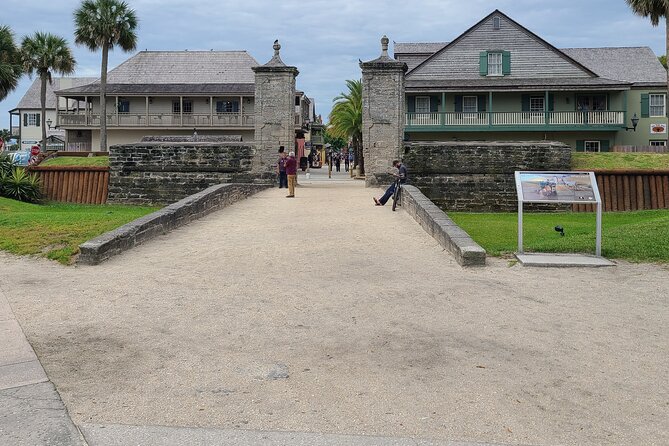
City Gate Spirits is another free stop, and it plays a neat role in the overall route: it helps you understand how people entered the city and how the city protected what was inside.
The tour notes that since 1762, this was the traditional entrance to St. Augustine. You’ll hear about the story of its construction and the brave effort that saved it from demolition.
This “saved from demolition” angle is important, because it turns a gate from a background detail into a survival story. Cities change, and sometimes the most meaningful history is what almost got erased.
It’s also a great transition stop. Once you’ve moved through cemetery, churches, public power, and the fort, the gate becomes the connecting logic: entry routes, defense, and control.
Walking Tour Reality Check: Timing, Shoes, and Staying Comfortable
The experience is listed at about 1 hour 30 minutes, and the route covers nearly two miles. But it’s smart to expect a little extra time in real-world conditions—especially when the group has questions and the guide is sharing side stories.
I like tours that can breathe a bit. If your schedule is tight, build in buffer time so you’re not stressed. If your schedule is flexible, you’ll likely enjoy the fact that the tour doesn’t feel like a rushed checklist.
For gear, I’d keep it simple:
- comfortable shoes (this is the big one)
- bottled water
- a phone with your mobile ticket ready
Also, the tour notes moderate physical fitness. That doesn’t mean it’s extreme. It means you should be ready for steady walking and standing time at stops.
Who This Tour Is Best For (and Who Might Want Something Else)
This walking history tour is a strong fit if you want:
- a guided overview of St. Augustine from early founding through the early 1900s
- multiple landmark stops in one continuous walk
- a small-group experience where questions are welcome
It’s also a good choice if you like your history told in plain language with a sense of humor. Guides such as Kevin Rose come across as enthusiastic and interactive, not robotic.
If you prefer very short, tightly timed tours with zero flexibility, you might feel the time stretch. And if you’re aiming for a full day of “only-ticket-free” attractions, remember that several stops list admission tickets as not included.
Should You Book This St. Augustine Historic District Walking Tour?
Book it if you want an efficient, friendly way to understand St. Augustine instead of just collecting photos. For $25, you’re getting a guided timeline across major sites like Castillo de San Marcos, Plaza de la Constitucion, Flagler College, and Tolomato Cemetery—plus the context that turns those stops into one coherent story.
Skip it only if your schedule is too strict for a tour that can run beyond its posted time, or if you know you’ll hate walking and prefer sitting-only experiences.
If you’re on the fence, I’d choose this tour early in your St. Augustine visit. It gives you the mental framework you’ll use all day, so the rest of the city starts to make sense fast.
FAQ
How long is the Walking History Tour of St. Augustine’s Historic District?
It’s listed at about 1 hour 30 minutes. The actual time can run longer depending on how the tour moves and questions along the way.
How much is the tour and what do I get for that price?
The price is $25.00 per person, and it includes the guided walking experience in English with a mobile ticket.
Are admission tickets included for the stops?
Not all stops have admission included. Tolomato Cemetery, Grace United Methodist Church, Memorial Presbyterian Church, Flagler College sites, and the Castillo stop are listed as admission tickets not included. Plaza de la Constitucion and City Gate Spirits are listed as free.
Where do I meet the tour?
You meet at the St. Augustine and St. Johns County Visitor Information Center, 10 S Castillo Dr, St. Augustine, FL 32084.
What should I bring and what’s the walking level like?
You should bring comfortable shoes and bottled water. The tour is described as suitable for travelers with a moderate physical fitness level.
What happens if the tour is canceled due to weather?
This experience requires good weather. If it’s canceled due to poor weather, you’ll be offered a different date or a full refund.