REVIEW · ST AUGUSTINE
Guided Historical Tour of St. Augustine Per Person
Book on Viator →Operated by Explore Tours And Pickups · Bookable on Viator
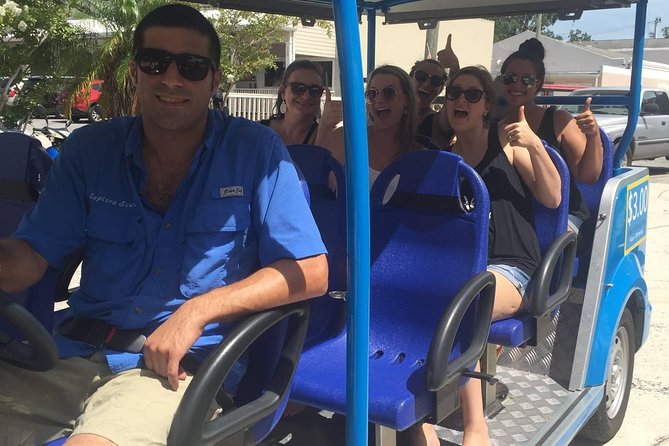
St. Augustine history moves fast—on purpose. This guided circuit uses an open-air electric vehicle to cover major Spanish, British, and American landmarks in the downtown area, with your driver acting as your guide as you pass each stop. You get the city’s timeline in plain language, plus chances to ask questions along the way. Small-group attention and easy downtown navigation make it a smart way to orient yourself.
I love the small-group size (up to 9) because you can actually hear the guide and ask follow-ups without shouting over other people. I also love how the tour treats history as a story—Fountain of Youth origins, mission-era religion, fort and defense, and later American chapters all show up in one hour.
One possible drawback: it’s a fast overview. You’ll see a lot from the vehicle, but you won’t have long time inside every site, and the open-air ride means wind or drizzle can affect comfort.
In This Review
- Key points before you go
- Open-air electric vehicle plus a real guide: why this format works
- Meeting at 1 Cordova St and the one logistics rule you should follow
- Mission Nombre de Dios and La Leche: the 1565 origin story
- Cathedral Basilica and Tolomato Cemetery: how faith and community overlap
- St. Francis Barracks: coquina walls and three empires in one place
- Castillo de San Marcos: the fort that links centuries
- Flagler College, Flagler’s church, and the Bridge of Lions
- Plaza de la Constitución: the center that still runs the town
- Fountain of Youth area and the Timucua village of Seloy
- Gonzalez-Alvarez House: oldest Spanish colonial residence in Florida
- Why the guides earn repeat bookings: Karen, Marc, Deanna, and Mark
- Getting your bearings fast: how to use the hour
- Price and value: $30.60 per person for a guided circuit
- Who should book this St. Augustine historical cart tour
- When you might choose a different approach
- Should you book this tour?
- FAQ
- FAQ
- How long is the guided historical tour?
- Where does the tour start and end?
- How big is the group?
- What language is the tour offered in?
- Is parking available for this tour?
- What should I do if the weather is bad?
Key points before you go
- Open-air electric vehicle keeps you moving while still letting you look at the big landmarks up close
- Guide + driver setup means you can ask questions while you roll
- Major highlights in about an hour help you pick what to revisit later
- Family-friendly small group often feels personal, not like a lecture
- Weather matters since it’s downtown and open-air, even when the tour is short
Open-air electric vehicle plus a real guide: why this format works

Downtown St. Augustine can feel like a maze when you’re hunting the “must-see” spots. This tour solves that problem with an open-air electric vehicle that keeps the pace steady. You’re not stuck doing stop-and-go parking math, and you’re not burning energy on long walks between key locations.
Most of the value here is how quickly the guide connects the dots. Instead of you bouncing from one signboard to another, you hear the timeline as you pass the places where the story happened. You also get the back-and-forth part—questions are encouraged, and the driver-guides are ready for them.
The vehicle setup is especially helpful if you want to cover the highlights on your first day, when you’re still figuring out where everything is and what you care about most.
You can also read our reviews of more guided tours in St Augustine
Meeting at 1 Cordova St and the one logistics rule you should follow
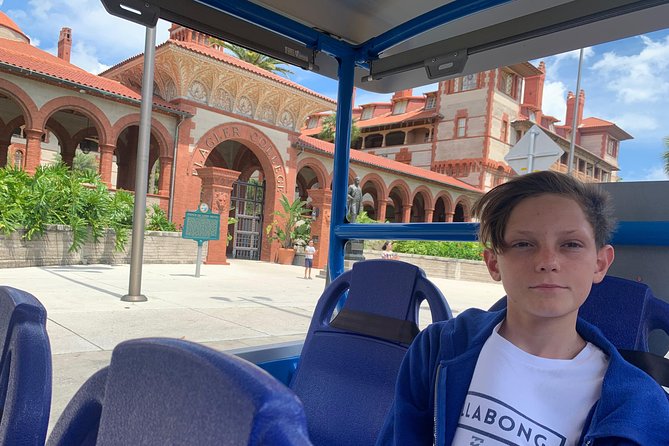
You’ll start and end right at 1 Cordova St, St. Augustine, FL 32084. The tour ends back where it begins, so you don’t have to worry about tracking a second meeting point later.
Here’s the one logistics rule: plan for parking and arrive early. The provider specifically notes they don’t offer parking, and St. Augustine traffic can be tricky. Even if your GPS acts confident, give yourself a cushion.
Also, don’t ignore the note on your ticket under special instructions. That’s where you’ll find day-of contact details (including a reachable phone number) so you’re not scrambling if you’re running late.
Mission Nombre de Dios and La Leche: the 1565 origin story

One of the tour’s strongest sections comes early, at Mission Nombre de Dios, tied to the founding era of St. Augustine. The guide points out the Shrine of Our Lady of La Leche, and you hear how the site traces back to Spanish settlement in 1565.
You’ll learn that on September 8, 1565, Pedro Menéndez de Avilés landed and proclaimed the area for Spain and the Church. Menéndez named the location Nombre de Dios, meaning Name of God, and placed Father Lopez in charge—described as the first parish priest in St. Augustine. That’s the kind of detail that helps the rest of the city’s landmarks click into place.
Practical tip: this is one of the moments where, if you want a better photo or a closer look, ask the guide for the timing and angle while you’re stopped. The tour doesn’t linger forever, so you’ll get the most by speaking up.
Cathedral Basilica and Tolomato Cemetery: how faith and community overlap
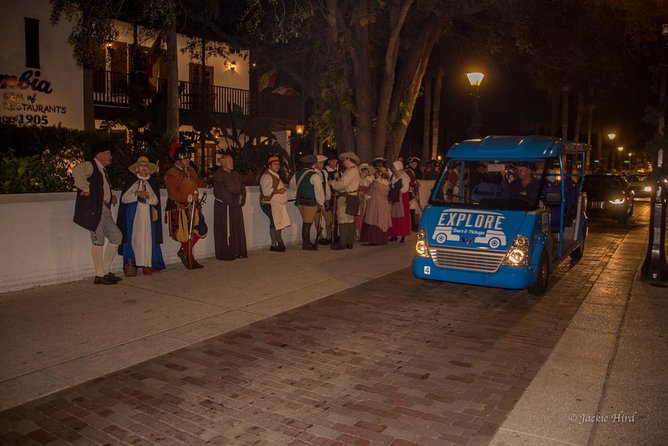
Next comes a pairing that many people would otherwise treat as separate stops: the Cathedral Basilica of St. Augustine and the Tolomato Cemetery.
At the Cathedral Basilica, you’re told it’s the oldest Catholic church in the city and also the oldest parish in the country. It’s a big claim, and it matters because it frames St. Augustine not just as a tourist town, but as a long-running religious center.
Then the tour shifts to Tolomato Cemetery, which is located in St. Augustine—described as the oldest European-founded city in the United States. The cemetery was in use from the 18th century until 1884. Even if you don’t spend much time standing still, the guide’s explanation helps you understand how this city carried on through major changes—storms, wars, shifting rulers, and new communities.
Respect matters here. If someone in your group asks questions, keep your tone calm. This isn’t a place for speed-reading facts from a phone.
St. Francis Barracks: coquina walls and three empires in one place
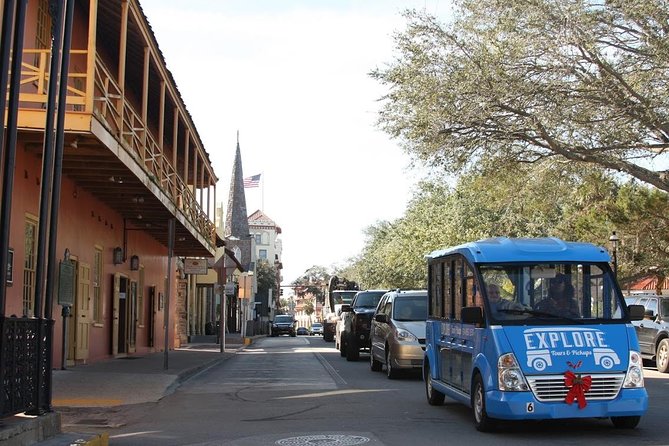
St. Augustine doesn’t just have Spanish-era stone. It also has evidence of later military chapters, and the tour makes that clear at the St. Francis Barracks on Marine Street.
You learn the barracks were constructed of coquina between 1724 and 1755 by Franciscan friars. Then the timeline turns: when Florida was possessed by the British in 1763, the barracks were converted for military use. After 1821, when Florida was claimed by the United States, the U.S. Army took control until deactivation in 1900. By 1907, it was leased to Florida State Troops, described as the forerunner of the present-day National Guard.
This is one of those stops where the vehicle format works well. You’re seeing the bones of a building while the guide narrates how the country around it kept changing. If you’re the type who loves cause-and-effect stories, you’ll like this portion a lot.
You can also read our reviews of more historical tours in St Augustine





Castillo de San Marcos: the fort that links centuries
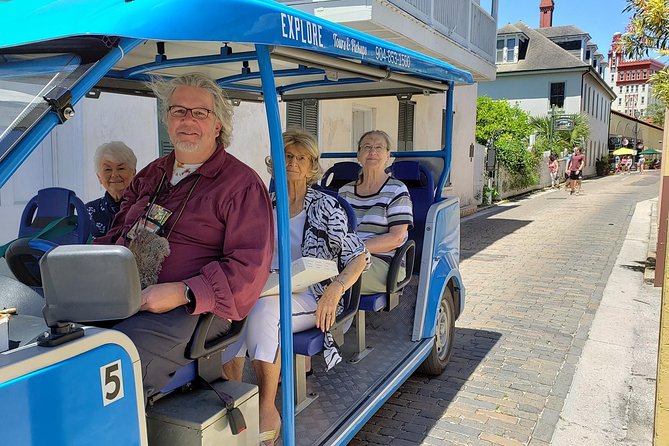
No short St. Augustine plan is complete without Castillo de San Marcos National Monument. During the tour, the guide explains what you’re looking at and why it’s still such a big deal.
You’ll hear that it preserves the oldest masonry fortification in the continental United States and interprets more than 450 years of cultural intersections. That phrase is doing a lot of work. It’s not just about Spanish defense. It’s about how power, trade routes, and international pressure shaped daily life around this fort.
What’s worth doing after: if you’re curious, make a note to return later for more on-the-ground time. In one hour, you can’t fully absorb a site of that scale. The tour gives you the why; a longer visit gives you the details.
Flagler College, Flagler’s church, and the Bridge of Lions

As the tour moves through downtown, you’ll pass modern-looking landmarks that actually sit on top of older economic stories. One stop covers the Ponce De Leon Hotel, now Flagler College. Even just hearing it framed in context helps, because Flagler’s impact is part of the city’s later identity.
Then you’ll get a strong architectural moment at Flagler’s Memorial Presbyterian Church, dedicated March 16, 1890. The guide shares that the church was built for Flagler’s daughter Jennie Louise Flagler, who died in 1889. You also learn that Carrere & Hastings designed it—listed as the same architects who built the Ponce de Leon Hotel. The design is said to be based on the Basilica of St. Mark in Venice.
After that, the tour points out the Bridge of Lions, completed in 1927 during Florida’s extravagant land boom. You’re told it was designed as much as a work of art as a transport for cars, connecting downtown St. Augustine with Anastasia Island.
If you want photos, this is where timing helps. Ask for a quick window for your best angle, especially if the day is breezy.
Plaza de la Constitución: the center that still runs the town
The tour’s downtown anchor is Plaza de la Constitución, described as sitting at the center of the historic city. It’s bordered by the Cathedral Basilica of St. Augustine, Trinity Episcopal, and the Government House. It also faces the Bridge of Lions, which makes it feel like the city is laid out for you to understand.
You’ll learn the plaza has a central pavilion used for city events, private events, and live entertainment. There’s also a public market with use reaching back to the 1500s, when fish, vegetables, and other goods were traded here.
That market detail is a great example of why this tour is useful: it helps you see the plaza as a living space, not just a backdrop for photos. Even if you don’t plan to shop, you’ll understand why locals treat this area like a hub.
Fountain of Youth area and the Timucua village of Seloy
One part of the tour shifts the story further back than the Spanish era. Pedro Menéndez de Avilés is noted as founding the city of St. Augustine at the Timucua village of Seloy, which is located at today’s Fountain of Youth Archaeological Park.
If you’ve only seen the Spanish landmarks, this stop adds an important layer: St. Augustine wasn’t empty when Europeans arrived. The guide’s explanation helps you connect the city’s origin story to the people who were already there.
Keep expectations realistic: this tour focuses on the downtown circuit, so you’re getting context more than a full excavation-level experience. Still, it’s a strong “first framework” stop if you’re trying to understand what came before.
Gonzalez-Alvarez House: oldest Spanish colonial residence in Florida
Another standout stop is the Gonzalez-Alvarez House (also referenced in the tour as the oldest surviving Spanish colonial residence in Florida). It’s owned and operated by the St. Augustine Historical Society.
Even when you’re only passing it, the guide frames why it matters: it helps you visualize how Spanish colonial life looked, not just how it sounded in a textbook. If you’re the kind of person who likes seeing an example of daily life structures, this is one of your “I should come back” spots.
Why the guides earn repeat bookings: Karen, Marc, Deanna, and Mark
You’ll hear a lot of compliments for the guides, and they’re not vague. The tour’s best moments tend to match what’s been shared in recent experiences: guides who mix storytelling with clear explanations, keep humor in the mix, and answer questions without rushing you.
Names you may hear include Karen Brady, Marc, Deanna, Mark, and Karen in general across different dates. Guests have described Karen as patient, easy to follow, and willing to let people pause for photos. Others have praised Marc for being helpful and fun, Mark for passion and pacing, and Deanna for mixing history with entertaining storytelling.
There’s also a practical touch that matters on a cool day: one guide is mentioned bringing a blanket if the wind gets through. That’s the small stuff that makes an open-air ride feel cared for rather than cold.
My advice: use your “question time” actively. Ask things like what to see first later, what stories connect between sites, or what is worth paying extra attention to if you only have a second day.
Getting your bearings fast: how to use the hour
This tour is built for orientation. In about an hour, you’ll get a guided circuit that hits the major landmarks people line up for on their own later.
Here’s how to make the hour pay off: after the tour, pick 2 or 3 stops you want to revisit and spend your time on those rather than trying to “do everything.” Since you’ll leave knowing the storyline, you’ll also understand what you’re seeing when you come back.
A lot of people treat this as the first step before a longer day—museums, self-guided walking, or a later tour when the city shifts mood. Even if you don’t plan your schedule right away, the guide’s layout gives you a map in your head.
Price and value: $30.60 per person for a guided circuit
At $30.60 per person for about one hour, the value is in three things: the guide, the electric transport, and the fact that you hit many key landmarks in one go.
If you were to cover this distance by yourself, you’d spend time managing walking routes, traffic, and the stress of figuring out what’s next. For many first-time visitors, that time is more expensive than the ticket.
This also helps explain why it’s popular enough to be booked ahead—on average 10 days in advance. If your dates are fixed, reserve early so you’re not stuck picking from whatever time is left.
Who should book this St. Augustine historical cart tour
This is a good fit if you:
- are visiting St. Augustine for the first time and want a clear big-picture timeline
- want less walking while still seeing the major downtown sites
- like asking questions and hearing explanations where the landmarks are
- prefer a small group environment (up to 9) so you don’t lose the guide’s voice
It can also work well for families. The tour keeps moving, the guide can respond to questions, and the time window is short enough to hold attention.
Service animals are allowed, and the tour is offered in English.
When you might choose a different approach
Skip this format if your main goal is long, slow time inside buildings and museums. This tour is designed for overview and orientation, not for deep time at every stop.
Also note: it requires good weather. Since it’s open-air, you should expect some wind or dampness on less-than-perfect days. If your group hates cold air, plan layers and plan your expectations.
Should you book this tour?
If you want a quick, guided way to understand St. Augustine’s Spanish origins, later defense history, and the downtown landmarks that shaped the city, this is an easy yes. The small-group setup, driver-as-guide approach, and the way the guide ties stops together make the hour feel efficient rather than rushed.
If you’re the type who likes to linger for long photo sessions and inside exhibits, book this anyway for orientation, then plan your second visit stops based on what grabs you most during the ride.
FAQ
FAQ
How long is the guided historical tour?
It runs for about 1 hour.
Where does the tour start and end?
It starts at 1 Cordova St, St. Augustine, FL 32084, USA and ends back at the same meeting point.
How big is the group?
The tour has a maximum of 9 travelers.
What language is the tour offered in?
The tour is offered in English.
Is parking available for this tour?
No. The provider says they do not offer parking, so you’ll want to plan accordingly and arrive early.
What should I do if the weather is bad?
The tour requires good weather. If it’s canceled due to poor weather, you’ll be offered a different date or a full refund.