REVIEW · ATHENS
The original Christian tour on Paul’s footsteps in Athens and ancient Corinth
Book on Viator →Operated by Athens Tours Greece · Bookable on Viator
Paul’s story in Athens feels like a real route. You get private pickup and a full day connecting the Acropolis to the nearby Areopagus, including the spot tied to Paul’s Sermon on an Unknown God. I also like how the itinerary keeps you moving between major sights—Acropolis to Agora to Corinth—without forcing a group shuffle. One watch-out: this is mostly a driver-led day, and you may end up exploring parts of the sites on your own inside.
In practice, the best value comes from the combination of a private air-conditioned vehicle plus history talk timed right before key entrances. I’m also glad it’s built around classic monument highlights like the Parthenon and the Ancient Agora, then finishes with the Corinth Canal at sea level. Still, if you want a licensed guide walking beside you through every monument and museum, budget extra for that option.
You’ll be outdoors a lot, including time on/near the Acropolis, so moderate fitness helps. Dress code is listed as formal, which can be awkward in Athens heat—plan for comfortable shoes under whatever “formal” means for you.
In This Review
- Key moments worth planning around
- Private Paul’s Footsteps route: what you’re really paying for
- From Piraeus along the Saronic Gulf: a gentle start before the climbs
- Acropolis gates and sacred views: how the stop order works
- Areopagus, the Hill of Ares: where Paul’s sermon becomes a place
- Propylaea and Temple of Athena Nike: the gate and the frieze
- Parthenon time: what to look for in 45 minutes
- Erechtheion and the caryatids: a lesson in preservation
- Ancient Agora: the heart of Athens across 5,000 years
- Saronic Gulf to the Peloponnese and the Corinth Canal
- Ancient Corinth and your lunch break: pacing matters
- Who should book this day tour (and who should consider a licensed guide)
- Should you book this Paul’s Footsteps tour?
- FAQ
- Is the tour private, and how many people can go?
- Does the tour include hotel pickup and cruise port pickup?
- Are entrance fees included for the archaeological sites?
- Will the driver guide us inside the sites and museums?
- How long is the tour?
- What should we wear?
Key moments worth planning around
- Hotel or cruise pickup: You start with a driver meeting you at your exact location in Athens or at Piraeus.
- Areopagus and the Unknown God: A short stop at the Hill of Ares where Paul’s famous message is tied to what he saw.
- Parthenon focus time: You get a dedicated block (about 45 minutes) at the main monument.
- Athenian civic center in layers: The Ancient Agora visit is long enough (about 1 hour 20 minutes) to feel like a real place, not a quick photo stop.
- Corinth Canal snapshot: The canal stop is brief but memorable—built into the isthmus at just 25 meters wide.
- Entrance fees are on you: Several major stops require separate tickets, so plan to pre-purchase.
Private Paul’s Footsteps route: what you’re really paying for
The price is $445.77 per group (up to 3) for about 8 hours. That structure can be a good deal if you’re traveling as a small party, because you’re paying for a private vehicle and dedicated transport, not a seat on a big bus.
The tour also includes hotel pickup/drop-off in Athens and pickup/drop-off at the Port of Piraeus cruise pier. If you’re on a cruise, that alone is often worth it because you avoid the stress of finding the right shuttle or taxi queue.
The biggest value trade-off is that admission fees to archaeological sites and museums are not included. You’ll want to budget extra for tickets, and the tour suggests you pre-purchase because availability can be tight.
You can also read our reviews of more tours and experiences in Athens.

From Piraeus along the Saronic Gulf: a gentle start before the climbs
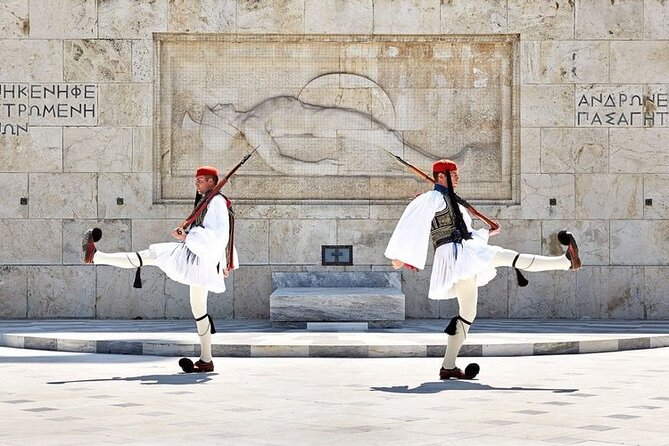
The day begins in Piraeus, with pickup either from your accommodation in Athens or from your cruise ship pier at Port of Piraeus. You then drive along the coastal road of the Saronic Gulf, which is a nice way to get your bearings before you hit the stone-heavy stuff.
This isn’t the “icon” moment of the tour, but it helps you ease into Athens. It also sets a calm rhythm: you’re not immediately scrambling to find a viewpoint, tickets, and your group.
Practical tip: if it’s hot (and it often is), pay attention to timing here. The day builds toward the Acropolis, and you’ll feel every step later.
Acropolis gates and sacred views: how the stop order works
Once you’re at the Acropolis area, the itinerary is designed to hit the story in sequence: myth-and-power sanctuaries, then the viewpoints from the surrounding hills.
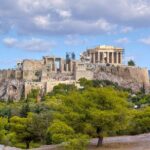
Stop by stop, you’ll start with the Areopagus area, then move to the Propylaea (the monumental gateway), followed by the smaller—yet very specific—temples around the main complex. This makes sense because the Acropolis isn’t just one building. It’s a whole religious and civic space, built over time.
Ticket note: several Acropolis components are listed with admission ticket not included, while other short segments are free. Translation: you’ll likely be buying tickets for the main archaeological zones, then stepping in and out for shorter stops.
Areopagus, the Hill of Ares: where Paul’s sermon becomes a place
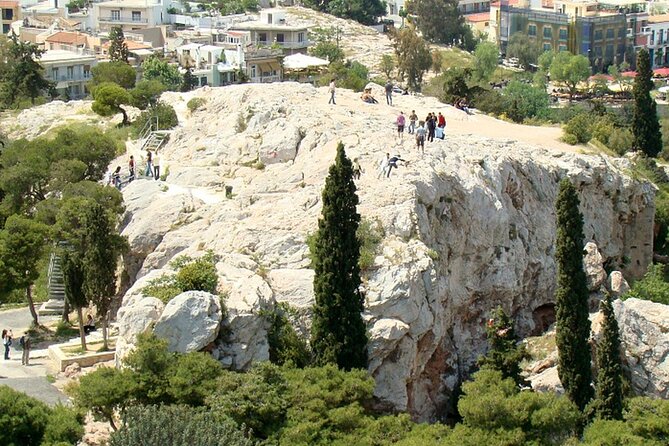
The Areopagus stop is short (about 20 minutes), but it’s one of the most meaningful parts of the day if you came for the Christian angle. In classical times, this was connected to a council and a judicial court, including cases involving homicide.
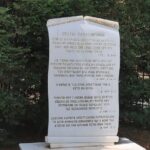
The itinerary also ties this hill to two mythic trials, and then brings it forward to Paul. The key detail here is the “Sermon on an Unknown God” connection, linked to Paul seeing an altar to an Unknown God. There’s also mention of a bronze plaque at the foot of the rock that you can see.
What I like about this stop is that it’s not just a label on a map. Even without a long walk, it gives you a physical sense of where a major message was delivered.
Drawback to consider: because the stop is brief and the tour doesn’t guarantee a licensed guide inside, your understanding may depend on how much your driver explains on the spot before you’re on your own.
Propylaea and Temple of Athena Nike: the gate and the frieze
After the Areopagus, you’ll head to the Propylaea, which functioned as the gate into the Acropolis precinct. The site has layers of rebuilding: an earlier gate associated with Peisistratos, destruction during the Persian Wars, then a major Periclean program where the monumental version was ultimately not completed.
Then you’ll get a quick look at the Temple of Athena Nike, a small Ionic temple built between 426 and 421 BC. The itinerary’s description gives you a clear lens for what to notice: the relief-carved frieze and how each side tells a different kind of story—gods, war, and battles connected to Persian conflict and Marathon.
These are short stops (about 5 minutes each in the provided timing), so the “win” here is having your eyes trained before you reach the viewpoint. If your driver-style explanation is strong, you’ll walk away remembering specific details.
If you want more time: you can’t stretch these stops much on this schedule. That’s the trade for packing in both Athens and Corinth in one day.


Parthenon time: what to look for in 45 minutes
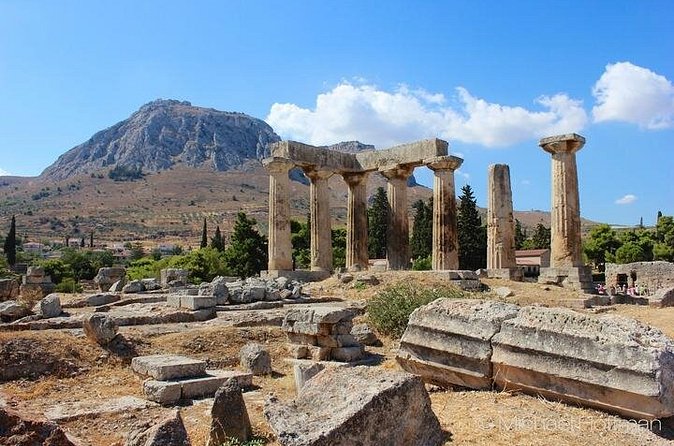
The Parthenon is the main headline, and you get about 45 minutes there. That’s enough time to do the basics well: orient yourself, take a few photos, and read the monument as architecture instead of just a postcard.
The itinerary notes it as the culmination of the Doric order and part of Pericles’ rebuilding program after the Greco-Persian Wars. It also highlights Athena Parthenos as the dedication and the Parthenon’s dual role as shrine and treasury.
When time is limited, focus on one or two things and stop chasing everything. I’d concentrate on the exterior proportions and the way the building sits as the center of the precinct. If you’re interested in sculpture and friezes, set aside a moment to look for the surviving cues your guide points out—then move on so you don’t burn your whole time tracking details you can’t fully see.
Admission ticket not included here, so if you want a smooth visit, pre-plan your tickets before you arrive at the Acropolis zone.
Erechtheion and the caryatids: a lesson in preservation
Next comes the Erechtheion, known for the porch where columns are replaced by the six maidens (caryatids). The itinerary mentions that pollution and weather damaged the originals, and that five were removed and moved to the Acropolis Museum in 1978, replaced with replicas.
This stop also includes an important—and uncomfortable—story about the remaining figure. One caryatid was taken by Lord Elgin in the early 1800s and ended up in the British Museum, where it’s been displayed since 1817.
Even if you don’t want museum-and-morality lectures on vacation, this is exactly the kind of context that changes how you see the monuments. Instead of thinking these sculptures are fixed and eternal, you understand they’ve been handled, protected, and also disturbed by history.
Time is short (about 5 minutes), so ask yourself what you’re hoping to learn. If your goal is architecture and symbolism, this stop fits. If your goal is a full sculptural lesson, you’d want more time or a licensed guide.
Ancient Agora: the heart of Athens across 5,000 years
After the Acropolis, you head to the Ancient Agora. The drive is about 20 minutes, and the visit lasts about 1 hour 20 minutes—long enough to feel like you’re walking through a real city center, not just between ruins.
The Agora is explained as both an assembly place and a marketplace. It stayed in use in different forms for roughly 5,000 years, which means the site has layers of building, destruction, and rebuilding.
The practical upside: you’ll get a richer sense of how ancient Athens worked day to day—assembly, commerce, and community—rather than only seeing temples and monuments. The schedule also keeps it from feeling like a pure “Christian sites only” day. It broadens the story to the civic world where ideas spread.
Admission ticket not included here, so again: tickets matter.
Saronic Gulf to the Peloponnese and the Corinth Canal
Between Athens and the Corinth area, the tour switches gears into road travel. You’ll admire the coastal drive along the Saronic Gulf until reaching the Corinth Canal in the Peloponnese.
The Peloponnese itself is described as a peninsula connected to the mainland by the Isthmus of Corinth. The itinerary even calls out the Peloponnese Wine Roads and native grape varieties, though this is more “context in the drive” than a tasting stop.
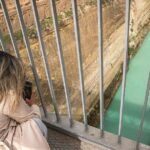
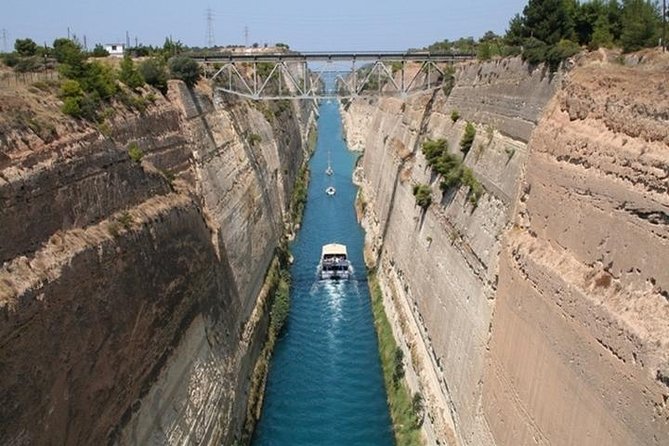
Then you reach the Corinth Canal for about 15 minutes. Here the details are very concrete: the canal links the Gulf of Corinth to the Saronic Gulf, separating the mainland from the Peloponnese like a kind of engineered island. It’s 6.4 kilometers long and about 25 meters wide.
What I like about this stop is that it connects ancient geography problems to modern solutions. The canal fulfills a long dream; before it, ships had to sail around the Peloponnese for an extra 185 nautical miles.
Ancient Corinth and your lunch break: pacing matters
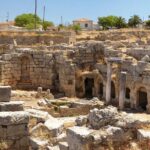
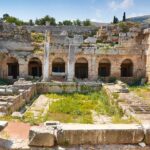
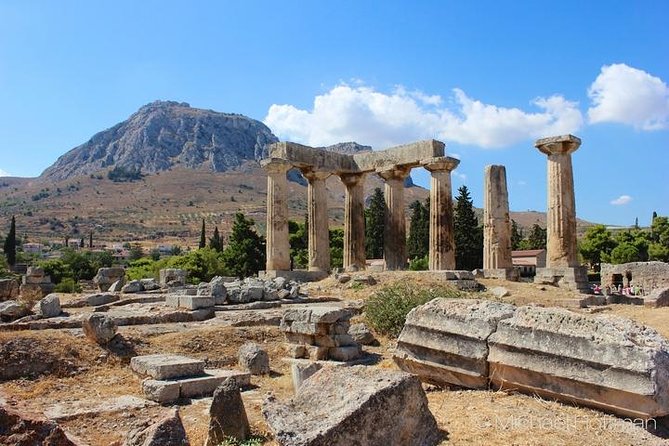
After the canal, you travel about 20 minutes to reach ancient Corinth. You get about 1 hour 20 minutes at Ancient Corinth (Archaia Korinthos).
The itinerary gives you a big-picture origin story: the area was inhabited since the Neolithic period, and Corinth’s strategic location fueled trade across land routes and waterways. It notes prosperity and communication across the Mediterranean world, plus that Corinthian colonies were founded in the 8th century BC.
This is where your interest in Paul may come into play, even though the schedule focuses on ancient Corinth’s development rather than listing specific Pauline stops. A good driver will connect the dots as you walk—ideas travel through cities, ports, and routes—so come in ready to listen.
Lunch is handled with free time for a traditional restaurant in Ancient Corinth, but food isn’t included. Translation: plan your cash and keep your expectations flexible. With a full day and lots of walk time, a simple meal beats an overplanned one.
Who should book this day tour (and who should consider a licensed guide)
This tour is ideal if you want a private day with a car, a logical sequence of Athens monuments, and a strong sense of place around major ancient sites. It also suits cruise passengers well thanks to the Piraeus pier pickup.
It’s less ideal if your top priority is being guided inside every major site and museum. The information provided with the tour is clear that the driver can’t accompany you inside archaeological sites and museums, and you’ll need a licensed English-speaking guide for that. The tour says they can arrange one for an extra cost, subject to availability.
If you’re traveling as a small group and care about details—history, religious context, and architectural meaning—this setup can work beautifully. If you’d like someone to walk beside you through the Parthenon complex and the Agora with a live commentary throughout, pay for the licensed guide option.
Based on the experience styles shared with this tour, some groups have had driver attention that keeps the day engaging before drop-offs, while others felt more like they were being dropped at stops. That difference often comes down to how much your driver talks right before and how you choose to spend your inside time.
Should you book this Paul’s Footsteps tour?
Book it if you want a private, structured day that hits the Acropolis and Agora in depth enough to make the Christian context feel grounded. It’s especially worth it if you’re traveling up to three people and want hotel/cruise convenience without hopping between buses.
Consider something else—or upgrade the guiding—if you know you’ll feel frustrated when you’re not being walked through monuments inside. Entrance fees aren’t included, and some of the timed stops are very short, so you’ll want either strong on-the-spot explanation from your driver or a licensed guide inside.
If you do book: pre-purchase your entry tickets, wear comfortable shoes, and give yourself permission to focus on a few key details at each stop instead of trying to “collect” every fact. You’ll enjoy the day more—and your legs will thank you.
FAQ
Is the tour private, and how many people can go?
Yes. It’s a private tour/activity, and the price is listed per group for up to 3 people.
Does the tour include hotel pickup and cruise port pickup?
Yes. The tour includes hotel pickup and drop-off in Athens, plus pickup and drop-off at the cruise ship pier at Port of Piraeus.
Are entrance fees included for the archaeological sites?
No. Entrance fees to archaeological sites and museums are not included. The tour suggests pre-purchasing tickets and notes they can be bought in advance with a small service fee.
Will the driver guide us inside the sites and museums?
Not exactly. The driver is a professional English-speaking tour driver and can guide you until you enter the archaeological sites and museums. For inside guiding, you’d need an English-speaking licensed tour guide, which can be arranged for an extra cost (subject to availability).
How long is the tour?
The duration is listed as about 8 hours.
What should we wear?
The dress code is listed as formal, and the tour notes moderate physical fitness is required. Comfortable shoes are important because the Acropolis area involves walking on uneven ground and steps.