REVIEW · ATHENS
Acropolis & Ancient Agora Guided tour included all Entrances
Book on GetYourGuide →Operated by Athens Walks Tour Company · Bookable on GetYourGuide
Four hours, two ancient centers, zero wasted time. This guided walk strings together the Acropolis and Ancient Agora with skip-the-line entrances, plus wireless headsets that keep you on track even in crowds.
I love the South Slopes approach into the Acropolis. It’s scenic, less chaotic, and your guide points out plants and archaeology you’d otherwise miss. I also like that the monuments are explained as stories you can actually follow while you’re standing right there.
The main drawback is simple: it’s a moderate amount of walking and an uphill climb, and it’s not suitable for wheelchair users or people with mobility impairments.
In This Review
- Key highlights worth getting excited about
- Starting at Porinou 5: easy meet-up, clear plan
- South Slopes of the Acropolis: a calmer first climb
- Theatre of Dionysus and Odeon of Herodes Atticus: where performances and power met
- Temple of Athena Nike and Propylaea: first impressions with real meaning
- Erechtheion and the Caryatids: beauty you can’t fully understand from photos
- The Parthenon: democracy, design, and the stories behind the stone
- A 15-minute Acropolis break: keep your footing, grab your best shots
- Ancient Agora: Stoa of Attalos and civic life you can actually picture
- Temple of Hephaestus: the Agora’s standout temple for craftsmanship and clarity
- Wireless headsets and the pacing that saves your day
- Value check: how $126 adds up for Acropolis + Agora entries
- What to bring (and what to skip) for a smooth 4-hour walk
- Who should book this, and who should look elsewhere
- Should you book this Acropolis & Ancient Agora tour?
- FAQ
- How long is the Acropolis & Ancient Agora guided tour?
- Where is the meeting point?
- Does the tour include entrance tickets?
- Is there skip-the-line access?
- What language is the tour offered in?
- Are wireless headsets provided?
- Is flash photography allowed?
- What should I bring for the tour?
- Is the tour suitable for children?
- Is hotel pickup included?
Key highlights worth getting excited about
- Skip-the-line access for both sites so you spend more time seeing, less time waiting
- Wireless hearing headsets that keep you hearing clearly in noisy areas
- South Slopes route for a calmer, scenic lead-in to the Acropolis
- Iconic Acropolis stops in one flow: Propylaea, Parthenon, Erechtheion, and Temple of Athena Nike
- Ancient Agora civic life explained with stops like the Stoa of Attalos and Temple of Hephaestus
- Guides who balance facts with a walking pace, with many praised by name (like Artemis, Kostas, and Yannis)
Starting at Porinou 5: easy meet-up, clear plan
You meet your guide at the Office of Athens Walks on Porinou 5, a very short walk from the Acropolis Metro Station. That matters, because the whole tour runs on momentum: get there on time, and the sites feel like a connected walk instead of a series of stressful dashes.
The plan is also straightforward. You’ll be at key Acropolis points first, then you’ll head down to the Ancient Agora and finish at the Ancient Agora area. It’s a smart half-day shape, especially if it’s your first time in Athens and you want the big hits without losing an entire day.
You can also read our reviews of more guided tours in Athens

South Slopes of the Acropolis: a calmer first climb
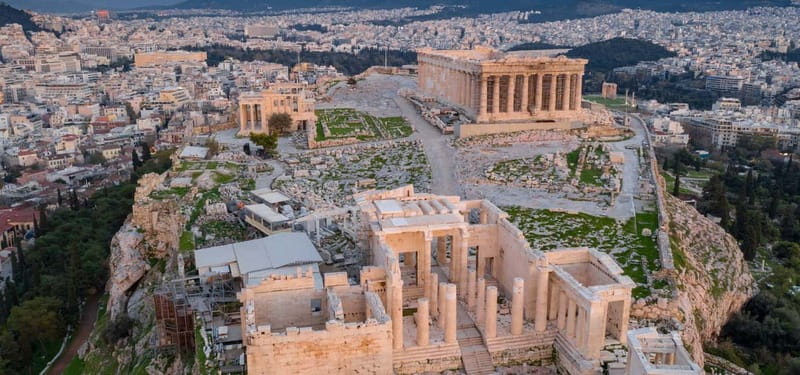
Instead of charging straight into the most crowded approach, you start up the South Slopes using a less busy route with great views. As you ascend, your guide points out the plants and archaeological features along the slopes, and that small detail changes everything. You stop seeing the Acropolis as one big postcard and start noticing it as a real place where daily life, rituals, and religion overlapped.
This is also where the guide can help you connect the dots. The Acropolis wasn’t just a collection of temples—it was tied to ancient Greek culture and belief. When someone explains those connections while you’re walking through the physical landscape, the climb feels like part of the lesson, not just a workout.
Photo-wise, the South Slopes are a gift. You get sweeping angles over the city as you go, and you’ll likely have better chances to frame Athens in the background before the density spikes higher up.
Theatre of Dionysus and Odeon of Herodes Atticus: where performances and power met
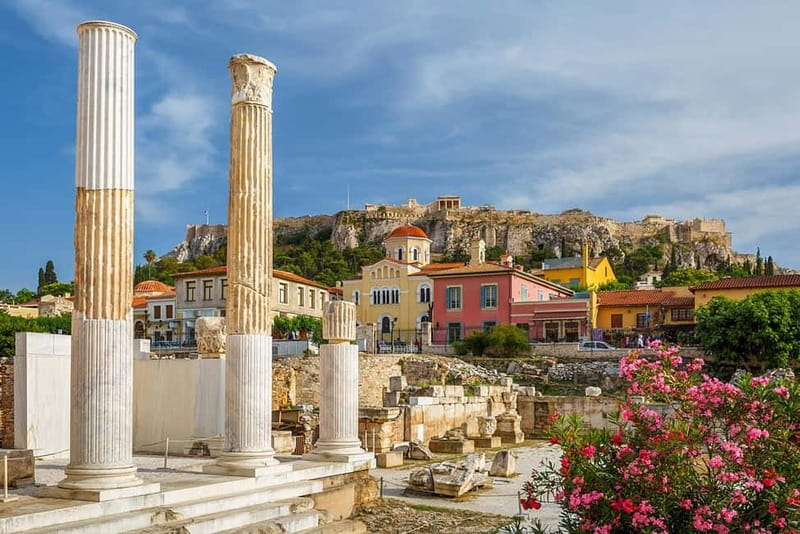
Early on, you’ll stop near the Theatre of Dionysus. You get a short guided look that sets the stage for what Athens was built to do: gather people, stage ideas, and turn culture into public life.
Then you move toward the Odeon of Herodes Atticus, which is especially worth paying attention to because it shows how theatrical life and architecture were intertwined. Even if you don’t catch a performance, seeing the scale and shape of these spaces makes the ancient city feel more human. It’s not just temples on a hill; it’s infrastructure for audiences.
The walk time here is part of the rhythm. You’re not stuck in one spot for too long, and that helps if you’re dealing with heat or crowds. Keep your eyes up and ahead. These landmarks reward you when you notice their edges and proportions, not just their names.
Temple of Athena Nike and Propylaea: first impressions with real meaning
Next comes a quick look at the Temple of Athena Nike. It’s smaller than the Parthenon, but that’s part of why it works on a guided route. Your guide can point out the fine details you’d likely miss when you’re tired and trying to photograph everything at once. Athena Nike connects to the theme of victory, and you’ll feel the logic of why this goddess appears in Athens’ most visible places.
After that, you approach Propylaea, the monumental gateway into the Acropolis. A guide’s explanation helps here because Propylaea isn’t just a fancy entrance—it’s a statement. It sets expectations for what’s inside and makes the transition from everyday city to sacred space feel deliberate.
If you’ve ever wondered how the Acropolis was meant to be experienced, gateway-and-temple sequencing is one of the answers. Walking this with a guide makes that structure click fast.
Erechtheion and the Caryatids: beauty you can’t fully understand from photos
The Erechtheion stop is one of the best parts of this tour’s logic. This is where you go from big-picture landmarks to distinctive architectural personality, including the famous Caryatids (sculpted female figures used as architectural supports).
The key value here is scale and texture. From street-level images, the Caryatids can look like decoration. Up close, they feel like architecture made with intention—designed to be seen, touched by light, and read from multiple angles. Your guide will also explain why the Erechtheion is known for its unique features, so you understand what makes it different before you move on.
This segment also tends to feel calmer than the Parthenon area. That’s important because it gives you time to look, not just pass through.




The Parthenon: democracy, design, and the stories behind the stone
Then you hit the main event: the Parthenon, with a dedicated guided visit. Your guide talks about its role as a symbol tied to Greek democracy and culture, and they’ll also share stories about how it was built. When you hear the purpose behind the design elements while standing in the courtyard space, the Parthenon stops being just a name and becomes a physical argument—about power, identity, and belief.
The Parthenon is also where crowds can crush your ability to think. That’s why this tour’s skip-the-line access matters. It buys you time to stay mentally present instead of constantly checking your watch. And the wireless hearing headsets help too; you can concentrate on what’s being explained even when the area gets loud.
If you want to get the most from the Parthenon without rushing, look for the details your guide highlights and then do one clean photo cycle after the explanation. In other words: listen first, then shoot.
A 15-minute Acropolis break: keep your footing, grab your best shots
You’ll get a break time at the Acropolis—enough time to reset without turning the tour into a hangout. Use it for water, quick photos, and a final loop of whatever your guide pointed out. This is also a good moment to check your energy, because the next part means switching from Acropolis views to Agora sidewalks and uneven ruin paths.
Practical note: there’s no flash photography allowed on the site, so if you’re a photographer, plan for natural light and phone/camera settings that don’t rely on flash. Also, bring your hat and sunscreen. Athens sun doesn’t care that you’re having a meaningful cultural day.
Ancient Agora: Stoa of Attalos and civic life you can actually picture
After the Acropolis, the tour moves to the Ancient Agora, often described as the heart of public life in ancient Athens. And it really feels that way once your guide starts connecting the ruins to real activities: political debates, social gathering, and commercial life.
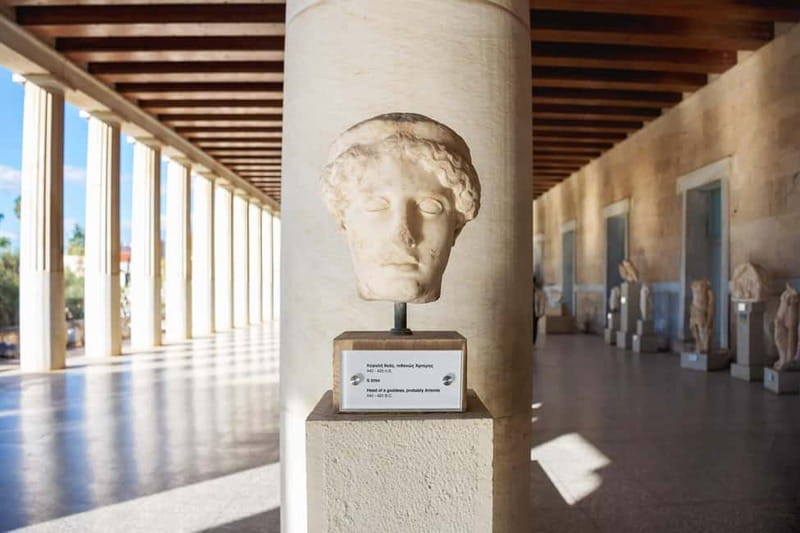
You’ll visit the Stoa of Attalos, which is well preserved and now houses a museum with artifacts from the site. That stop is valuable because it helps you bridge the gap between what’s left outside and what can be studied up close indoors. It also gives you a short chance to focus on objects and details, not just building outlines.
The guide’s job here is to make the Agora more than a stone grid. They explain why it mattered for Athenian democracy and how citizens, philosophers, and politicians used the space. If you like your history with context, this is where the tour earns its keep.
Temple of Hephaestus: the Agora’s standout temple for craftsmanship and clarity
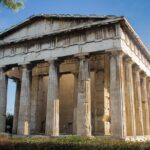
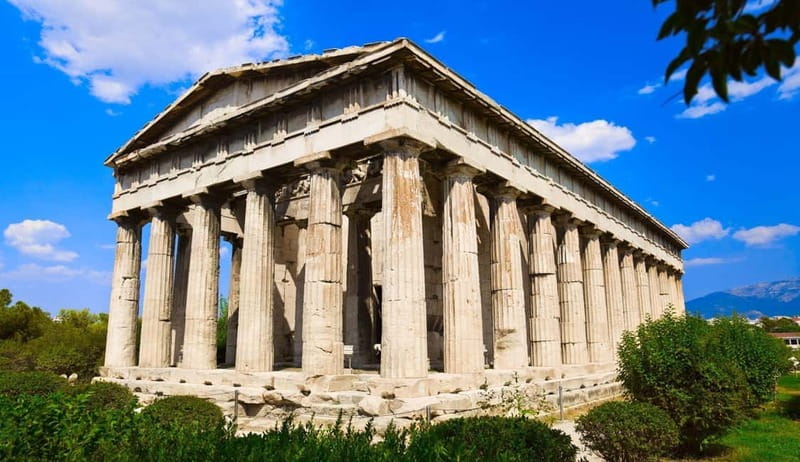
Your route continues with the Temple of Hephaestus, one of the best-preserved ancient temples. Your guide connects it to Hephaestus, the god of craftsmanship, which gives the temple a theme beyond just architecture.
This part works because the temple is visually legible. You can see the lines, the structure, and why preservation makes a difference. Without that explanation, you might just admire it; with it, you understand why Athenians valued skilled work and how that respect fit their civic values.
Wireless headsets and the pacing that saves your day
The tour includes wireless hearing headsets, and this is one of those features that sounds modern until you’re standing in a crowd trying to hear a whisper of Greek history. With the headsets, you don’t have to constantly reposition to catch every word. That keeps you engaged instead of frustrated.
Pacing is also a quiet strength. The stops are timed so you get guided attention at the important moments (the Parthenon and Erechtheion, for example), with walks in between so you aren’t stuck too long in sun. Some guides have been praised for keeping the pace comfortable even on very hot, busy days, including making sure people got to the best spots for photos and shade when possible.
Guide personalities come through, too. If you’re lucky enough to get someone like Artemis, Anastasia, Kostas, or Yannis, the common thread is energy plus clarity. I like that several guides are also described as not dumping you with endless facts. You get information that fits what you’re seeing.
Value check: how $126 adds up for Acropolis + Agora entries
At $126 per person for a 4-hour guided walk that includes entrances to both major sites, this isn’t just a “nice extra.” The value is in what’s bundled:
- Expert guided interpretation for multiple monuments, not just one
- Wireless headsets (so you don’t miss details in the crowd)
- All entry tickets included for both the Acropolis and the Ancient Agora
- Skip-the-line access using separate entrances
If you were to do this independently, you’d likely spend a chunk of time figuring out routes, ticket logistics, and timing across two separate areas. Here, you’re paying for coordination plus time saved at the busiest gates.
That also means you should judge the price by your travel style. If you hate waiting in lines and want a guided narrative, this package is strong. If you prefer total freedom and don’t care about skip-the-line entrances, you might decide a DIY day works better. But for most first-timers, paying for a plan is what makes the half-day feel successful.
What to bring (and what to skip) for a smooth 4-hour walk
You’re outdoors for much of the day, and the walking includes an uphill climb. Pack like you’re going to be moving:
- Comfortable shoes (non-negotiable)
- Hat and sunscreen
- Water (bring a bottle)
- Camera for the views
- Wear light layers in case temperatures swing
Two rules to remember:
- Flash photography is not allowed.
- Arrive 15 minutes early so the group can start cleanly.
And if you’re traveling with younger teens, note that participants under 18 need a picture of passport/ID.
Who should book this, and who should look elsewhere
This is a great fit if:
- It’s your first time in Athens and you want the Acropolis + Agora combo done right
- You like a structured route through major landmarks
- You want help making sense of what you’re seeing (Parthenon, Erechtheion, Agora civic spaces)
- You’d rather save time with skip-the-line access
It’s not a great fit if:
- You’re using a wheelchair or have mobility impairments (the tour isn’t suitable)
- You’re traveling with children under 6
- You don’t handle uphill walking well
If you’re somewhere in the middle—good on your feet but not a marathon hiker—this still can work. Just plan for the sun, take the break seriously, and keep water close.
Should you book this Acropolis & Ancient Agora tour?
Yes, if you want the best “first Athens” combo in a short window. The mix of licensed guidance, skip-the-line access, and wireless headsets helps you see more of the story with less stress. It’s also a solid choice if you like monuments explained through purpose—democracy and culture at the Acropolis, then civic, political, and social life in the Agora.
If you hate guided structure, this may feel too planned. And if your mobility is limited, you should choose an alternative that matches your needs. But for most visitors who want a smart, efficient Athens classic, this is the kind of tour that turns a list of ruins into a coherent walk you can remember.
FAQ
How long is the Acropolis & Ancient Agora guided tour?
The tour duration is 4 hours.
Where is the meeting point?
You meet at the Office of Athens Walks on Porinou 5, near the Acropolis Metro Station.
Does the tour include entrance tickets?
Yes. Acropolis entrance and Ancient Agora entrance tickets are included, with all entries covered in the booking.
Is there skip-the-line access?
Yes. You bypass long queues at both the Acropolis and the Ancient Agora through a separate entrance.
What language is the tour offered in?
The live guide provides the tour in English.
Are wireless headsets provided?
Yes. Wireless hearing headsets are included so you can hear the guide clearly during the walk.
Is flash photography allowed?
No. Flash photography is not allowed.
What should I bring for the tour?
Bring comfortable walking shoes, a hat, sunscreen, a camera, and water (a water bottle).
Is the tour suitable for children?
The tour is not suitable for children under 6. For participants under 18, you need a picture of passport or ID.
Is hotel pickup included?
No. Hotel pickup and drop-off are not included.