REVIEW · ATHENS
Ancient Corinth, Mycenae, Epidaurus, Nafplio Full Day Private Tour From Athens
Book on Viator →Operated by CRISPY LOCAL MONOPROSOΡΙ Ι.Κ.Ε. · Bookable on Viator
Nine hours, three UNESCO sites, zero stress. This private day trip strings together the most important Peloponnese stops without the headache of buses and connections, so you can focus on the ruins and the views. I like that it’s truly private for your group, not a shared cattle-car situation.
What also makes this tour work is the way you learn while you ride. The driver offers history facts during transit, which helps the sites make sense before you ever step inside, and you still get enough time on your own to wander. The only real caution is practical: key archaeological entries for Corinth, Mycenae, and Epidaurus are not included, so you’ll want to budget for tickets (and plan for a long day).
In This Review
- Key Things I’d Pay Attention To
- Why This Peloponnese Day Trip Works So Well from Athens
- Corinth Canal: The Short Stop That Explains the Whole Region
- Ancient Corinth: Paul’s World Meets a Big Roman Restart
- Corinth Archaeological Museum: A Calm Breather Before the Big Forts
- Mycenae: Cyclopean Walls and a Kingdom That Still Sounds Familiar
- Mycenae Museum: Quick Context at the Entrance
- Treasury of Atreus: The Beehive Tomb That Feels Massive
- Epidaurus: The Theatre That Still Sounds Perfect
- Sanctuary of Asklepios: Healing Temples and Late Roman Reality
- Nafplio Lunch, Coffee, and Venetian-Style Walking
- Bourtzi and Harbor Photos: The Castle You Don’t Need to Hike For
- Palamidi Castle and Acronauplia: Stairs, Views, and a Real Workout Option
- Price and Tickets: Is It Worth $259.03 Per Person?
- Pace, Personal Preferences, and the One Thing to Be Ready For
- Who This Private Tour Suits Best
- Should You Book This Tour?
- FAQ
- Can I get picked up from my hotel in Athens?
- How long is the tour?
- Is this tour private?
- Are entrance tickets included?
- What’s included in the tour price?
- Do I need to pay for the museum stops separately?
- Do I need a guided tour inside the sites?
- Is the tour in English?
- What if weather is bad?
- Can I cancel for a full refund?
Key Things I’d Pay Attention To
- Private vehicle, hotel pickup in Athens, with drop-off back at your accommodation
- 3 UNESCO World Heritage sites checked off in one day: Ancient Corinth, Mycenae, Epidaurus
- On-the-road storytelling from the driver, who shares context while you’re traveling
- Ticket costs add up for some major sites, so bring cash/card ready
- Fortress views in Nafplio plus the Palamidi step climb, if you feel up for it
Why This Peloponnese Day Trip Works So Well from Athens
If you want the Peloponnese highlights but you only have a day, this is one of the smartest ways to do it. You start early (8:00 am) and you’re back late, with a route that’s designed to connect dispersed sites without wasted time. The payoff is you get a real “route day” feeling, where each stop builds on the last.
I also like that you’re traveling in comfort. You ride in a luxury car or minivan with air-conditioning, bottled water on board, and the pace is handled for you. That matters on a day that involves outdoor walking, stairs, and a few archaeology entrances.
One more practical note: the driver is not a licensed site guide inside the museums and ruins. That’s not a deal-breaker, because the driver does give context along the way, but if you want a licensed explanation inside the archaeological areas, the tour offers it upon request and depending on availability.
You can also read our reviews of more private tours in Athens

Corinth Canal: The Short Stop That Explains the Whole Region
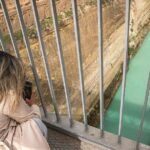
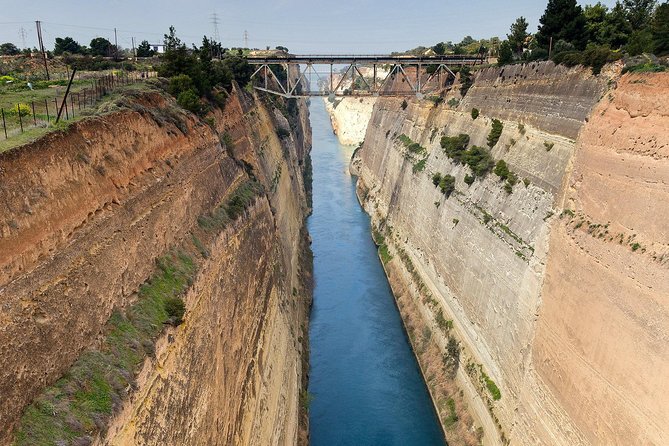
The day starts with the Corinth Canal, and it’s a good warm-up because it gives you the geography in one glance. The canal cuts through the Isthmus of Corinth, separating the Peloponnese from mainland Greece. Even if you’ve seen photos before, standing near the canal area makes the “peninsula as island” idea click.
Here are the details that make the canal feel real: it’s about 6.4 km long, roughly 21.4 meters wide at its base, and it was dug at sea level with no locks. From the vantage point the tour uses, you can watch ships work their way through the narrow channel between steep limestone walls.
This is also the easiest stop of the day. It’s around 10 minutes, and the admission ticket here is free. The only consideration is timing: it’s short, so you’ll want to have your camera ready fast.
Ancient Corinth: Paul’s World Meets a Big Roman Restart
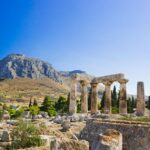
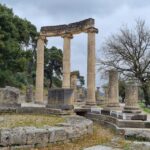
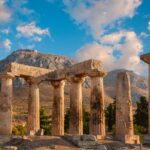
Ancient Corinth is one of those places where you can feel why it mattered. Corinth sat on the Isthmus, basically the trade and travel hinge between Athens and Sparta. Later, it became famous for its Christian connections through Saint Paul’s letters—First and Second Corinthians—and it also appears in the Acts of the Apostles.
What I love about this stop is that it’s not just one story. It’s a layered city. At its height around 400 BC, Corinth was described as a major city-state with a population around 90,000. Then the Romans demolished it in 146 BC, rebuilt a new city in 44 BC, and later made it a provincial capital.
You’ll also get the Christian context in your head while you’re walking, which helps the ruins feel less random. The tour gives about one hour here, but that doesn’t mean you have to sprint. The best use of your time is to slow down around the main areas you can identify, then use the remaining time to connect the dots between what you see and the stories you’ve heard.
The drawback is the practical one: the archaeological entry ticket for Corinth is not included. Budget around €15 per person. It’s still worth it, but it’s better if you go in expecting to pay.
Corinth Archaeological Museum: A Calm Breather Before the Big Forts
Right after Ancient Corinth, you’ll have a short break at the Archaeological Museum of Ancient Corinth. The museum was constructed around 1931–1932, specifically to display finds from the recent excavations. Since it’s located within the ancient site area, it works as a “translation layer” between the ruins and the objects.
You’re given about 30 minutes. That’s enough time to see key pieces without turning this into another full museum day. The ticket here is also not included, so keep in mind the total entrance costs can climb over the day.
If you’re the type who likes to understand what you’re looking at, the museum time helps. If you’d rather spend that energy outdoors in the ruins, you might skim. Either way, it’s a useful step in keeping the day from feeling chaotic.
Mycenae: Cyclopean Walls and a Kingdom That Still Sounds Familiar
Then comes Mycenae, and it’s the kind of place that makes you stop talking and start staring. The citadel is strongly associated with the legendary King Agamemnon, but it’s also tied to real Bronze Age power. Mycenae gave its name to the Mycenaean period, roughly 1600 BC to 1100 BC.
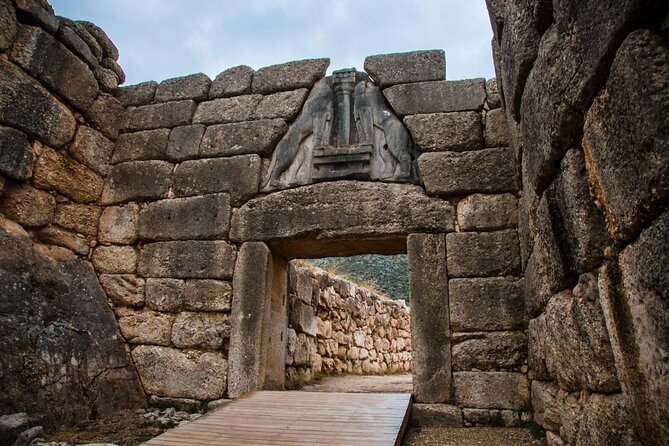
This stop is built around the dramatic elements you probably already recognize: the Lion’s Gate, the Cyclopean walls, and the fortified citadel layout. The tour also highlights specific areas like the Tomb of Clytemnestra and other key structures, so you’re not wandering with only general vibes.
Mycenae is given about one hour. That’s a good window because the site has enough scale that you can choose where to spend energy. If you’re into architecture and fortifications, you’ll likely focus on the walls and gates. If you’re into stories, you’ll orbit the key tomb references.
Practical note: Mycenae’s main entry is free for you during the tour time at the site stops listed, but the Archaeological Museum of Ancient Mycenae entry is not included and is typically a separate fee later in the day. The ticket you’ll need to budget for Mycenae archaeological entries is €20 per person.
A few more Athens tours and experiences worth a look

Mycenae Museum: Quick Context at the Entrance
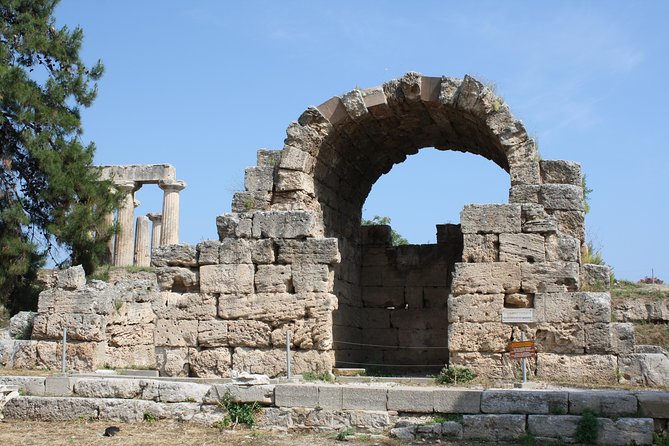
Right near the entrance—just steps before the Lion Gate—you’ll visit the Archaeological Museum of Ancient Mycenae for about 30 minutes. This is the classic format: a short museum stop that helps your eyes read what you’re about to see (or what you just saw).
If you’re trying to maximize value on a one-day timeline, this is one of the “smart short stops.” It prevents the ruins from feeling like random stones.
Treasury of Atreus: The Beehive Tomb That Feels Massive
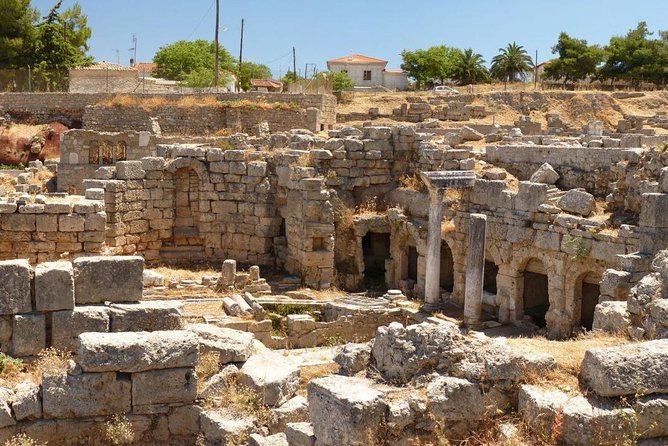
One of the standout moments is the Citadel and Treasury of Atreus, also called the Tomb of Agamemnon. This isn’t a casual look; it’s a major Bronze Age tholos (beehive) tomb on Panagitsa Hill, built around 1250 BC.
The details here are what make it memorable. The stone lintel above the doorway weighs an estimated 120 tons, with dimensions around 8.3 x 5.2 x 1.2 meters, and it’s described as the largest in the world in the information provided. Even if you don’t love trivia, those numbers make the scale feel believable.
You’re only given about 10 minutes, which means you’ll want to use that time for the essential angles—front view, doorway proportions, and any nearby vantage points. This is one of the stops where having been told a little context by the driver helps a lot.
Epidaurus: The Theatre That Still Sounds Perfect
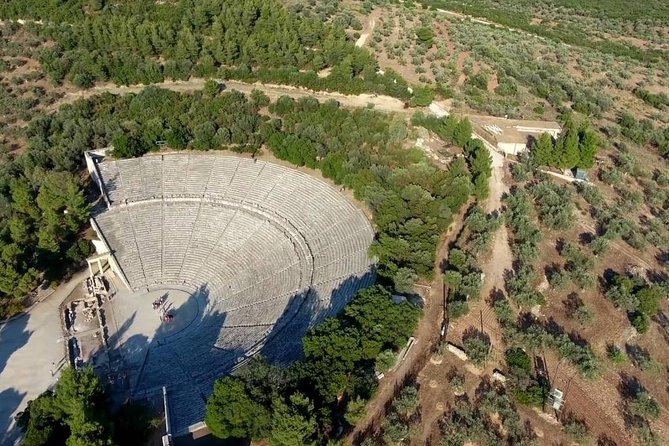
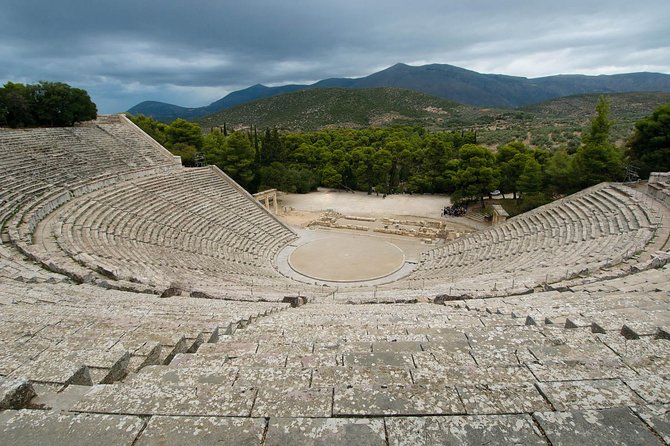
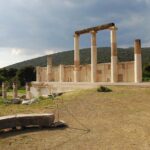
Epidaurus is where the day turns into something calmer and more awe-filled. You’ll visit the Ancient Theatre of Epidaurus, located within the larger sanctuary area dedicated to Asclepius, the ancient Greek god associated with healing.
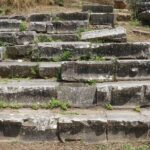
This theatre is famous for acoustics and aesthetics and is described as the most perfect ancient Greek theatre in those terms. Structurally, it keeps the classic tripartite layout: theatron, orchestra, and skene. Even better for modern visitors, the theatre did not suffer the usual Roman modifications seen at many other Greek sites.
You get about one hour here, which is a comfortable amount of time to walk the area, take in the view of the seating, and then sit for a bit if conditions allow. Because it’s a theatre, it rewards a slower pace than you might expect.
Ticket note: the Epidaurus archaeological admission is not included, with an entry fee listed at €20 per person. This is one reason the ticket budget can feel significant, but it’s also the reason the day feels like it earns its checkmarks.
Sanctuary of Asklepios: Healing Temples and Late Roman Reality
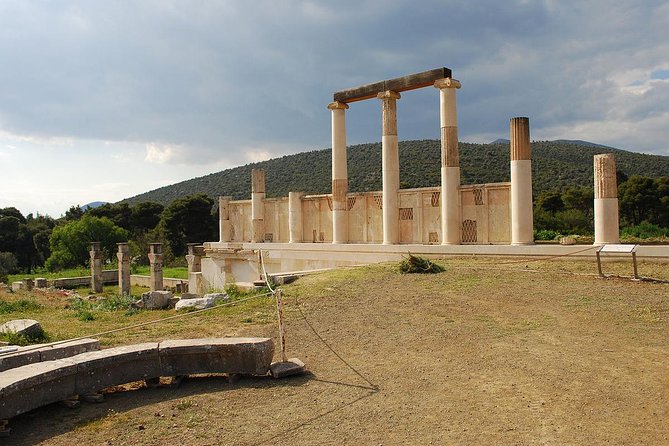
Right after the theatre, you’ll visit the Sanctuary of Asklepios, including the Temple of Asclepius. This was the main holy site of the sanctuary complex, rivaling major cult centers like Olympia and Delphi.
The temple you’ll see is built in the early 4th century BC. And the context matters: if it had still been in use in the 4th century AD, the sanctuary would likely have faced closures during the late Roman persecutions when Christian emperors issued edicts limiting non-Christian worship.
The tour time here is shorter—about 20 minutes—so treat it like a meaningful overview stop. Look at the setting, locate the temple area, and then let the driver’s context do its job so you’re not trying to “figure it out” alone in minutes.
Nafplio Lunch, Coffee, and Venetian-Style Walking
After the heavy archaeology, Nafplio is your release valve. This is where you eat, stroll, and actually breathe. You’ll have about two hours in town, with time planned for lunch, coffee, or shopping.
Nafplio is often called the Naples of the East, and the nickname fits if you like atmospheric Old Town streets. The town mixes Venetian architecture, cobbled squares, and castles sitting above commanding views of the Argolic Gulf. It also has serious historical weight: it served as the capital of the First Hellenic Republic and then the Kingdom of Greece, from the start of the Greek Revolution in 1821 until 1834.
The tour suggestion is practical: walk some cobbled streets, enjoy the harbor, and spend at least part of the time just looking. When you’ve been staring at stones all morning, this kind of change feels like a reset.
Bourtzi and Harbor Photos: The Castle You Don’t Need to Hike For
While in Nafplio, you’ll also get time to enjoy views of Bourtzi, the Venetian castle sitting in the middle of the harbor. It’s one of those photo subjects that works because you don’t need to work for it. You can take fascinating shots from the harbor side and enjoy the water views without another big climb.
This is also a good moment to pause and plan your next step. If you’re heading toward Palamidi, you can decide how ambitious you want to be after you see the fortress area from the harbor.
Palamidi Castle and Acronauplia: Stairs, Views, and a Real Workout Option
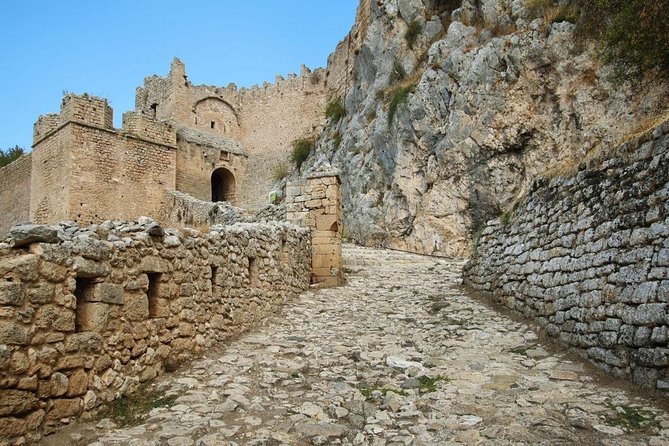
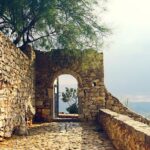
Now for the payoff with a little sweat. Palamidi Castle is built on a hill about 216 meters above the town, and the tour notes 913 steps from town to the fortress (though locals jokingly say 999). Either way, it’s a climb. The best part is what comes after: the fortress gives big views over the Argolic Gulf, Nafplio, and the surrounding countryside.
The tour time allocated is about 30 minutes. That might sound short, but it’s enough for a quick climb, a few strategic photo stops, and then a descent before you’re exhausted. Wear shoes you trust on stone steps, and pace yourself.
And if you look around the older city structure, you’ll also learn about Acronauplia, the oldest part of Nafplio. It became part of the fortifications after the arrival of Venetians and Franks, and it was used as a prison before a hotel complex was built to take advantage of the view from the site.
Price and Tickets: Is It Worth $259.03 Per Person?
At $259.03 per person, this isn’t a budget tour. But it’s not priced like a small-town day trip either. You’re paying for four main things:
- Private transportation with a luxury car or minivan and air-conditioning
- A full-day route that would be hard to stitch together yourself in one day
- Driver-led historical context during transit (which helps you understand what you’re seeing)
- The structure of a day that covers three UNESCO sites plus Nafplio
The ticket fees are the variable. The archaeological entries for Corinth (€15), Mycenae (€20), and Epidaurus (€20) are not included. That means your total cost depends on exactly what entry combinations you choose, but you should plan for those core sites.
Here’s the value math that helps most people decide: if you tried to DIY this route, you’d still need transportation between widely separated sites and you’d spend real time figuring it out. This tour buys you time and smooth logistics, which is especially valuable if you hate racing a clock on vacation.
One more detail that affects value: you’re not just dropped at a single site. The plan includes shorter stops too (like the Corinth Canal) and a real town break in Nafplio. That mix keeps the day from turning into only museums and only ruins.
Pace, Personal Preferences, and the One Thing to Be Ready For
This is a private tour, so the biggest advantage is control. You can usually spend more time where you care most. In feedback, people praised drivers like Dimitris and George for staying on schedule, sharing plenty of context, and driving safely. That kind of guidance is exactly what prevents a private tour from turning into random wandering.
Still, there’s one practical mismatch to watch for: some drivers may talk about cultural topics, including religion, as part of explaining Greek society. If that’s not your thing—or if you want the day to stick strictly to archaeology and history—just say so up front. The best outcome is simple: you’ll get the explanations you want, and the conversation style you can tolerate.
Also remember the driver is not a licensed guide inside sites. If you want official interpretation while you’re walking around the ruins and museums, request it in advance when available.
Who This Private Tour Suits Best
This tour is a strong fit if you want a one-day hit list without the stress of transportation planning. It’s also ideal if you like learning context while you ride, not only when you’re standing in front of a carved stone.
It’s less ideal if you:
- Want a fully flexible itinerary with totally free roaming all day
- Plan to skip ticketed archaeological sites to keep costs down
- Prefer quiet guides with minimal conversation (you may want to set expectations early)
Most people can participate, and the day includes a mix of walking, stairs, and short stops. You should be ready for outdoor steps at Palamidi if you choose to go up.
Should You Book This Tour?
I’d book it if you want the fastest, most coherent way to see Ancient Corinth, Mycenae, and Epidaurus from Athens while also getting a real break in Nafplio. The private vehicle, the driver’s on-the-road explanations, and the way the day is structured are the reasons this works.
I’d think twice if ticket fees feel like too much add-on for your budget, or if you don’t want any conversation beyond logistics and ruins. In that case, you might be happier with a self-planned route.
FAQ
Can I get picked up from my hotel in Athens?
Yes. Pickup is available from any accommodation in Athens. Airport pickup or airport-area pickup and drop-off has an extra charge.
How long is the tour?
Plan on about 9 to 10 hours for the full day.
Is this tour private?
Yes. It’s a private tour, so only your group participates.
Are entrance tickets included?
Not for all stops. Admission fees for the archaeological sites at Corinth, Mycenae, and Epidaurus are not included. The Corinth Canal stop is free.
What’s included in the tour price?
Private transportation, the chance to discover three UNESCO-listed classical sites, bottled water, an air-conditioned vehicle, and historical facts provided by the driver. A culinary gift is also included.
Do I need to pay for the museum stops separately?
Yes. The archaeological museum entries at Corinth and Mycenae are listed as not included.
Do I need a guided tour inside the sites?
The driver is not a licensed guide to accompany you in the archaeological sites. However, a licensed tour guide can be arranged upon request and depending on availability.
Is the tour in English?
Yes. The tour is offered in English.
What if weather is bad?
The experience requires good weather. If it’s canceled due to poor weather, you’ll be offered a different date or a full refund.
Can I cancel for a full refund?
Yes. You can cancel up to 24 hours in advance of the experience start time for a full refund.