REVIEW · POMPEII
Pompeii Ancient City Walking Tour – Italian & English Guide
Book on Viator →Operated by Sesto Continente Tours · Bookable on Viator
Pompeii hits hard, even on a walk. This tour turns that huge UNESCO site into a guided route with an Italian and English guide and help at the Ticket Office entrance gate. It’s designed for people who want the big moments and the right context without getting lost in the ruins.
I especially like how the day-by-day plan keeps you moving between the famous stops, like the Anfiteatro Romano and the major villas, while the guide connects what you’re seeing to what happened there. The other big plus is the story-and-art balance: the eruption gets explained alongside the mosaics and frescoes.
One thing to plan around: the main Pompeii entrance ticket is not included (it’s €22 per person), so your real total cost is a bit higher than the tour price. Also, the experience needs good weather.
In This Review
- Key highlights you’ll care about
- Why Pompeii feels easier with this kind of guided route
- Day 1: Pompeii’s core sights, from temples to the big arena
- Pompeii Archaeological Park (your main walk-in)
- Casa del Fauno: mosaics that set the tone
- Tempio di Giove Capitolino: Romans, gods, and power
- Temple of Apollo: an ancient religious anchor
- Anfiteatro Romano: 20,000 seats and the social ladder
- Casa del Menandro: a name from a painted clue
- Casa dei Vettii: freedmen with expensive taste
- Villa dei Misteri: the painted “initiation” story
- Day 2: the Roman Catholic Sanctuary of Pompeii adds a local layer
- Price and value: what $36.12 really turns into
- Group pace, language support, and real-world logistics
- What I’d pack and plan for (so the day feels good on your feet)
- Who this tour is best for (and when you might DIY)
- Should you book Sesto Continente’s Pompeii walking tour?
- FAQ
- Is this Pompeii tour offered in English?
- Do I have to buy the Pompeii entrance ticket separately?
- Is the Day 2 Sanctuary visit included in the price?
- Where is the meeting point?
- How big is the group?
- What happens if the tour can’t run due to weather?
Key highlights you’ll care about
- Entrance-gate facilitation to reduce stress at the ticket office
- English touring with an Italian guide team
- Day 1 Pompeii route built around the Amphitheater, temples, and key houses
- Museum-style art stops, including mosaics and fresco rooms in the villas
- Day 2 Sanctuary visit included as a separate, shorter stop
Why Pompeii feels easier with this kind of guided route
Pompeii can be overwhelming fast. The streets, houses, and public buildings are spread out, and once you wander without a plan, you can burn hours before you even reach the highlights. What I like about this tour style is that it gives you a structure that actually matches how Pompeii is laid out: you start at the official entrance area and work through the most important clusters of ruins with a guide leading the way.
You’re not just walking past stones. The guide’s job here is to translate what you’re looking at. The tour focuses on the major public buildings and the best-known houses, then slows down where the “wow” comes from—things like mosaics and painted room scenes. That matters because Pompeii is famous for two kinds of detail: large-scale Roman architecture (temples, theaters/arenas) and the small visual clues that make the houses feel personal.
Another practical advantage: you get help at the entrance to the Ticket Office. Even if you already have tickets, that kind of facilitation can make your morning less chaotic. Pompeii entrances can be busy, and time spent searching for lines or the right counter is time you don’t get back. This tour’s setup is meant to reduce that friction.
Group size is capped at 25 travelers. That’s a sweet spot: big enough for a lively group pace, small enough that the guide can still keep people together and answer basic questions. It’s also listed as doable for most people, and service animals are allowed.
You can also read our reviews of more walking tours in Pompeii
Day 1: Pompeii’s core sights, from temples to the big arena
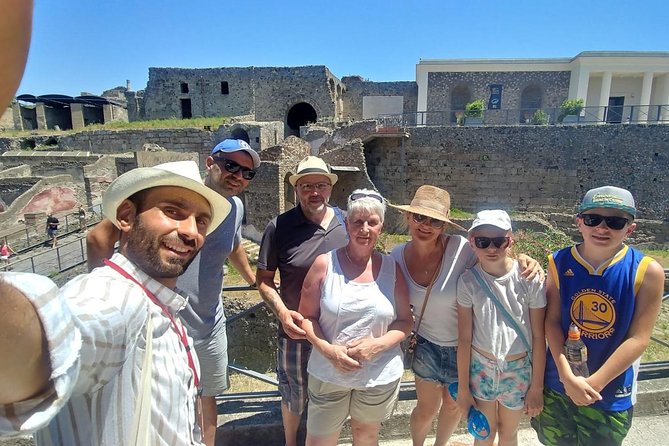
Day 1 is the heart of the experience. You spend time inside the Pompeii Archaeological Park with a guide, then make short, focused stops at major sites. The day is paced in a way that helps you see a lot without feeling like you’re sprinting nonstop—each listed stop is short enough that you get the key points and move on.
Pompeii Archaeological Park (your main walk-in)
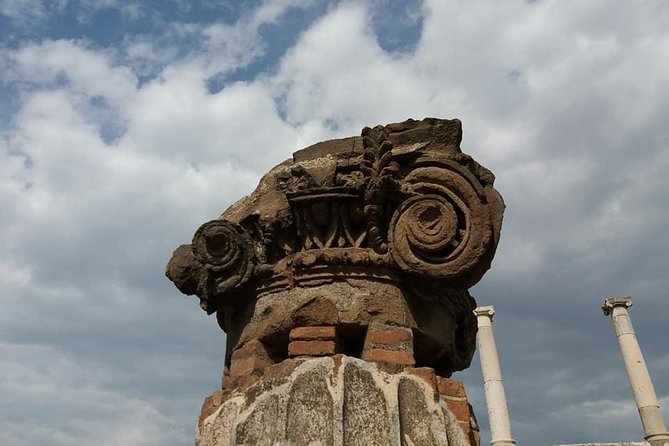
You start at the park and follow a route that includes some of Pompeii’s most recognizable anchors. The big value of this time in the park is that the guide helps you recognize what you’re seeing before you even reach the individual houses and monuments.
Here are the kinds of stops you’ll pass through:
- Anfiteatro Romano: the arena that tells you how public life and spectacle worked in Roman Pompeii.
- Tempio di Apollo: one of the older religious structures in town.
- Tempio di Giove: tied to Roman worship of the divine triad.
- High-impact homes such as Casa del Fauno, Casa del Menandro, and Casa dei Vettii.
- Villa dei Misteri, the painted “initiation” scenes house.
Important detail: the entrance time for these sights is guided, but admission tickets are not included for the park and most of these stops. You’ll want to budget for that €22 Pompeii entrance ticket separately.
Casa del Fauno: mosaics that set the tone
Casa del Fauno is a large residence, and the highlight here is the mosaic reproduction of Alexander the Great’s battle against Darius III. Even if you’ve never studied ancient art, that battle image is the kind of thing your brain understands instantly—action, armor, ranks—so it’s an easy entry point into Pompeii’s visual world.
This stop is short, so the guide’s guidance matters. Instead of letting you stare at a floor with no context, you’ll get the meaning behind why this mosaic is remembered and how mosaics functioned as status markers in wealthy homes.
Tempio di Giove Capitolino: Romans, gods, and power
Next is the Tempio di Giove Capitolino. The guide frames it through the Roman religious concept of the Capitoline triad: Jupiter, Juno, and Minerva. The key is understanding that these buildings weren’t just decorative—they were part of how Roman society organized belief and authority.
You’ll also see the landscape of Pompeii’s setting in your peripheral vision (the idea of Mount Vesuvius looming in the background is part of why Pompeii feels so intense). This stop is brief, but it’s useful because it connects the city’s daily life to what the Romans believed shaped everything.
You can also read our reviews of more guided tours in Pompeii
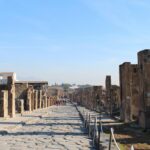
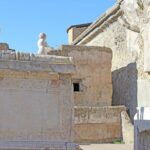
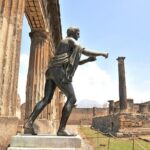
Temple of Apollo: an ancient religious anchor
The Temple of Apollo is described as the most ancient religious building in Pompeii. The standout here is a reproduction of a bronze statue of Apollo, shown holding a bow and arrow in a poised stance. This is a classic “look for the details” moment: columns and architectural order in one direction, the religious symbolism in another.
If you tend to rush through ruins yourself, this is one of the stops that justifies a guided plan: the guide points out what to focus on so you don’t miss the religious and artistic message.
Anfiteatro Romano: 20,000 seats and the social ladder
The Roman Amphitheater (built around 80 BCE) is presented as the oldest amphitheater of its kind. The guide emphasizes its purpose and scale: gladiator spectacles and capacity up to 20,000 spectators, arranged into three sections based on social class.
This is a great stop for understanding how “public” life worked. Pompeii wasn’t just houses and streets—it was also crowd entertainment where people of different classes sat apart, even while watching the same event.
Casa del Menandro: a name from a painted clue
Casa del Menandro gets its name not from the owners but from a fresco portraying the Greek poet Menander. That detail matters because it shows how archaeologists often identify spaces by themes found in art, not by paperwork that survives.
This makes the stop feel less random. Instead of thinking of a house as just a pile of rooms, you start thinking of it as a curated environment—painted messages, cultural references, and identity.
Casa dei Vettii: freedmen with expensive taste
Casa dei Vettii is tied to the story that the brothers were former slaves who gained freedom and then didn’t hold back on spending. The highlight is the affreschi and painted wall decorations, which communicate wealth and ambition.
This stop is also useful because it shows you how social identity shows up in architecture. Even without seeing everything that once existed, the surviving paintings hint at lifestyle and aspiration.
Villa dei Misteri: the painted “initiation” story
The final stop of Day 1 is Villa dei Misteri. The highlight is the sequence of nine painted scenes on the walls inside the initiation room, describing a rite of passage for a bride into adulthood and linking the scenes to the cult of Dionysus (wine and fertility).
This stop is where the tour’s “art + meaning” approach really shows. If you love frescoes, you’ll appreciate that the guide explains what you’re looking at so the art doesn’t feel like random decoration. If you’re not an art person, you’ll still get a story thread that keeps the scene sequence from turning into visual overload.
Day 2: the Roman Catholic Sanctuary of Pompeii adds a local layer
Day 2 is shorter and calmer. You get a free visit to the Roman Catholic Sanctuary of Pompeii for about one hour, and the sanctuary ticket is included.
What makes this stop valuable isn’t the ruins. It’s the contrast. Pompeii is ancient, but the area didn’t stop being meaningful after the Roman era. A sanctuary visit can help you understand how locals relate to the site today—especially because the sanctuary is part of the broader Pompeii world you’re already standing in.
Because the details in the provided info are limited to the visit length and inclusion status, I’d treat this as a slower palate cleanser after the long Day 1 walk. It’s the time to sit down for a moment, reset your feet, and let the day’s big themes land: tragedy, memory, and how people keep interpreting the place.
Price and value: what $36.12 really turns into
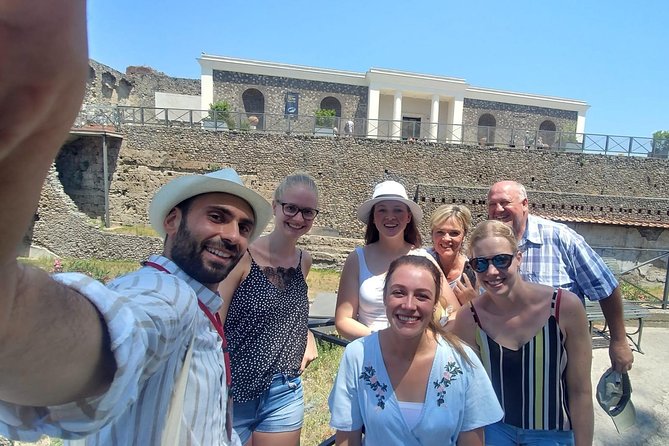
The tour price is listed as $36.12 per person. On top of that, you must budget for the Pompeii entrance ticket of €22.00 per person, because entrance fees are not included for the ruins portion.
A lot of tours hide this part. This one doesn’t, and that’s good. When you add the missing entry fee, you’re paying for:
- Guide-led navigation and explanations through key Pompeii zones
- Time in major sights like the amphitheater and signature villas
- Help at the Ticket Office entrance gate
- A second day sanctuary visit where the sanctuary ticket is included
If you’re comparing options, the real question isn’t just the headline price—it’s whether you want to spend your precious time wrestling with entrances, routes, and interpretation. If you want a structured highlight plan, the total can feel fair. If you prefer a self-guided day with a book or audio app, you might find it easier to DIY and skip the guiding cost.
Also note: entrance rules are listed in the info. Entrance to Pompeii is free for minors under 18, EU seniors +65, and journalists, students, and teachers in the EU. If any of that applies to you, your total cost might be much lower.
Group pace, language support, and real-world logistics
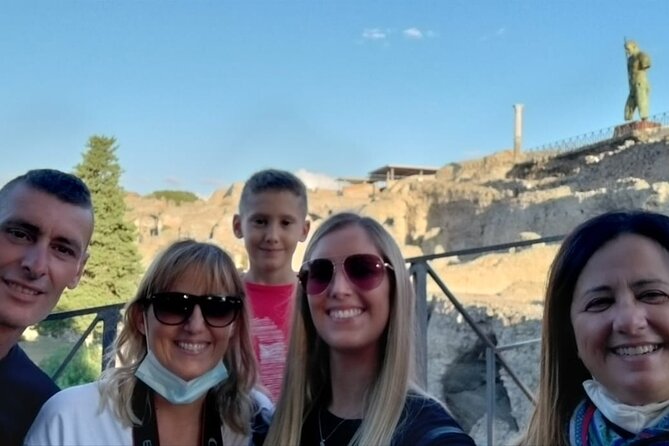
The tour is offered in English. You’ll meet at Piazza Porta Marina, 80045 Pompei NA, Italy, and the activity ends back at the meeting point.
The stop list reads like a classic “big highlights” route. That’s great if you want the essential Pompeii without spending your whole day between entrances. It also means you shouldn’t expect long, lingering museum-style time at every single room. Instead, think of each stop as a guided chapter: you get the key context, then you move on.
I also like that group size is capped at 25. With that number, you can still hear the guide and stay oriented, especially important on a site where signage isn’t always intuitive.
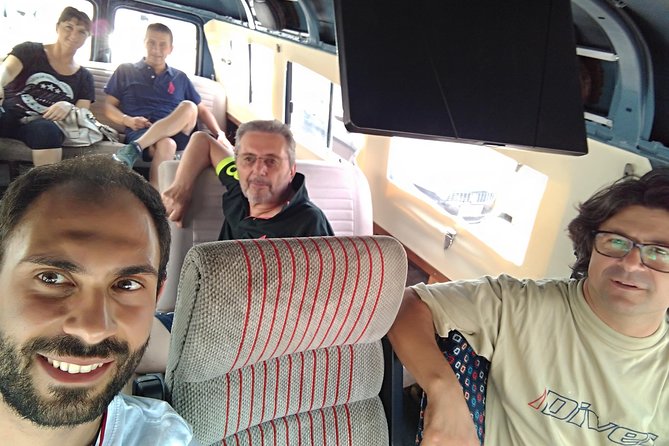
One small but practical point from a real-world scenario: if you’re in a mixed language group, the guide can adapt. In at least one experience, Simone stepped in to handle an English portion when there was an issue with the schedule, and he was willing to repeat in Italian when questions came up. That’s the kind of flexibility that matters when you’re standing in front of something you want to understand right now.
Service animals are allowed, and the meeting point is near public transportation, which helps if you’re arriving by train or bus and don’t want to depend only on taxis.
What I’d pack and plan for (so the day feels good on your feet)
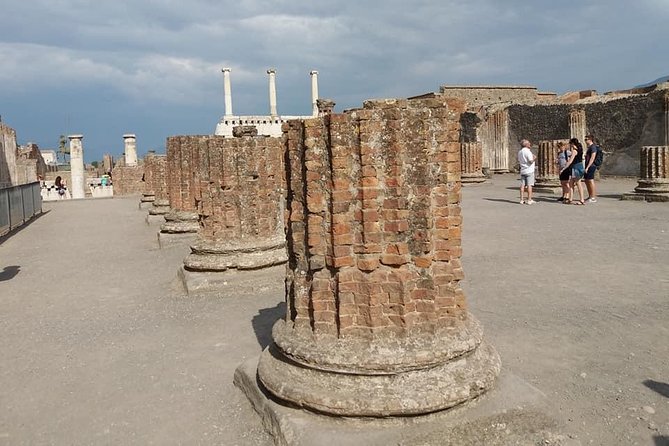
The tour schedule moves through several major ruins and villas, so your comfort matters. You’ll want footwear that works on outdoor stone and uneven paths.
Also, plan for weather. This experience requires good weather, and if it’s canceled due to poor weather, you’ll be offered a different date or a full refund. That matters because Pompeii is an outdoor walking experience first, with indoor moments only in the buildings you’re visiting.
Finally, arrive early enough to settle in at Piazza Porta Marina. When tours have strict start times, a few minutes of confusion can knock your whole day off rhythm.
Who this tour is best for (and when you might DIY)
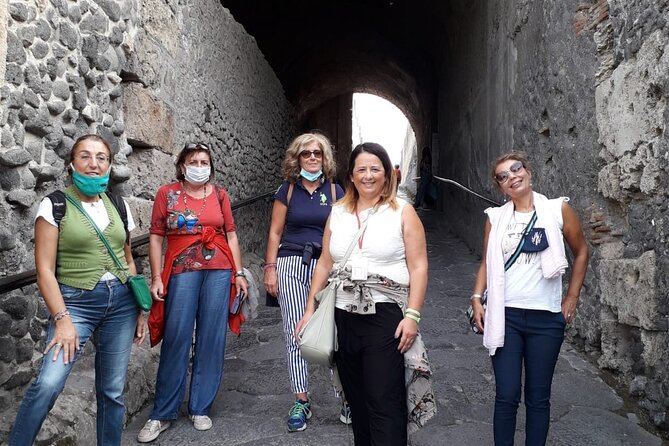
This Pompeii tour fits best if:
- You’re visiting Pompeii for the first time and want a structured highlight route
- You want an English guide to explain what you’re seeing, especially the art in the villas
- You care about not wasting time on the ticket-office entrance gate
- You prefer a small group pace (max 25)
You might consider a DIY approach if:
- You already know Pompeii well and want deep, unhurried time in fewer areas
- You don’t want to follow a set stop order
- You’re comfortable planning entrances, routes, and interpretation on your own
One caution to keep in mind: there is at least one negative experience tied to poor communication and a guide not meeting the group, with no refund issued. That doesn’t mean every tour will go wrong, but it’s a good reminder to confirm details close to departure and double-check you know exactly where to meet.
Should you book Sesto Continente’s Pompeii walking tour?
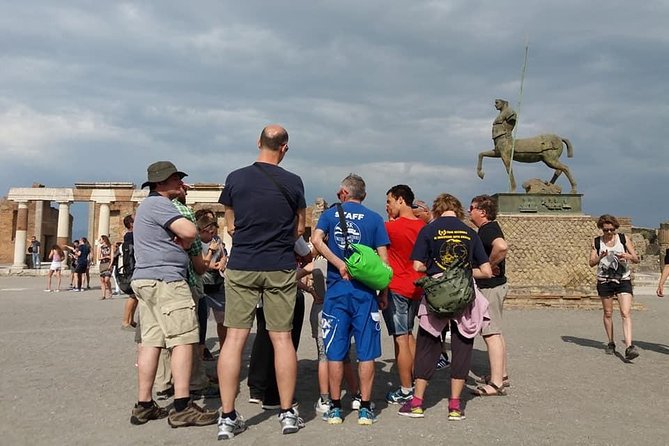
If you want Pompeii to feel understandable—not just impressive—this kind of guided route is a smart way to spend limited time. Entrance-gate facilitation, a focused highlight itinerary, and an English-led explanation approach are the reasons it’s good value at $36.12.
Before booking, do two reality checks:
- Factor in the €22 Pompeii entrance ticket for the ruins portion.
- Decide if you want a planned route (guided) or total freedom (DIY). Pompeii is big enough that structure often saves time and makes the art and architecture hit harder.
If those match your style, this tour is a strong choice.
FAQ
Is this Pompeii tour offered in English?
Yes. The experience is offered in English.
Do I have to buy the Pompeii entrance ticket separately?
Yes. The Pompeii entrance ticket is not included and costs €22.00 per person.
Is the Day 2 Sanctuary visit included in the price?
Yes. The Roman Catholic Sanctuary of Pompeii visit is included, and the ticket is listed as included for that stop.
Where is the meeting point?
You meet at Piazza Porta Marina, 80045 Pompei NA, Italy, and the tour ends back at the same meeting point.
How big is the group?
The tour has a maximum of 25 travelers.
What happens if the tour can’t run due to weather?
The experience requires good weather. If it’s canceled due to poor weather, you’ll be offered a different date or a full refund. You can also cancel for a full refund if you cancel at least 24 hours in advance.