REVIEW · ATHENS
Biblical Ancient Corinth Canal Epidaurus Nafplio Private Tour
Book on Viator →Operated by Yomadic.Tours & Transfers · Bookable on Viator
One day, three time periods, one smooth ride. This private tour strings together Corinth Canal, Ancient Corinth, Epidaurus, and Nafplio so you can move through myth, Roman echoes, and Greek drama without the stress of transfers. The plan also aims to include the Mycenae area as part of the broader route, plus plenty of time to slow down where you care most.
I really like that you travel in a modern private vehicle with A/C, WiFi, and bottled water. That matters on a long day with long drives and exposed ruins. I also like how the stops are built around “why it mattered,” not just “what it looks like,” from Corinth’s shipping dream to Epidaurus’ famous acoustics.
One thing to think about: this is a big sightseeing day, and several sites have entrance fees not included. Also, the tour includes expert driver-style guiding, but a licensed guide inside museums/sites is not included, so you’ll get more context if you’re ready to ask questions on the spot.
In This Review
- Key points worth planning around
- A single-day sweep: Corinth, Epidaurus, and Nafplio with private pacing
- Stop 1: Corinth Canal, the “2000-year dream” shortcut
- Stop 2–5: Ancient Corinth, museum stops, and Akrokorinthos views
- Ancient Corinth (Archaia Korinthos): where Paul and empires overlap
- Archaeological Museum of Corinth: the “how do we know?” stop
- Temple of Apollo and Akrokorinthos: stone, power, and defense
- Epidaurus: theatre acoustics and the Asclepius healing sanctuary
- Epidaurus Archaeological complex: Asclepius and the museum option
- The Ancient Theatre of Epidaurus: the famous sound test
- Nafplio: coast views, the Bavarian Lion, and the climb to Palamidi
- Lion of the Bavarians: a big statue with an oddback story
- Palamidi Castle: the viewpoint payoff (and the stairs)
- Bourtzi and the old fortifications
- Private vehicle comfort, driver expertise, and flexibility that matters
- Price and value: is $240.93 a fair deal?
- Timing, heat, and how to avoid a “too much” day
- Should you book the Biblical Ancient Corinth Canal Epidaurus Nafplio private tour?
- FAQ
- How long is the private tour?
- Do you get pickup and drop-off from Athens?
- Are entrance fees included in the price?
- Is transportation provided, and is it comfortable?
- Do I have a licensed guide inside the archaeological sites?
- Can the itinerary be customized?
Key points worth planning around
- A/C private transport all day with WiFi and water keeps the schedule livable, even when it’s hot.
- Corinth Canal + diolkos backstory gives you the “2000-year dream” angle before you even reach the ruins.
- Corinth isn’t just one ruin: you’re set up to see the ancient city, museum, major temple sites, and Akrokorinthos.
- Epidaurus is the star for theatre buffs (and acoustics testers). You also get the Asclepius sanctuary context.
- Nafplio balances history and views with the Bavarian Lion, Bourtzi, and the big hike to Palamidi.
A single-day sweep: Corinth, Epidaurus, and Nafplio with private pacing
This is the kind of day trip that works when you want “big wins” without juggling buses. You start from Athens with a pickup, then head into the Corinth–Peloponnese region, finishing in Nafplio. The tour length is about 8 hours 30 minutes, so it’s not a quick taste. It’s a full day that’s easier to handle because you stay in one comfortable vehicle most of the time.
What makes the route feel smart is the mix of themes. You’re not only seeing famous places—you’re seeing how the region functioned: trade and shortcuts at Corinth, healing and performance at Epidaurus, and fortifications and coastal life in Nafplio. You’ll also notice the tour’s built-in breathing room: some stops are short viewing breaks, and others allow longer time on site.
Because it’s private, you can adjust the rhythm. In past experiences, guides have been described as flexible with the itinerary—like Giannis working with guests who wanted changes and finding a great lunch spot in Nafplio. There’s also a pattern of not rushing people when the group wants to linger, which is especially helpful at places like Epidaurus where the whole point is to slow down and listen.
You can also read our reviews of more private tours in Athens
Stop 1: Corinth Canal, the “2000-year dream” shortcut
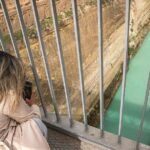
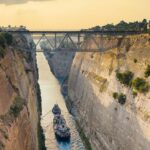
The day begins at Corinth Canal, a narrow waterway linking the Gulf of Corinth with the Saronic Gulf. In practical terms, it separates the Greek mainland from the Peloponnese, turning that peninsula into something closer to an island by cutting across the isthmus.
The useful part here is the context. The canal wasn’t just a modern engineering project; it fulfilled an idea that had been “on people’s minds” for centuries. Before the canal, ships often had to circle the Peloponnese to travel toward the Adriatic or to reach Corinth, adding a major detour—around 185 nautical miles. Standing at the canal, you can connect the dots between geography and cost and time, which makes the whole place feel more real.
You also get the “how did they try?” story. It’s believed that Periander, tyrant of Corinth (around 602 BC), first conceived the digging idea. Since the tech wasn’t there, the solution was the diolkos, a stone track where ships could be transferred overland on wheeled platforms. Even if you don’t memorize the details, you leave with a sense of why Greeks cared so much about controlling this strip of land.
Tip: this is listed at around 20 minutes. If you want photos, I’d plan to do them right away, then enjoy the view rather than racing the clock.
Stop 2–5: Ancient Corinth, museum stops, and Akrokorinthos views
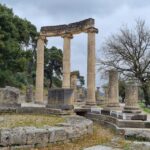
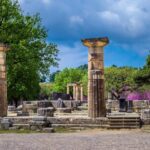
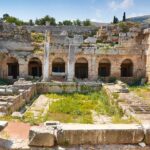
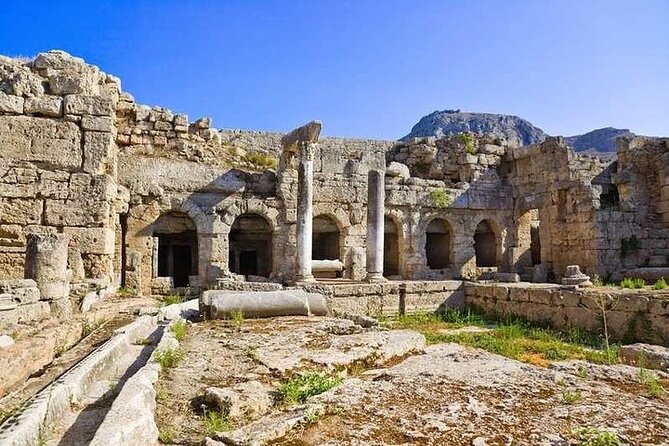
Ancient Corinth is the big historical anchor of the day, and you get more than one “layer.” The route includes Ancient Corinth (Archaia Korinthos), the Archaeological Museum of Corinth, the Temple of Apollo, and Akrokorinthos (Acrocorinth).
Ancient Corinth (Archaia Korinthos): where Paul and empires overlap
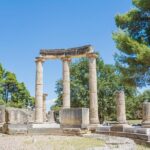
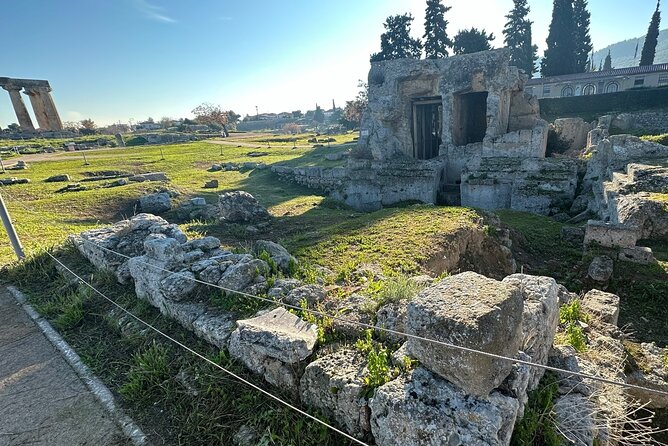
Corinth was a city-state on the Isthmus of Corinth, basically halfway (in distance and importance) between Athens and Sparta. It’s also one of those places where religion and politics keep bumping into each other in the sources people know.
For Christians, Corinth is well known from Saint Paul’s First and Second Corinthians, and it also appears in Acts during Paul’s travels. Corinth shows up in Pausanias’ Description of Greece too. If that’s your interest, this stop feels like walking through the “map behind the texts.”
The site itself matters even if you skip the Bible angle. Corinth was huge—one estimate puts population around 90,000 in 400 BC—and it stayed strategically important through Roman times. The Romans destroyed Corinth in 146 BC, rebuilt in 44 BC, then used it as a provincial capital.
Practical note: Ancient Corinth entry isn’t included (the fee listed is €15 per person), and you’ll spend about 1.5 hours here plus museum time later.
Archaeological Museum of Corinth: the “how do we know?” stop
The museum is at the archaeological site and was built in 1931–1932. The idea is straightforward: show what recent excavations uncovered, in the same zone where the city once stood.
You’ll likely see major site features referenced in the museum context, like the Hadgimoustafa spring, Lechaion Road, the Agora, Basilica, Fountain of Peirene, and more. Even without reading every label, the museum gives you structure. It’s a good reset before you climb toward the Apollo temple and Akrokorinthos.
This stop is listed around 40 minutes, and museum entry is also not included.



Temple of Apollo and Akrokorinthos: stone, power, and defense
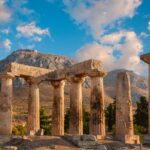
The Temple of Apollo is an early Doric temple (construction listed around 550 BC, with monolithic columns noted). Even with limited time, the key is that Corinth’s temple architecture signals status and identity. This is one of those stops where you get more from a short guided explanation than from trying to interpret on your own.
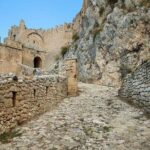
Then you head to Akrokorinthos (Acrocorinth), the acropolis perched on a massive rock above the city. You’ll get that “this was a fortress” feeling fast. The point wasn’t comfort—it was survival. Because it overlooked the Isthmus, the fortress could serve as a last line of defense and help repel land-based attackers into the Peloponnese.
Time here is listed around 30 minutes. Since Akrokorinthos is elevated and can feel exposed, I’d treat this as the moment to wear shoes you’re comfortable hiking in—this isn’t the time for sandals.
Epidaurus: theatre acoustics and the Asclepius healing sanctuary
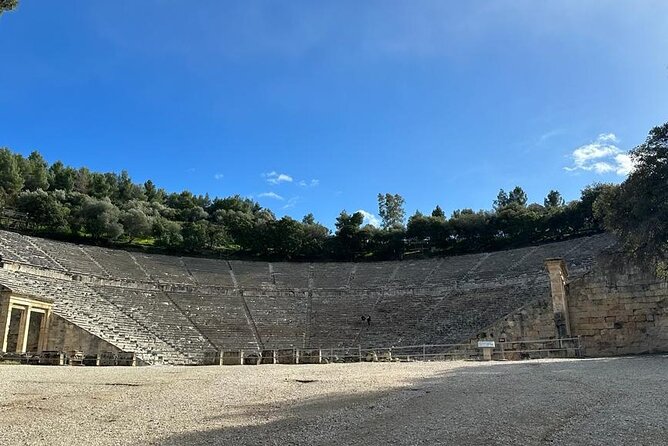
Epidaurus is the best-known stop on this day for one reason: the theatre. The route pairs the ancient performances with the broader healing-world around Asclepius.
Epidaurus Archaeological complex: Asclepius and the museum option
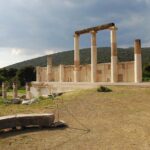
You’ll spend about 1 hour at Epidaurus highlights, including the sanctuary dedicated to Asclepius, plus nearby museum time later.
Asclepius was the Greek demi-god of medicine, and the sanctuary at Epidaurus was a major holy site—often described as rivaling places like Olympia and Delphi in importance. The temple is listed as built in the early 4th century BC. The tour also notes that if pagan worship had still been active by the 4th century AD, it would have been closed during late Roman persecutions and Christian edicts.
There’s also an Epidaurus Archaeological Museum stop, listed at around 30 minutes. The museum is described for reconstructions of temples and for columns with inscriptions. Since it’s not included in admission here, you’ll decide on the spot whether to prioritize museum time versus lingering outdoors.
The Ancient Theatre of Epidaurus: the famous sound test
You’ll then get The Ancient Theatre of Epidaurus for about 45 minutes. This is often called one of the best examples of Greek theatre design, especially because of acoustics. The classic fun fact here is that even sounds from the stage can carry far enough to be heard from the last seats. You don’t need to do the test to enjoy the design—you just need to sit down, look up at the structure, and listen.
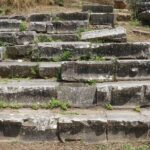
The theatre keeps its tripartite organization: theatron (seating), orchestra, and skene (stage building). The tour adds that in Roman times, it didn’t suffer the same kind of damage many other Greek theatres did, which helps explain why it still feels so intact.
Practical note: if you have trouble with long standing or steep seating, arrive ready to take it slow. This is where comfort planning pays off.
Nafplio: coast views, the Bavarian Lion, and the climb to Palamidi
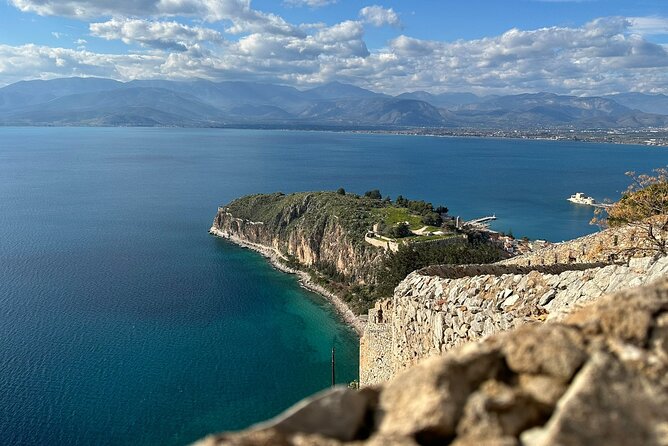
By the time you reach Nafplio, the day turns from inland ruins to a seaport feel: hillsides, harbor views, and Venetian-era reminders.
You’ll get a longer free time for lunch and coffee shopping. That’s valuable. This route is history-heavy, so having time to reset matters. In fact, prior experiences with guides like Giannis specifically included steering people toward a good lunch spot in Nafplio, which is exactly the kind of local help that makes a private day feel worth it.
Lion of the Bavarians: a big statue with an oddback story
You’ll see the Lion of the Bavarians. It’s carved into rock above Michael Iatrou Street and towers over a small park. The story in the tour info traces it to King Louis’s commission (for memory of Bavarian soldiers connected to Otto’s dynasty) who died in Nafplio during a typhoid epidemic in 1833.
Locals, though, have their own version—something about what caused the deaths being bitter foods. That’s the kind of detail that can only come from local context, and it makes the monument feel less like a stop and more like a story you can carry.
Palamidi Castle: the viewpoint payoff (and the stairs)
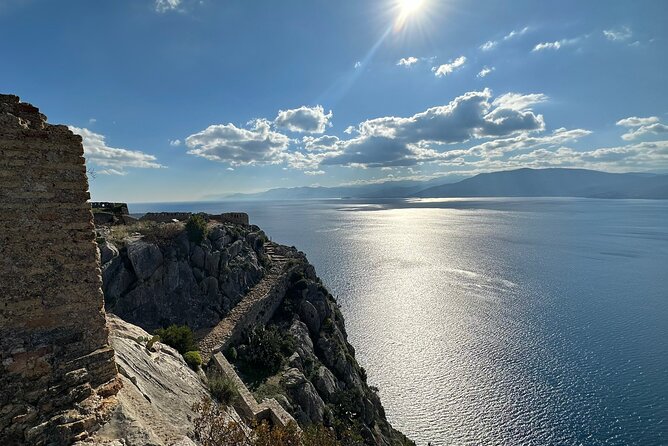
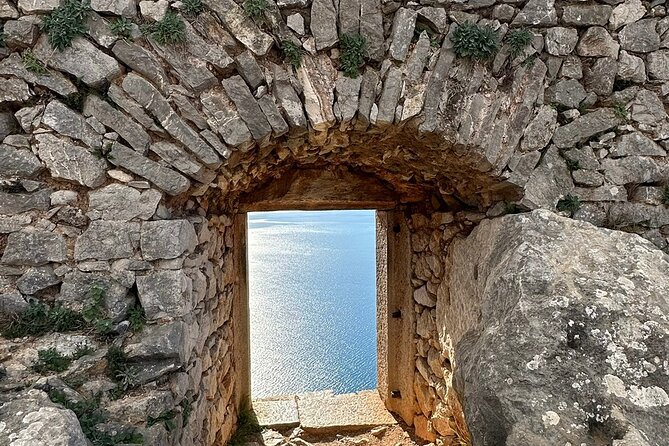
Next up is Palamidi Castle, listed as one of Greece’s best-preserved castles. The Venetian construction is dated to their second occupation (1686–1715), and the fortress sits on a 216-metre high hill.
The view is the point: you get angles over Nafplio and the Argolic Gulf from loopholes and along the interior paths. The terrain is described as tough in a way that’s part adventure, part caution. You also get a built-in “choose your energy” decision: the climb includes 913 steps in the winding stair from town, and locals say it can feel like 999 steps to the top.
The listed time is around 30 minutes, so I’d treat it as viewpoint-first, photo-second unless your group specifically loves castle exploration.
Bourtzi and the old fortifications
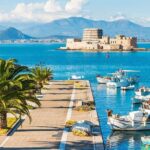
You also get Bourtzi, the small Venetian castle in the harbor. It’s a short stop (about 10 minutes) but it’s perfect for photos from the harbor side.
One more thing: the route mentions the older fortified part of town, including the Akronaufplia area, and how fortifications and even a prison past shaped the city. That context helps you understand why Nafplio looks the way it does even when you’re just walking around for coffee.
Private vehicle comfort, driver expertise, and flexibility that matters

The included comfort details aren’t just niceties. When your day includes multiple archaeological sites plus a castle climb, A/C and bottled water keep you from turning into a cranky human heat symptom. WiFi can help with navigation and quick updates too.
Vehicle size also matters. Smaller groups (1–3 people) use a luxury sedan; 4–7 people use a comfortable mini van. Either way, you’re not sharing the ride with strangers, and that’s a big part of why the pacing can feel relaxed.
You also get expert English-speaking tour drivers with extensive historical knowledge. One caution: the tour data specifies that a licensed guide inside archaeological sites is not included. Practically, that means the driver can explain a lot, but if you want the level of site interpretation you’d get from a museum-licensed guide, plan to ask questions in the moment. The route still does a lot of the heavy lifting for you.
Finally, flexibility is real. In the feedback, names like Giannis, Themos, and Chris are linked with a calm, responsive style—Giannis with itinerary adjustments and lunch guidance, Themos with adding extra stops beyond the planned ones, and Chris with careful driving, no-rush pacing, and even help coordinating a port transfer. That’s the kind of service that can turn a checklist day into your day.
Price and value: is $240.93 a fair deal?
The price is $240.93 per person for a fully private day, including pickup/drop-off in Athens, fuel, tolls, WiFi, A/C, and bottled water. That sounds like a lot until you compare it to the alternative: private cars plus separate guides plus individual transport can easily cost more.
The biggest value lever here is that the tour compresses multiple “big name” areas into one day without you coordinating the logistics yourself. You get Corinth Canal, multiple Corinth stops, Epidaurus, and Nafplio in one continuous route.
The main downside to watch is that several key entrances are not included. The tour data lists these fees:
- Ancient Corinth (Archaia Korinthos): €15 per person
- Palamidi Castle: €20 per person
- Archaeological Site of Epidaurus: €20 per person
Other museums/sites (like the Corinth museum) are also listed as not included, though exact amounts aren’t provided for every stop.
So, who does this price make sense for?
- Families and small groups who value private pacing and don’t want to negotiate bus routes all day.
- People who want comfort first, especially in hot weather.
- Anyone who’s okay paying a bit extra for a structured, guided day rather than building their own schedule.
If you’re traveling solo on a tight budget, a shared-group option could be cheaper. If you care about comfort and speed-to-fun, this private format often feels fair.
Timing, heat, and how to avoid a “too much” day
Because this is a full day, the trick is to match your pace to the schedule rather than the other way around.
A few practical moves:
- Start strong at Corinth Canal. It’s short, and once you’re on the road you’ll likely be in “site time” mode for hours.
- At Akrokorinthos and Palamidi, plan for effort. You’re dealing with elevation and stairs, and you only get about 30 minutes at each.
- Epidaurus is the spot where you’ll either fall in love with the theatre or feel rushed through it. The 45 minutes at the theatre is enough for photos plus time to sit.
Also, consider that the tour can depend on good weather. You’ll be offered a different date or a full refund if it’s canceled due to poor weather, so keep an eye on forecasts when your day is close.
Should you book the Biblical Ancient Corinth Canal Epidaurus Nafplio private tour?
I think this tour is a strong choice if you want a private, A/C ride that links Corinth’s ancient story to Epidaurus’ theatre and Nafplio’s coastal charm in one go. It’s especially worth it when you have mixed ages or mobility levels, since you can lean on short stops, shade breaks, and the driver’s flexibility.
Book it if:
- You want a structured day without transport hassle.
- You like mixing archaeology with meaningful context (Paul and Corinth, Asclepius and Epidaurus, fortresses in Nafplio).
- You’re fine budgeting for entrance fees on top of the tour price.
Skip it or consider another option if:
- You hate long days and you’d rather slow-travel.
- You’re hoping for a fully licensed guide inside every museum/site (that’s not included here).
- You’re extremely price-sensitive once you add admissions.
If you want one clear takeaway: this is a well-built route for people who want the Peloponnese highlights, with enough comfort and flexibility to make it enjoyable instead of exhausting.
FAQ
How long is the private tour?
The duration is about 8 hours 30 minutes.
Do you get pickup and drop-off from Athens?
Yes. Pickup is offered from an Athens hotel, Airbnb residence, or the port. The driver waits where you’d expect, including holding a sign for airport or port pickups, and you’re returned to the same place or to a point you prefer.
Are entrance fees included in the price?
No. Several sites charge separately, including Ancient Corinth (listed as €15 per person), Palamidi Castle (€20 per person), and the archaeological site of Epidaurus (€20 per person). Other museum/site entries are also listed as not included.
Is transportation provided, and is it comfortable?
Yes. You ride in a modern, first-class private vehicle with WiFi and A/C, plus bottled water. Small groups use sedan vehicles, while groups of 4–7 use comfortable mini vans.
Do I have a licensed guide inside the archaeological sites?
A licensed guide to accompany you inside archaeological sites is not included. The tour includes an expert English-speaking driver with historical knowledge.
Can the itinerary be customized?
Yes. Since this is a private tour, you can customize the program according to your needs, and pickup time is adjustable upon request.