REVIEW · SIEM REAP
Siem Reap: Banteay Srei and Grand Circuit Heritage Tour
Book on GetYourGuide →Operated by Journey Cambodia · Bookable on GetYourGuide
Lesser-known Angkor feels personal fast. This day tour strings together Banteay Srei’s fine sandstone carving and the quieter Grand Circuit temples around it, with a guided explanation that makes the details click. I also like the built-in comfort: an air-conditioned van, cold bottled water, and cool towels after temple walks.
One thing to plan for: you pay temple entrance fees on the day (the Angkor Pass surcharge is listed as $37 per person). Also, it’s a long, hot day, and the tour notes no shorts.
In This Review
- Key things I’d write on your map before you go
- Why this Grand Circuit day beats the usual Angkor rush
- Getting picked up and cooled off before the first temple
- Pre Rup: Rajendravarman’s temple mountain and a sunset viewpoint
- Banteay Srei: sandstone carvings that reward slow looking
- Neak Pean and Jayatataka Baray: Buddhism on a circular island
- Preah Khan: tree roots, crumbling stone, and World Monument Fund restoration
- Lunch break: local restaurant stop with time to reset
- Sunset views from Pre Rup: what to expect when weather shifts
- Price and value: $18 sounds cheap, but plan for the pass
- The guiding style that makes the temples easier to understand
- What to bring, what to wear, and who should avoid this day
- Should you book this Banteay Srei and Grand Circuit Heritage Tour?
Key things I’d write on your map before you go
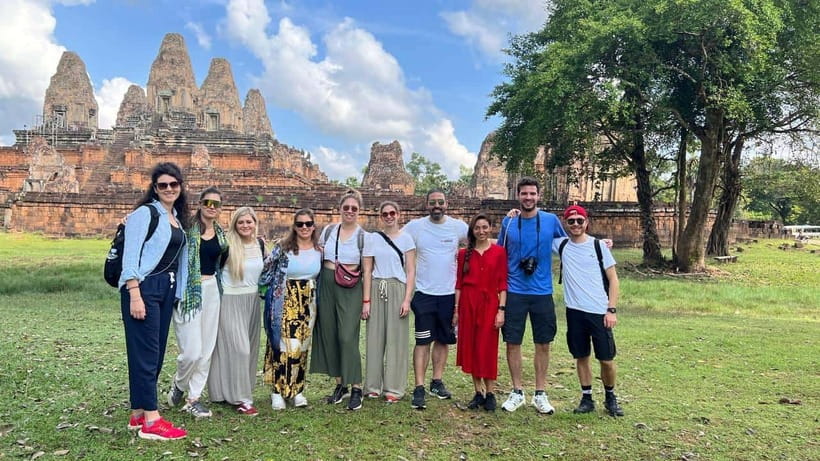
- Banteay Srei’s reliefs: considered among Cambodia’s finest, and it’s smaller than the big names so you can study it more closely
- Pre Rup at golden hour: a temple mountain viewpoint timed for sweeping sunset views
- Neak Pean’s “island temple” mood: a Buddhist shrine on an artificial circular island in Jayatataka Baray
- Preah Khan’s roots-and-ruins feel: commissioned by Jayavaraman VII, with restoration work supported by the World Monument Fund
- Small group focus: you get more attention from your guide for photos and questions
- Cooling details: AC transport plus bottled water and cool towels help you stay functional in the heat
Why this Grand Circuit day beats the usual Angkor rush
If you’ve already done Angkor Wat or Ta Prohm, this is the smart second day. The “big three” get all the fame, but they’re also where crowds crush your time and your photos. This tour leans the other way, taking you to temples outside Angkor Thom that feel calmer and more spaced out—without losing the awe.
What makes it feel different is the mix of scales and spiritual flavors. You’re not only chasing impressive stone. You’re also moving between Hindu temple design, Buddhist symbolism, and the kind of ruin where nature has taken over. That contrast helps you understand Angkor as a living religious landscape, not just a lineup of famous monuments.
You can also read our reviews of more historical tours in Siem Reap
Getting picked up and cooled off before the first temple
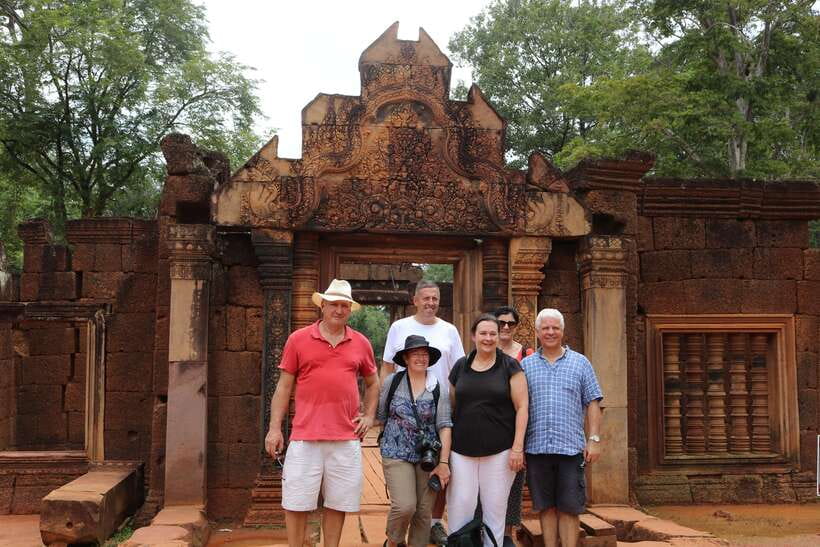
The day starts with hotel pickup in Siem Reap city and a comfortable ride in an air-conditioned vehicle. Departures are around 8:00 am, so you beat some of the heat and tour-group momentum.
The practical wins are real. You’ll have complimentary bottled water and a cool towel, and the cooling keeps showing up at temple stops (past guests specifically mention cold towels right after returning to the van). One of the easiest ways to enjoy Angkor is to stay ahead of fatigue, and this tour is built for that—less “sprint between sights,” more “see it properly.”
The group size matters too. Many people love that it’s a small group, which usually means you can ask more questions without waiting your turn and you get help finding good photo angles.
Pre Rup: Rajendravarman’s temple mountain and a sunset viewpoint
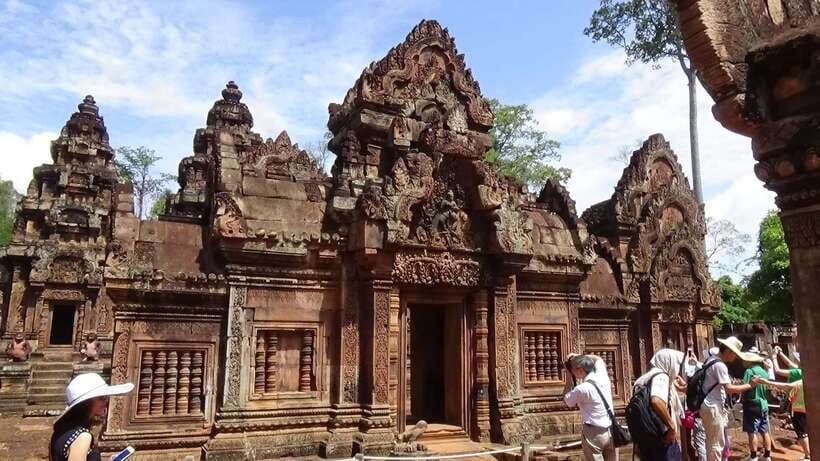
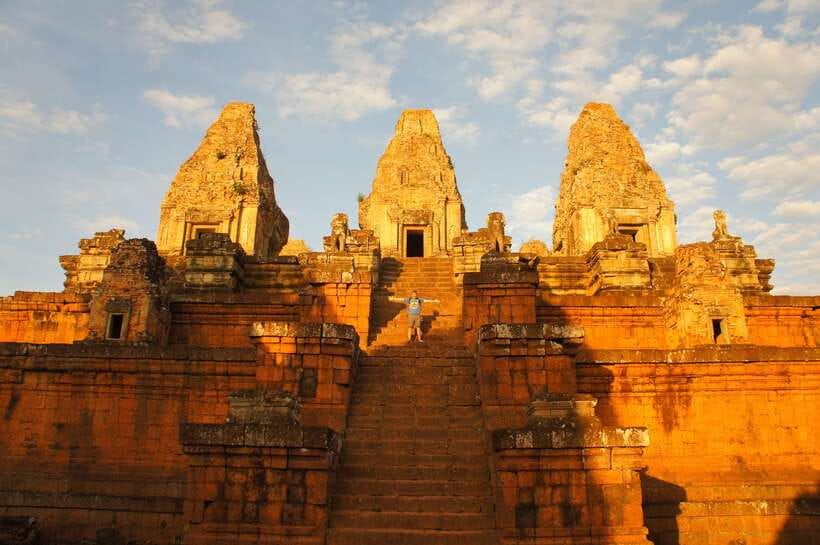
Pre Rup is where the day sets its mood. This is a Hindu temple built as the state temple of Khmer king Rajendravarman, dedicated in 961 or early 962. It’s constructed as a “temple mountain” using brick, laterite, and sandstone—so even before you start reading the carvings, you can see the building logic.
Why it works on this tour: Pre Rup is both approachable and dramatic. You get a guided visit, plus time for photos. Then you’re building toward sunset later, and Pre Rup’s design gives you that atmospheric “overlook” feeling as the light changes.
A consideration: it’s still a temple walk in open air. You’ll want to bring sun protection and insect repellent, and you’ll likely be standing in heat for photo moments.
Banteay Srei: sandstone carvings that reward slow looking
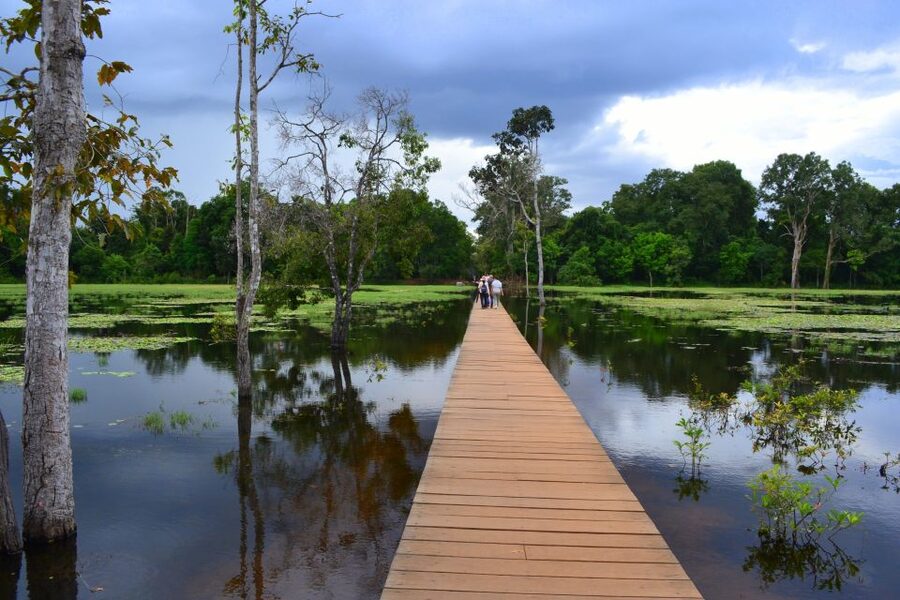
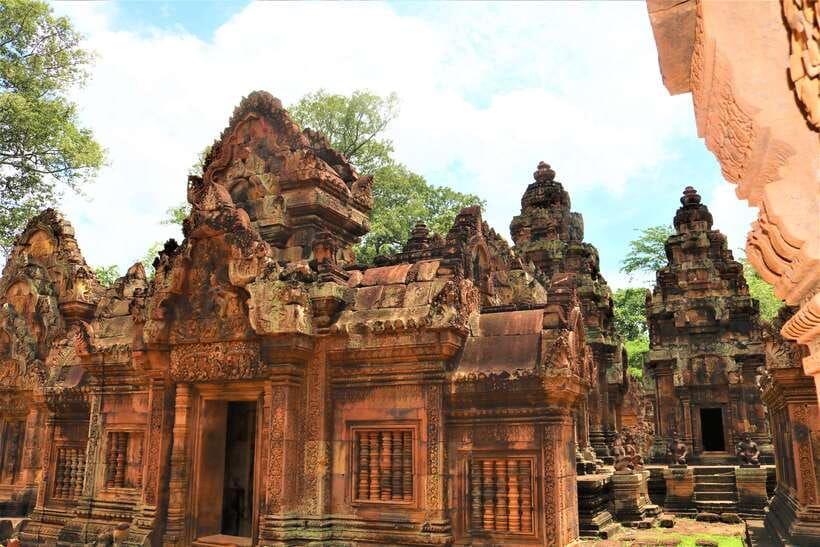
Then comes the star that most people talk about: Banteay Srei. It’s smaller than the headline Angkor temples, but don’t let the size fool you. The relief work here—carved into sandstone—is widely regarded as some of the finest and most skillfully crafted in Cambodia.
This is also one of the more emotionally interesting parts of the day. The area has been accessible since the late 1990s, after Khmer Rouge left the region. Knowing that gives the place extra weight: you’re not just touring a monument—you’re seeing a heritage site that had to survive a very dark chapter to be enjoyed again.
Practical tip: because the carvings are detailed, you’ll get more out of this stop if you slow down. Use your guide’s pointers to locate the story elements and the visual “anchors,” then spend time looking at how the stone art is layered. It’s the kind of temple where your best photos often come from patiently repositioning, not from one quick click.
Neak Pean and Jayatataka Baray: Buddhism on a circular island
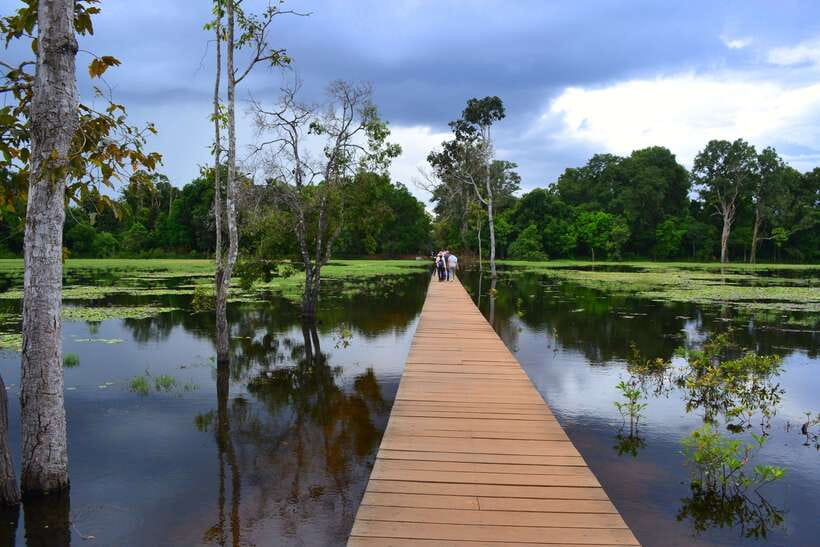
After the drive, you shift from carving detail to a more reflective atmosphere at Neak Pean. The centerpiece here is an artificial island with a Buddhist temple on a circular island within Jayatataka Baray.
Neak Pean is not about sheer size. It’s about mood and symbolism. The circular island setting makes it feel like you’re visiting a place with rules—quiet boundaries, deliberate design, and a sense of ceremony. With a guide on hand, the explanations can help you connect the forms to what visitors historically would have understood.
Photo heads-up: this is the kind of spot where timing matters and the light can change fast. If clouds roll in or the air feels hazy, still prioritize the guided walk and your orientation first—then you’ll know what you’re photographing.
Preah Khan: tree roots, crumbling stone, and World Monument Fund restoration
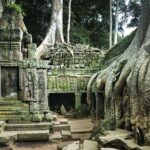
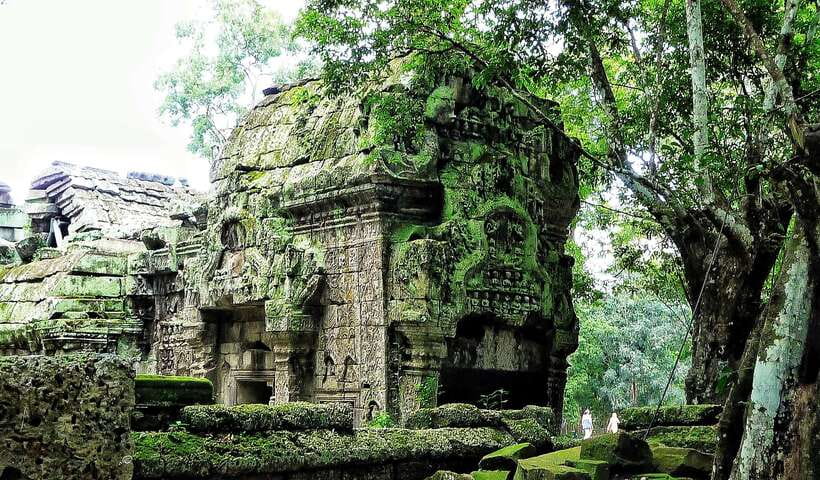
Next is Preah Khan, and it’s a very different kind of impressive. This site is ruined, but it’s the good kind of ruined—the kind where tree roots tangle through structures and the stone looks like it’s actively aging in front of you.
Preah Khan was commissioned by Khmer king Jayavaraman VII in honor of his father, and it’s an interesting contrast to bigger, more formal Angkor templates. You get guided touring, walking time, and photo stops, and because it’s being restored in places (with support noted as coming from the World Monument Fund), you may notice areas where stability is returning while other parts remain in a fragile, exposed state.
Why I think this stop matters: it helps you see the difference between what’s been reconstructed and what’s still vulnerable. It also gives context for how conservation decisions shape what you experience as a visitor.
A consideration: this is also where your shoes earn their keep. Bring outdoor footwear you’re comfortable walking in all day.
Lunch break: local restaurant stop with time to reset
Between temples, you stop for lunch at a local restaurant. The meal includes options like beer, coffee, and tea, and you get a full hour. That timing is important on a long temple day because it lets you refuel before the final temple + sunset portion.
If you’re the type who gets grumpy when you’re hungry and dehydrated, this buffer can save your afternoon. Keep water going, and don’t rely on the van stop alone—temple days punish slow hydration.
Sunset views from Pre Rup: what to expect when weather shifts
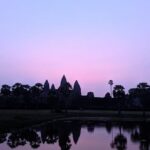
The tour includes time for sunset views from the final temple highlight area. In practice, this can be a highlight because Pre Rup’s position and the temple-mountain feel help the sky do its work. A cool towel and the sense of finishing the day right adds up.
Weather is always a factor in Siem Reap, though. During rainier periods, the tour can shorten the last sunset moment to match group preferences or conditions. The smart move for your side is simple: plan for a flexible end of day. If rain comes, focus on what you can control—good angles, quick photos when the light breaks, and staying comfortable in the van.
Price and value: $18 sounds cheap, but plan for the pass
The listed price is $18 per person for a 9-hour small-group day. That’s excellent value if you compare it to the cost of doing multiple temple visits with transport, pickup, and a guide who can explain what you’re seeing.
The one extra line item is the temple entrance cost. The day requires an Angkor Pass-related surcharge of $37 per person (not included in the tour price). For your budgeting, think of it like this: the tour fee mainly buys you transport + guiding + the day’s structure; the pass buys access to the sites themselves.
So is it still worth it? For most people doing Angkor for more than a day, yes—because you’re getting access to a set of temples that many first-timers skip. You’re also spending more time at each stop than you would on a rushed “drive-by” circuit.
The guiding style that makes the temples easier to understand
A big part of why people score this tour so high is the guide support. Past guests praise guides such as Pal Saroun, Sak, Bun, Chhay, and Sokpee, with drivers like Mao, Naro, and Syha also repeatedly mentioned for safe driving and quick cooling breaks.
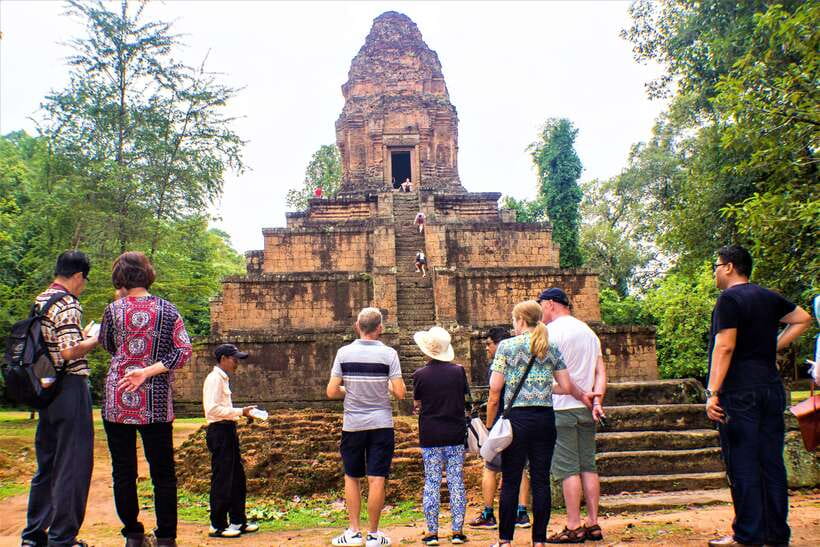
The standout behavior isn’t just facts. Guides often use visual aids—some bring tablets with photos or context to help you identify what you’re looking at. That matters because Angkor carvings can feel like visual noise until someone points out the story elements and design cues. Once you see those anchors, the carvings stop being “pretty stone” and start being readable scenes.
Also, you’ll likely get help with photo spots. Multiple guests mention that guides focus on positioning, not just reciting information.
What to bring, what to wear, and who should avoid this day
This is a heat-and-walking day, so pack for the outdoors:
- Sunglasses
- Sun hat
- Insect repellent
- Outdoor clothing you can move in
The tour notes that shorts are not allowed. That’s a practical rule for temple dress and comfort in Cambodia’s sun.
Suitability notes are clear: it’s not suitable for wheelchair users, and it’s also not recommended for children under 8.
If your goal is temples beyond the main Angkor highlights and you want a pace that feels manageable, this tour fits well—especially if you’re doing multiple days in Siem Reap.
Should you book this Banteay Srei and Grand Circuit Heritage Tour?
Book it if:
- You want temples outside the most overcrowded sites and you still want a guided explanation
- You care about carving detail and temple design more than just checking boxes
- You like small-group days where photos and questions don’t feel rushed
Skip it (or consider a different format) if:
- You’re only willing to pay for the major Angkor hits and don’t want the extra pass cost
- You’re sensitive to long days in the heat and long temple walks
- You need wheelchair-friendly access
If you’re on a multi-day Angkor plan, this is a smart “second-day” choice. It gives you the best mix of craft (Banteay Srei), atmosphere (Preah Khan), symbolism (Neak Pean), and the payoff of a sunset view that feels earned after a full circuit of quieter temples.
![[Day trip bus tour from Kanazawa Station] Weekend only! World Heritage Shirakawago Day Bus Tour - The day’s timing: what the schedule actually means for your day](https://l.historytourer.com/wp-content/uploads/day-trip-bus-tour-from-kanazawa-station-weekend-only-world-heritage-shirakawago-day-bus-tour-400x267.jpg)