REVIEW · SIEM REAP
Siem Reap: 3-Hour Ancient Trails Motorbike Tour
Book on GetYourGuide →Operated by Sabai Adventures Cambodia · Bookable on GetYourGuide
Three hours, and you’re off the main road. This motorbike tour turns Siem Reap’s outskirts into real, rural Cambodia, and I really like how bike training makes it doable even if you’re new. I also like the mix of people and places—village roads, a local market in Pradak, and a pagoda stop to meet a monk—so it’s not just scenery. The main thing to consider is that it’s often dusty and hot, and the ride can feel more about driving than about lots of history unless you ask questions.
I like that the pacing is built for comfort: you get picked up, get a safety briefing, then you ride with a guide who leads the way while you follow. In English, guides such as Chiwa and Scott are the kind who explain what you’re seeing and how to handle the bike, and that matters when you’re crossing sandy stretches and uneven dirt.
In This Review
- Key highlights worth caring about
- Getting off the main road: what makes this tour special
- Price of $44: does it feel like value?
- Morning or 2 PM: how timing changes the ride
- From pickup in Krong Siem Reap to your bike: the logistics that matter
- Motorbike training for first-timers: what to expect
- The route sequence: villages, off-road tracks, and an ancient bridge
- Pradak market stop: why this is more than a photo break
- Pagoda visit and meeting a monk: the human moment
- Dust, heat, and road feel: the only real downside
- Who should book this motorbike tour?
- Guide quality: why names matter here (C hiwa and Scott)
- Should you book it? My practical take
- FAQ
- What’s the duration of the Siem Reap 3-Hour Ancient Trails motorbike tour?
- What time do hotel pickups happen?
- Do I get motorbike training if I’m a beginner?
- What’s included in the tour price?
- How big is the group?
- Is there free cancellation?
Key highlights worth caring about
- Small group capped at 9 people means more time with your guide and fewer awkward waits
- Motorbike training before you ride helps beginners get moving without feeling lost
- Pradak market stop gives you a taste of daily local life
- A pagoda visit to meet a monk and villagers adds a human, spiritual moment
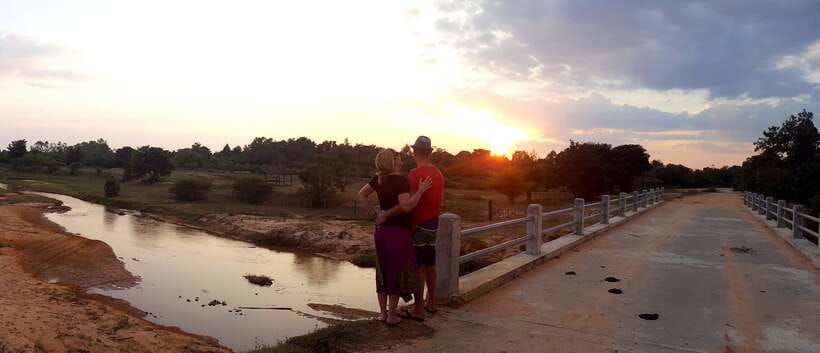
- A bridge over 1,000 years old gives the route more meaning than a random ride
- Two daily departures (8:30 AM or 2:00 PM) lets you choose cooler morning light or late-afternoon rides
Getting off the main road: what makes this tour special
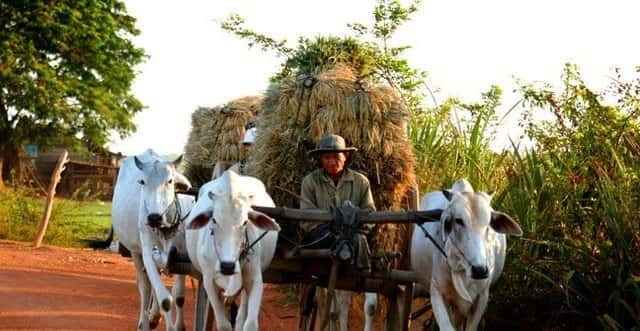
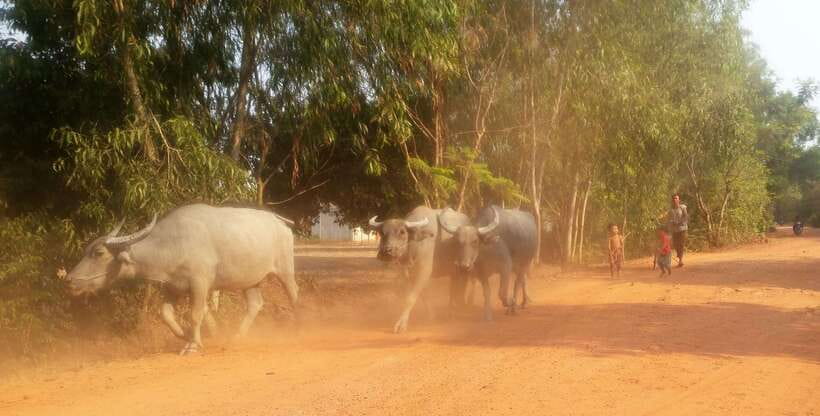
Siem Reap is famous for temples. This tour is the antidote. Instead of staying inside the usual temple circuit, you ride the dirt trails and village lanes outside town, where daily life happens at walking speed, not tourist speed.
You’ll drive through places that most people never see from the road. The best part is that you’re not just watching from the back of a vehicle. You’re actually on your own motorbike, with your guide setting the pace and showing you routes you wouldn’t find by yourself.
And yes, you can get the contrast of Cambodia in one half-day: temple area crowds fade fast, then you’re back on rural roads where the world is quieter and the scenery is more practical than postcard-perfect.
You can also read our reviews of more tours and experiences in Siem Reap.
Price of $44: does it feel like value?
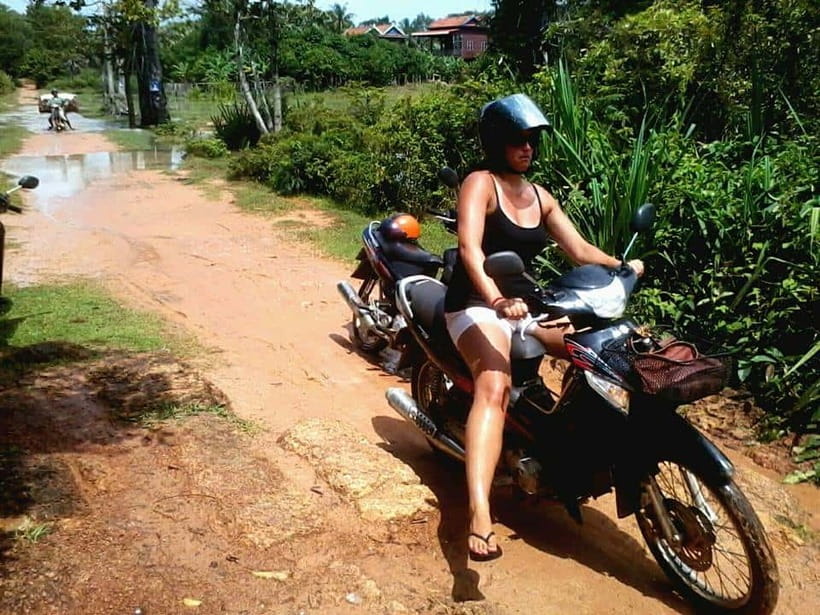
At $44 per person for a 3-hour outing, this is one of the more affordable ways to get a real countryside experience around Siem Reap—especially because the cost includes more than just a guide. You get pickup and drop-off, motorbike training, the motorbike (with helmet and fuel), and an English-speaking guide.
The value only makes sense if you show up ready to ride and get dusty. This tour isn’t a slow cultural walk with lots of seated time. It’s a driving experience with stops built in, so you’re paying for transport, instruction, and access to rural roads.
Also, the small-group limit (9 people) helps. When fewer people are in the group, you spend less time waiting and more time actually moving through the countryside.
Morning or 2 PM: how timing changes the ride
You can choose a morning start at 8:30 AM or an afternoon start at 2:00 PM. Both work, but the feel is different.
The afternoon ride often gives you that late-day glow people look for, and it’s a break from the Siem Reap hustle. The trade-off is that you still have dirt tracks and dust, so if it’s very hot that day, you’ll feel it no matter what time you go.
If you’re someone who prefers the “cooler start” option, choose the morning. If you want the countryside ride to feel like a reset after temple time, the 2 PM slot fits well.
From pickup in Krong Siem Reap to your bike: the logistics that matter
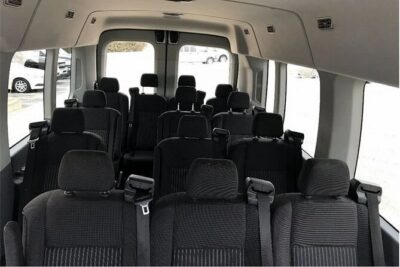
The tour begins in Krong Siem Reap. You’ll be picked up from your hotel, and then you transfer briefly by Jeep/SUV before you meet your group for the on-the-bike portion.
That early Jeep/SUV time matters because it usually helps you get set up before you’re on dirt. After that, you get a safety briefing (about 15 minutes), which is where the tour helps nervous riders the most. This isn’t a throw-you-in scenario.
Then you’re out riding for roughly 2.67 hours, with a guided off-road adventure and scenic stops along the way. The route is designed as a kind of loop—so you return to where you started without having to plan your own transportation afterward.
Motorbike training for first-timers: what to expect
If you’re worried you have little experience, that worry is exactly what the training is for. You’ll receive instruction before heading out, and the training is practical: how to handle the bike, how to follow the guide, and what to do if you need to adjust your pace.
A few details stand out from real rider experiences: some people found the bikes easy to control, including semi-automatic setups. One rider specifically mentioned a Honda Dream 125cc, and that kind of bike profile is often a relief for beginners because it reduces the learning curve.
You’ll still feel the reality of rural roads—sandy bits, uneven stretches, and dusty ground. But the point is that you’re not alone on those roads. The guide’s job is to lead and keep you moving in a safe way, and that’s why the training isn’t a formality.
The route sequence: villages, off-road tracks, and an ancient bridge
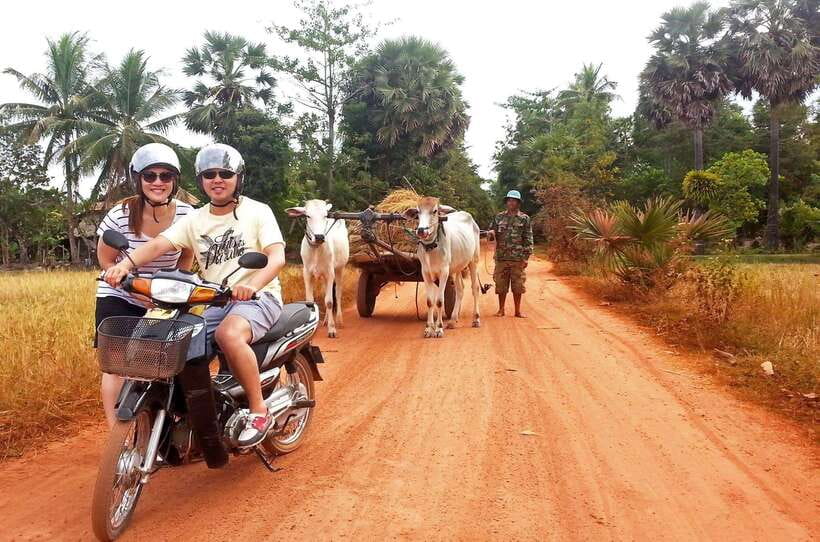
The heart of the experience is the riding itself. You’ll pass traditional villages where life looks different from the temple areas—more homes, more everyday routines, and more of the countryside rhythm.
Then the tour heads toward highlights that make the drive feel intentional. One of those is an old bridge that dates back more than 1,000 years. Even if you’re not a history person, it changes the mood of the ride. It turns the countryside from background into something with time behind it.
As you move through the countryside, you’ll likely experience a mix of dirt trails and regular roads. Some roadwork and ordinary traffic can pop up, which can slow the loop a bit, but that’s part of real-world riding. You’re not in a closed theme park. You’re on Cambodian roads.
Also, expect periodic stops. They’re not random. They’re built in so you can regroup, take photos, and check your needs without breaking the flow of the ride.
Pradak market stop: why this is more than a photo break
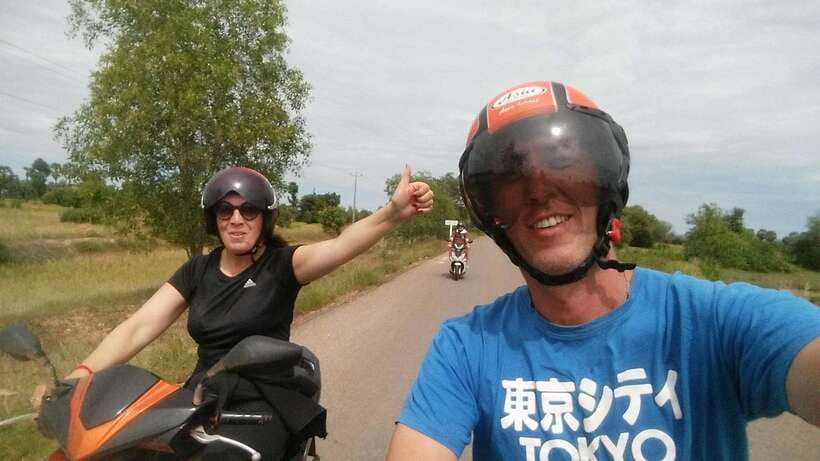
One stop that tends to stick is the local market in Pradak. This is the kind of place where you get a quick window into daily life—how people buy, sell, and move through their routines.
The market stop is valuable because it gives you a different kind of understanding than temples alone. Temples are important, but they’re only one slice of Cambodia. A market is where you see the practical side of the country: voices, colors, movement, and what people rely on day to day.
If you’re the type who likes asking questions, this is a good moment. You’ll be in a place where the guide can help you connect what you see to Cambodian culture and local geography.
Pagoda visit and meeting a monk: the human moment
The tour includes a stop at a pagoda where you can meet a monk and spend time with villagers. This is one of the more meaningful parts of the tour because it shifts the focus from roads to people.
A pagoda visit also helps explain why the countryside matters. These are not just scenic areas for driving; they’re living communities with spiritual and social centers.
Keep expectations simple: you’re there to witness and be respectful, not to treat the moment like a staged performance. The guide helps you navigate the visit, and if you’re comfortable talking and listening, you’ll come away with a clearer sense of how faith and village life connect.
Dust, heat, and road feel: the only real downside
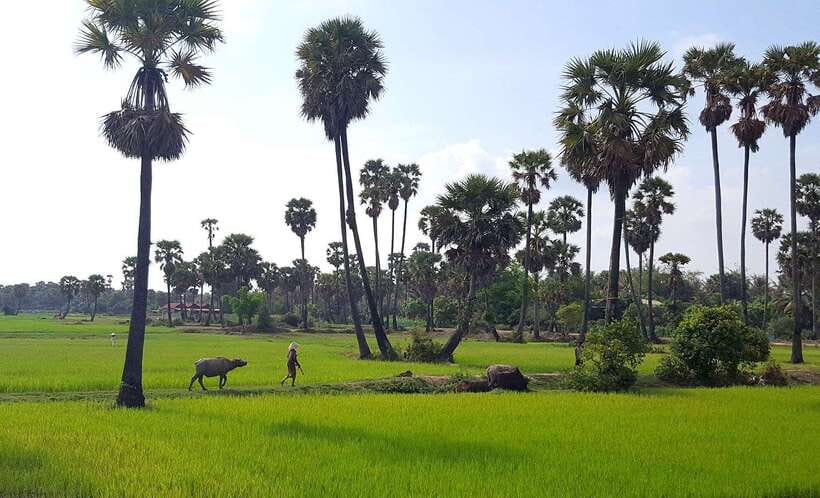
Here’s the deal: you will likely get dirty. The roads are dusty, and the ride involves dirt tracks, so you should plan for that reality.
One consideration that comes up is how much storytelling you get during the drive. Some riders felt they wanted more history and more explanation about why you’re stopping where you stop. That doesn’t mean the guide isn’t informative—it often means you may need to ask more direct questions if you want deeper background.
Also, the day you go affects comfort. If it’s very hot, you’ll feel it, because you’re riding and stopping in outdoor conditions.
If you can handle dust and uneven ground, this tour turns into one of those memories you keep talking about.
Who should book this motorbike tour?
This is a strong fit for:
- You want to escape the temple-only bubble and see rural life around Siem Reap
- You like active travel—riding, stopping, moving on
- You want a manageable time commitment (3 hours) instead of a full day
- You’re a beginner but willing to take training seriously
It might be less ideal if:
- You hate dusty conditions or you want a super-clean, low-heat outing
- You prefer a lot of seated, deep historical explanation rather than a ride-first itinerary
- You’re expecting a big sightseeing checklist like a temple tour (this is countryside, not a landmark sprint)
Guide quality: why names matter here (C hiwa and Scott)
The guide can make or break a motorbike tour. In this case, guides such as Chiwa and Scott come up for a reason: they make the ride feel comfortable and understandable.
Good communication is especially important when you’re learning bike control. Riders have noted the guides helped them feel safe, gave useful directions, and explained what was happening in the places you passed. If you’re someone who gets nervous on unfamiliar roads, that safety-conscious approach is a big part of the value.
Small-group format helps again. With fewer people, the guide can focus more attention where it’s needed—especially at the start when you’re getting used to the bike.
Should you book it? My practical take
Book this tour if you want a straightforward way to trade crowds for countryside, and you’re excited to ride. It’s priced fairly for what’s included—motorbike, helmet, fuel, training, guide, and pickup—and it’s one of the few ways around Siem Reap that actually gets you off the main routes.
Don’t book it if you’re hoping for a calm, dust-free afternoon or if you need nonstop historical narration. This is a driving experience first, with stops that add texture: Pradak market, the pagoda monk visit, and that ancient bridge stop.
One more smart choice: pick the departure time that matches your energy. If you want a cooler, fresher start, go morning. If you want a break after temple hours, the 2 PM ride is a great rhythm switch.
FAQ
What’s the duration of the Siem Reap 3-Hour Ancient Trails motorbike tour?
The tour runs for about 3 hours. The exact starting times depend on availability.
What time do hotel pickups happen?
Pickup from hotels in Siem Reap is at 8:30 AM for the morning option or 2:00 PM for the afternoon option.
Do I get motorbike training if I’m a beginner?
Yes. The tour includes motorbike training, and it’s designed to help riders who have little experience feel comfortable.
What’s included in the tour price?
It includes pickup and drop-off, motorbike training, a motorbike with helmet and fuel, and an English-speaking guide.
How big is the group?
The group is small and limited to 9 participants.
Is there free cancellation?
Yes. You can cancel up to 24 hours in advance for a full refund, and you can also reserve now and pay later.