REVIEW · ROME
Exploring Rome’s Rich Heritage: Pantheon and Jewish Ghetto
Book on Viator →Operated by Checkandgo Tours · Bookable on Viator
Rome rewards the early starters. This guided route strings together the Pantheon dome, Largo di Torre Argentina, and the Jewish Ghetto streets so you see ancient power and later community life in one tight plan. I love the skip-the-line Pantheon entry and the headsets that help you follow the guide on crowded sidewalks. The main watch-out is the Pantheon dress code: knees and shoulders covered.
You start at Piazza della Rotonda at 9:00 am and finish right by the Portico of Octavia, which is a smart landing spot for lunch or a follow-on wander. The group is capped at 25, so the pace stays relaxed enough for questions and real back-and-forth.
Along the way, you’ll also catch details most people miss on a self-guided stroll, like Bernini’s elephant-supported obelisk and the Turtle Fountain in Piazza Mattei.
In This Review
- Key things to know before you go
- Pantheon First: Skip-the-Line Entry and the Oculus Moment
- Piazza della Minerva: Bernini’s Elephant Obelisk and Gothic Santa Maria sopra Minerva
- Largo di Torre Argentina: Four Temples, Julius Caesar, and Ancient Layers Up Close
- Piazza Mattei: The Turtle Fountain and the Art of Small Squares
- Via del Portico d’Ottavia and the Portico of Octavia: Jewish Ghetto Core in One Walk
- What Makes This 2-Hour Format Work (and where it can feel rushed)
- Price and Value: Is $43.29 a Smart Use of Time?
- Who Should Book This Tour
- Should You Book the Pantheon and Jewish Ghetto Walk?
- FAQ
- FAQ
- How long is the Pantheon and Jewish Ghetto tour?
- Where does the tour start and end?
- What time does the tour begin?
- What’s included in the price?
- Is entry to the Pantheon included?
- What should I wear to enter the Pantheon?
- Do I need to bring an ID?
- How many people are in the group?
- Can I cancel for a full refund?
Key things to know before you go
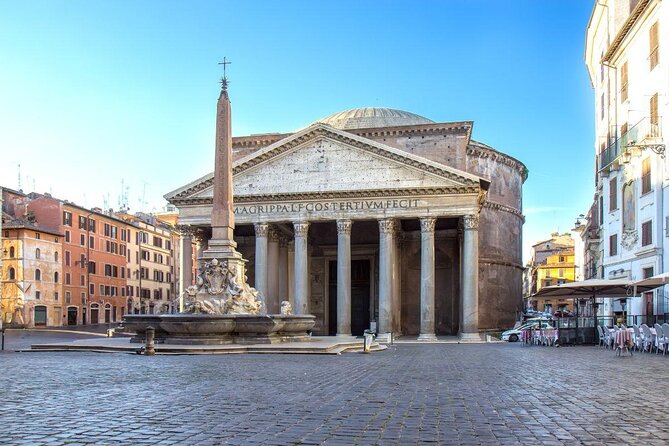
- Skip-the-line at the Pantheon with the dress code clearly spelled out (knees and shoulders)
- Headsets for the guide’s narration, helpful in narrow lanes and busy junctions
- Small group size (max 25) for a calmer, more personal experience
- Largo di Torre Argentina: four temple ruins plus the 44 BC assassination site tied to Julius Caesar
- Bernini touches nearby at Piazza della Minerva, including the obelisk-and-elephant sculpture
- Jewish Ghetto focus through Via del Portico d’Ottavia to the Portico of Octavia
Pantheon First: Skip-the-Line Entry and the Oculus Moment
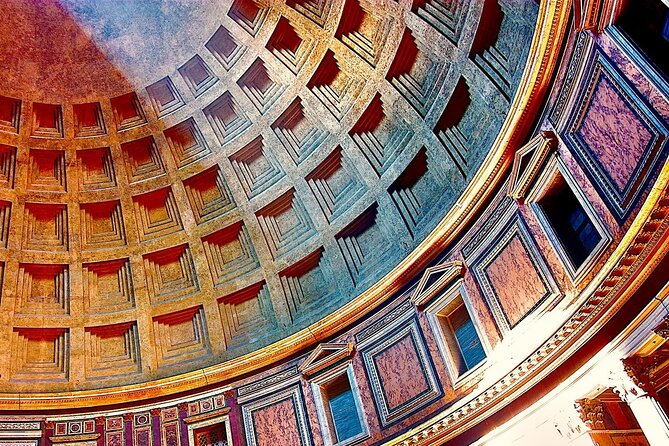
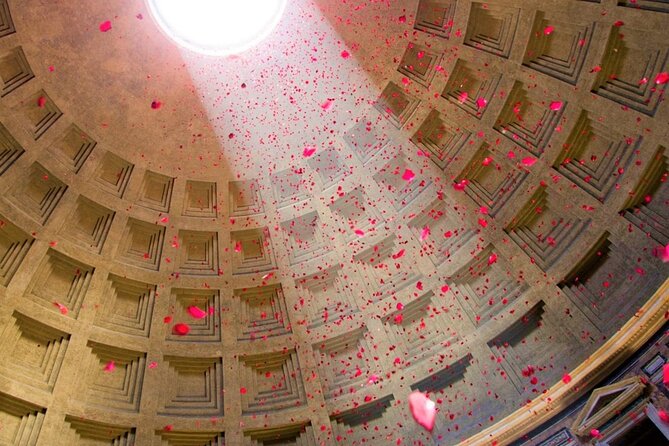
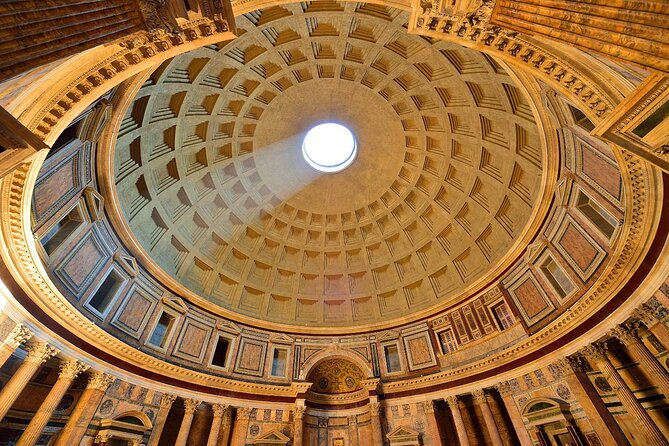
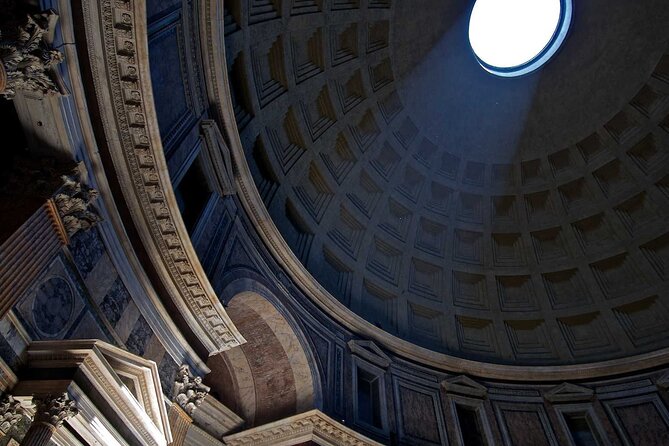
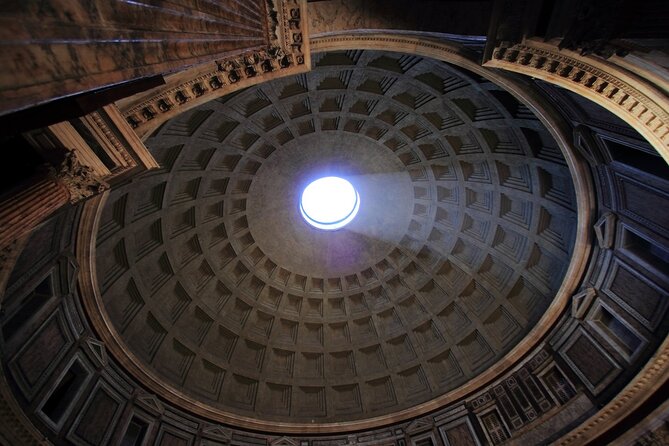
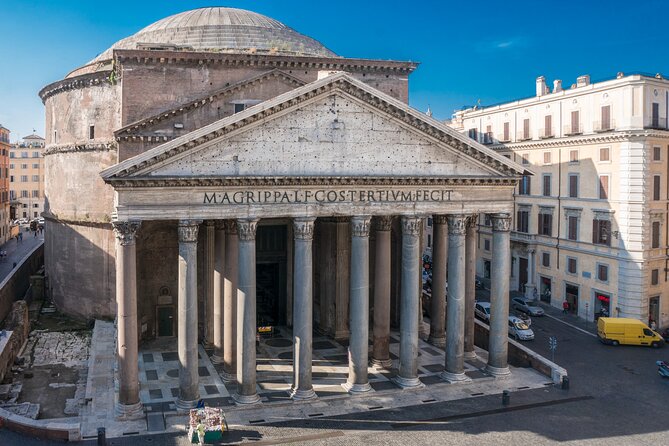
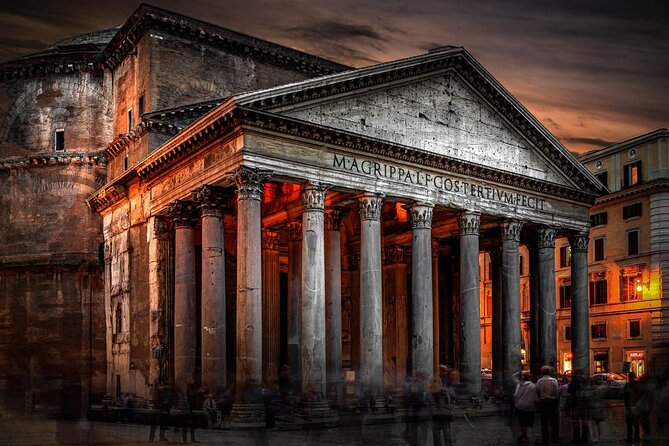
The tour begins at the Pantheon, one of Rome’s best-preserved Ancient Roman monuments. You’ll start by getting oriented inside and out, then spend about 45 minutes learning what you’re looking at: the huge domed ceiling, the central oculus, and the way light moves through the interior space. The Pantheon’s design is the sort of thing that feels almost impossible until you stand in the middle of it and see how the proportions work.
I also like that the Pantheon visit isn’t just a photo stop. You’re told what it originally was—a temple for all gods—and how it later became a place of burial for notable figures. That timeline matters because it changes how you read the building: it’s not just a “pretty ancient church,” it’s a structure that kept being reused and reinterpreted over centuries.
Two practical notes can save your day here:
- Dress code: you need knees and shoulders covered to enter (it can be refused). If you’re traveling in summer, keep a light layer handy.
- Skip-the-line doesn’t mean no time: it still takes a bit to get through entry checks. Arrive near the meeting time so you’re not stressed.
You can also read our reviews of more historical tours in Rome

Piazza della Minerva: Bernini’s Elephant Obelisk and Gothic Santa Maria sopra Minerva
Right after the Pantheon, you head to Piazza della Minerva, a short walk that pays off immediately. The highlight is the obelisk supported by a small elephant, created by Gian Lorenzo Bernini. Even if you’ve seen photos, seeing it in person hits different because you notice the scale and the cleverness of how the artwork balances itself.
This stop also gives you a quick architectural contrast. Nearby you have the Church of Santa Maria sopra Minerva, described as a rare example of Gothic architecture in Rome. Rome is famous for a lot of styles, but Gothic shows up less often than you might expect. If you’ve been mentally stuck in “Roman empire mode,” this is a nice reset.
Time here is about 20 minutes, so it’s not an all-day museum detour. Think of it as a visual palate cleanser: you go from the Pantheon’s massive classical dome geometry to a more playful, later-Baroque-feeling sculpture and a church style that’s different from the mainstream.
Largo di Torre Argentina: Four Temples, Julius Caesar, and Ancient Layers Up Close
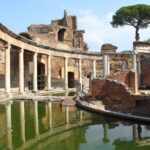
Next comes Largo di Torre Argentina, an archaeological area with ruins of four ancient Roman temples. This is the kind of stop that sounds academic until you’re standing there and realizing you’re looking at a piece of the city that predates much of what you see around you.
The tour also connects this place to a major moment in Roman history: Julius Caesar was assassinated here in 44 BC. That detail matters because it turns rubble into a scene. When you hear the “who and when” while you’re looking at the “what remains,” the site stops being a background landmark and becomes a location with real stakes.
This portion is about 20 minutes. That’s long enough for the story and some time to absorb the layout, but short enough that you keep momentum through Rome’s center without turning the day into one long queue of standing still.
One consideration: archaeological areas can feel visually busy because you’re seeing ruins, signs, and multiple temple foundations at once. If you’re prone to getting overwhelmed, it helps to listen closely at the start of this stop. The guide’s job here is to give you a mental map so you don’t just see scattered stone.
Piazza Mattei: The Turtle Fountain and the Art of Small Squares
Piazza Mattei is small, but it’s the sort of square you’ll remember because it’s specific. The focus here is the Turtle Fountain, created in the 16th century by Giacomo della Porta, and later enriched with sculptures attributed to Bernini.
This is one of those details that makes the tour feel more like exploring than checking boxes. Rome has plenty of grand monuments. But the streets also reward curiosity at the “micro” level—little corners where art, water, and symbolism show up where you’d never expect them.
You’ll have about 15 minutes at this stop. That timing works because you’re already walking between big-hitter sights. It gives you a breathing space without losing the thread of the day.
A quick mindset tip: instead of only hunting for the fountain, look at how the square is framed by buildings around it. These compact spaces are part of why Rome feels human-scale even when the history is enormous.
Via del Portico d’Ottavia and the Portico of Octavia: Jewish Ghetto Core in One Walk
The final stretch moves into the Jewish Ghetto area, with the tour walking along Via del Portico d’Ottavia. This is described as the historical center of Rome’s Jewish community and is one of the most evocative parts of the city because it’s layered: you’re seeing everyday life in streets that carry centuries of memory.
The tour concludes at the Portico of Octavia, an imposing ancient complex commissioned by Emperor Augustus. According to the tour description, the structure once housed a library and a place of worship. That detail is powerful because it ties together different eras in the same physical space: Roman imperial power, later community presence, and the way locations keep taking on new meanings.
About 20 minutes here is enough time to understand the geography and leave with a clear sense of what you were seeing and why it mattered. It’s also a good finish point because you’re not stuck “backtracking” to return to the bus. You end right where you can keep exploring on foot.
Dress and comfort matter a bit more in this last section since you’ll likely be walking through tight lanes. Wear shoes you can trust. Rome’s center is charming, but it’s not a place for squishy footwear.


What Makes This 2-Hour Format Work (and where it can feel rushed)
This tour is roughly two hours, and that’s the whole trick: it’s designed for concentrated learning without eating up your day. In that time, you get a sequence that covers:
- A top-tier Ancient Roman monument (Pantheon)
- A Baroque/renaissance art detail plus an architectural side trip (Minerva area)
- A major turning-point site (Caesar at Largo di Torre Argentina)
- A Renaissance-era fountain scene (Piazza Mattei)
- A historically focused walk through the Jewish Ghetto to the Portico of Octavia
That’s a lot of context for a short schedule, which is great if you only have a morning free or you’re fitting Rome into a packed itinerary.
The included headsets are a real value add. They help you hear the guide clearly even if the sidewalk gets busy. I also like that the guide experience is described as enthusiastic and story-driven rather than just reciting facts like a textbook. On a tour that short, that storytelling approach is what keeps the sites connected.
Potential drawback: because it’s fast, you won’t get long, solo contemplation at each stop. If you prefer to linger, take photos slowly, or want time to roam on your own within the sites, plan to add extra free time after the tour—especially after the final stop near the Portico of Octavia.
One more “real world” note: there’s at least one reported instance of an altered plan close to the travel date. You can’t predict these things, but it’s smart to keep a flexible buffer on a day when you have tight connections or a hard deadline later.
Price and Value: Is $43.29 a Smart Use of Time?
At $43.29 per person for about two hours, this isn’t a bargain tour, but it also isn’t priced like a full-day private experience. The value comes from what’s included:
- Skip-the-line Pantheon tickets
- A professional tour guide
- Headsets to hear clearly
- A guided walk focused on the Jewish Ghetto
The Pantheon alone is where you can lose time fast. If you’re trying to see it on a specific day, skip-the-line access usually pays for itself in stress avoided. Then you add the other stops, and you’re essentially getting a guided “best-of-and-meaning” route across central Rome without needing to figure out the connections between sites.
Group size also matters for value. With a maximum of 25, you’re more likely to get a calm experience compared with huge groups that can feel like herding. Smaller groups don’t guarantee a great tour, but they give the guide a fighting chance to keep things interactive.
If you’re a history fan, you’ll likely feel the money is well spent because the tour connects places to stories and time periods. If you’re not a history nut, you might still enjoy it because the route includes visual art and architecture that you can see instantly, even if you’re not memorizing dates.
Who Should Book This Tour

I’d point you toward this tour if you want:
- A compact, guided intro to central Rome
- A route that connects Ancient Rome to later cultural life
- Skip-the-line access at the Pantheon
- A small group experience with clear audio support (headsets)
This also makes sense for short trips. The structure works well when you have limited time and still want something more meaningful than just wandering until you’re tired.
If you’re traveling with someone who loves landmark photos but also appreciates explanations, this format tends to satisfy both. The stops are famous enough to photograph, but the stories help you see them differently.
Should You Book the Pantheon and Jewish Ghetto Walk?
If your goal is to get your bearings fast and understand what you’re seeing, I think this is a smart buy. You get a high-demand entry site handled for you, plus a sequence of nearby stops that would take more effort to organize on your own. The route also avoids being only “empire-only Rome,” because it ends with a guided focus on the Jewish Ghetto and the Portico of Octavia’s role across eras.
Book it if:
- You want a calm small-group morning walk
- You respect the Pantheon dress code and can bring the right clothing
- You’re excited by how Rome layers different centuries in the same streets
Skip it or add extra time if:
- You dislike structured pacing and want to linger at every stop
- You’re tight on schedule and would struggle if your day gets altered
FAQ
FAQ
How long is the Pantheon and Jewish Ghetto tour?
The tour lasts about 2 hours.
Where does the tour start and end?
It starts at Piazza della Rotonda, 2, 00186 Roma RM, Italy and ends at the Portico of Octavia on Via del Portico d’Ottavia, 29, 00186 Roma RM, Italy.
What time does the tour begin?
The start time is 9:00 am.
What’s included in the price?
The price includes skip-the-line tickets for the Pantheon, a tour guide, headsets to hear the guide clearly, and a guided tour of the Jewish Ghetto.
Is entry to the Pantheon included?
Yes. Skip-the-line tickets for the Pantheon are included.
What should I wear to enter the Pantheon?
You must have knees and shoulders covered, or entry will be refused.
Do I need to bring an ID?
Yes. Don’t forget to bring a copy of your ID.
How many people are in the group?
The tour has a maximum of 25 travelers.
Can I cancel for a full refund?
Free cancellation is available if you cancel at least 24 hours before the experience starts. If you cancel less than 24 hours before, you won’t get a refund.